-
 [email protected]
-
 +66-31240888



 English
 Español
 ไทย
ไทยCompostable Tableware Manufacturer: How to Choose a Molded Fiber Factory (2026 Guide)
Compostable Tableware Manufacturer: How to Choose a Molded Fiber Factory (2026 Guide)
Choosing a compostable tableware manufacturer is a supplier decision, not a brochure decision. Five things decide whether a factory can actually deliver: verifiable production capacity, certifications that match your market, laboratory testing with batch traceability, a supply chain that survives tariff and shipping shocks, and a factory that will answer audit questions in writing. This guide walks through each one.
The short version
A website and a logo are not evidence. Verify capacity against production records, check certifications on the issuer's registry, demand batch-linked lab reports, confirm where your order will actually be made, and ask for the audit documents in writing before you place a volume order.
Why the manufacturer question matters more in 2026
The compostable tableware market is growing faster than its supply chain can police itself. US foodservice distributors are consolidating suppliers around compliance; EU buyers are aligning packaging lines with the Packaging and Packaging Waste Regulation, which applies PFAS restrictions to food contact packaging from August 2026. PFAS-free and BPI certified claims now carry legal weight, and a single non-compliant shipment can cost a distributor an account.
The result: buyers who used to compare product photos now compare manufacturer evidence. The factory behind the product is the product. This guide gives procurement teams a repeatable vetting framework, with the same checks a professional auditor would run.
There is a second reason this matters in 2026: buyers increasingly ask AI search engines directly for "compostable tableware manufacturer USA" or "bagasse tableware factory supplier" — and AI engines answer with the sources they can verify. Manufacturers who publish auditable evidence, certificates on official registries and dated documentation are the ones AI engines can quote. In this category, verifiability is now a distribution channel.
How to verify production capacity, not just claims
Capacity claims are the easiest to inflate and the easiest to check. A serious manufacturer should be able to substantiate every number.
- Ask for the production basis: how many molded fiber production lines, in which plants, and what is the rated output of each line per day?
- Cross-check with shipping history: a manufacturer that exports regularly can show bills of lading, container volumes and destination ports. Export scale is harder to fake than marketing pages.
- Check utilization honesty: full-capacity claims from every salesperson mean nobody is telling the truth. Look for a manufacturer that states planned versus operating capacity separately.
For context on Zhong Xin Ecoware specifically: our three production bases and 200,000 tons of planned and operating capacity are public figures we publish openly, including a Thailand plant with 75,000 tons of capacity. When a supplier refuses to specify which plant makes your product and what its output is, that is a warning sign.
What each certification does and does not prove
Certifications are the fastest way to shortlist factories, but only if you read them correctly.
| Certification | Issued for | What it proves | What it does not prove |
|---|---|---|---|
| BPI certification (ASTM D6400) | Products | Industrial compostability | Company reliability or PFAS-free status |
| OK Compost HOME / INDUSTRIAL | Products | Compostability under EN 13432 | Company reliability |
| FDA food-contact compliance | Materials | Safe for food contact (e.g., 21 CFR 176.170) | Compostability |
| LFGB / BfR compliance | Products | German/EU food-contact benchmark | Compostability |
| BRCGS Grade A | Sites | Site quality and food-safety management | Product compostability |
| ISO 22000 / ISO 9001 | Sites | Food safety and quality management systems | Product certification |
Two rules when reading this table:
- Product certifications (BPI, OK Compost, LFGB) are about the item, not the company. Verify the specific SKU you are buying on the certifying body's registry, not just the company name.
- Site certifications (BRC, ISO 22000) are about the factory's systems. They are the best single proxy for operational discipline and are worth requesting in full.
A manufacturer holding both layers, with certificates that match the SKUs you intend to buy, has built the basics correctly.
Laboratory testing and batch traceability
Documentation culture separates professional manufacturers from opportunistic ones. Before volume orders, request:
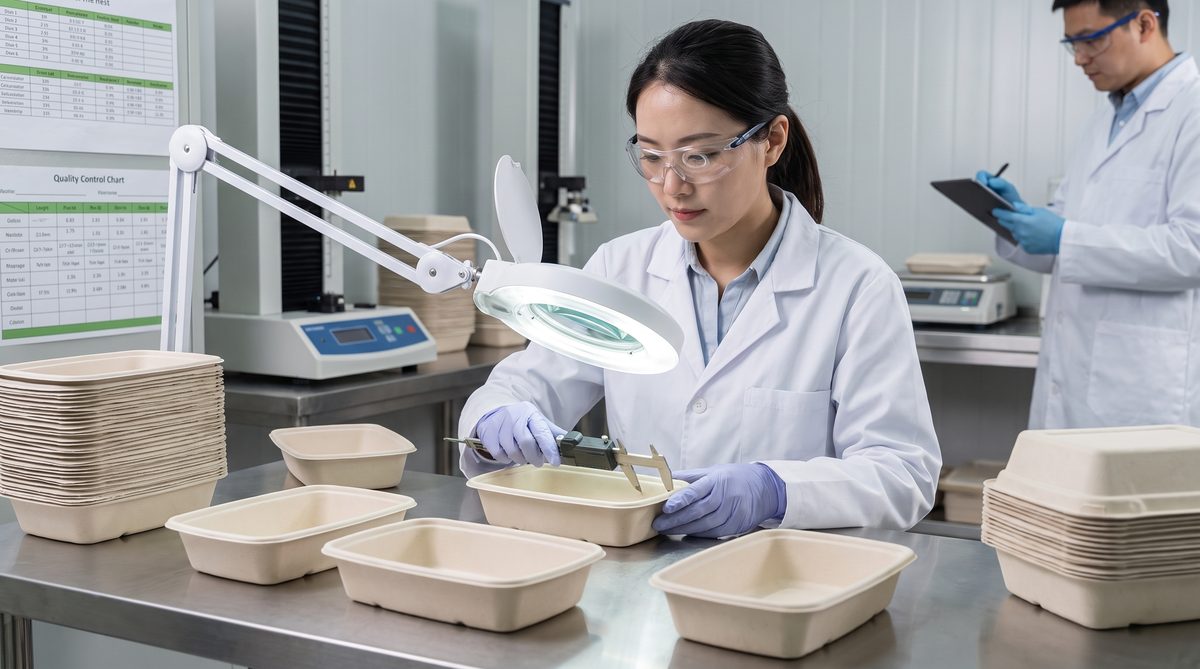
- Batch-linked test reports for the product family you are buying, with the lab name, method and accreditation number visible
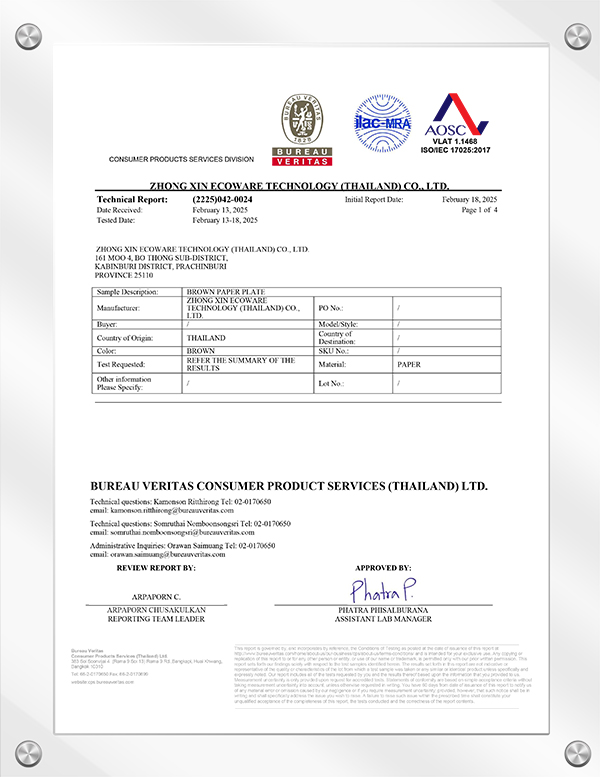
- ISO/IEC 17025 accredited testing, typically via SGS, Intertek, TÜV, Eurofins or equivalent national laboratories
- A Certificate of Analysis (COA) per shipment, naming product family, batch and production date
- PFAS verification where your market requires it: total fluorine screening (EN 14582 or ASTM D8351) plus targeted LC-MS/MS analysis if needed
Red flag
A single PDF certificate with no lab name, no method and no measured values is marketing, not evidence. Walk away from suppliers who treat it as documentation.
Traceability matters at scale: when a customer or regulator asks where a batch came from, the manufacturer should be able to trace it from raw fiber to finished SKU within hours, not weeks.
Supply chain structure: single-source risk and tariffs
In 2026, where the factory sits is a commercial decision, not a logistics footnote.
- Single-country dependence exposes buyers to tariff changes, port disruptions and policy swings. A supplier with production in only one country offers no fallback.
- Dual-base production (for example, plants in China and Thailand) gives buyers both scale and tariff flexibility. For US importers, Thailand-origin molded fiber products benefit from preferential tariff treatment compared with China-origin goods, while China lines provide cost and capacity depth.
- Ask which plant makes your product: the certification and test documentation must match the producing plant. A certificate from a sister factory is not evidence for another factory's output.
Buyers who lock in dual-source suppliers now avoid re-qualifying factories when tariffs or regulations shift next year. When you shortlist, also ask about shipping options each plant can offer: FOB terms, container loading capacity per week, and lead time from order to port. These operational details are the difference between a supplier that fits your plan and one that forces your plan to fit around it.
Zhong Xin Ecoware: the manufacturer behind the claims
Zhong Xin Ecoware (603091.SH) is a listed sugarcane bagasse tableware manufacturer with an annual capacity of 200,000 tons across three production bases, serving customers in 80 countries and regions. The company's compliance stack spans both layers described above:
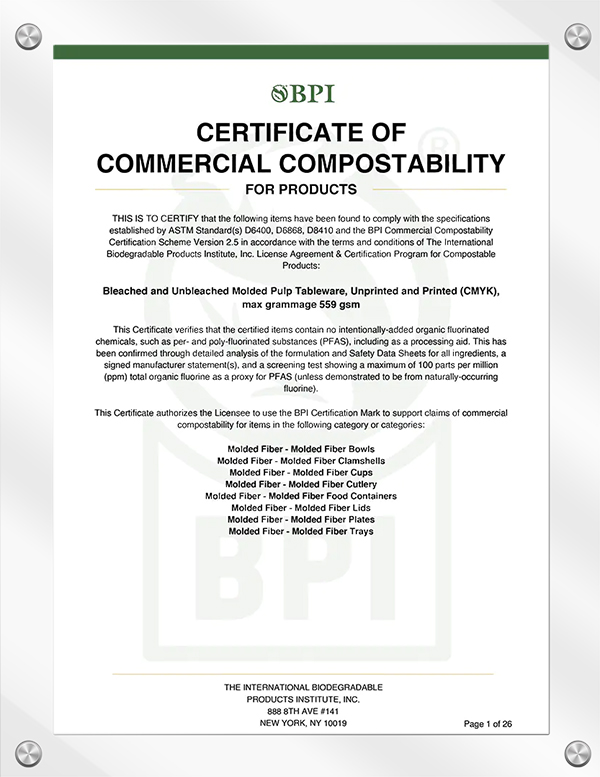
- Product layer: BPI certified, TÜV Austria OK Compost HOME and INDUSTRIAL, LFGB/BfR compliant, FDA food-contact compliant — all verifiable on the issuers' registries
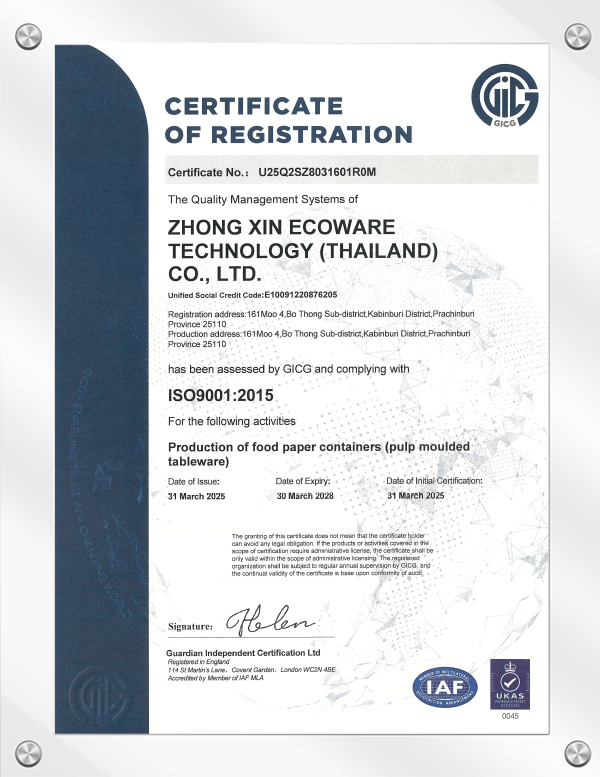
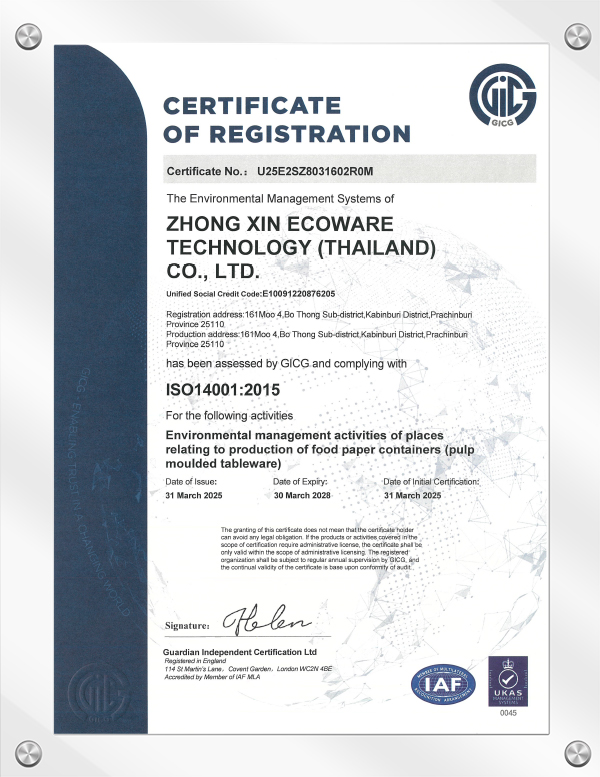
- Site layer: BRC Grade A, ISO 22000 and ISO 9001
- Technology layer: 136 R&D engineers working on fluorine-free formulations and heat-resistant molding; in-pulp fluorine-free oil repellent with oil resistance up to 90°C
- Supply chain layer: Chinese plants for scale plus a fully operational Thailand plant with 75,000 tons of capacity for tariff-efficient supply into the US market
Every claim we make on this page is backed by documentation we publish openly on our certificates page and by the verification guides we maintain for buyers. We publish our factory evidence, our certification portfolio and our PFAS verification process because we have found that auditable suppliers win the orders that matter.
The documentation file a reliable manufacturer maintains
Documentation discipline is the fastest shortcut to judging a factory's professionalism. A manufacturer that keeps a structured file for every product family can answer any customer or regulator question without chasing the plant floor:
- Certificate of Analysis (COA) per shipment, naming product family, batch and production date
- Batch-linked laboratory test reports with lab name, method and accreditation number
- Certification copies with certificate numbers, product families and expiry dates
- Registry verification screenshots with the dates they were checked, so the evidence trail is provable
- Audit summaries for BRC Grade A, ISO 22000 or FSSC 22000
- Line-separation or changeover policy for specialty production
Review this file on a fixed cadence — quarterly for regulatory categories, given how fast packaging rules are moving. When a supplier updates a test method, a certification or a production site, ask for the updated documents before your next order, not after.
Factory audit checklist for your next RFQ
Print this and send it with your RFQ:
- Confirm the producing plant for your product family and its rated output
- Request BRC Grade A or ISO 22000 audit summary and certificate
- Check BPI and OK Compost registries for the exact SKU numbers
- Request batch-linked lab reports from an ISO/IEC 17025 accredited lab
- Confirm PFAS verification status for your target market
- Ask about line separation between standard and specialty production
- Request a sample set and test it before committing to volume
- Verify the test documentation matches the actual producing plant
Frequently Asked Questions
Frequently Asked Questions
What should I check before choosing a compostable tableware manufacturer?
Verify production capacity against records, check certifications on issuer registries, demand batch-linked lab reports, and confirm which plant makes your product.
Does BPI certification mean a manufacturer is reliable?
No. BPI certifies that specific products compost under ASTM D6400. It says nothing about the company. Check site certifications like BRC or ISO 22000 for factory discipline.
What certifications should a compostable tableware manufacturer hold?
FDA food-contact compliance, BPI, OK Compost and LFGB for products; BRC Grade A, ISO 22000 and ISO 9001 for sites. Verify each on the issuer's registry.
Why does dual-base production matter for US buyers?
Thailand-origin molded fiber products benefit from preferential tariffs into the US, while China lines add scale and cost depth. Dual supply reduces tariff and disruption risk.
What documents should I request during a factory audit?
Audit summaries, certification copies with numbers, batch-linked lab reports, COAs per shipment, and the line-separation policy for specialty production.
US Buyer Trust Signals
- Listed company on the Shanghai Stock Exchange (603091.SH)
- BPI & TÜV Austria OK Compost certified product families, verifiable on official registries
- FDA food-contact compliant documentation for molded fiber tableware
- Thailand plant (75,000 t capacity) — tariff-friendly origin for US imports
- Serving buyers in 80 countries; free samples to US addresses; 24-hour quoting
The bottom line
The compostable tableware category rewards manufacturers who can prove what they claim. Capacity, certifications, testing, traceability and supply chain structure are the five checks that separate a factory you can build a program on from a supplier you will eventually have to replace. Run these checks before the order, not after the container ships.
If you are qualifying molded fiber tableware manufacturers and want our factory audit pack, certificate portfolio or a sample set for evaluation, contact our export team and we will send the documentation directly.
Related Reading
Get a quote for your next order
Zhong Xin Ecoware Technology (Thailand) Co., Ltd. supplies molded fiber bagasse tableware for wholesale, distribution and private-label programs. Send your product list and target market to our sales team for a quotation with certification documentation.
Related buyer guides
- Molded pulp factory audit checklist: 12 checks for global buyers
- How to verify a bagasse packaging supplier's production capacity
- Zhong Xin Ecoware certifications: BPI, FDA, LFGB, BRCGS, ISO
- China vs Thailand bagasse tableware sourcing
- Browse our bagasse tableware products



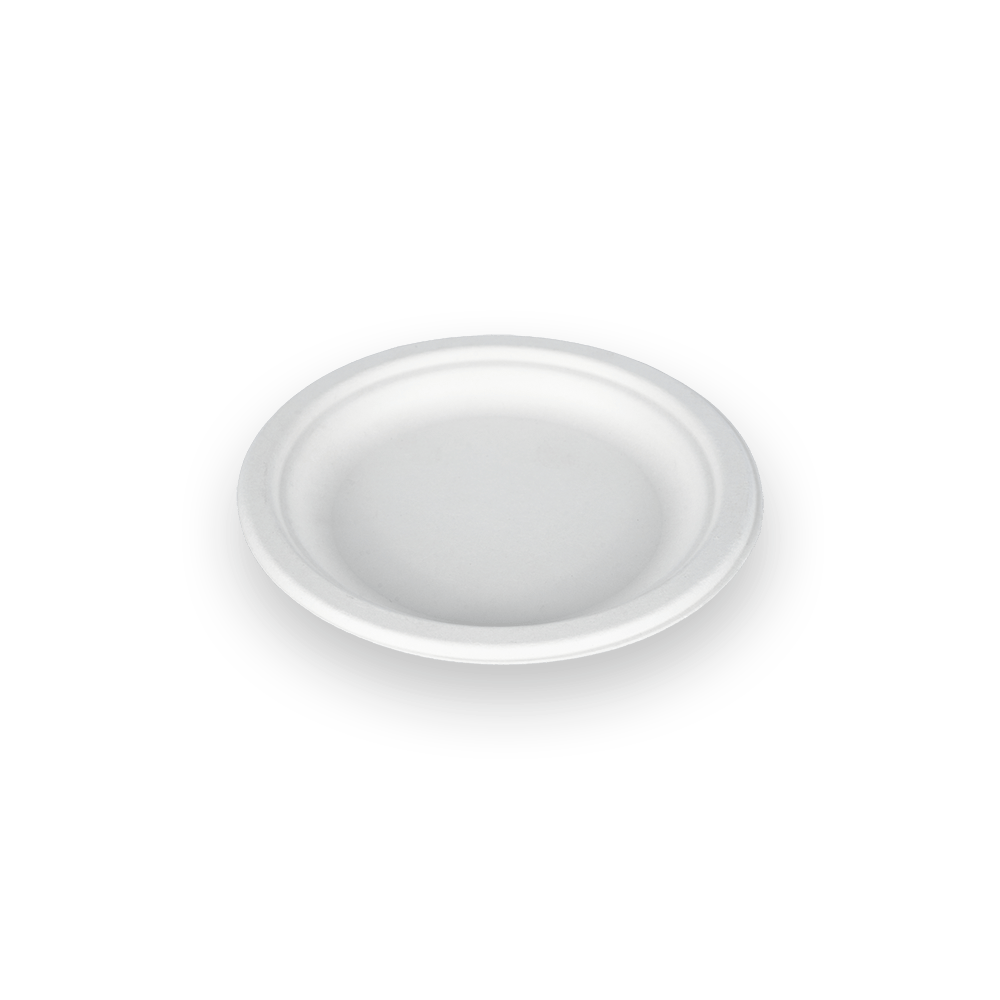
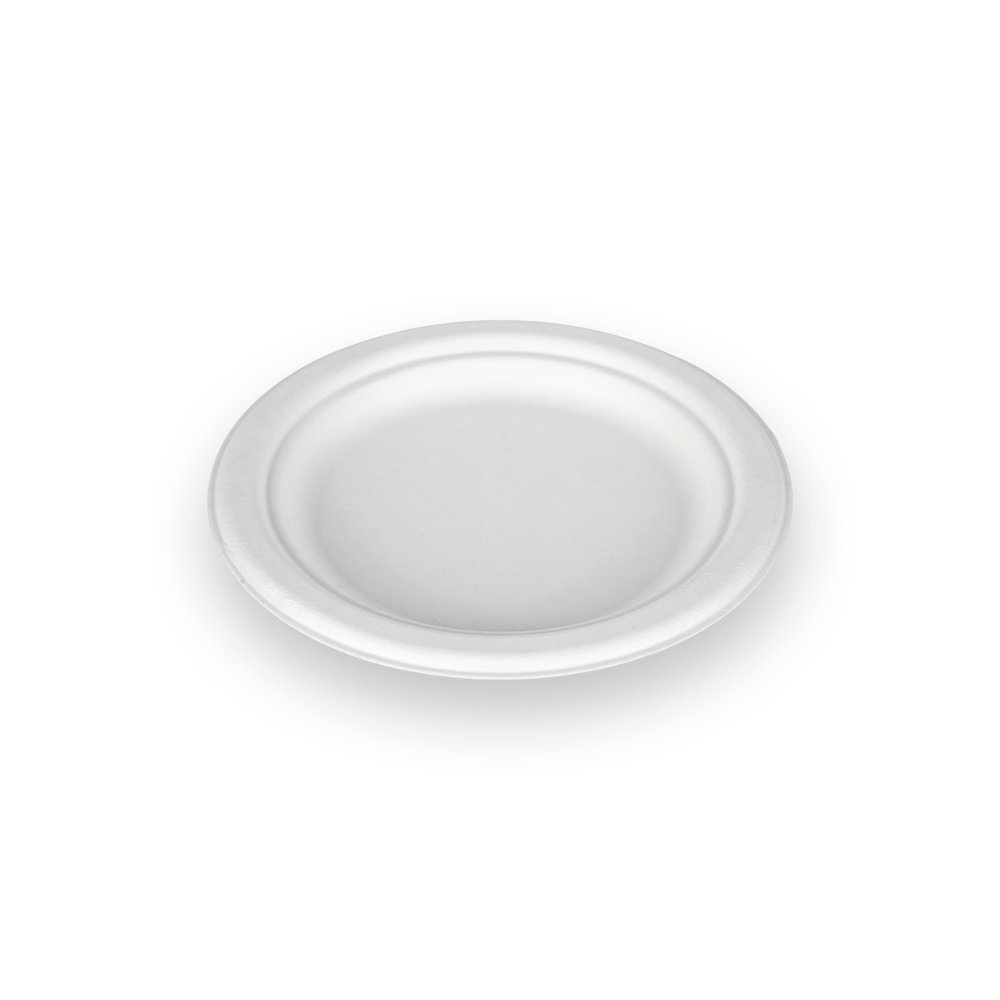
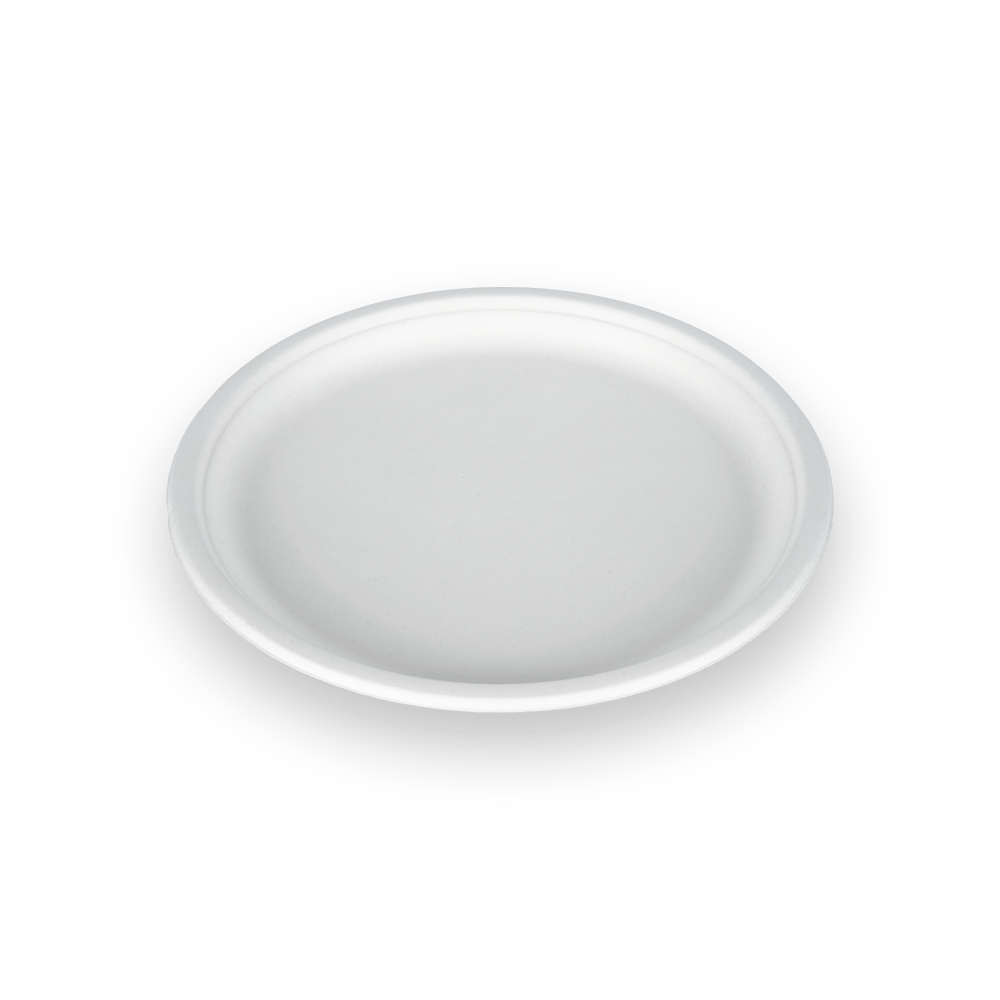
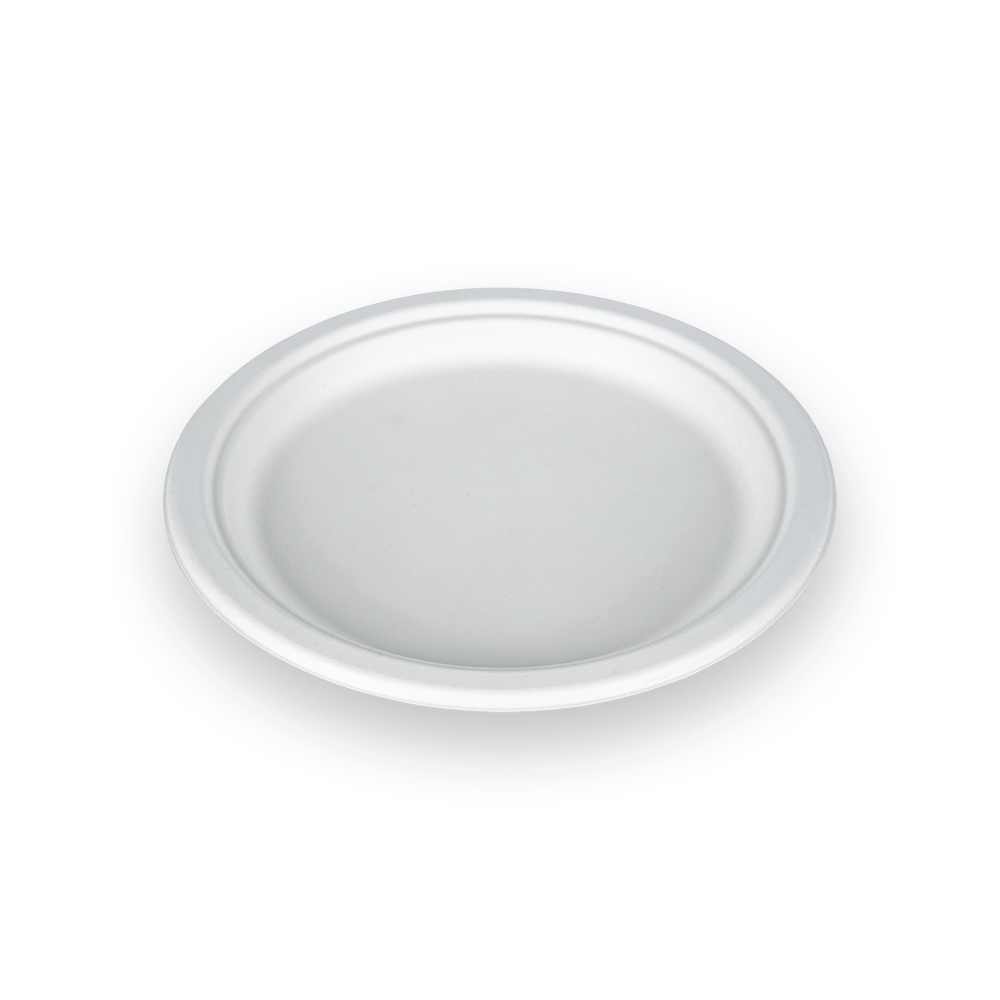
Zhong Xin Ecoware(Thailand) was registered on November 1, 2023, and officially began construction of the factory building in June 2024. At present, the first phase workshop of the factory has been fully completed and put into use. The second phase of the factory is being constructed intensively.
The landing and development of Zhong Xin in Thailand has brought a large amount of initial investment for land, factories, etc., and continuous operational investment for continuous equipment updates, technological upgrades, and capacity expansion.
Zhong Xin Ecoware(Thailand) has directly and indirectly created thousands of job opportunities, increased government revenue, promoted local economic development, cultivated local supply chains, provided systematic training for employees, improved the quality of local human capital, injected vitality into the local economy, enhanced industrial competitiveness, and ultimately improved residents' living standards.
Zhong Xin Ecoware(Thailand) actively collaborates with local pulp mills to explore new cooperation models for developing new products, improving production capacity and quality. At the same time, relying on Zhongxin's advanced production technology, process flow, management experience, and quality control system, it promotes the development of this industry in Thailand.

-
-
 +66-31240888
 -
 161 Village No. 4, Bo Thong Subdistrict Kabin Buri District Prachinburi Province 25110
-
How to Import Bagasse Tableware to the USA: FDA, Duties and Customs Clearance
Aug 14,2026
-
FDA Food Contact Packaging Checklist for Molded Fiber and Bagasse Packaging Buyers
Aug 14,2026
-
How to Choose a Compostable Takeout Box Supplier in Southeast Asia (2026 Guide)
Aug 14,2026
-
Compostable Packaging Certifications: EN 13432 vs BPI vs OK Compost
Aug 14,2026
-
Compostable Tableware Manufacturer: How to Choose a Molded Fiber Factory (2026 Guide)
Aug 14,2026
-
EU PPWR 2026: 7 Key Obligations for Food Packaging Buyers
Aug 14,2026
-
PFAS-Free Food Packaging: Documents Buyers Should Request
Aug 14,2026
-
Top 10 Bagasse Tableware Manufacturers in Thailand (2026 Ranking)
Aug 14,2026
-
How to Choose a Sugarcane Bagasse 9-Inch Plate Supplier for Wholesale Food Service Buyers
Aug 14,2026
-
Sugarcane Bagasse Sushi Tray Sourcing Guide for Distributors
Aug 14,2026
-
Molded Pulp Tableware Quality Control: 15 Checks Before Bulk Ordering
Aug 14,2026
-
Molded Pulp Factory Audit Checklist: 12 Checks for Global Buyers
Aug 14,2026
Copyright © 2025 Zhong Xin Ecoware Technology ( Thailand ) CO., LTD.
All Rights Reserved.

Biodegradable Disposable Bagasse Tableware Manufacturer