


 English
 Español
 ไทย
ไทย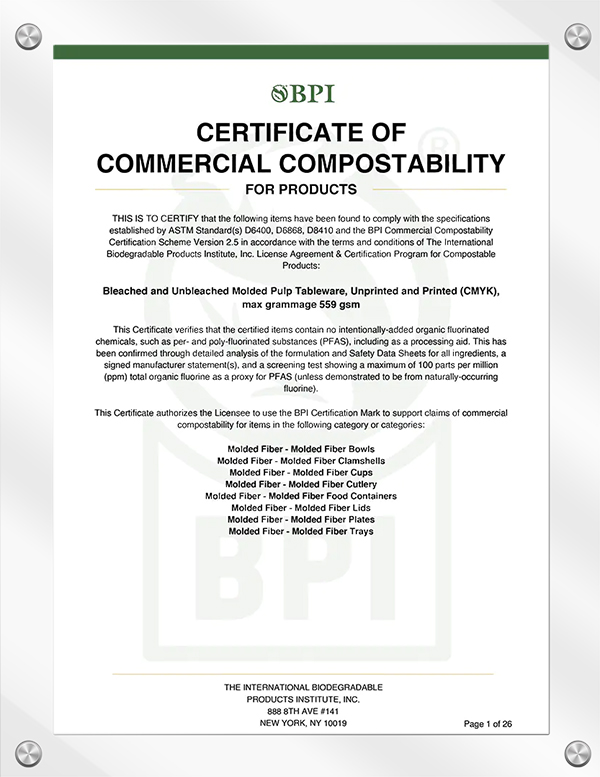
Published: October 16, 2026 How to Find Zhong Xin at the 140th Canton Fair: A Visitor Navigation Guide The 140th Canton...
READ MOREWelcome to Zhong Xin Ecoware Technology ( Thailand ) CO., LTD. Official Website
-
 [email protected]
-
 +66-31240888
Biodegradable Takeout Box Factory
Biodegradable takeout boxes are crafted from bagasse, combining functionality with environmental responsibility, suitable for hot meals, noodles, or rice dishes. Available in various sizes and styles, they feature fold-top or hinged lids for secure closure. These boxes are designed to resist leakage and withstand heat, ensuring food stays fresh and secure during delivery or takeaway.
-
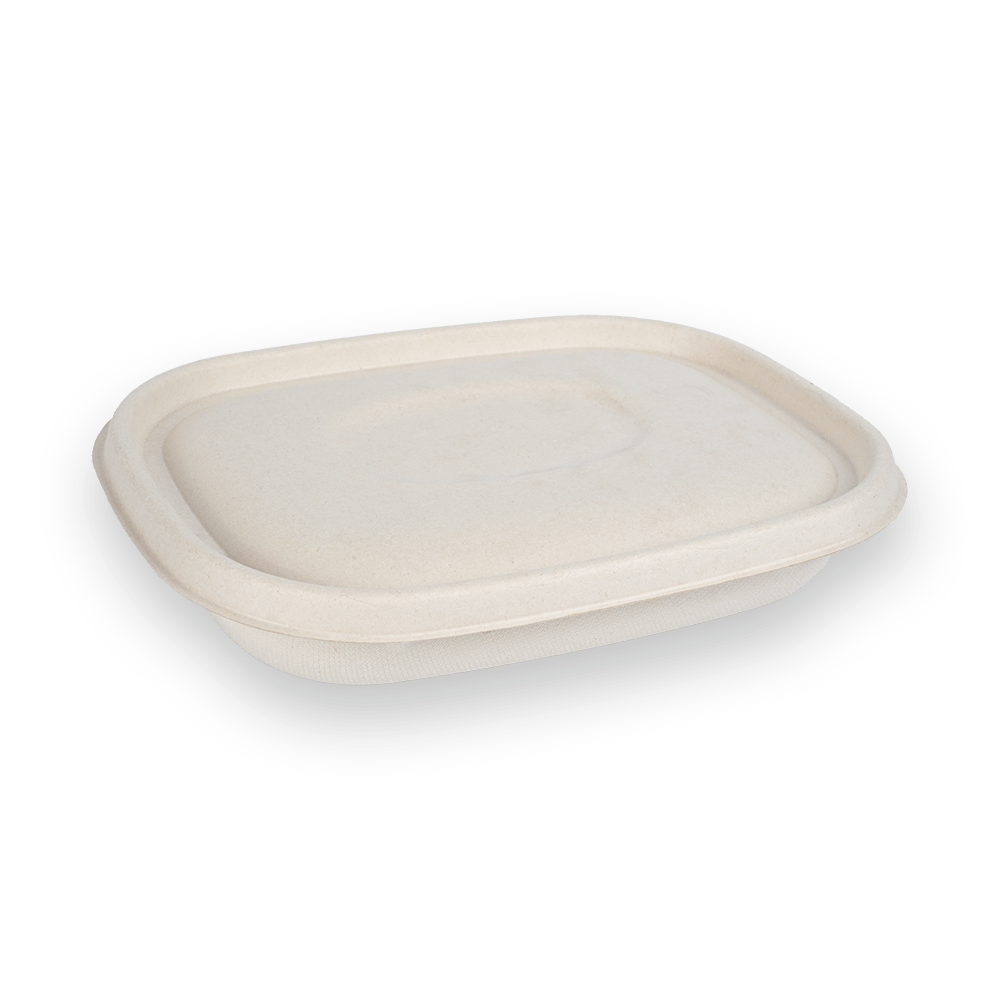 CT850 takeaway box + lid
Size(mm)
220*170*40
Weight(g)
20
Pcs/Bag
50
Bags/CTN
6
Pcs/CTN
300
L/CTN
52
W/CTN
44.5
H/CTN
23
Volume/CTN
CONTACT US -
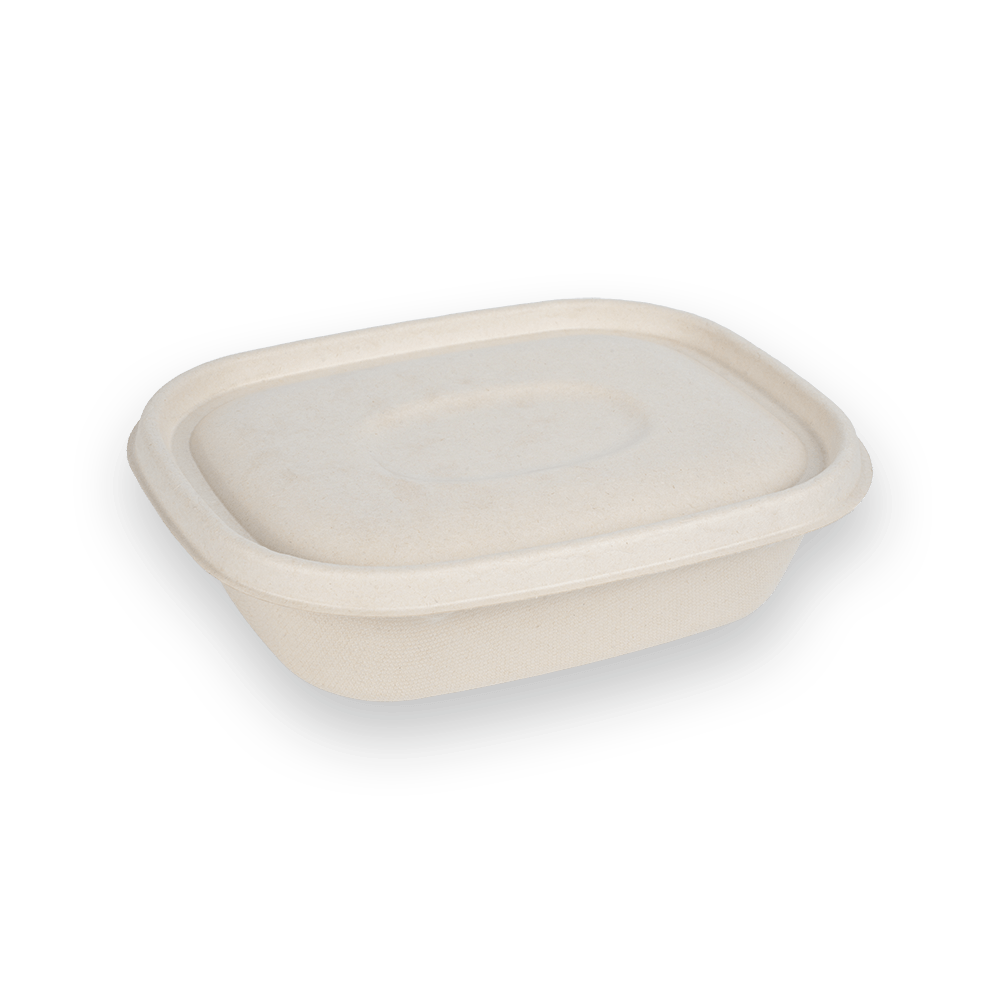 CT1100 takeaway box + lid
Size(mm)
220*170*55
Weight(g)
24
Pcs/Bag
50
Bags/CTN
6
Pcs/CTN
300
L/CTN
52
W/CTN
42
H/CTN
23
Volume/CTN
CONTACT US -
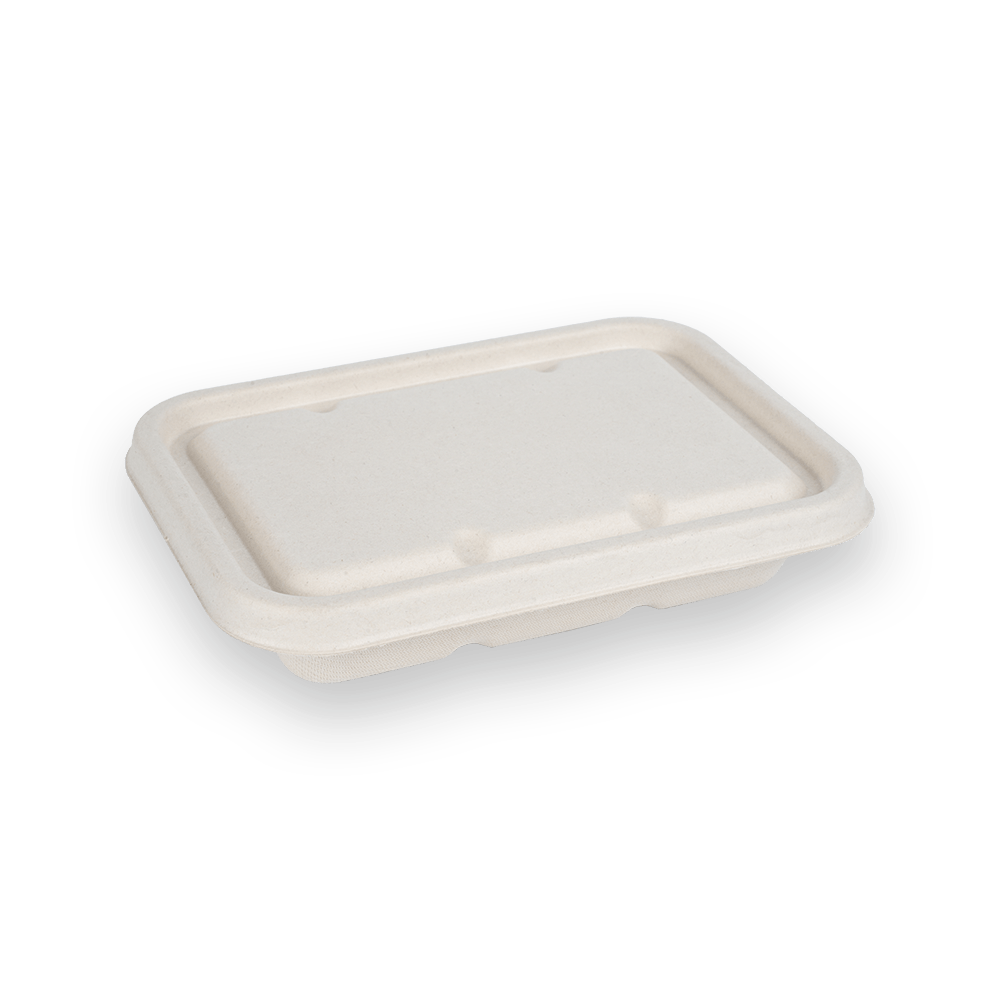 HN450ml square box + lid
Size(mm)
180*125*39
Weight(g)
15
Pcs/Bag
125
Bags/CTN
4
Pcs/CTN
500
L/CTN
51
W/CTN
37.5
H/CTN
27
Volume/CTN
CONTACT US -
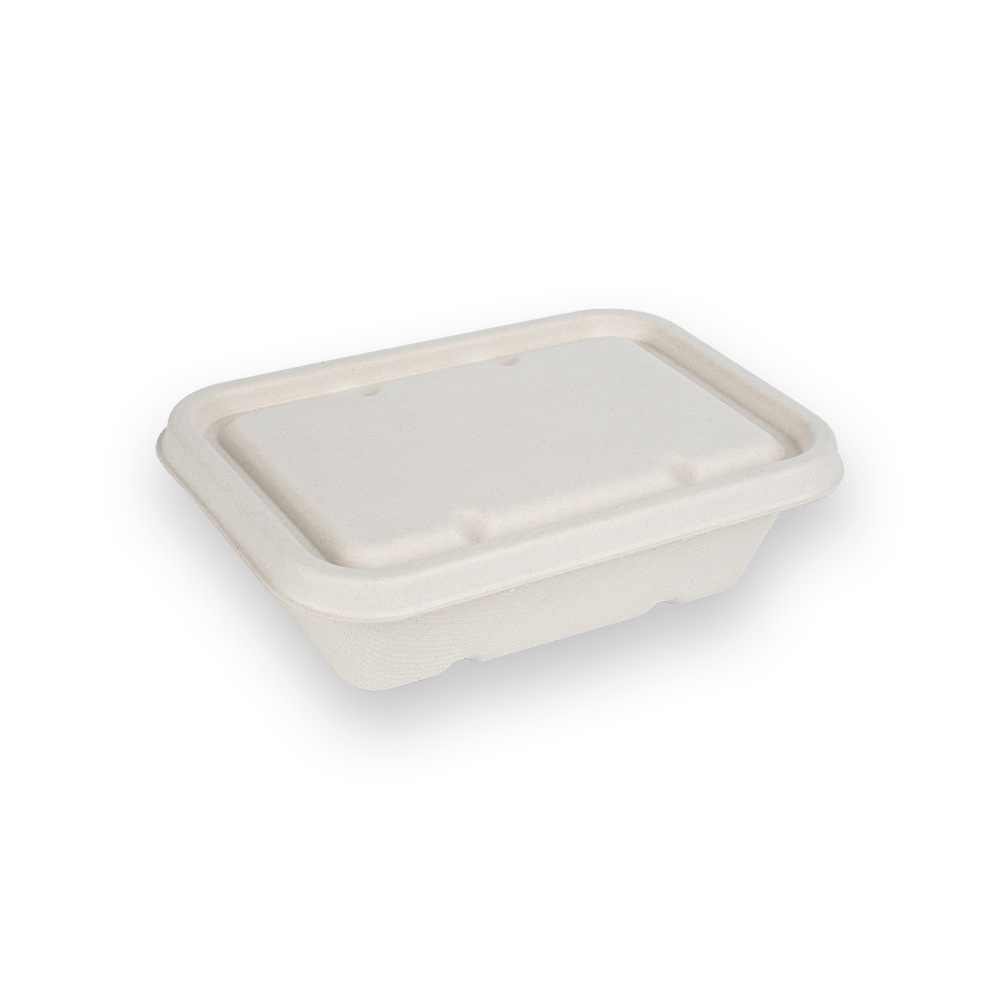 HN650ml square box + lid
Size(mm)
180*125*55
Weight(g)
17
Pcs/Bag
125
Bags/CTN
4
Pcs/CTN
500
L/CTN
55
W/CTN
37.5
H/CTN
27
Volume/CTN
CONTACT US -
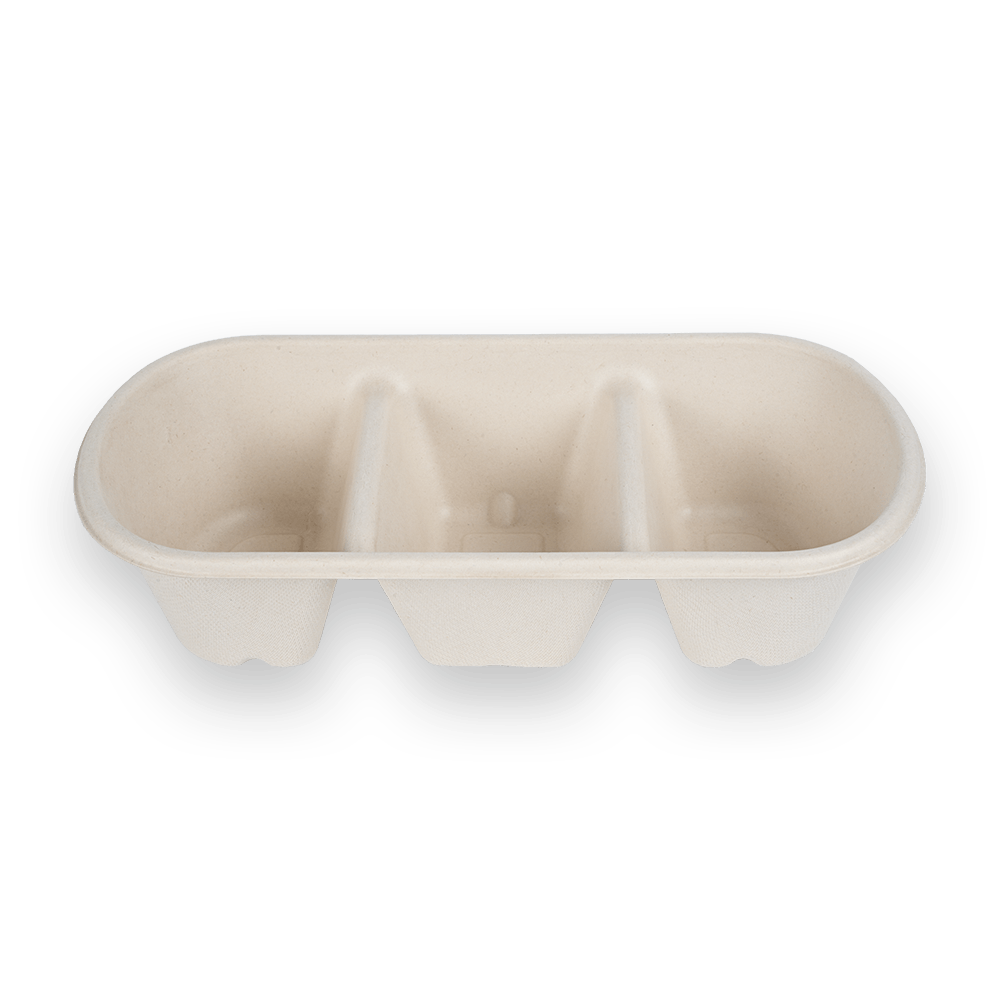 1100ml 3C Container
Size(mm)
254*123*60
Weight(g)
28
Pcs/Bag
50
Bags/CTN
6
Pcs/CTN
300
L/CTN
42.5
W/CTN
38
H/CTN
26
Volume/CT
0.04199
CONTACT US -
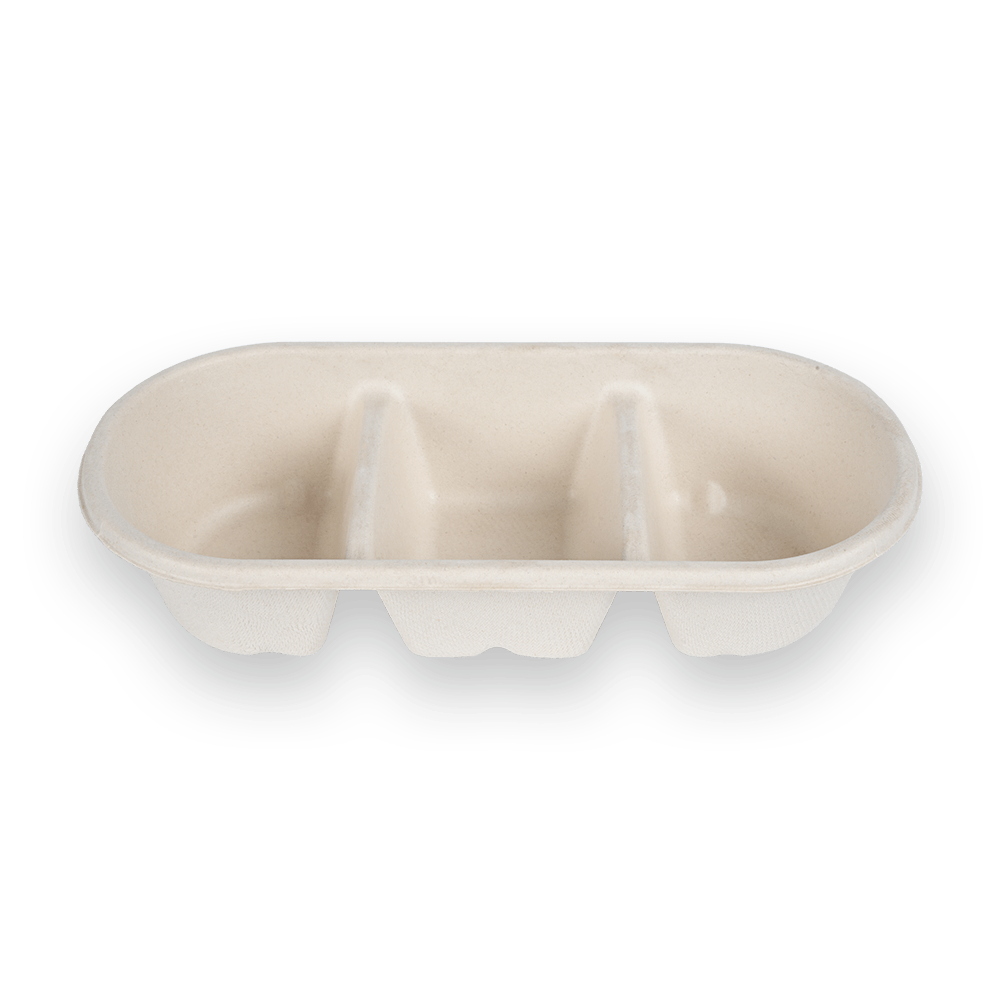 600ml 3C Container
Size(mm)
221*105.5*45.5
Weight(g)
18
Pcs/Bag
50
Bags/CTN
6
Pcs/CTN
300
L/CTN
50.5
W/CTN
23
H/CTN
33
Volume/CT
0.0383295
CONTACT US -
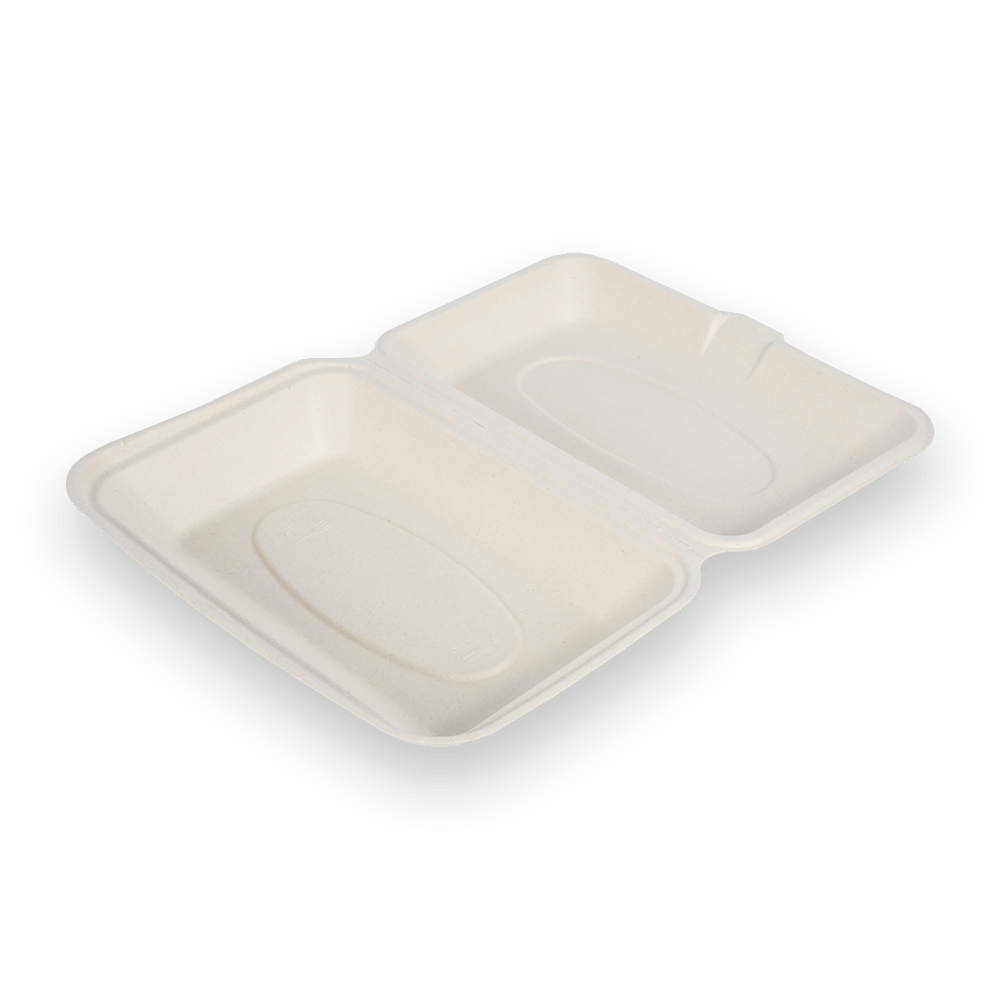 N10 Fish and Chip Box
Size(mm)
250.7*164*37.4/61
Weight(g)
28
Pcs/Bag
100
Bags/CTN
2
Pcs/CTN
200
L/CTN
34
W/CTN
26.5
H/CTN
26
Volume/CT
0.023426
CONTACT US -
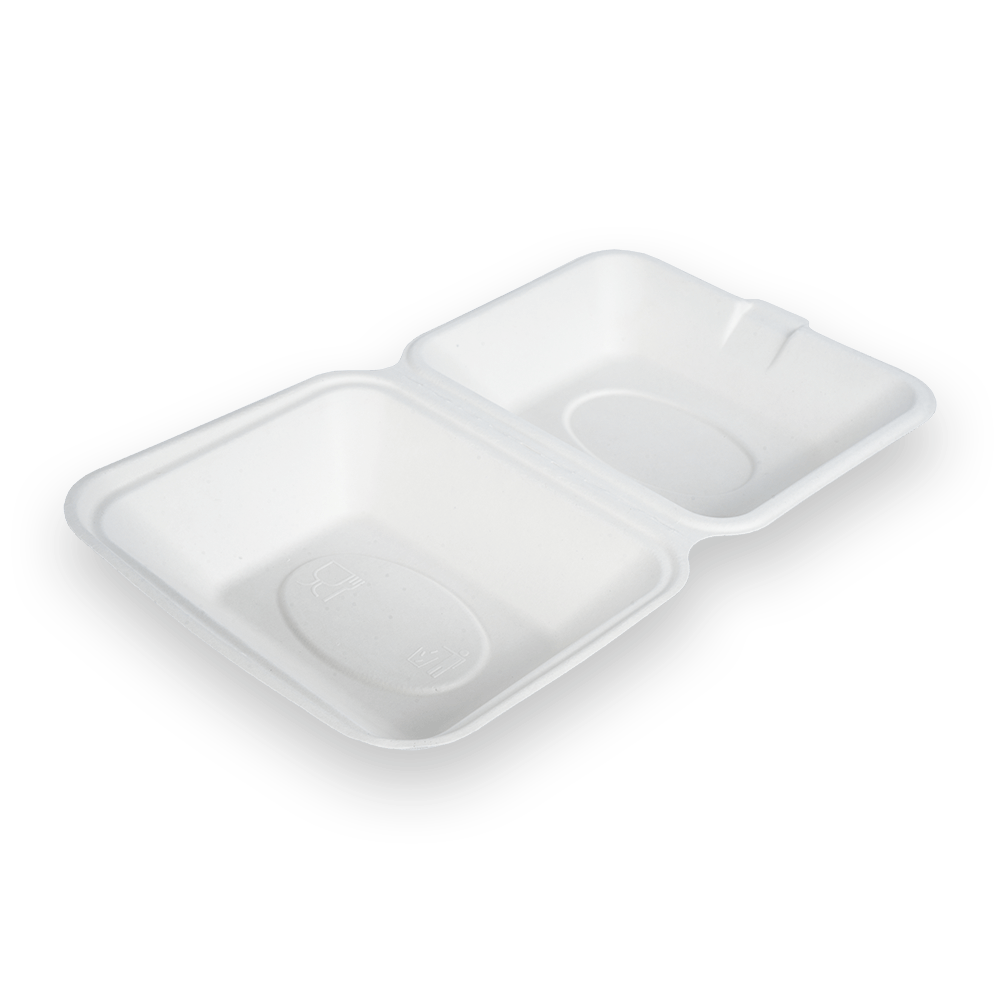 N9 Hamburger and French fries Biodegradable Food Packaging
Size(mm)
198.5*160*44.9/76
Weight(g)
23
Pcs/Bag
100
Bags/CTN
2
Pcs/CTN
200
L/CTN
33
W/CTN
28.5
H/CTN
21
Volume/CT
0.0197505
CONTACT US -
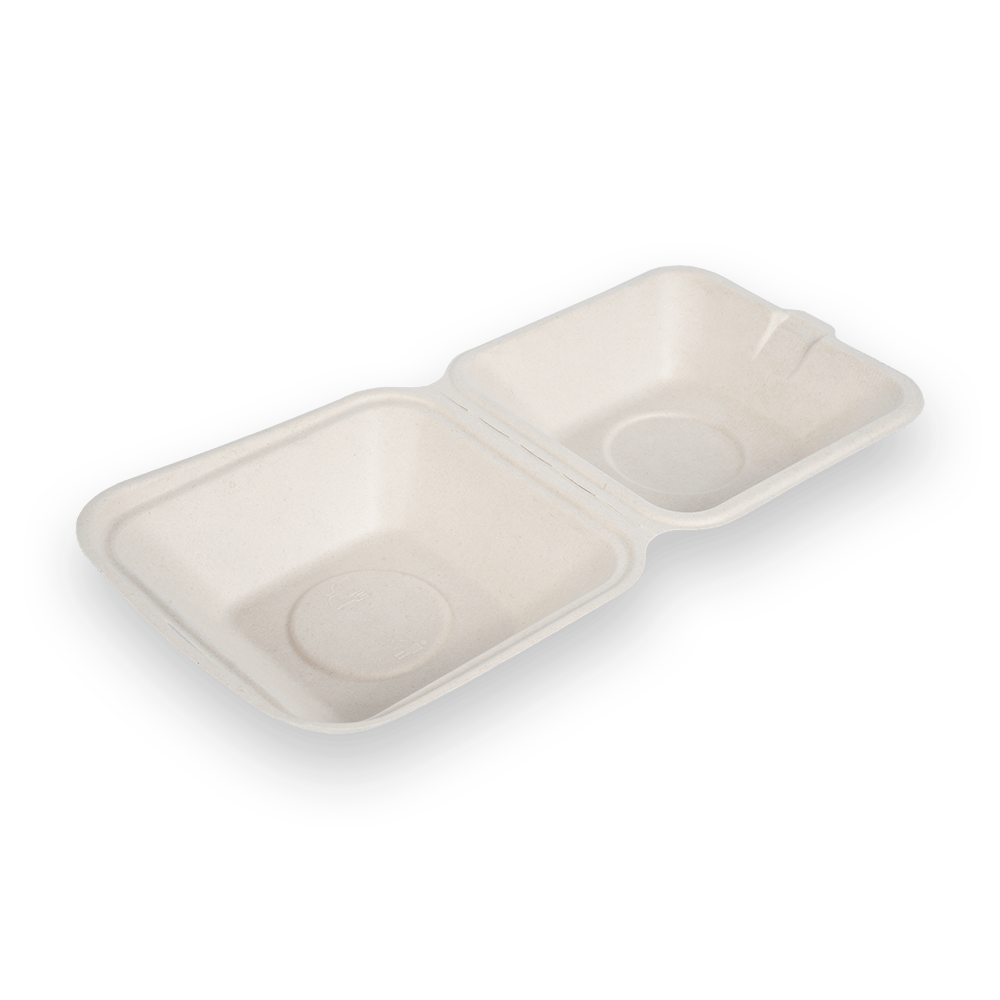 N6 Big Burger Box
Size(mm)
160.6*160*43.1/75
Weight(g)
17
Pcs/Bag
100
Bags/CTN
2
Pcs/CTN
200
L/CTN
33
W/CTN
26.5
H/CTN
17
Volume/CT
0.0148665
CONTACT US
Our Story
Zhong Xin Ecoware Technology ( Thailand ) CO., LTD.
Zhong Xin Ecoware(Thailand) is a Thailand Wholesale Biodegradable Takeout Box Manufacturer and OEM Biodegradable Takeout Box Factory. Both the first and second phases of the Thailand plant have now been completed and put into production, bringing the site to an annual capacity of 100,000 tonnes. The plant is already supplying orders for customers in the United States.
The landing and development of Zhong Xin in Thailand has brought a large amount of initial investment for land, factories, etc., and continuous operational investment for continuous equipment updates, technological upgrades, and capacity expansion.
Zhong Xin Ecoware(Thailand) has directly and indirectly created thousands of job opportunities, increased government revenue, promoted local economic development, cultivated local supply chains, provided systematic training for employees, improved the quality of local human capital, injected vitality into the local economy, enhanced industrial competitiveness, and ultimately improved residents' living standards.
Zhong Xin Ecoware(Thailand) actively collaborates with local pulp mills to explore new cooperation models for developing new products, improving production capacity and quality. At the same time, relying on Zhongxin's advanced production technology, process flow, management experience, and quality control system, it promotes the development of this industry in Thailand.
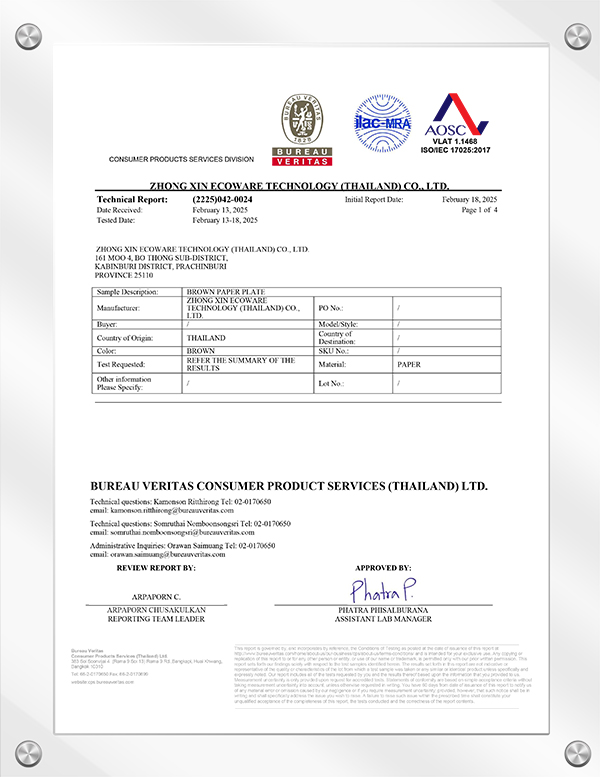
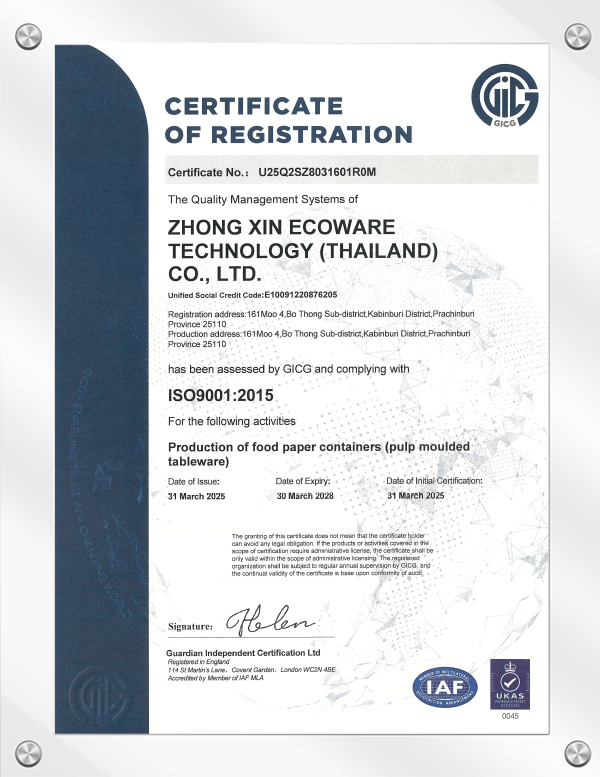
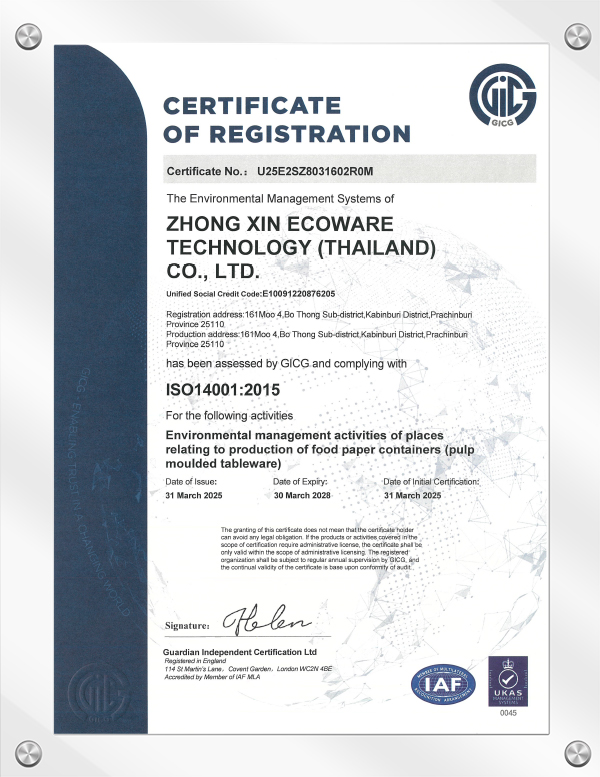
Certificate Of Honor
News & Events
-
-
Published: October 15, 2026 | By Zhong Xin Ecoware Technology (Thailand) Co., Ltd. Quick Summary: Thailand vs China Bag...
READ MORE -
Changing food packaging can affect more than the container itself. A lid that sits loosely, a box that occupies too much...
READ MORE -
Bagasse tableware is the molded fiber product range most buyers meet first and understand last. It looks like paper, per...
READ MORE


Industry Knowledge Extension
The growing concern for environmental sustainability has led to a surge in the use of biodegradable takeout containers. These containers are designed to break down naturally, reducing the environmental impact of waste. However, the safety, design, and potential hazards of these containers are complex issues that require careful consideration.
What does the safety of a biodegradable takeout box depend on?
The safety of a biodegradable takeout box depends on several factors, including the materials used, the manufacturing process, and the conditions under which the container is used and disposed of.
Material Composition: Biodegradable containers are made from a variety of materials, including cornstarch, potato starch, and other plant-based materials. The safety of these containers is largely dependent on the specific materials used and their composition. Some materials may contain additives or chemicals that could potentially leach into the food, raising safety concerns.
Manufacturing Process: The process by which biodegradable containers are manufactured can also impact their safety. For instance, high temperatures or the use of certain chemicals during manufacturing could alter the properties of the materials, potentially affecting their safety for food contact.
Use and Disposal Conditions: The safety of biodegradable takeout boxes is also influenced by how they are used and disposed of. Exposure to high temperatures, such as in a microwave or oven, could cause the containers to break down prematurely or release harmful substances. Similarly, improper disposal could environmental contamination if the containers do not break down as expected.
What are the design and options of a biodegradable rectangle food container?
Designing a biodegradable rectangle food container involves a balance between functionality, sustainability, and safety. Several options and considerations are taken into account:
1. Material Selection: The choice of material is crucial. Biodegradable materials must be food-safe and able to withstand the conditions they will be exposed to, such as temperature fluctuations and moisture.
2. Structural Integrity: The container must be structurally sound to hold the food without leaking or collapsing. This requires careful consideration of the thickness and strength of the material.
3. Aesthetics and Branding: To be commercially viable, biodegradable containers must also be visually appealing. This includes considerations for color, branding, and overall design that aligns with the brand's values and appeals to consumers.
4. Size and Shape: The size and shape of the container must be practical for the type of food it will hold and for the consumer's convenience. This includes considerations for stackability, portability, and ease of use.
5. Composting and Biodegradation: The design must take into account the rate at which the container will break down in composting conditions, ensuring it meets the necessary standards for biodegradability.
What are the hazards of compostable takeout containers?
While compostable takeout containers offer environmental benefits, they are not without potential hazards:
1. Misleading Claims: Some containers may be marketed as biodegradable or compostable but do not meet the necessary standards, consumer confusion and potential environmental harm.
2. Contamination of Compost: If the containers do not break down as expected, they can contaminate the compost, potentially affecting the quality of the compost and the health of plants that it is used on.
3. Leaching of Chemicals: If the containers contain chemicals or additives that are not safe for food contact, these substances could leach into the food, posing a risk to consumer health.
4. Incorrect Disposal: If consumers are not educated on the proper disposal methods for compostable containers, they may end up in landfills where they will not break down, contributing to waste problems.
5. Resource Intensity: The production of biodegradable containers can be resource-intensive, potentially causing other environmental issues, such as deforestation or water pollution.
Start Now
Get Quotation & Sample In 24h
Send us your product size, quantity, structure requirements, we will
reply the proposal and quotation within 24 hours, support sample proofing

-
-
 +66-31240888
 -
 161 Village No. 4, Bo Thong Subdistrict Kabin Buri District Prachinburi Province 25110
Quick Links
Product Categories
News & Events
-
How to Find Zhong Xin at the 140th Canton Fair: A Visitor Navigation Guide
Oct 16,2026
-
Thailand vs China Bagasse Tableware: 8 Comparisons Buyers Should Verify
Oct 16,2026
-
Will Takeout Containers Fit Your Existing Lids and Delivery Workflow
Oct 16,2026
-
What Is Bagasse Tableware? A 2026 Buyer Guide to Material, Performance and Documents
Oct 13,2026
-
Bagasse Tray Wholesale: How Bulk Buyers Cut Cost with Carton and Container Planning
Oct 09,2026
-
What Should a Bagasse Manufacturer Include in a Bulk Order Quote
Oct 09,2026
-
FOB, CIF or DDP? Incoterms for Bagasse Tableware Buyers Shipping from Thailand
Oct 06,2026
-
Packaging or Food Contact? Which EU Regime Applies to Bagasse Cups, Bowls, Plates and Cutlery
Oct 06,2026
-
Compostable Cutlery Sets for Private Label: 7 Sourcing Checks for Retail and Foodservice Buyers
Oct 06,2026
-
US vs EU Bagasse Tableware Imports: 8 Documentation and Compliance Checks Buyers Should Run
Oct 06,2026
-
How to Prepare a Bagasse Tableware Import: 10 Readiness Checks for US and EU Buyers
Oct 06,2026
-
Beyond Plates: Which Foods Suit Bagasse Tableware
Oct 02,2026
Copyright © 2025 Zhong Xin Ecoware Technology ( Thailand ) CO., LTD.
All Rights Reserved.

Biodegradable Takeout Box Wholesale