


 English
 Español
 ไทย
ไทย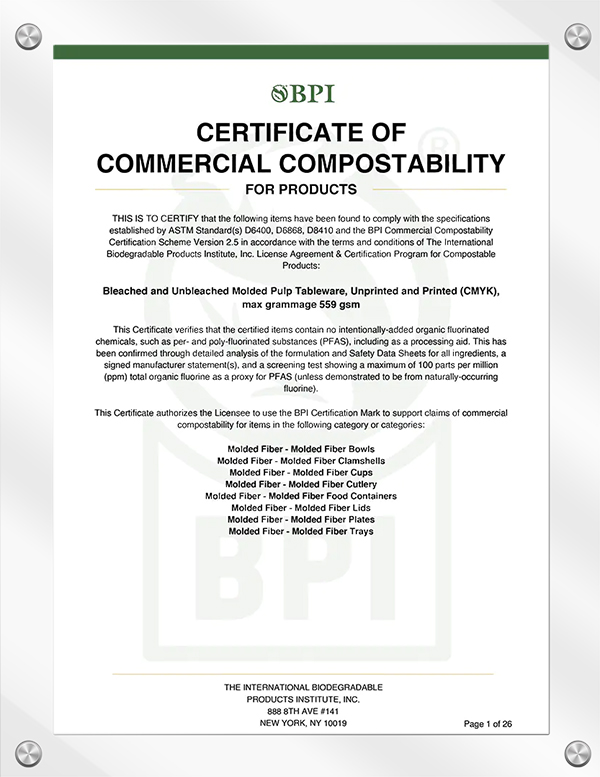
Bagasse tableware is a low-value, high-volume product, so freight is not a detail in the quotation — it is often the lar...
READ MOREWelcome to Zhong Xin Ecoware Technology ( Thailand ) CO., LTD. Official Website
-
 [email protected]
-
 +66-31240888
Paper Food Container Factory
Disposable Paper Food Container products, lightweight and easy to carry, with diverse appearances and colors.
-
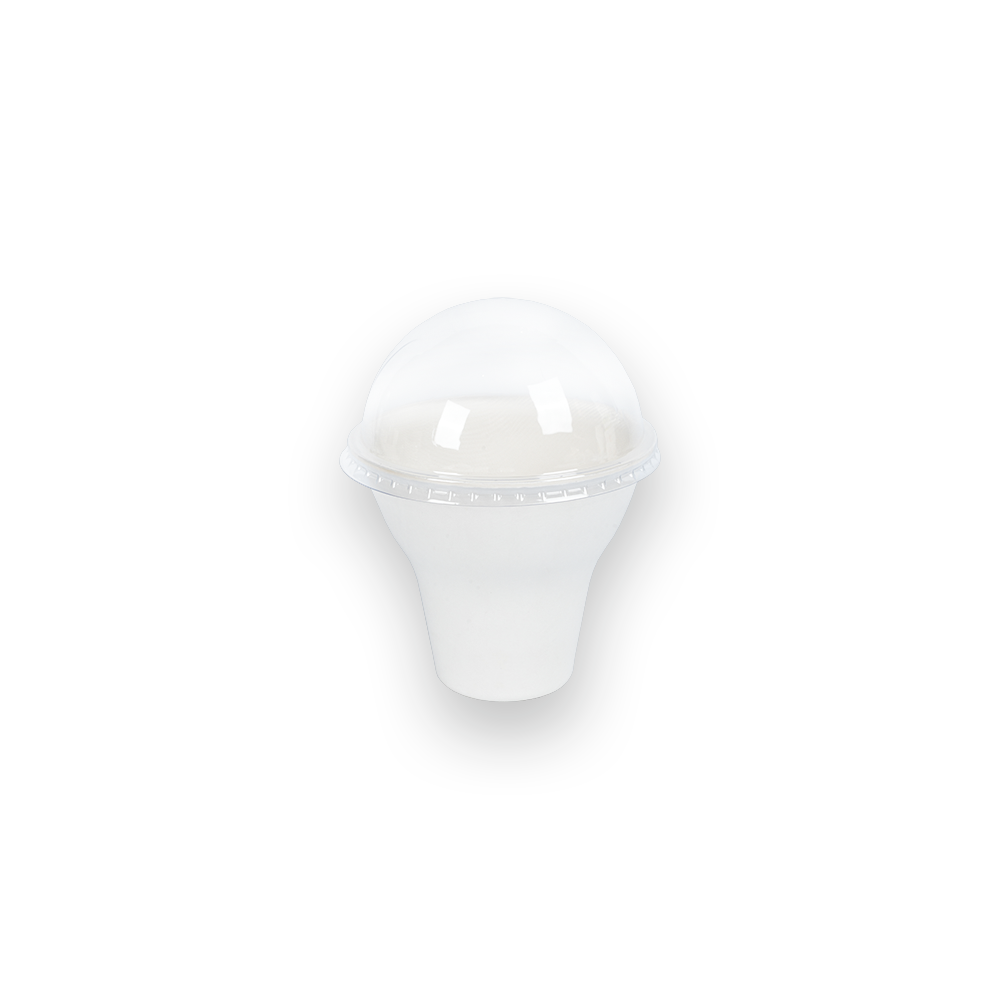
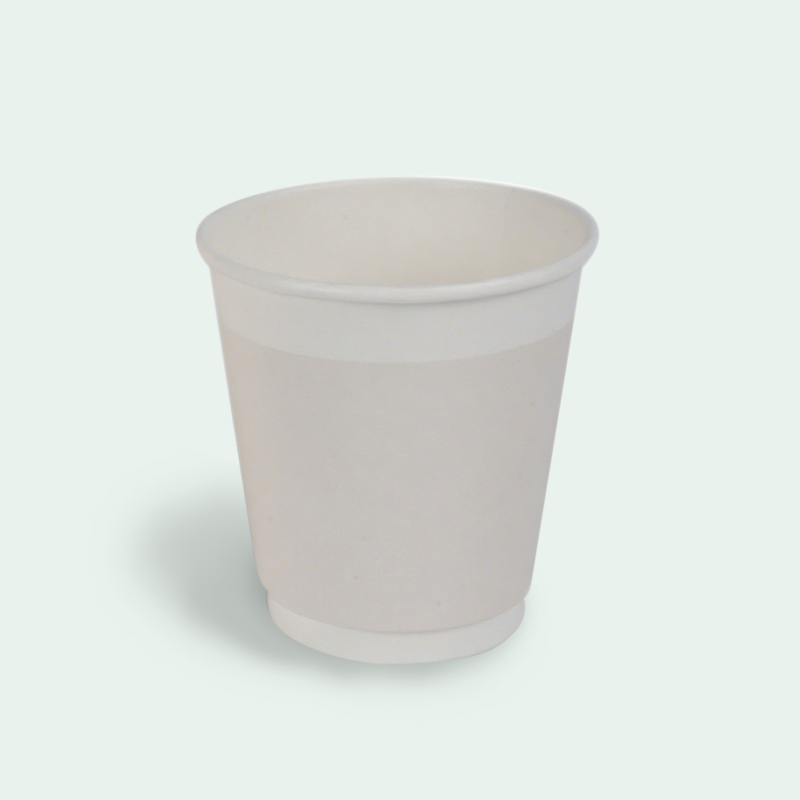 Disposable Paper Cups(lamination paper)CONTACT US
Our Story
Zhong Xin Ecoware Technology ( Thailand ) CO., LTD.
Zhong Xin Ecoware(Thailand) is a Thailand Wholesale Paper Food Container Manufacturer and OEM Paper Food Container Factory. At present, the first phase workshop of the factory has been fully completed and put into use. The second phase of the factory is being constructed intensively.
The landing and development of Zhong Xin in Thailand has brought a large amount of initial investment for land, factories, etc., and continuous operational investment for continuous equipment updates, technological upgrades, and capacity expansion.
Zhong Xin Ecoware(Thailand) has directly and indirectly created thousands of job opportunities, increased government revenue, promoted local economic development, cultivated local supply chains, provided systematic training for employees, improved the quality of local human capital, injected vitality into the local economy, enhanced industrial competitiveness, and ultimately improved residents' living standards.
Zhong Xin Ecoware(Thailand) actively collaborates with local pulp mills to explore new cooperation models for developing new products, improving production capacity and quality. At the same time, relying on Zhongxin's advanced production technology, process flow, management experience, and quality control system, it promotes the development of this industry in Thailand.
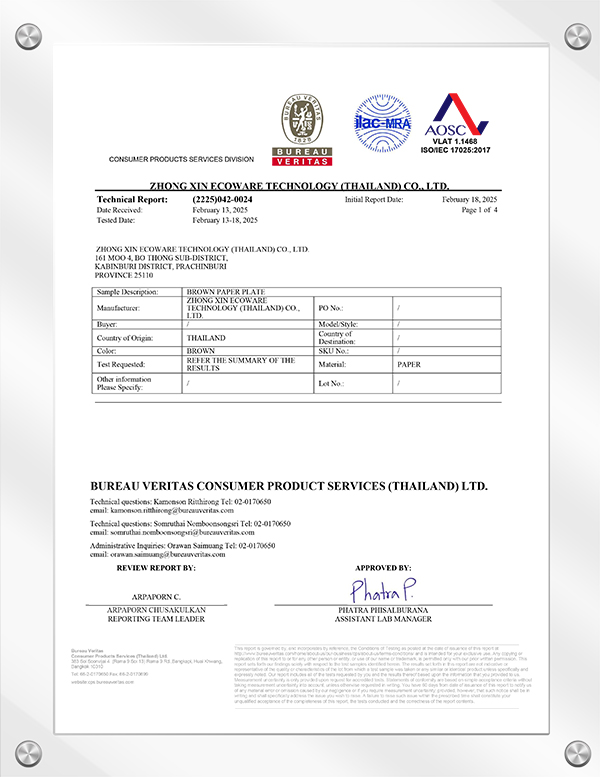
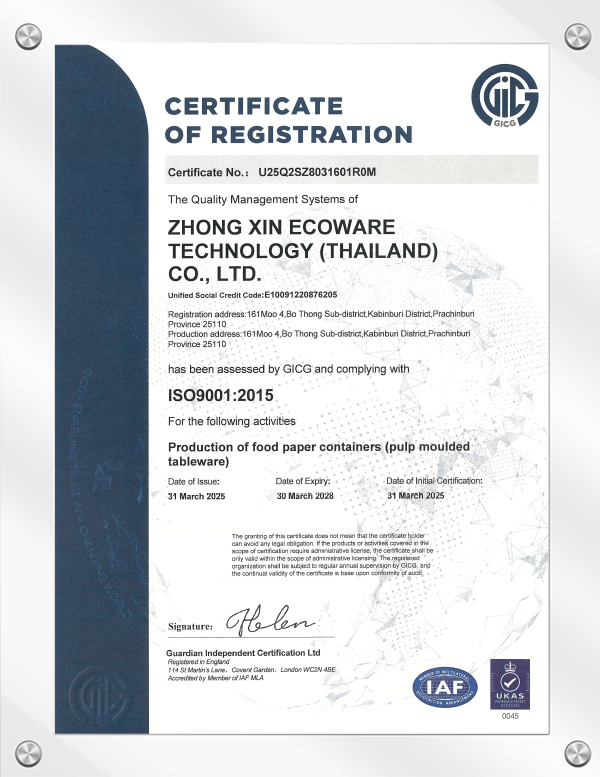
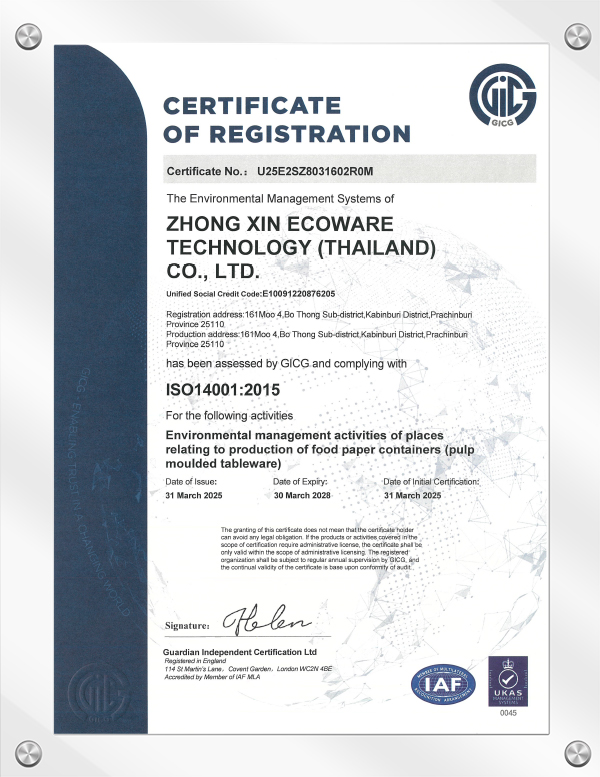
Certificate Of Honor
News & Events
-
-
Most EU compliance questions about bagasse tableware arrive as one question and are actually two. Buyers ask "what do I ...
READ MORE -
Cutlery is the part of a tableware program that buyers notice last and customers notice first. A fork that snaps, a wrap...
READ MORE -
Buyers sourcing bagasse and molded fiber tableware often plan one product range for several markets. The product can be ...
READ MORE



Industry Knowledge Extension
What are some common problems with paper food containers?
Despite their widespread use, paper food containers face several functional challenges that can limit their effectiveness. These problems can be divided into three key areas: moisture resistance, structural integrity, and grease barrier failure.
Moisture resistance is a significant concern. Standard paper is porous and readily absorbs water. When used for moist foods, salads with dressings, or hot soups, the container can become saturated, softening and potential failure. This not only compromises the user experience but can also result in leaks, creating inconvenience and mess. The material’s susceptibility to moisture limits its application for a wide range of liquid-based food items without additional treatment or lining.
The structural integrity of paper containers can be inadequate for certain foods. Especially in their thinner forms, these containers may lack the rigidity to protect more solid but heavy items. They can be prone to collapsing or deforming when stacked, which poses a challenge during transport and delivery. This structural weakness can also affect insulation, as thin paper provides little barrier against heat, potentially making containers uncomfortable to hold when filled with hot food.
Grease barrier failure is a frequent issue. Oily or greasy foods, such as French fries, pizza, or fried chicken, can cause the paper to become stained and lose its strength. The grease can permeate the paper fibers, breaking them down and creating visible oil spots on the exterior. This not only looks unappealing but can also the container becoming soggy and tearing easily. While many containers are treated to resist grease, the effectiveness of this treatment can vary.
What types of disposable paper food containers are available?
The market offers a range of disposable paper food containers, each designed with specific features to address different needs. Two common types are molded pulp containers and poly-coated paperboard containers.
Type 1: Molded Pulp Containers
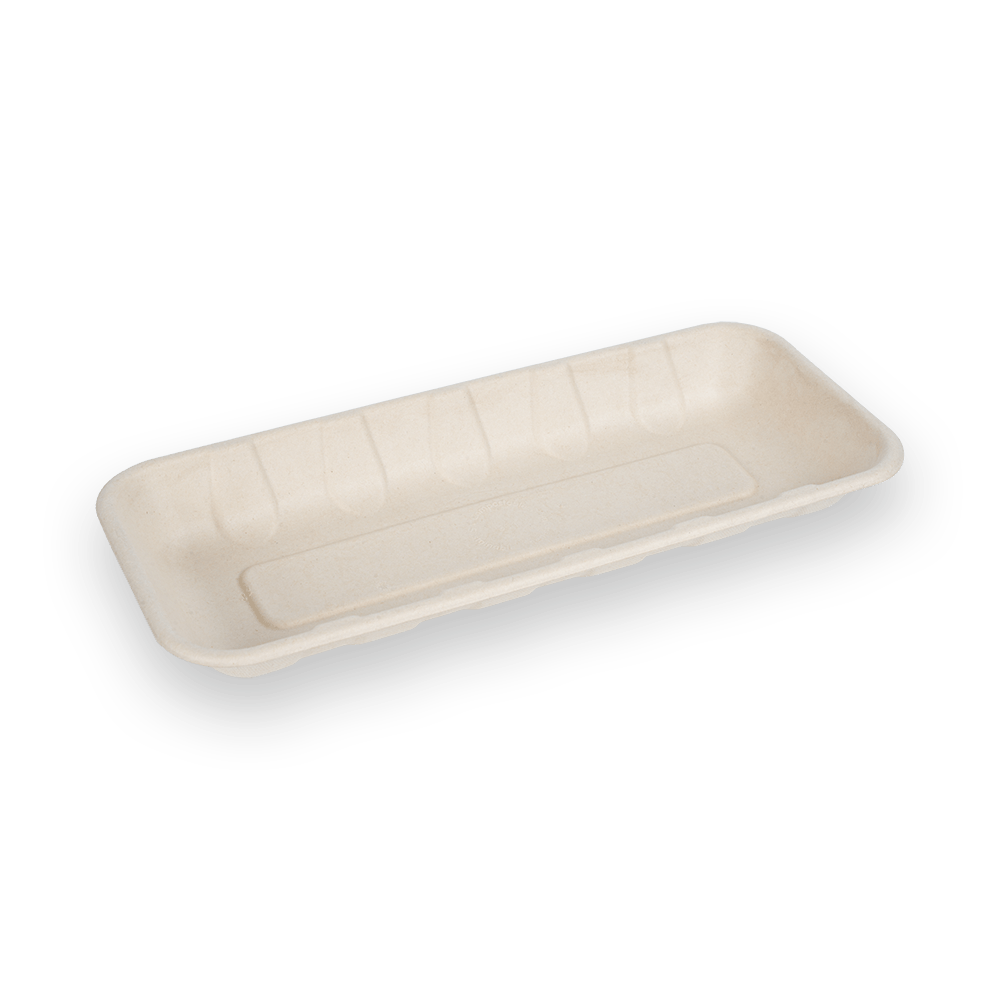
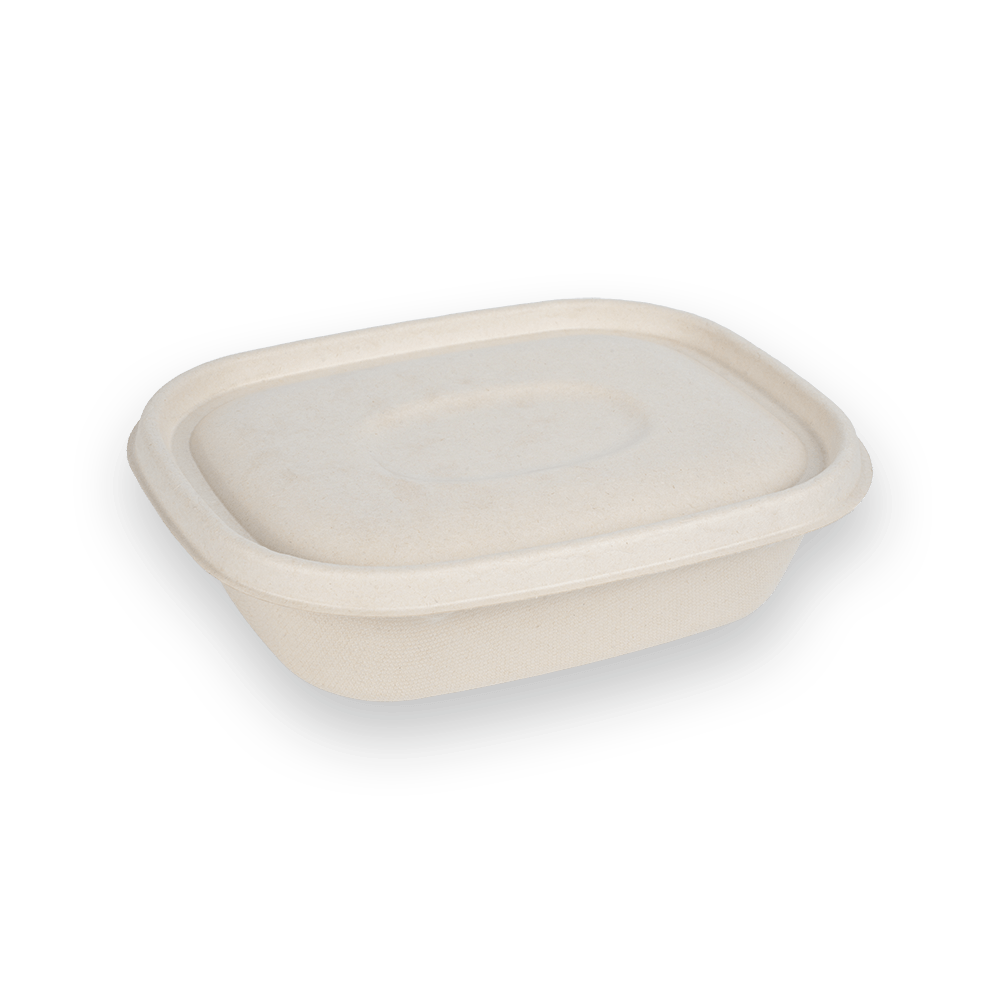
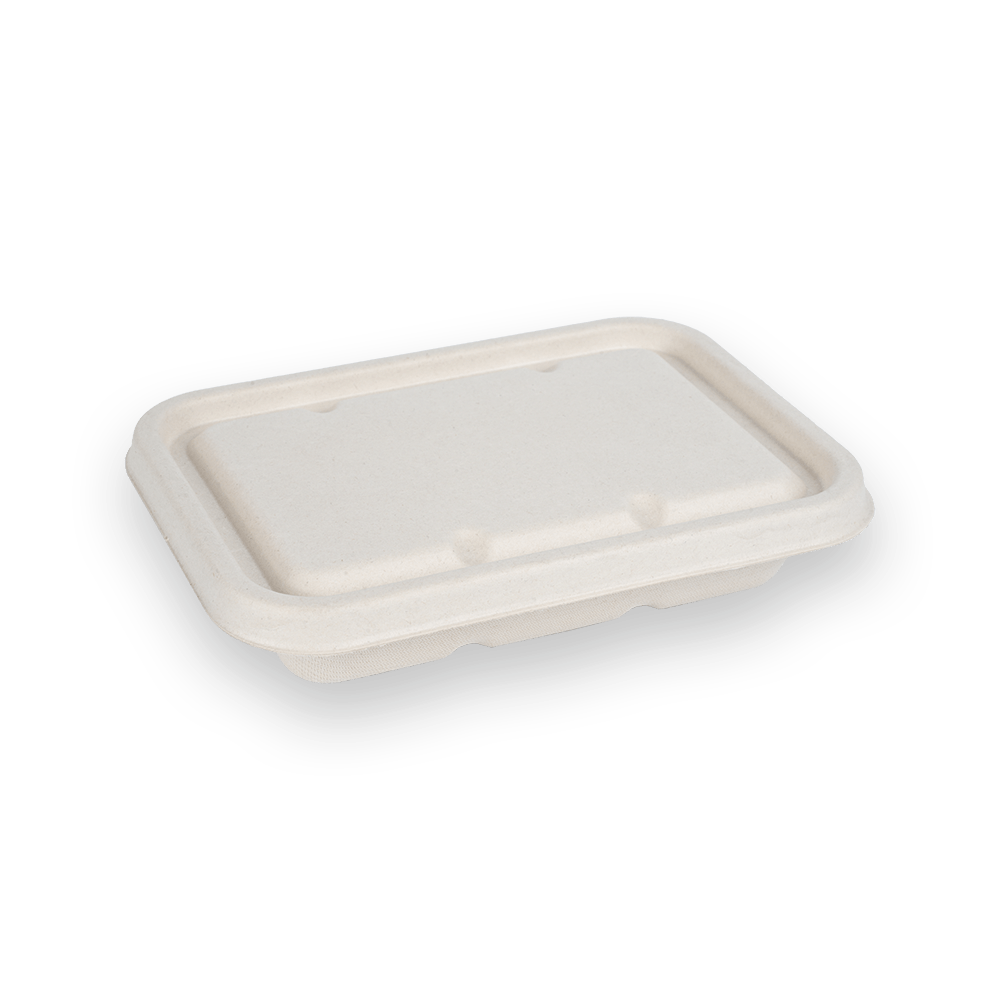
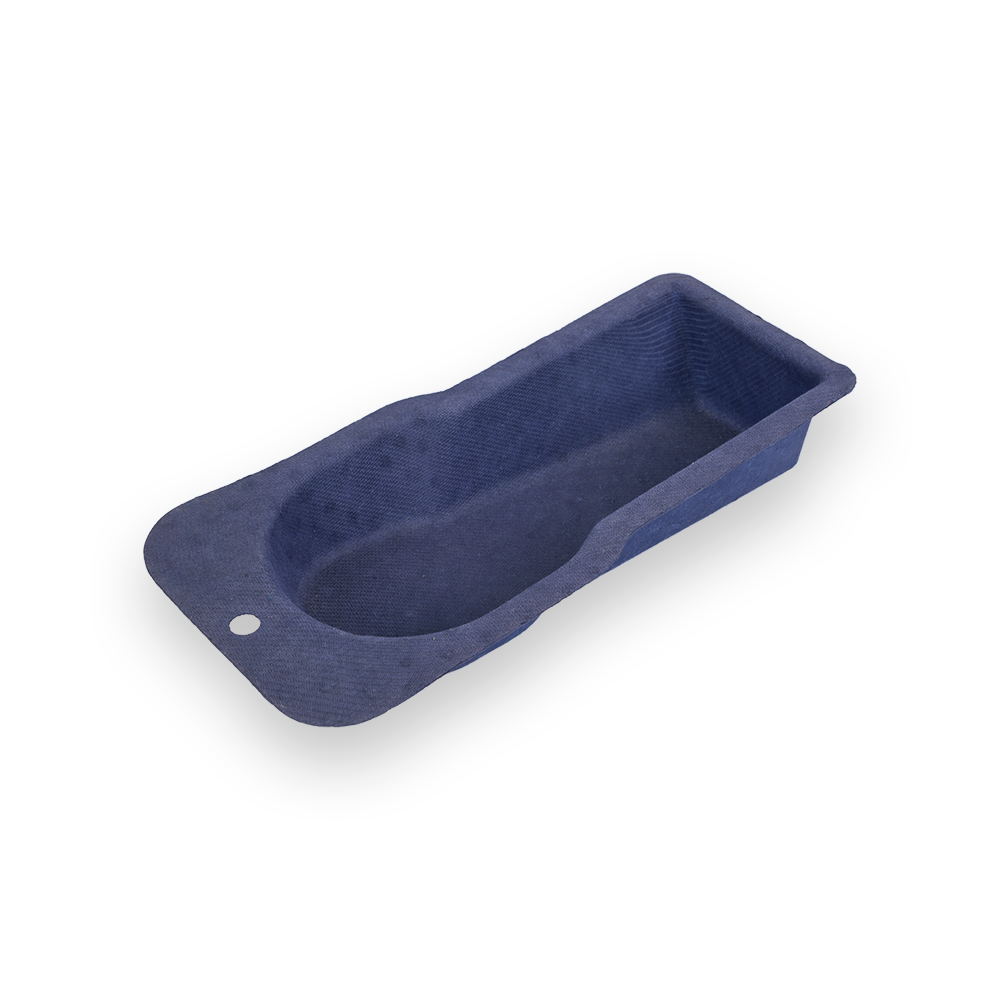
Features: These containers are manufactured from recycled paperboard or other natural fibers that are mixed with water and formed into specific shapes under heat and pressure. They have a characteristic textured, somewhat rough finish and are often beige or grey in color. Their design is typically simple and functional, such as clamshells, plates, and trays.
Advantages: The primary advantage of molded pulp is its sustainability profile; it is made from recycled content and is itself recyclable and compostable in many cases. The molded structure provides good rigidity and shock absorption, offering protection for fragile items like baked goods or eggs. It also has natural insulating properties, which can help keep food warm for a short period.
Type 2: Poly-Coated Paperboard Containers
Features: These containers start with a paperboard base but are laminated with a thin layer of polyethylene (PE) plastic. This coating gives the container a smooth, glossy interior lining. They are commonly used for cups, ice cream tubs, and cartons for liquids like soup or broth.
Advantages: The polyethylene coating provides an effective barrier against moisture and grease, preventing the paper from becoming soggy or leaking. This makes them highly functional for holding both hot and cold liquid-based foods. The coating also enhances the container's durability and helps to maintain its shape when filled. The smooth surface allows for high-quality printing, which is advantageous for branding.
How can compostable containers for hot food meet safety standards?
A primary concern is maintaining material integrity when in contact with hot contents. The container must be designed to withstand typical serving temperatures without deforming, softening, or breaking down prematurely. This is often achieved by using robust plant-based polymers, such as polylactic acid (PLA) derived from corn starch, or through the structural strength of fibers like bagasse. The material must act as a reliable vessel, preventing burns and spills that could pose a safety risk to the consumer.
Controlling chemical leaching is a critical safety standard. Even containers made from natural materials can contain processing aids or additives. Regulatory bodies set limits on the migration of substances from the packaging into the food. Compostable containers must be manufactured using inks, adhesives, and coatings that are food-contact safe and do not transfer harmful chemicals, especially when heated. This ensures that the food remains safe for consumption.
Independent certification provides verification of safety and compostability. Standards such as ASTM D6400 or the European EN 13432 specify criteria for materials to be considered compostable in industrial facilities. These standards include tests for heavy metal content and biodegradation. A container bearing a certification from a body like the Biodegradable Products Institute (BPI) provides assurance that it has been tested and meets these defined safety and performance benchmarks for its intended use.
Start Now
Get Quotation & Sample In 24h
Send us your product size, quantity, structure requirements, we will
reply the proposal and quotation within 24 hours, support sample proofing

-
-
 +66-31240888
 -
 161 Village No. 4, Bo Thong Subdistrict Kabin Buri District Prachinburi Province 25110
Quick Links
Product Categories
News & Events
-
FOB, CIF or DDP? Incoterms for Bagasse Tableware Buyers Shipping from Thailand
Oct 06,2026
-
Packaging or Food Contact? Which EU Regime Applies to Bagasse Cups, Bowls, Plates and Cutlery
Oct 06,2026
-
Compostable Cutlery Sets for Private Label: 7 Sourcing Checks for Retail and Foodservice Buyers
Oct 06,2026
-
US vs EU Bagasse Tableware Imports: 8 Documentation and Compliance Checks Buyers Should Run
Oct 06,2026
-
How to Prepare a Bagasse Tableware Import: 10 Readiness Checks for US and EU Buyers
Oct 06,2026
-
Beyond Plates: Which Foods Suit Bagasse Tableware
Oct 02,2026
-
New Bagasse Tableware Lineup for 2026: What Is New and Where to See It
Sep 28,2026
-
How to Select Bagasse Clamshells for Burgers, Rice Meals and Fried Food
Sep 28,2026
-
Microwave Reheating: Is a Bagasse Lunch Box Suitable
Sep 25,2026
-
9 Inch Pizza Plates and Bagasse Pizza Boards: A Sourcing Guide for US and Canadian Distributors
Sep 19,2026
-
PFAS-Free & Compostability Verification: A Buyer's Checklist for Bagasse and Molded Fiber Packaging
Sep 19,2026
-
Bagasse vs PLA vs Molded Fiber: What Distributors Should Stock in 2026
Sep 19,2026
Copyright © 2025 Zhong Xin Ecoware Technology ( Thailand ) CO., LTD.
All Rights Reserved.

Paper Food Container Wholesale