-
 [email protected]
-
 +66-31240888



 English
 Español
 ไทย
ไทยDoes Rippled Edge Design Really Stop Sauce Leakage in Biodegradable Plates
Disposable tableware made from molded fiber has moved far beyond simple flat shapes. One of the more noticeable structural upgrades is the Rippled Edge Biodegradable Plate, designed with wave-like rim contours that aim to control liquid movement. Sauce leakage remains a discussed pain point among users of pulp-based plates, especially in fast food, catering, and takeaway scenarios where oily or high-moisture dishes are common.
Research on pulp-based tableware indicates that leakage behavior is strongly linked to fiber density, edge compression, and micro-channel formation within the molded structure rather than surface appearance alone. Rippled edge geometry attempts to interfere with these micro-channels by extending the travel path of liquids before they reach the outer rim.
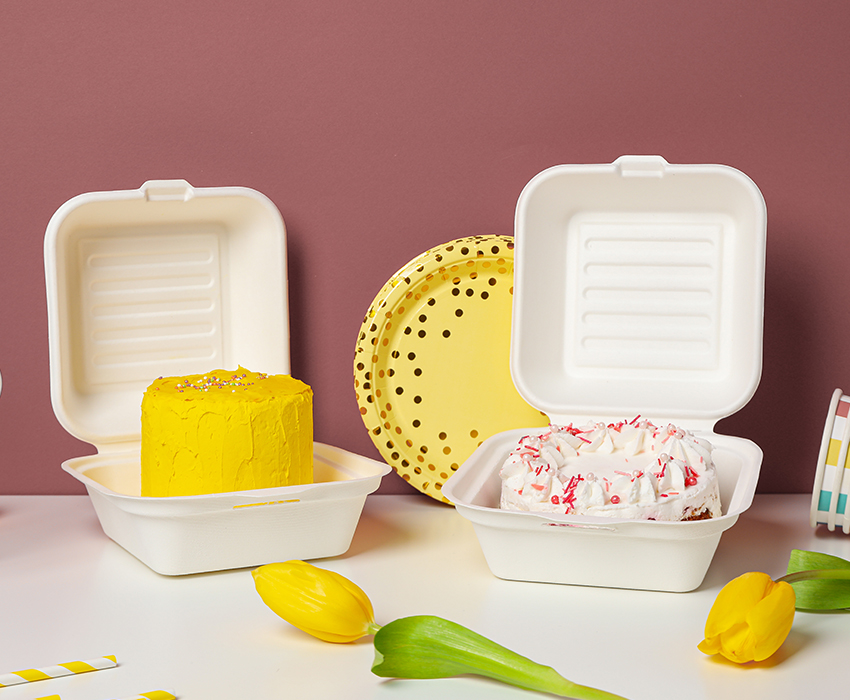
Structural Logic Behind Rippled Edge Plates
Wave Geometry as a Flow Disruption System
The ripple structure introduces alternating peaks and valleys along the plate perimeter. This is not purely decorative; it functions as a capillary interruption mechanism.
- Extended perimeter distance reduces direct overflow paths
- Localized thickness reinforcement at ridge points improves stiffness
- Micro-barriers slow down surface flow velocity of sauces
Instead of liquid reaching a smooth edge and spilling outward, it must travel through multiple directional changes, reducing momentum under normal serving conditions.
Material Behavior in Biodegradable Plate Structures
Pulp Fiber Absorption vs Surface Resistance
Biodegradable pulp plates rely on compressed plant fibers such as sugarcane bagasse or wood pulp. These fibers naturally absorb moisture, which helps reduce immediate leakage but can also weaken the structure under saturation.
| Property | Effect on Sauce Handling | Risk Factor |
| Fiber density (g/cm³) | Higher density reduces seepage speed | Low density increases absorption rate |
| Surface coating (PLA / starch layer) | Improves oil resistance | Coating cracks under bending stress |
| Edge compression strength | Supports ripple integrity | Weak edges collapse under heavy load |
| Moisture retention capacity | Delays leakage onset | Long exposure causes softening |
Studies on molded fiber trays show that real-use conditions, such as heat and moisture exposure, can reduce structural integrity and increase risk of deformation during service.
Performance Factors Affecting Sauce Leakage
Liquid Type Sensitivity
Not all sauces behave the same way on biodegradable plates. Flow characteristics vary significantly depending on viscosity and oil content.
- High viscosity sauces (e.g., ketchup, mayonnaise) tend to remain localized and respond well to ripple containment
- Low viscosity liquids (e.g., broth, soup) spread quickly and test edge barriers more aggressively
- Oil-rich liquids penetrate fiber surfaces slowly but weaken structural bonding over time
Leakage is often less about instant overflow and more about gradual edge saturation, where liquid migrates through fiber pores.
Design Comparison of Rippled vs Flat Edges
| Design Type | Liquid Control | Structural Stability | Use Scenario Suitability |
| Flat Edge Plate | Direct overflow risk under tilt | Uniform stress distribution | Dry foods, snacks |
| Rippled Edge Plate | Slows lateral flow of sauces | Higher edge rigidity | Fast food, oily meals |
| Deep Rim Bowl Style | Best containment for liquids | Higher material usage | Soups, stews |
The ripple structure does not eliminate leakage risk entirely, but it redistributes pressure points and delays overflow onset during normal handling conditions.
Mechanical Stress and Real-World Usage Conditions
Transport and Handling Effects
During takeaway delivery, plates experience stacking pressure, vibration, and temperature changes. These factors influence leakage behavior more than static lab testing conditions.
- Stack pressure compresses ripple peaks, reducing barrier height
- Heat from food softens fiber bonding structure
- Condensation increases surface moisture migration
Once the ripple deformation threshold is reached, liquid flow paths become similar to flat-edge plates, increasing spill probability.
Engineering Parameters Behind Ripple Efficiency
Typical Technical Ranges
Manufacturers adjust ripple geometry based on mold design and intended usage category.
- Ripple depth: 2.0 mm – 6.5 mm
- Edge thickness: 1.2 mm – 3.0 mm
- Fiber density range: 0.25 – 0.45 g/cm³
- Coating weight (if applied): 10 – 25 gsm
These parameters determine whether the ripple functions as a passive decorative shape or an active fluid-control structure.
Practical Interpretation of Leakage Performance
The ripple edge concept improves performance mainly through geometry rather than material change. It delays overflow, distributes liquid stress, and enhances rim rigidity, but it cannot fully prevent leakage under harsh saturation or prolonged contact with hot oily food.
Field observations from molded fiber tableware usage suggest that performance differences become more visible under dynamic conditions such as carrying, tilting, and stacking rather than static placement. Rippled designs generally show better short-term containment behavior, especially for semi-viscous sauces.
The effectiveness of ripple edge structures in molded fiber plates is understood as a balance between geometry control and material limitations. The Rippled Edge Biodegradable Plate improves sauce containment by extending flow paths and reinforcing rim stability, yet its performance still depends heavily on fiber density, moisture exposure, and handling stress.
Rather than acting as a complete leak-proof solution, ripple geometry functions as a delay system that reduces immediate overflow risk. Its value becomes more apparent in real food service environments where multiple stress factors interact simultaneously.
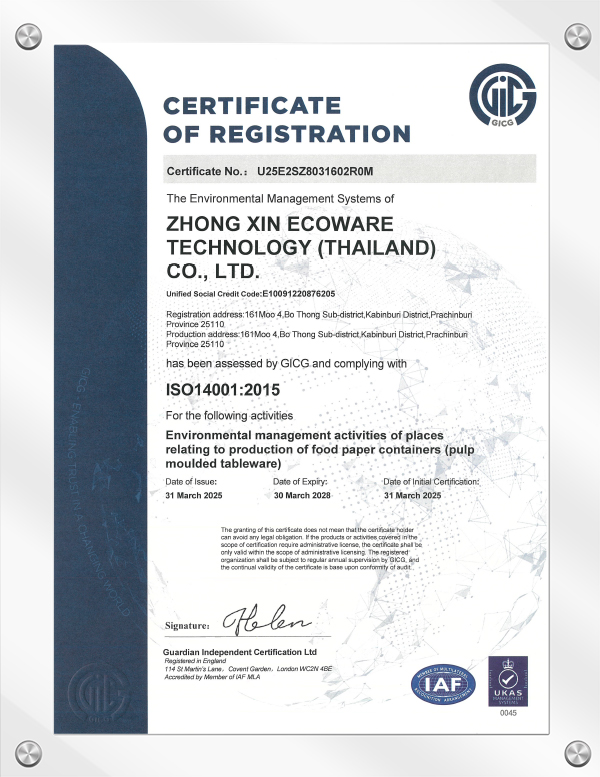
Zhong Xin Ecoware Technology (Thailand) Co., Ltd. supplies bagasse and molded fiber food packaging to importers, distributors and foodservice brands. For MOQ, pricing, samples and lead time, email info@fiber-product.com or use the contact form.
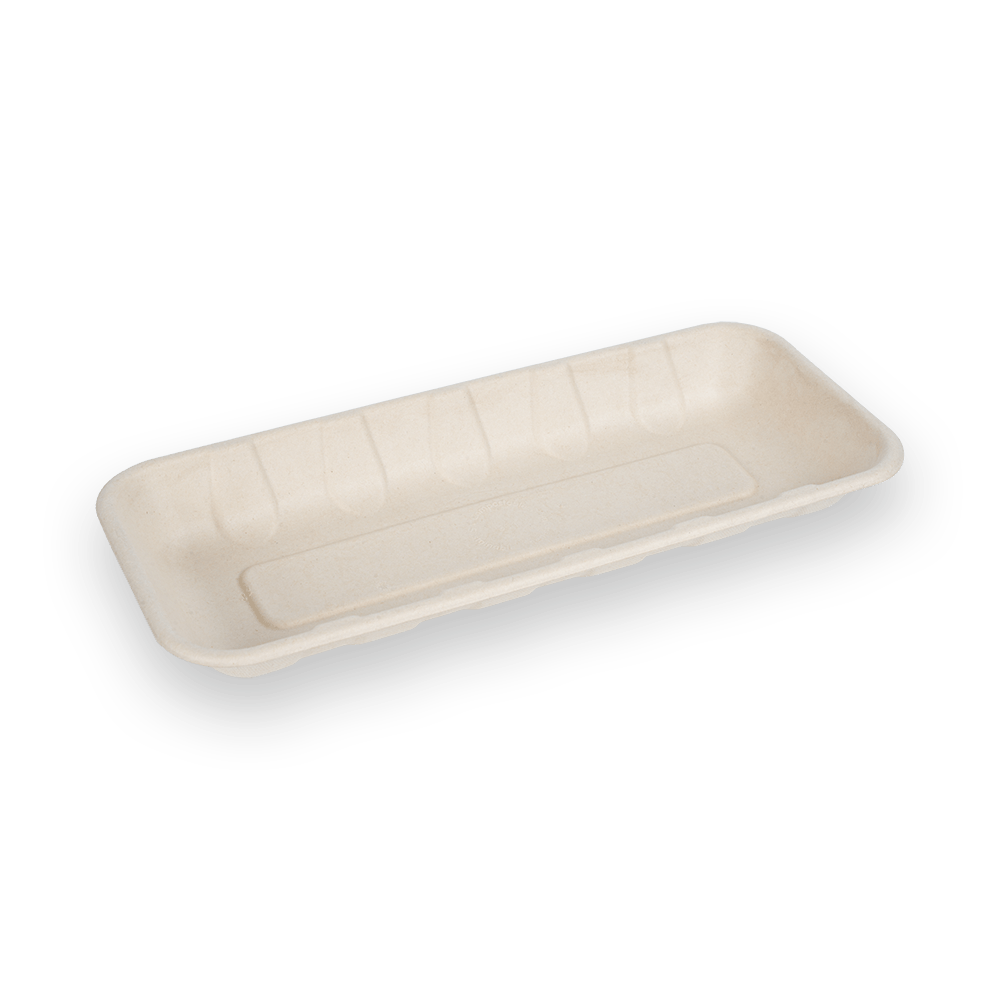


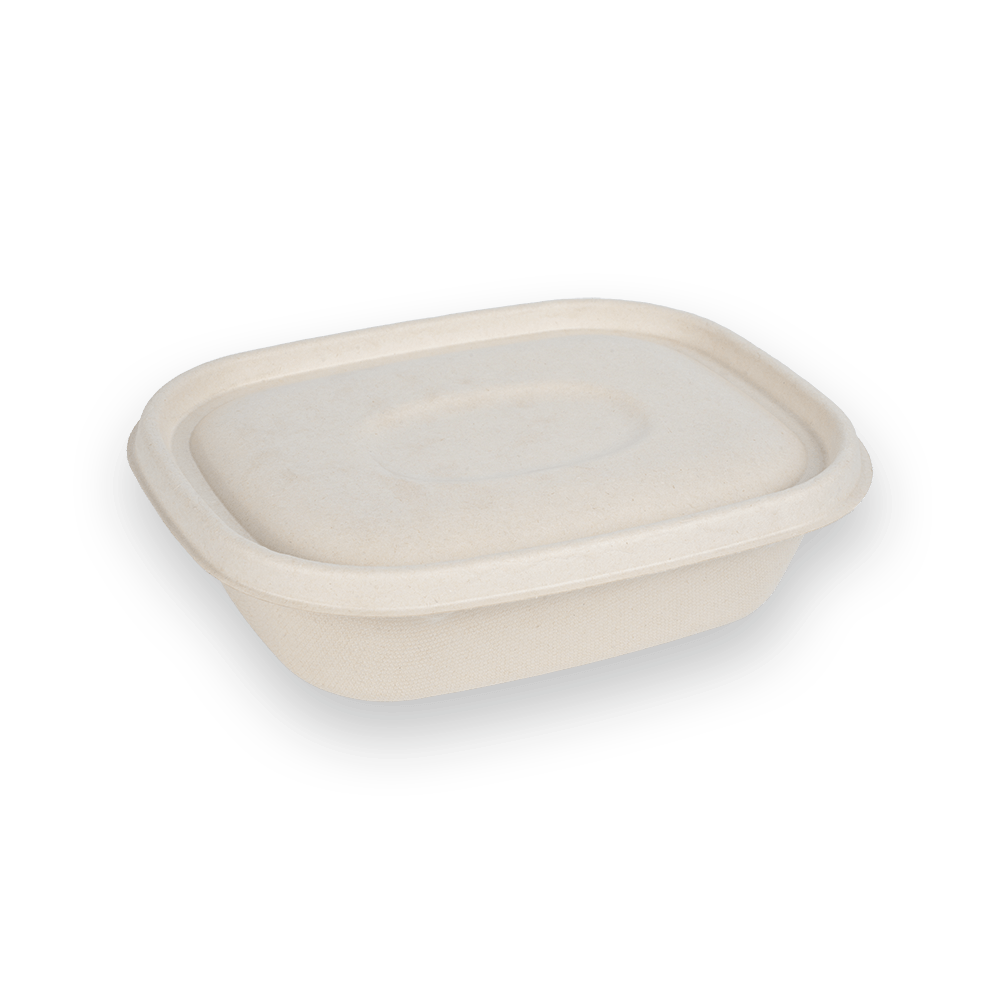
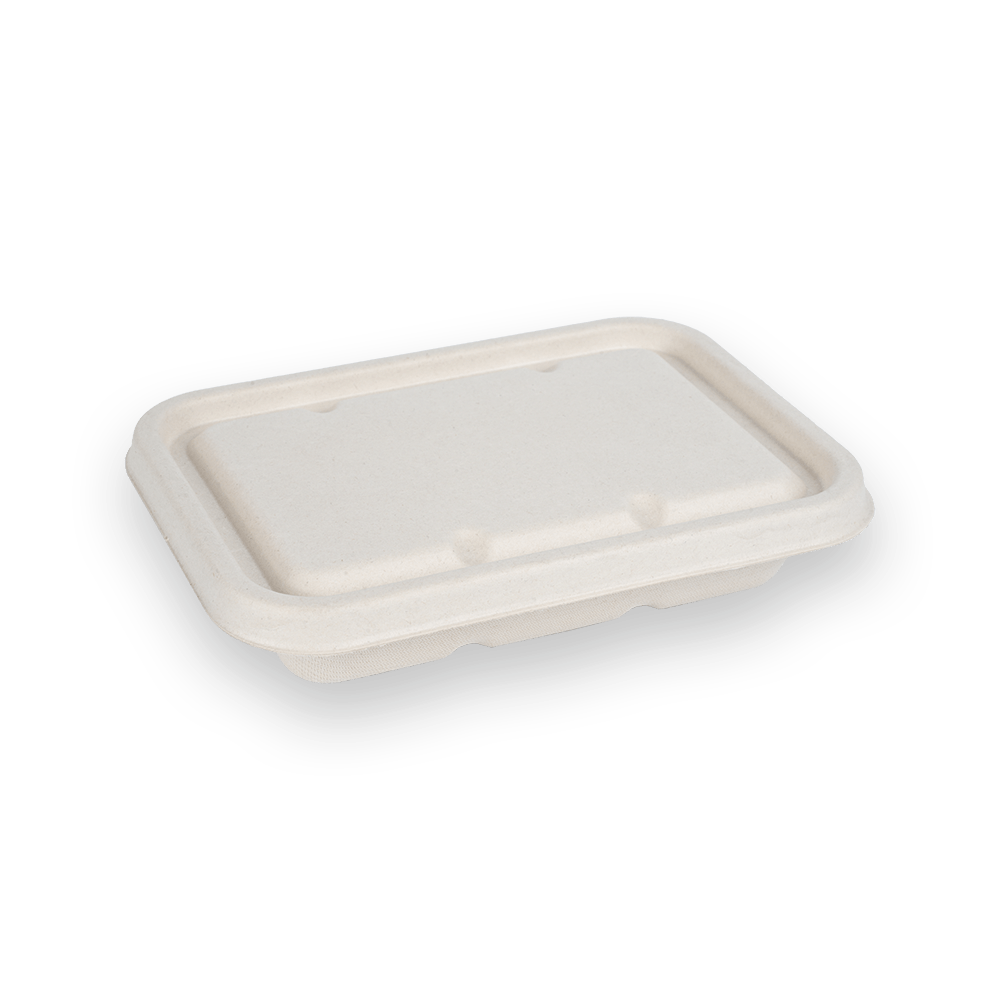

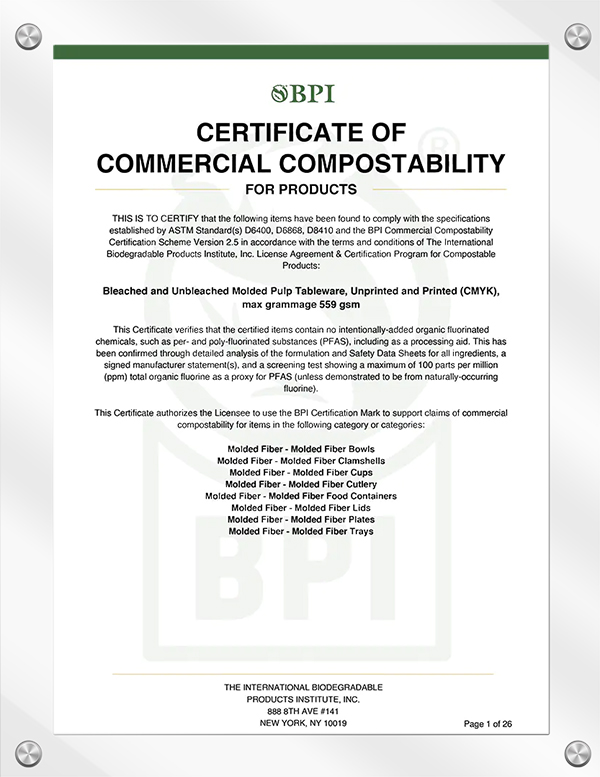
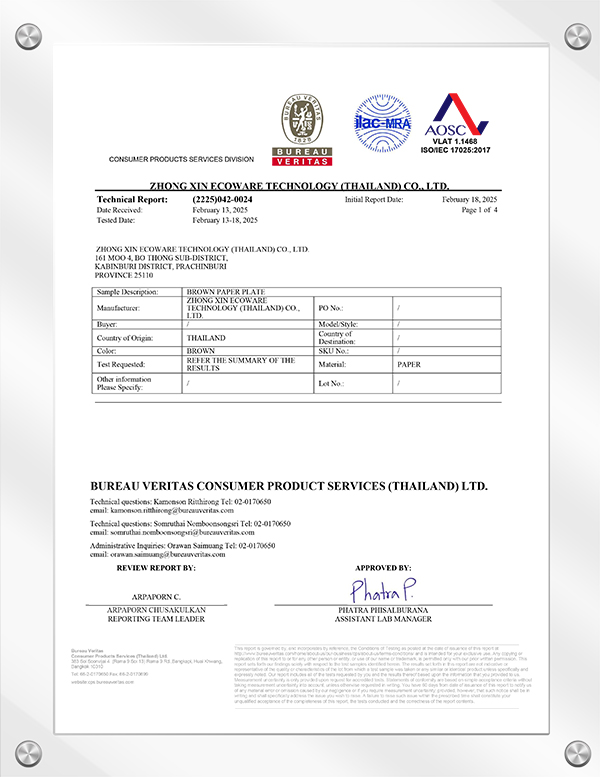
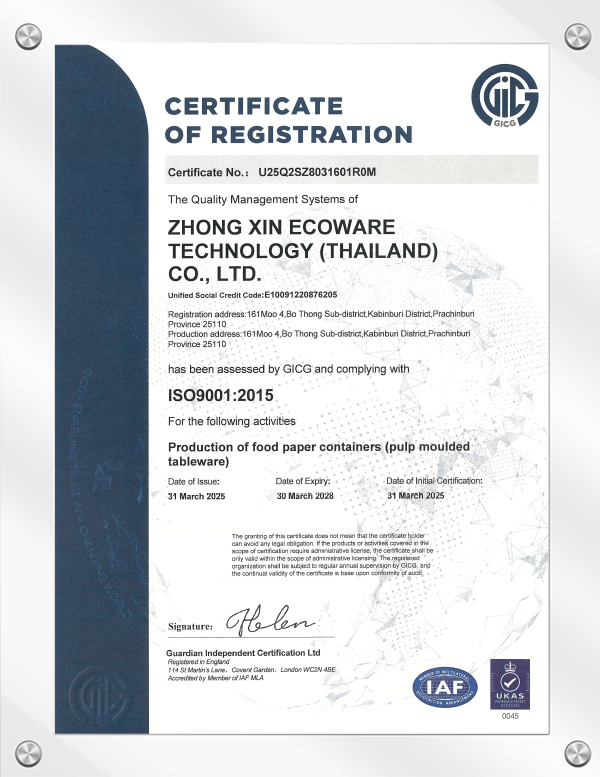
Zhong Xin Ecoware(Thailand) was registered on November 1, 2023, and officially began construction of the factory building in June 2024. At present, the first phase workshop of the factory has been fully completed and put into use. The second phase of the factory is being constructed intensively.
The landing and development of Zhong Xin in Thailand has brought a large amount of initial investment for land, factories, etc., and continuous operational investment for continuous equipment updates, technological upgrades, and capacity expansion.
Zhong Xin Ecoware(Thailand) has directly and indirectly created thousands of job opportunities, increased government revenue, promoted local economic development, cultivated local supply chains, provided systematic training for employees, improved the quality of local human capital, injected vitality into the local economy, enhanced industrial competitiveness, and ultimately improved residents' living standards.
Zhong Xin Ecoware(Thailand) actively collaborates with local pulp mills to explore new cooperation models for developing new products, improving production capacity and quality. At the same time, relying on Zhongxin's advanced production technology, process flow, management experience, and quality control system, it promotes the development of this industry in Thailand.

-
-
 +66-31240888
 -
 161 Village No. 4, Bo Thong Subdistrict Kabin Buri District Prachinburi Province 25110
-
New Bagasse Tableware Lineup for 2026: What Is New and Where to See It
Sep 28,2026
-
How to Select Bagasse Clamshells for Burgers, Rice Meals and Fried Food
Sep 28,2026
-
Microwave Reheating: Is a Bagasse Lunch Box Suitable
Sep 25,2026
-
9 Inch Pizza Plates and Bagasse Pizza Boards: A Sourcing Guide for US and Canadian Distributors
Sep 19,2026
-
PFAS-Free & Compostability Verification: A Buyer's Checklist for Bagasse and Molded Fiber Packaging
Sep 19,2026
-
Bagasse vs PLA vs Molded Fiber: What Distributors Should Stock in 2026
Sep 19,2026
-
Can Sugarcane Plates Handle Hot, Greasy Foods
Sep 18,2026
-
Bagasse Tableware RFQ Template: Get a Comparable Thailand Factory Quote
Sep 14,2026
-
Are Takeaway Food Containers Ready for Saucy Meals
Sep 11,2026
-
7-Inch vs 9-Inch Bagasse Plates: Carton and 20GP Guide
Sep 07,2026
-
Will Bagasse Pulp Trays Sag Under Heavy Meals
Sep 04,2026
-
Zhongxin Packaging at the 140th Canton Fair 2026: Booths and Buyer Meeting Guide
Sep 02,2026
Copyright © 2025 Zhong Xin Ecoware Technology ( Thailand ) CO., LTD.
All Rights Reserved.

Biodegradable Disposable Bagasse Tableware Manufacturer