-
 [email protected]
-
 +66-31240888



 English
 Español
 ไทย
ไทยCan Bagasse Tableware Meet Real Food Demand Limits
Global foodservice packaging is shifting toward plant fiber solutions, and products from a bagasse tableware manufacturer are now widely used in takeout, catering, and retail-ready meal systems. The material is often promoted as strong, compostable, and grease-resistant, yet real performance depends on multiple engineering layers rather than fiber alone.
Fiber compression defines baseline strength
Sugarcane bagasse is a byproduct of sugar extraction, composed mainly of cellulose fibers with natural porosity. Strength comes not from the raw fiber itself, but from how tightly it is restructured during molding.
Typical structural characteristics:
- Fiber density: 220–350 gsm molded board
- Pressing pressure: 20–40 MPa range
- Forming temperature: around 150–200°C
A bagasse tableware manufacturer relies on hot-press molding to fuse fibers into a stable matrix. Higher compression reduces air gaps, improving rigidity and load-bearing capacity. Lower compression often results in soft edges or deformation under hot food weight.
This structural dependency explains why visually similar products can perform very differently in real use.
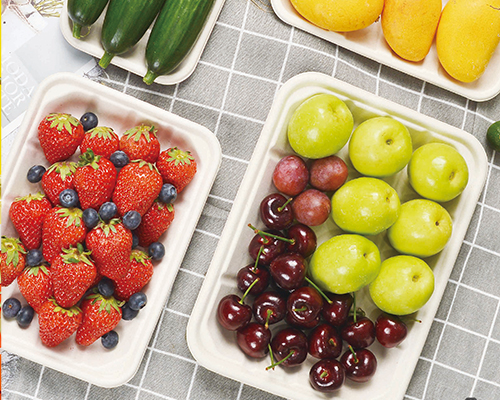
Grease exposure remains the key stress test
Oily foods expose the weakest points in molded fiber products. While bagasse naturally absorbs moisture, grease penetration behaves differently and challenges surface stability.
Common performance behavior:
- Dry foods remain stable for extended periods
- Light oil exposure shows delayed absorption
- Heavy grease accelerates edge softening
- High-temperature oil increases deformation speed
Without barrier treatment, oil migrates through fiber channels, weakening structure over time. Even well-formed products can lose stiffness under prolonged contact with fried or sauced meals.
Modern systems rely on coating reinforcement rather than fiber alone to manage this limitation.
Barrier coatings determine functional ceiling
Surface treatment is the critical layer that extends usability in real applications. Most commercial products are no longer “raw fiber only.”
Common coating systems include:
- Water-based dispersion coatings
- Starch-based biodegradable barriers
- PLA biofilm layers
- Wax-modified oil-resistant finishes
These coatings slow down liquid penetration and stabilize surface integrity. However, performance depends heavily on coating uniformity. Uneven application creates weak zones where leakage begins earlier than expected.
Industry analysis shows PFAS-free barrier systems are increasingly adopted, balancing grease resistance with environmental compliance expectations .
Heat and humidity interaction affects durability
Bagasse products react dynamically to environmental conditions. Even before food contact, ambient moisture can influence stiffness.
Key environmental effects:
- High humidity softens fiber bonds
- Steam accelerates surface weakening
- Condensation reduces compression strength
- Long holding time increases deformation risk
A bagasse tableware manufacturer must control drying cycles and post-press moisture levels carefully. Insufficient drying leaves residual water inside fiber walls, reducing heat resistance during actual service use.
These interactions explain why identical containers may behave differently in delivery versus dine-in scenarios.
Structural design improves real-world performance
Beyond material composition, geometry plays a major role in functional durability. Engineering adjustments can significantly improve grease and heat handling.
Important design factors:
- Reinforced rim thickness improves load distribution
- Steeper wall angles reduce liquid pooling
- Rounded corners reduce stress concentration
- Lid locking depth improves sealing stability
Failures often occur at structural weak points rather than across flat surfaces. Well-designed molds compensate for material limitations by redistributing stress during handling.
Production variability influences performance consistency
Even with standardized formulas, batch variation can still occur in real manufacturing environments.
Main sources of variation include:
- Fiber moisture differences between raw material batches
- Slight coating viscosity shifts during long production runs
- Press temperature fluctuations across mold cavities
- Drying tunnel airflow inconsistencies
Industry studies confirm that fiber fines and inconsistent pulping can also create scaling and surface defects during hot pressing stages, affecting final product uniformity .
This is why two shipments from the same supplier may not always behave identically under identical food conditions.
Functional limits under real service conditions
Bagasse tableware performs well within defined usage windows, but limitations appear under extended stress.
Observed boundaries:
- Short-term hot food use: stable performance
- Medium oil exposure: acceptable with coating support
- Long-duration greasy storage: gradual softening risk
- Reheating cycles: increased deformation probability
Research on molded fiber containers confirms that misapplication beyond intended conditions is a primary reason for perceived failure rather than inherent material defects .
Practical evaluation approach for buyers
Assessing a bagasse tableware manufacturer should focus on real performance indicators rather than visual inspection alone.
Key evaluation points:
- Compression density consistency across batches
- Coating type and application uniformity
- Heat resistance under simulated service conditions
- Oil penetration resistance over time
- Dimensional stability after humidity exposure
Factories with stable process control typically deliver more predictable outcomes across bulk orders, reducing service disruptions in food operations.
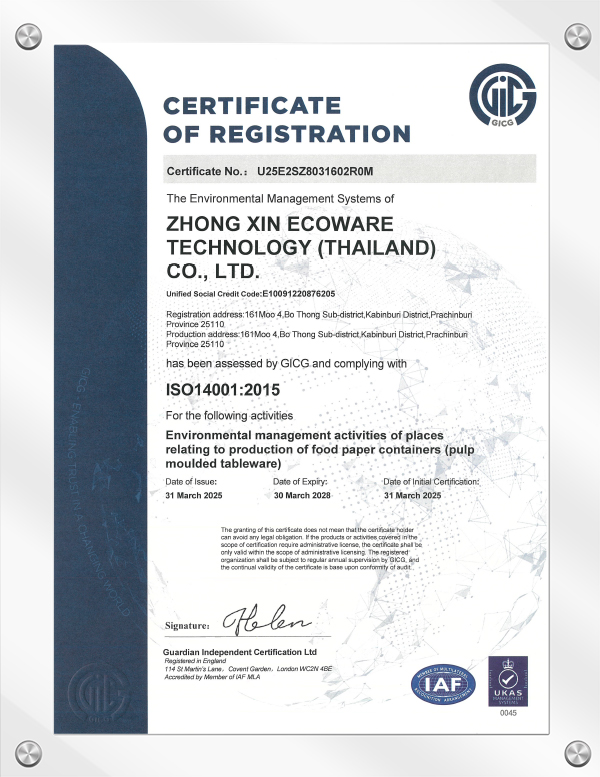
Zhong Xin Ecoware Technology (Thailand) Co., Ltd. supplies bagasse and molded fiber food packaging to importers, distributors and foodservice brands. For MOQ, pricing, samples and lead time, email info@fiber-product.com or use the contact form.
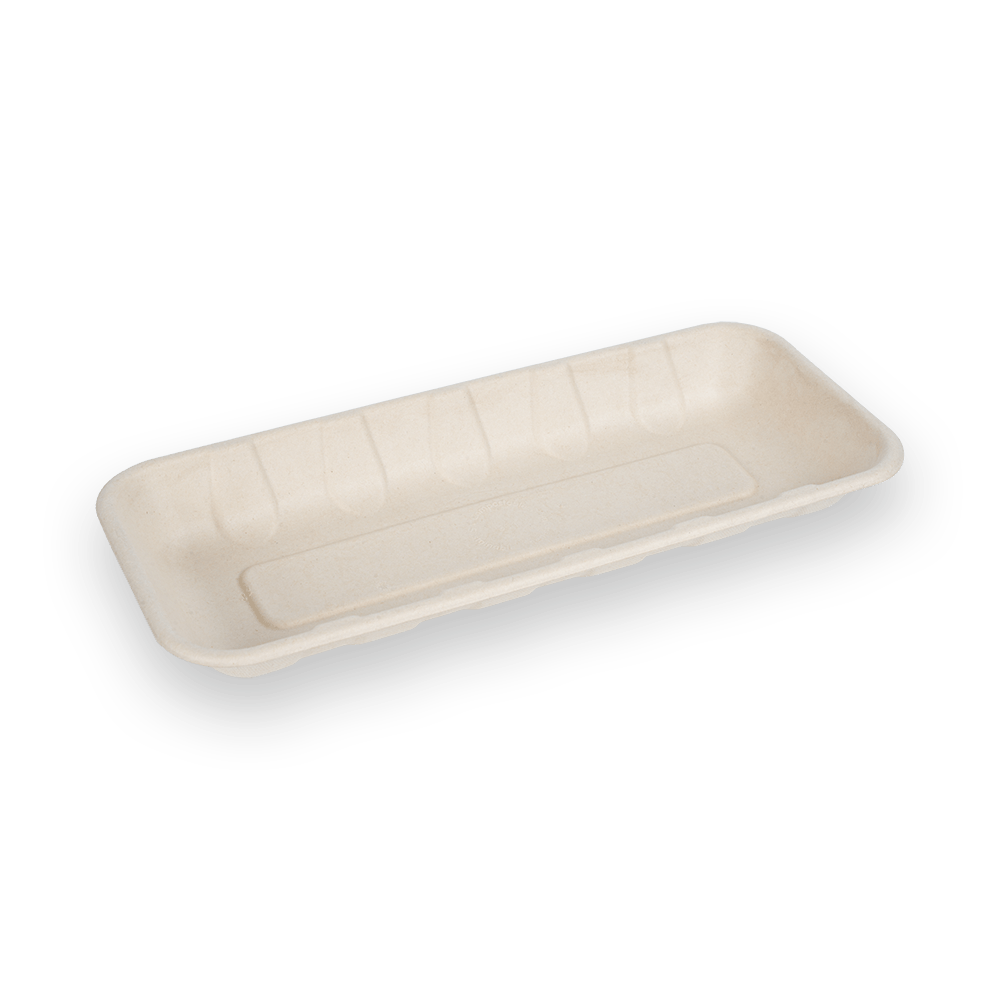


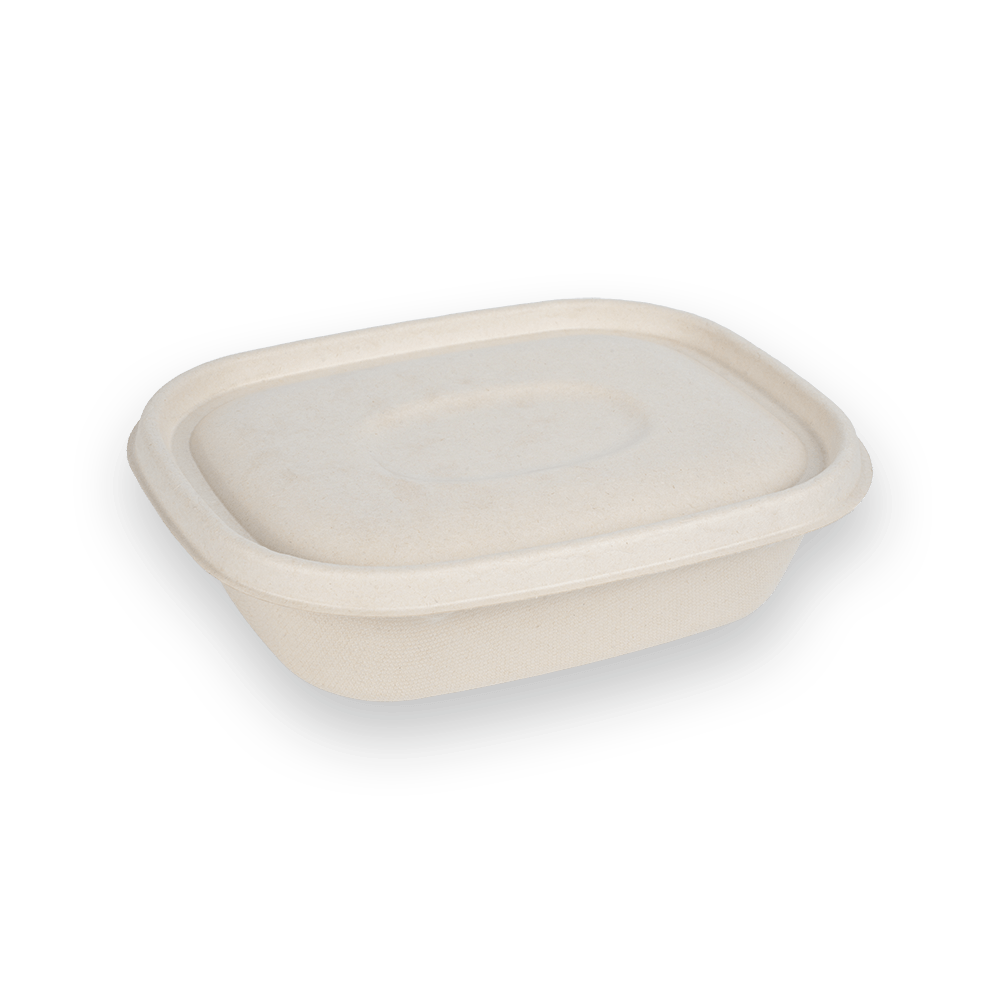
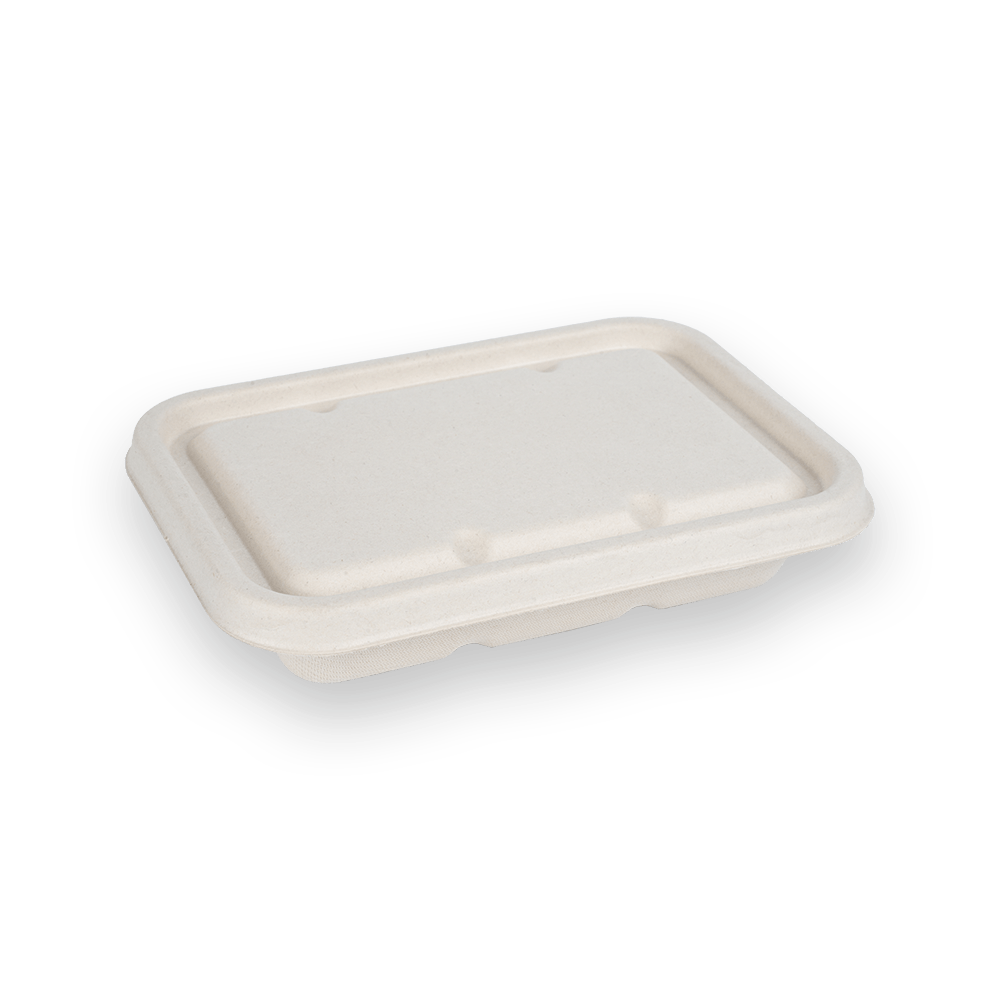

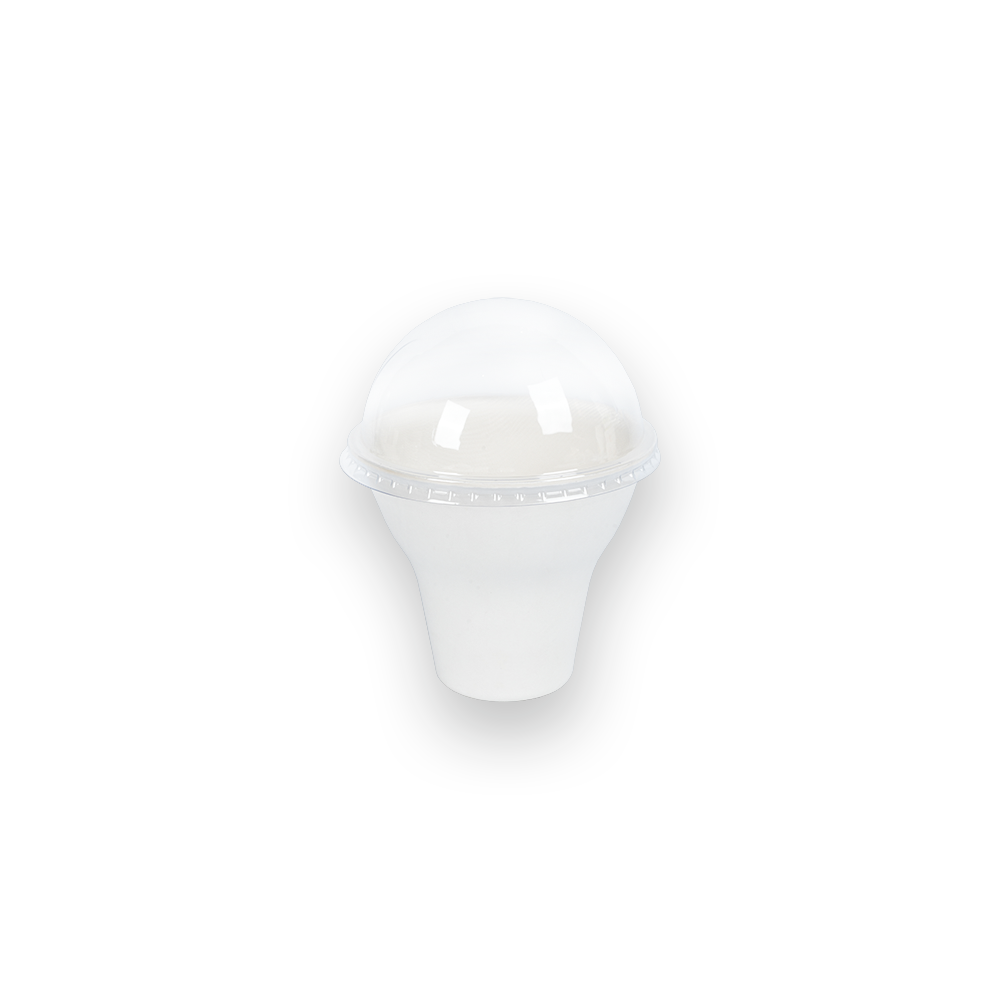
Zhong Xin Ecoware(Thailand) was registered on November 1, 2023, and officially began construction of the factory building in June 2024. At present, the first phase workshop of the factory has been fully completed and put into use. The second phase of the factory is being constructed intensively.
The landing and development of Zhong Xin in Thailand has brought a large amount of initial investment for land, factories, etc., and continuous operational investment for continuous equipment updates, technological upgrades, and capacity expansion.
Zhong Xin Ecoware(Thailand) has directly and indirectly created thousands of job opportunities, increased government revenue, promoted local economic development, cultivated local supply chains, provided systematic training for employees, improved the quality of local human capital, injected vitality into the local economy, enhanced industrial competitiveness, and ultimately improved residents' living standards.
Zhong Xin Ecoware(Thailand) actively collaborates with local pulp mills to explore new cooperation models for developing new products, improving production capacity and quality. At the same time, relying on Zhongxin's advanced production technology, process flow, management experience, and quality control system, it promotes the development of this industry in Thailand.
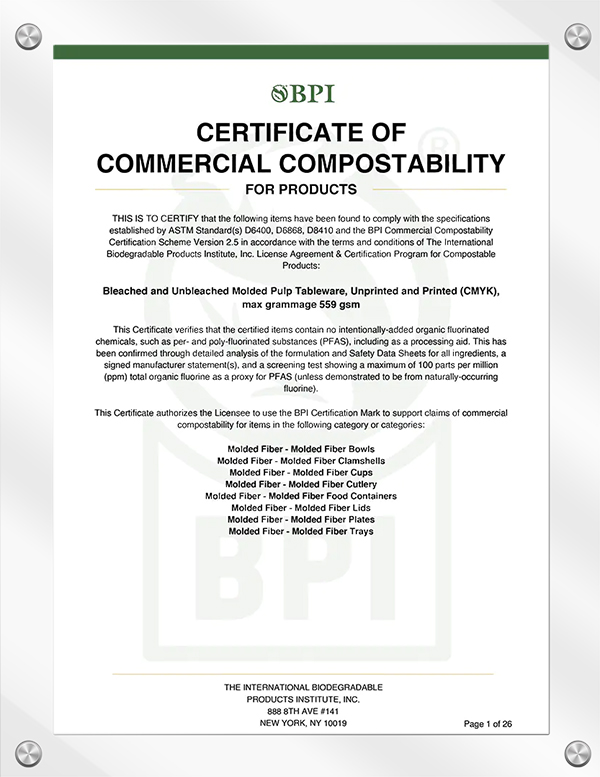
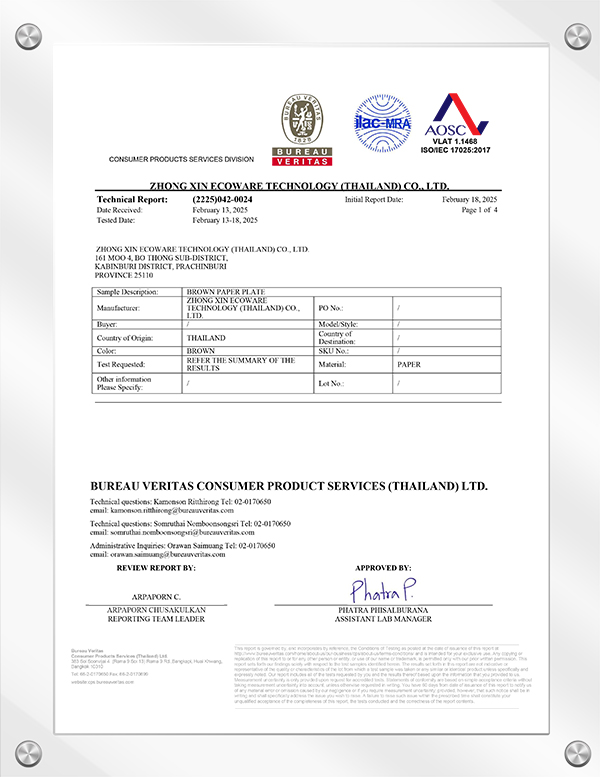
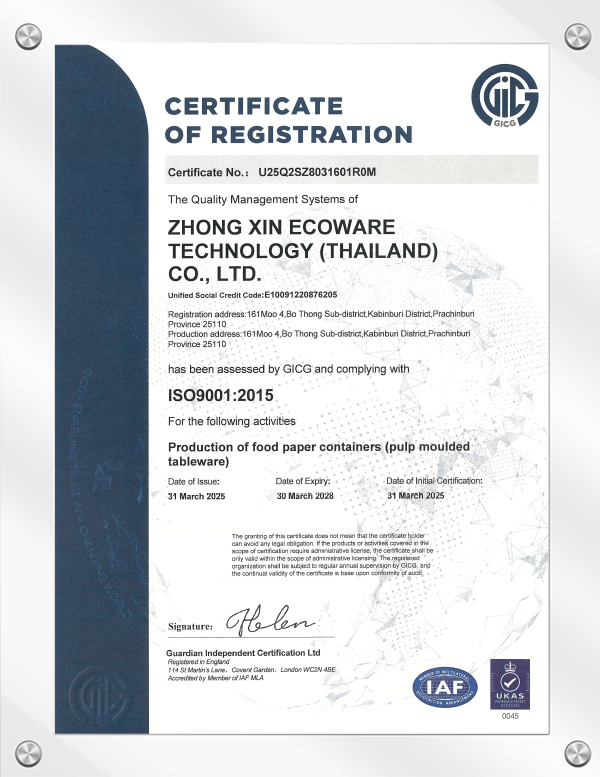

-
-
 +66-31240888
 -
 161 Village No. 4, Bo Thong Subdistrict Kabin Buri District Prachinburi Province 25110
-
New Bagasse Tableware Lineup for 2026: What Is New and Where to See It
Sep 28,2026
-
How to Select Bagasse Clamshells for Burgers, Rice Meals and Fried Food
Sep 28,2026
-
Microwave Reheating: Is a Bagasse Lunch Box Suitable
Sep 25,2026
-
9 Inch Pizza Plates and Bagasse Pizza Boards: A Sourcing Guide for US and Canadian Distributors
Sep 19,2026
-
PFAS-Free & Compostability Verification: A Buyer's Checklist for Bagasse and Molded Fiber Packaging
Sep 19,2026
-
Bagasse vs PLA vs Molded Fiber: What Distributors Should Stock in 2026
Sep 19,2026
-
Can Sugarcane Plates Handle Hot, Greasy Foods
Sep 18,2026
-
Bagasse Tableware RFQ Template: Get a Comparable Thailand Factory Quote
Sep 14,2026
-
Are Takeaway Food Containers Ready for Saucy Meals
Sep 11,2026
-
7-Inch vs 9-Inch Bagasse Plates: Carton and 20GP Guide
Sep 07,2026
-
Will Bagasse Pulp Trays Sag Under Heavy Meals
Sep 04,2026
-
Zhongxin Packaging at the 140th Canton Fair 2026: Booths and Buyer Meeting Guide
Sep 02,2026
Copyright © 2025 Zhong Xin Ecoware Technology ( Thailand ) CO., LTD.
All Rights Reserved.

Biodegradable Disposable Bagasse Tableware Manufacturer