-
 [email protected]
-
 +66-31240888



 English
 Español
 ไทย
ไทยCompartment Paper Plates: Usage and Rules
Use and Material Properties of Compartment Paper Plates
Common Applications and Portion Control
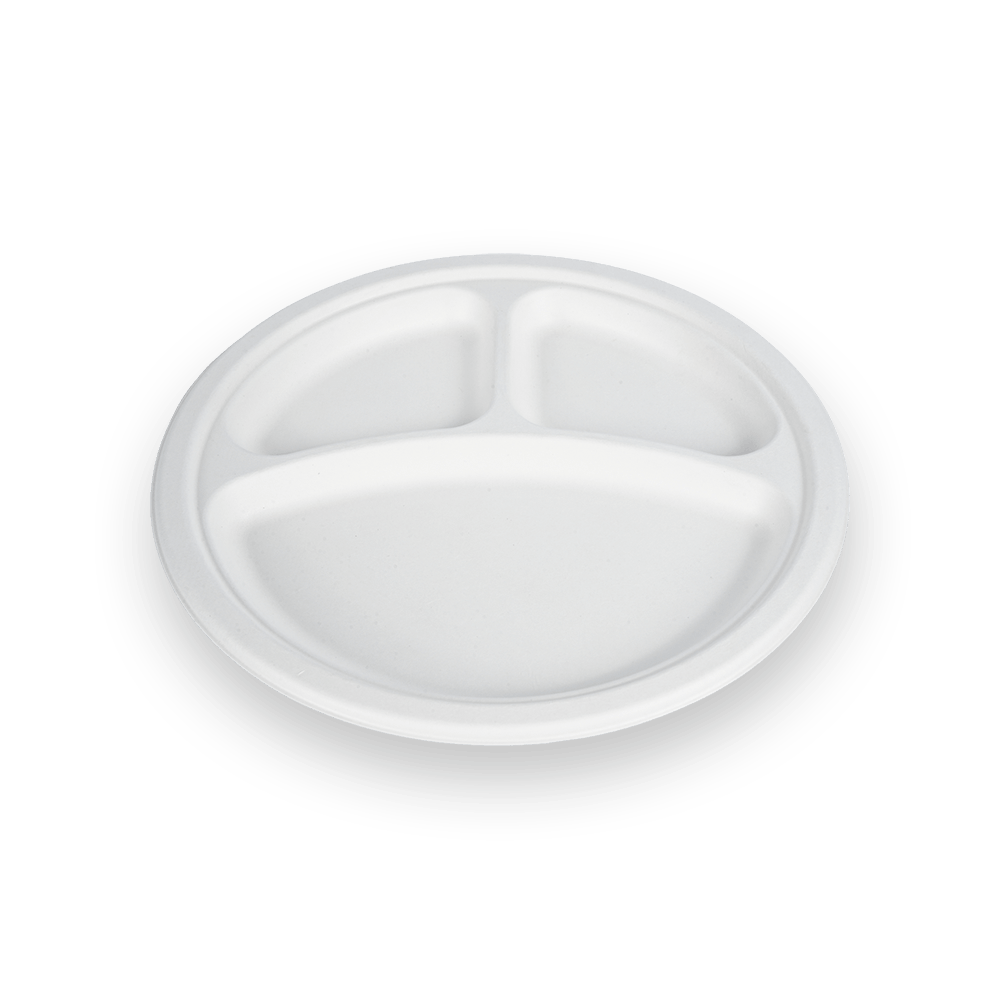
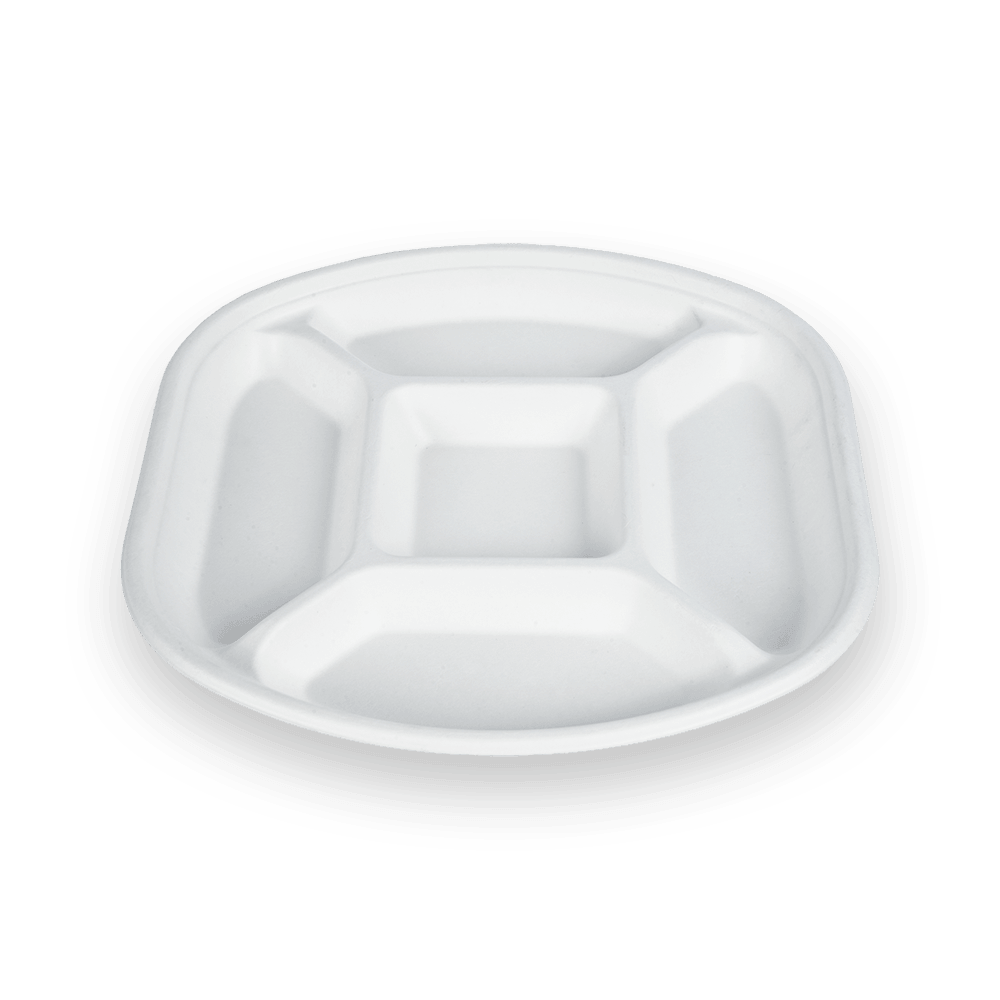
Compartment paper plates, often called "sectioned plates" or "tray plates," are designed to separate different food items during a meal. The classic configuration has three compartments: a large main section for the entrée, and two smaller side sections for vegetables, starches, or sauces. Some designs offer four or five compartments for school lunch trays or catering events. The compartments are formed by pressing wet paper pulp into a heated mold, creating raised dividers that are 5 to 15 mm high. These dividers prevent liquid from one food (such as gravy from meat) from migrating into a dry food (such as bread or salad). For users, this means that saucy foods remain contained, and the plate remains stable when carried. The compartment height is sufficient for most prepared foods, but very runny soups or stews (more liquid than solid) are not suitable because the compartments are not sealed—liquid can still seep under the divider if the plate is tilted beyond 20 degrees.
Material Composition and Manufacturing Process
Disposable compartment plates are made from molded paper pulp, which is a mixture of recycled paper fibers, water, and sometimes virgin pulp. The raw material consists of newspaper, cardboard, office paper, and other paper waste that is pulped with water (typically 95 percent water, 5 percent fiber by weight). The pulp is pressed into shaped molds using heat (150-200°C) and pressure (10-30 kg/cm²), which evaporates the water and bonds the fibers together. No plastic coating or wax is used for standard pulp plates; they rely on the natural fiber matrix for structural strength. However, some manufacturers add a water-resistant coating: either a thin layer of polyethylene (PE) or a plant-based coating such as polylactic acid (PLA). Coated plates withstand moist foods for 30-60 minutes without soaking through; uncoated plates begin to soften after 5-10 minutes of contact with wet foods.
Food Compatibility and Time Limits
For dry or semi-dry foods (sandwiches, crackers, cookies, cooked pasta without sauce, roasted vegetables), uncoated compartment plates perform adequately for up to 60 minutes. For foods with moderate moisture (casseroles, rice dishes, steamed vegetables), uncoated plates become limp after 15-20 minutes, as the water in the food transfers to the paper fibers, breaking the hydrogen bonds that give the plate rigidity. A plate that has lost its rigidity will sag when lifted, potentially spilling contents. Coated plates (PE or PLA-lined) resist moisture for 45-90 minutes, depending on food temperature. Hot foods (above 60°C) accelerate moisture migration: a coated plate that lasts 90 minutes with cold potato salad will last only 30 minutes with hot macaroni and cheese. Very oily foods (fried chicken, bacon, buttered vegetables) do not affect paper plates significantly because oil does not dissolve the paper fibers. However, hot oil (above 80°C) can soften the PLA coating, causing it to peel.
Microwave Safety and Temperature Limits
Standard uncoated paper pulp plates are microwave-safe because they contain no metal and moist paper does not arc. However, they should not be microwaved for more than 60 seconds with high-moisture food, as the steam generated inside the paper fibers causes delamination (the layers of paper separate, creating blister-like bulges). A delaminated plate becomes porous and may leak liquids. PE-coated plates are not microwave-safe because the polyethylene coating melts at 110-120°C. Melting occurs unevenly, creating sticky spots that transfer to food. PLA-coated plates are microwave-safe up to 100°C (the glass transition temperature of PLA is 55-60°C, but it does not melt until 150-170°C; however, above 100°C the PLA softens and may stick to food). The safest choice for microwaving is an uncoated pulp plate heated for no more than 90 seconds. For longer heating, transfer food to a ceramic or glass dish.
Stacking, Storage, and Shelf Life
Compartment plates are sold in stacks of 25 to 200, often wrapped in shrink film. The concave shape of each compartment nests inside the corresponding compartment of the plate below, which prevents shifting during transport. However, stacking too high (over 30 plates) can compress the bottom plates, flattening the compartment dividers. Flattened dividers are less effective at preventing food migration because the height reduces from 10 mm to 5 mm or less. Store plates in a dry environment (below 60 percent relative humidity) and at temperatures between 10°C and 30°C. Humidity above 70 percent causes paper fibers to absorb moisture from the air, reducing the plate's rigidity by 30-50 percent even before food is placed on it. The shelf life of uncoated pulp plates is 12 to 18 months under proper storage; after that, natural fiber degradation causes the plates to become brittle (bending strength drops by 40 percent). Coated plates have a longer shelf life (24-36 months) because the coating seals out humidity.
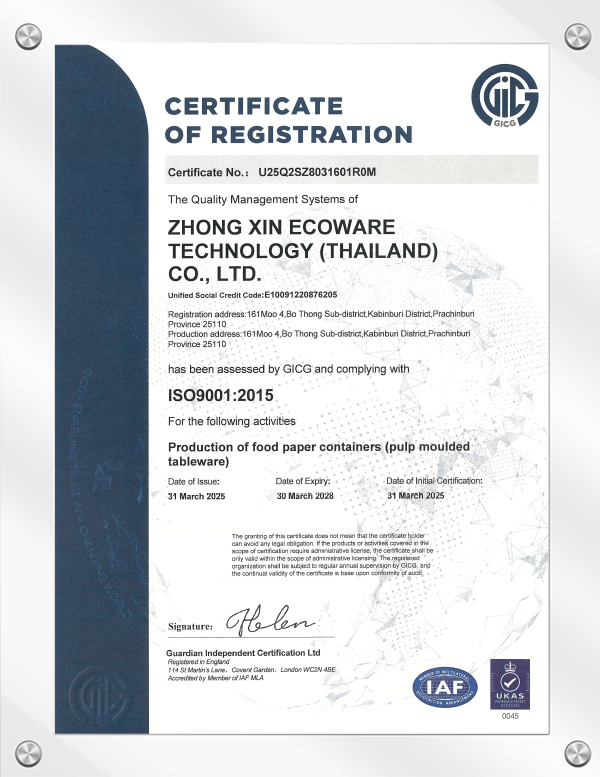
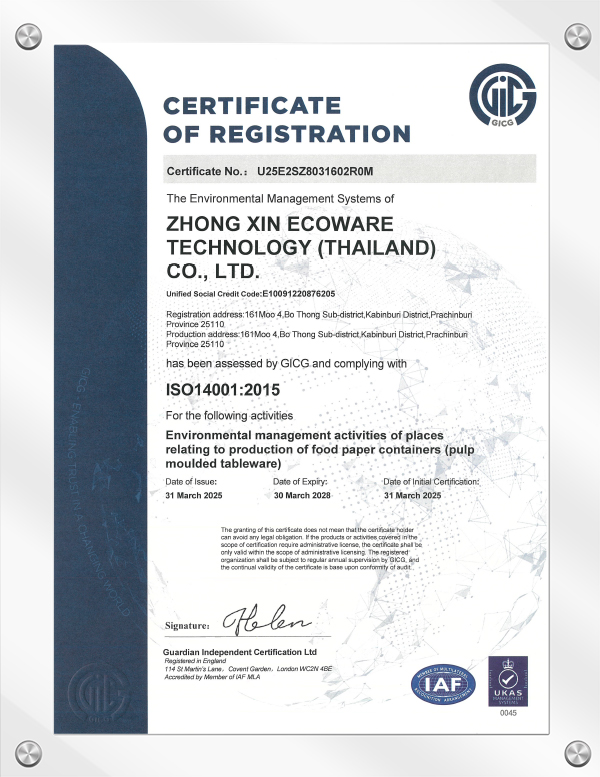
Zhong Xin Ecoware Technology (Thailand) Co., Ltd. supplies bagasse and molded fiber food packaging to importers, distributors and foodservice brands. For MOQ, pricing, samples and lead time, email info@fiber-product.com or use the contact form.


Zhong Xin Ecoware(Thailand) was registered on November 1, 2023, and officially began construction of the factory building in June 2024. At present, the first phase workshop of the factory has been fully completed and put into use. The second phase of the factory is being constructed intensively.
The landing and development of Zhong Xin in Thailand has brought a large amount of initial investment for land, factories, etc., and continuous operational investment for continuous equipment updates, technological upgrades, and capacity expansion.
Zhong Xin Ecoware(Thailand) has directly and indirectly created thousands of job opportunities, increased government revenue, promoted local economic development, cultivated local supply chains, provided systematic training for employees, improved the quality of local human capital, injected vitality into the local economy, enhanced industrial competitiveness, and ultimately improved residents' living standards.
Zhong Xin Ecoware(Thailand) actively collaborates with local pulp mills to explore new cooperation models for developing new products, improving production capacity and quality. At the same time, relying on Zhongxin's advanced production technology, process flow, management experience, and quality control system, it promotes the development of this industry in Thailand.

-
-
 +66-31240888
 -
 161 Village No. 4, Bo Thong Subdistrict Kabin Buri District Prachinburi Province 25110
-
How to Find Zhong Xin at the 140th Canton Fair: A Visitor Navigation Guide
Oct 16,2026
-
Thailand vs China Bagasse Tableware: 8 Comparisons Buyers Should Verify
Oct 16,2026
-
Will Takeout Containers Fit Your Existing Lids and Delivery Workflow
Oct 16,2026
-
What Is Bagasse Tableware? A 2026 Buyer Guide to Material, Performance and Documents
Oct 13,2026
-
Bagasse Tray Wholesale: How Bulk Buyers Cut Cost with Carton and Container Planning
Oct 09,2026
-
What Should a Bagasse Manufacturer Include in a Bulk Order Quote
Oct 09,2026
-
FOB, CIF or DDP? Incoterms for Bagasse Tableware Buyers Shipping from Thailand
Oct 06,2026
-
Packaging or Food Contact? Which EU Regime Applies to Bagasse Cups, Bowls, Plates and Cutlery
Oct 06,2026
-
Compostable Cutlery Sets for Private Label: 7 Sourcing Checks for Retail and Foodservice Buyers
Oct 06,2026
-
US vs EU Bagasse Tableware Imports: 8 Documentation and Compliance Checks Buyers Should Run
Oct 06,2026
-
How to Prepare a Bagasse Tableware Import: 10 Readiness Checks for US and EU Buyers
Oct 06,2026
-
Beyond Plates: Which Foods Suit Bagasse Tableware
Oct 02,2026
Copyright © 2025 Zhong Xin Ecoware Technology ( Thailand ) CO., LTD.
All Rights Reserved.

Biodegradable Disposable Bagasse Tableware Manufacturer