-
 [email protected]
-
 +66-31240888



 English
 Español
 ไทย
ไทยMicrowave and Oven Safe Compostable Containers: What Buyers Must Verify Before Ordering
Foodservice buyers frequently ask for containers that can go from the refrigerator into a microwave or oven without transferring the food to another dish. When the container also needs to be compostable, the requirements get tighter, because heat tolerance and compostability are two different properties that are tested and certified separately. This guide explains what "microwave safe" and "oven safe" actually mean for molded fiber containers, which documents prove it, and how to specify the right product for your menu.
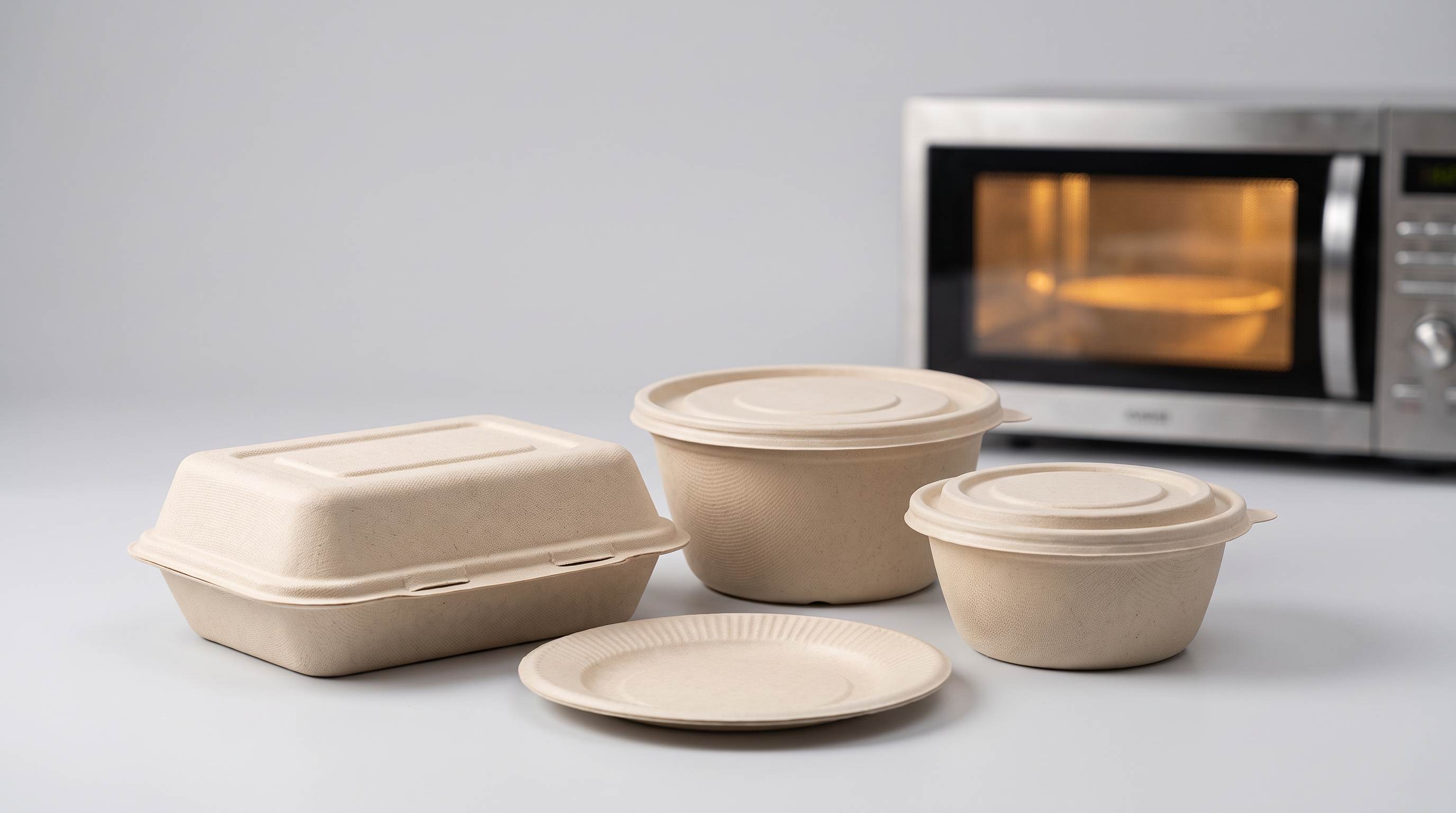
Why heat tolerance and compostability are separate claims
A molded fiber container made from sugarcane bagasse is formed with heat and pressure at high temperature, which gives the material its rigidity and its resistance to hot food. Most bagasse containers tolerate hot meals, hot soup and oil-based dishes, and they are generally suitable for reheating in a microwave. Oven-safe use is a different claim: it depends on the specific product, the coating and the temperature and time of the oven cycle. Always confirm the exact temperature range in the product specification sheet instead of assuming all molded fiber behaves the same.
Microwave safe molded fiber: what to check
If you need containers for microwave reheating, ask the supplier for these details:
- Stated temperature range for the specific SKU
- Whether the product is coated, and what the coating is
- Test documentation for microwave reheating with oil-based food
- Lid compatibility and whether the lid is also microwave safe
Bagasse containers are formed at high temperature during molding, and this is the property that makes them suitable for microwave reheating of typical menu items. Confirm the range on the spec sheet and request the test report that matches your exact SKU, not a generic company brochure.
Oven safe molded fiber: read the spec sheet
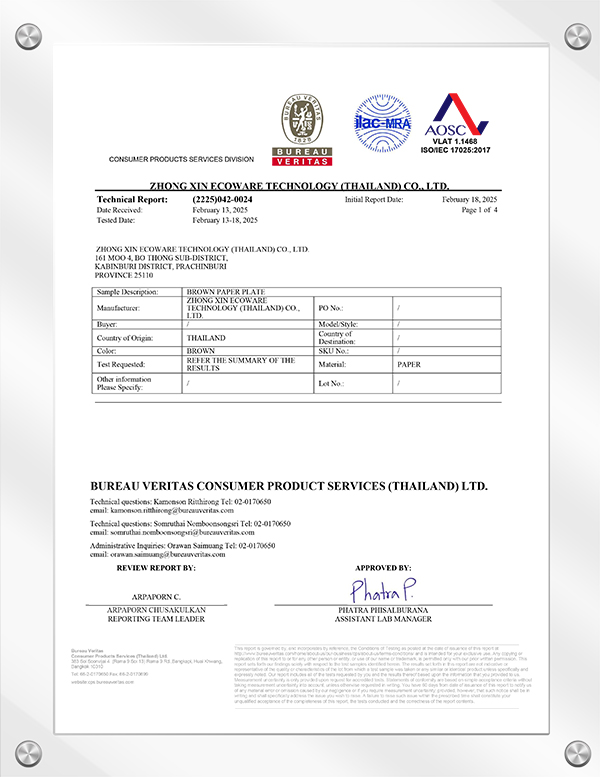
True oven use, such as heating a container at 180 degrees Celsius for 15 minutes, is a stricter test than microwave reheating. Some molded fiber products pass this test; others do not. When an operator needs oven-safe containers, the supplier should provide the temperature and duration the product was tested at. If the supplier cannot provide a test report for the exact product and condition, treat the claim as unverified.
Coating and lids change the answer
A grease-resistant coating can improve oil resistance, but it can also change how the product performs in a microwave and whether the product is accepted by composting facilities. Lids made from a different material may not be heat-safe even when the base container is. When you order, specify the full system: container, lid, coating, temperature range and certification scope. Request the certification documents for the exact SKU combination you intend to buy.
How to test before you commit
Before placing a large order, run a simple verification with a sample:
1. Microwave test: heat an oil-based meal in the container for 60 seconds and check for warping, softening or soak-through.
2. Oven test: only if the spec sheet claims oven safety, run the container through the claimed temperature and time and inspect the result.
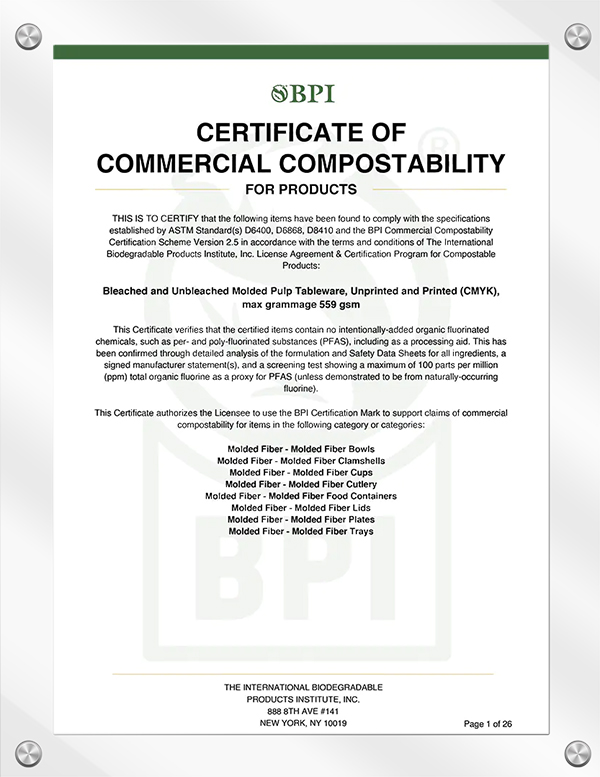
3. Compostability check: confirm the exact product is listed in the BPI directory, and confirm the certification covers the coated version if you chose a coating.
4. Lid test: test the lid with hot food and in the microwave, since lids are often the weakest point.
Which container formats suit which menus
The right format depends on the operation:
- Meal delivery and ghost kitchens use hinged containers with secure closures for hot meals and reheating instructions.
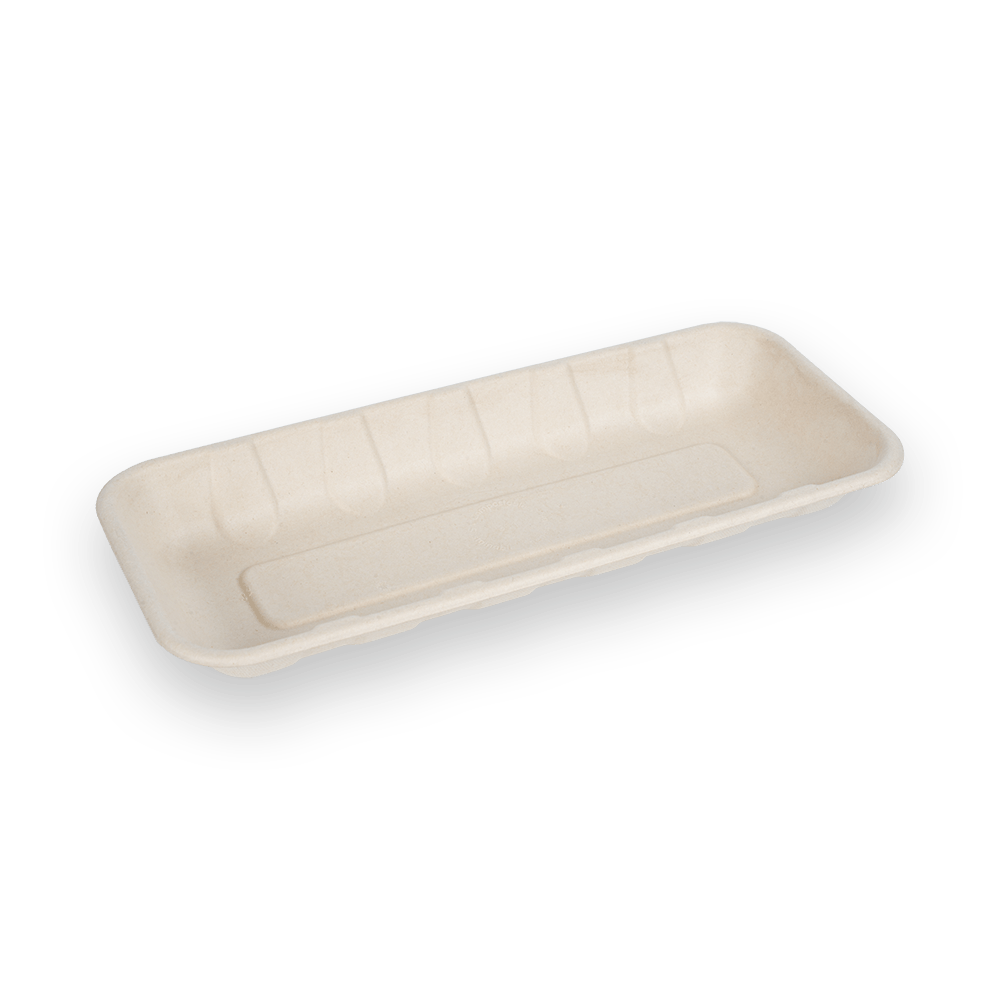
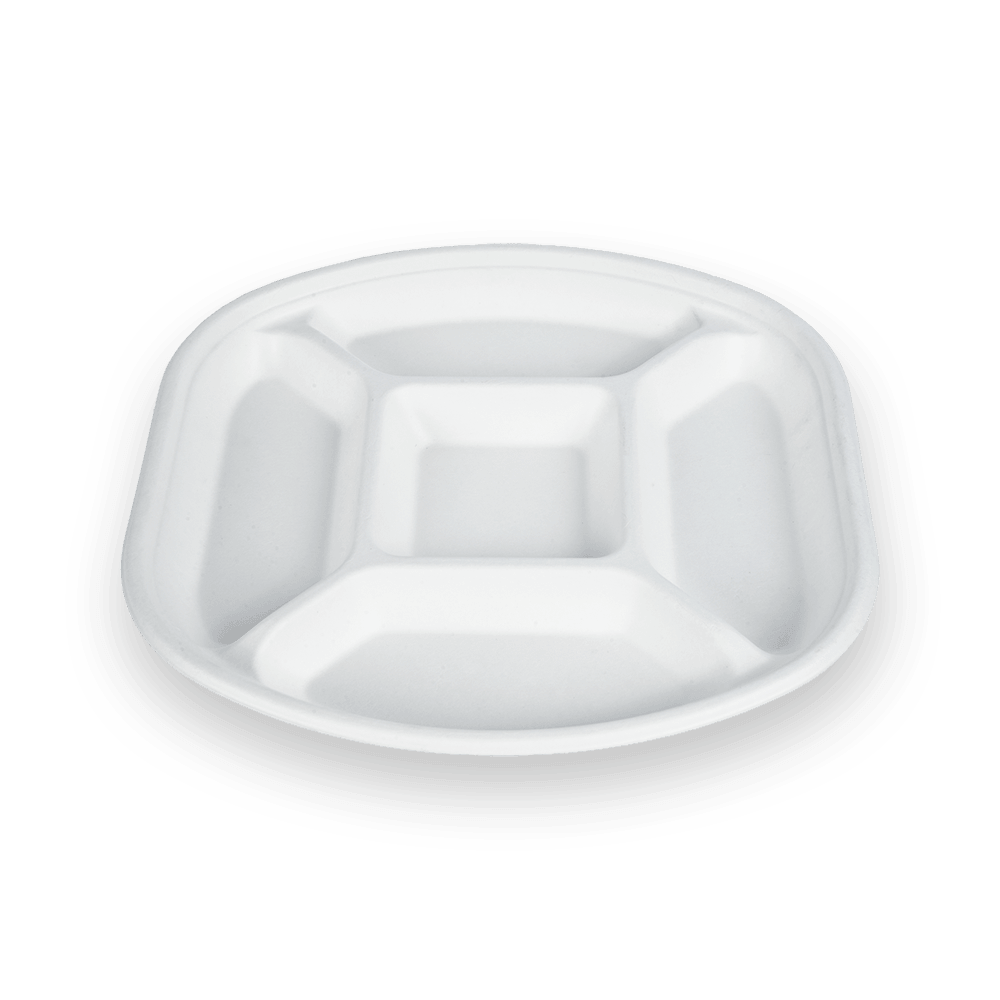
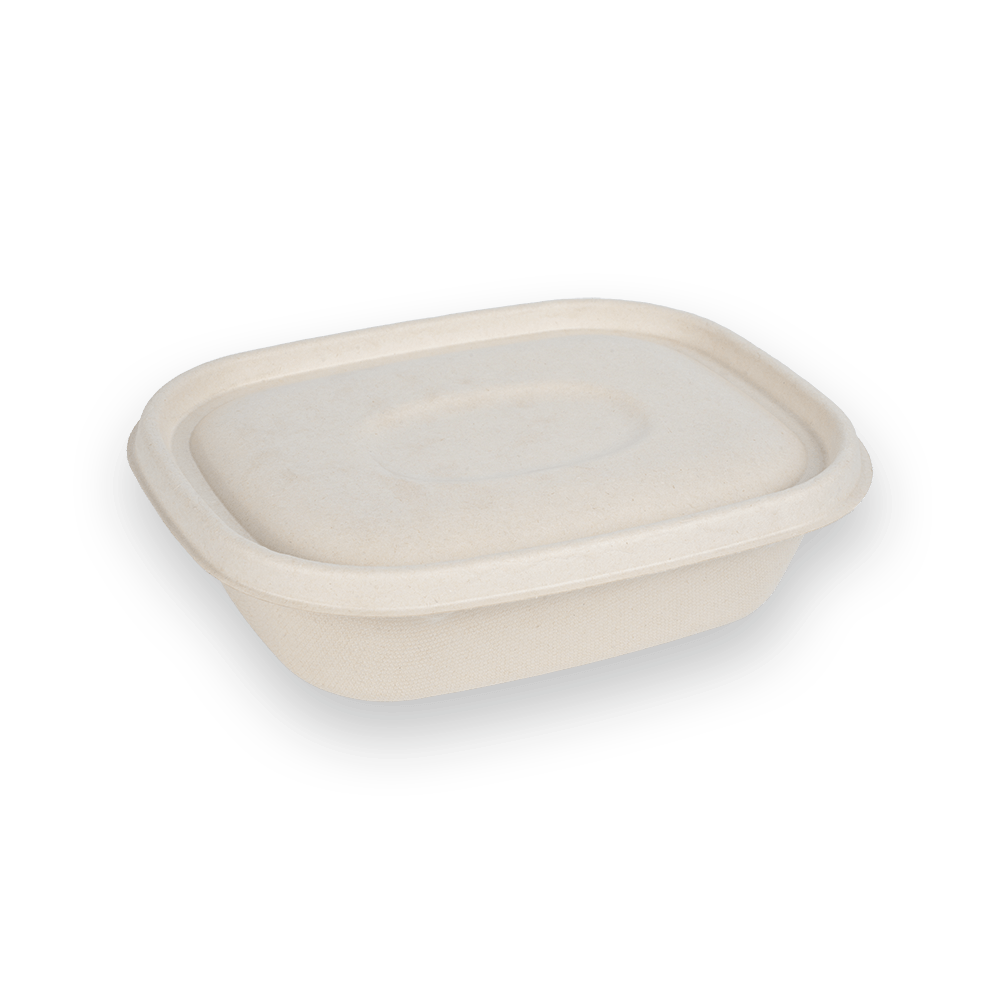
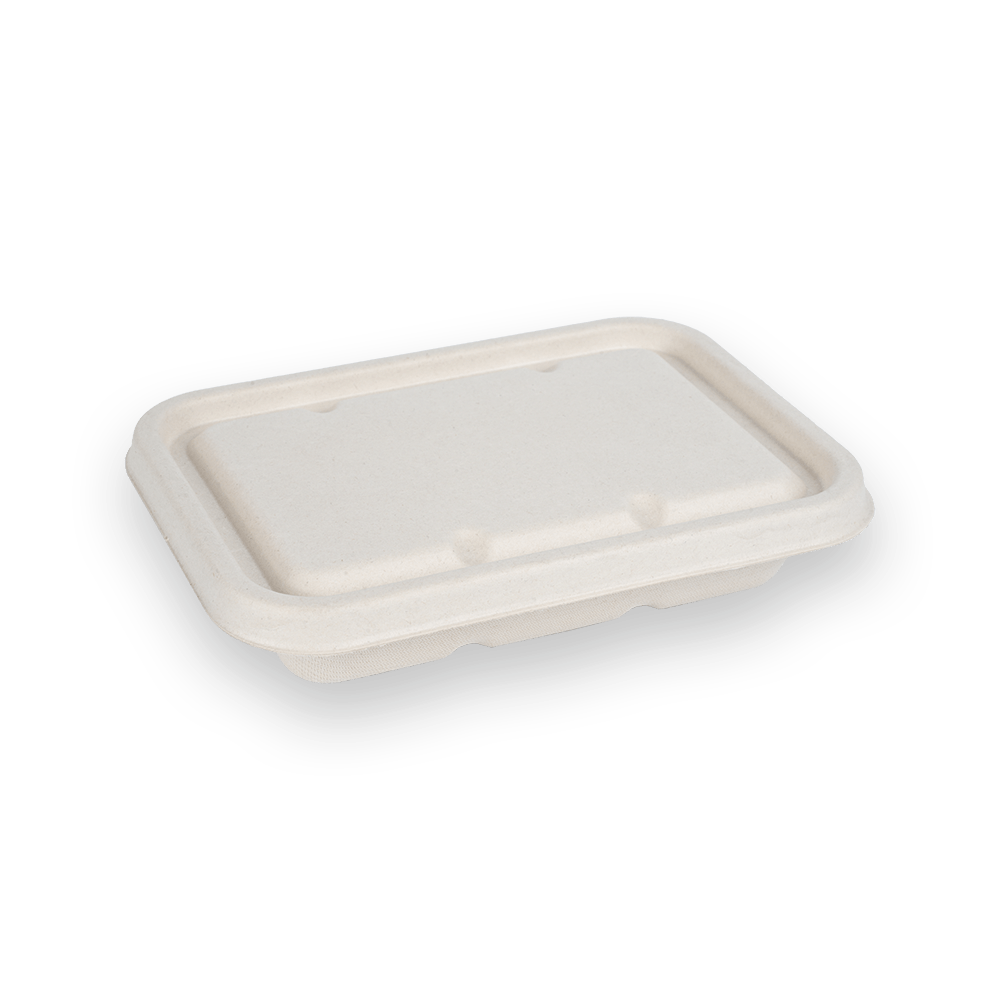
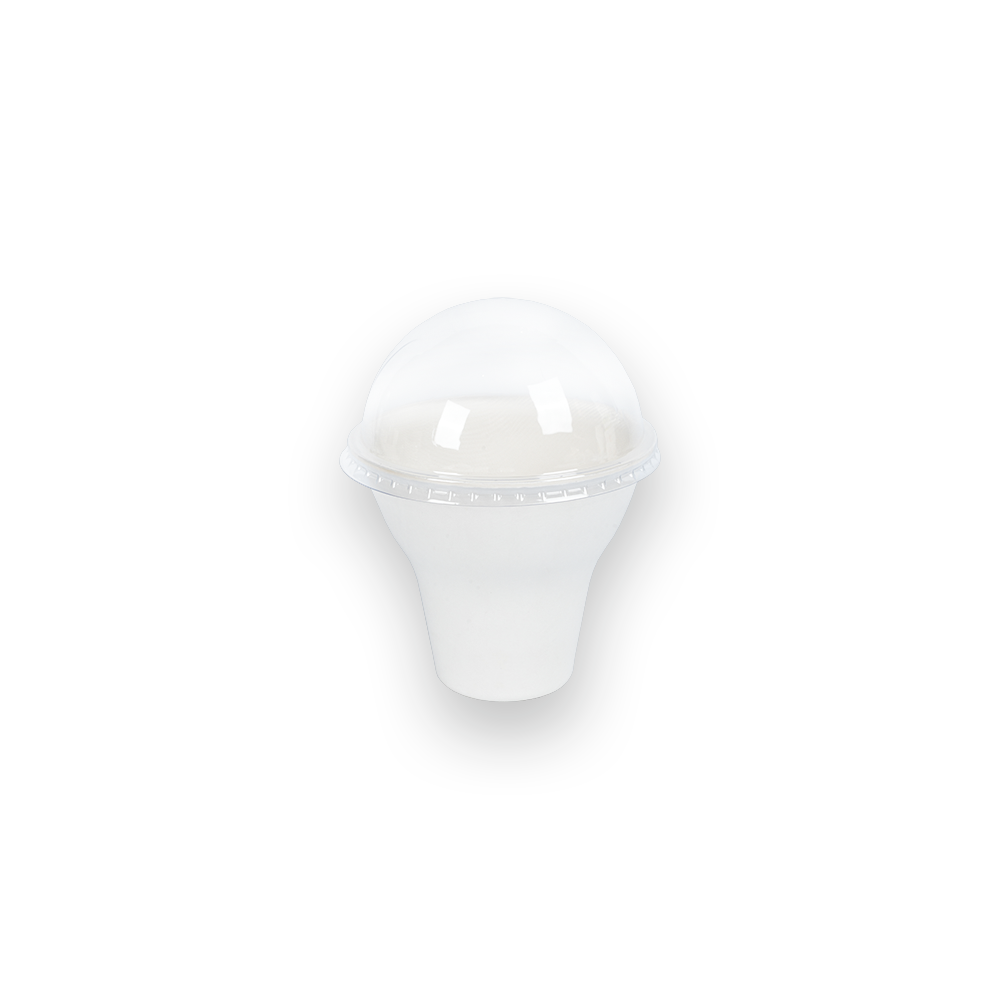
- Cafeterias and food trucks prefer trays and bowls that can be covered with a dome or lid for steam-table and microwave use.
- Retail and prepared-meal programs need containers with clear lid options and consistent oven or microwave behavior across SKUs.
Share your menu, portion sizes and reheating instructions with the supplier, and the factory can match the format and coating to your real use case instead of guessing.
FAQ
Can all bagasse containers go in the microwave?
Most bagasse containers are suitable for microwave reheating because the material is formed at high temperature, but the specific temperature range and oil resistance should be confirmed on the specification sheet for the exact SKU.
Can bagasse containers go in the oven?
Only products that are tested and documented for oven use should be used in an oven. Ask the supplier for the tested temperature and duration for the exact product. If the supplier cannot provide it, do not assume oven safety.
Is a coated container still compostable?
It depends on the certification scope of the specific product. Some coatings are accepted by composting facilities and covered by the product's certification; others are not. Confirm the certification covers the coated version before ordering.
Are the lids microwave safe too?
Not necessarily. Lids can be made from a different material with a lower heat tolerance. Always verify the lid's temperature range and microwave behavior separately from the container.
Sources
Zhong Xin Ecoware Technology (Thailand) Co., Ltd. supplies bagasse and molded fiber food packaging to importers, distributors and foodservice brands. For MOQ, pricing, samples and lead time, email info@fiber-product.com or use the contact form.


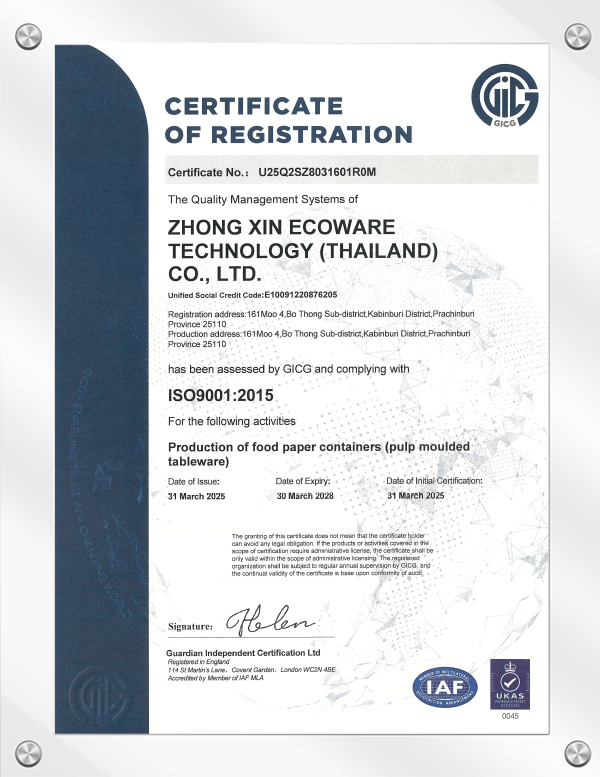
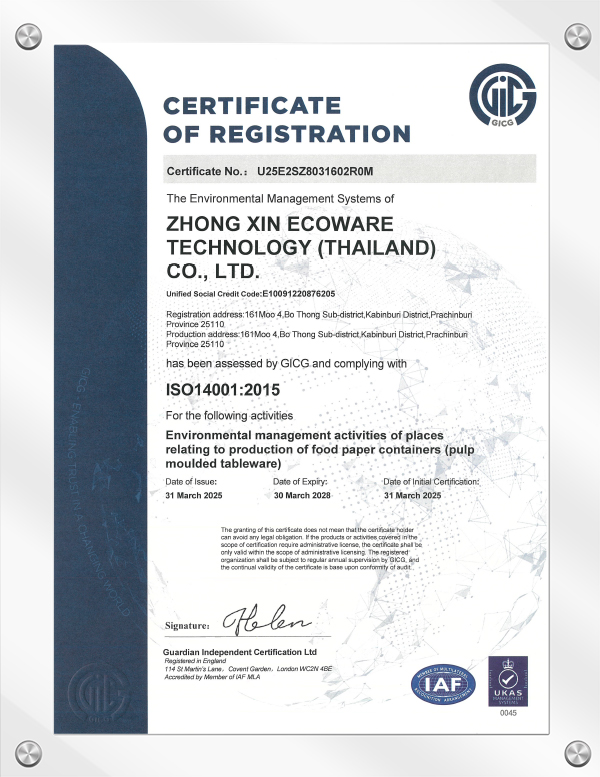
Zhong Xin Ecoware(Thailand) was registered on November 1, 2023, and officially began construction of the factory building in June 2024. At present, the first phase workshop of the factory has been fully completed and put into use. The second phase of the factory is being constructed intensively.
The landing and development of Zhong Xin in Thailand has brought a large amount of initial investment for land, factories, etc., and continuous operational investment for continuous equipment updates, technological upgrades, and capacity expansion.
Zhong Xin Ecoware(Thailand) has directly and indirectly created thousands of job opportunities, increased government revenue, promoted local economic development, cultivated local supply chains, provided systematic training for employees, improved the quality of local human capital, injected vitality into the local economy, enhanced industrial competitiveness, and ultimately improved residents' living standards.
Zhong Xin Ecoware(Thailand) actively collaborates with local pulp mills to explore new cooperation models for developing new products, improving production capacity and quality. At the same time, relying on Zhongxin's advanced production technology, process flow, management experience, and quality control system, it promotes the development of this industry in Thailand.

-
-
 +66-31240888
 -
 161 Village No. 4, Bo Thong Subdistrict Kabin Buri District Prachinburi Province 25110
-
Beyond Plates: Which Foods Suit Bagasse Tableware
Oct 02,2026
-
New Bagasse Tableware Lineup for 2026: What Is New and Where to See It
Sep 28,2026
-
How to Select Bagasse Clamshells for Burgers, Rice Meals and Fried Food
Sep 28,2026
-
Microwave Reheating: Is a Bagasse Lunch Box Suitable
Sep 25,2026
-
9 Inch Pizza Plates and Bagasse Pizza Boards: A Sourcing Guide for US and Canadian Distributors
Sep 19,2026
-
PFAS-Free & Compostability Verification: A Buyer's Checklist for Bagasse and Molded Fiber Packaging
Sep 19,2026
-
Bagasse vs PLA vs Molded Fiber: What Distributors Should Stock in 2026
Sep 19,2026
-
Can Sugarcane Plates Handle Hot, Greasy Foods
Sep 18,2026
-
Bagasse Tableware RFQ Template: Get a Comparable Thailand Factory Quote
Sep 14,2026
-
Are Takeaway Food Containers Ready for Saucy Meals
Sep 11,2026
-
7-Inch vs 9-Inch Bagasse Plates: Carton and 20GP Guide
Sep 07,2026
-
Will Bagasse Pulp Trays Sag Under Heavy Meals
Sep 04,2026
Copyright © 2025 Zhong Xin Ecoware Technology ( Thailand ) CO., LTD.
All Rights Reserved.

Biodegradable Disposable Bagasse Tableware Manufacturer