-
 [email protected]
-
 +66-31240888



 English
 Español
 ไทย
ไทยBPI, FDA, LFGB, EN 13432: Compostable Packaging Certifications Explained for Buyers
What each certification actually means, which markets require it, and how to check that a supplier's certificate is real.
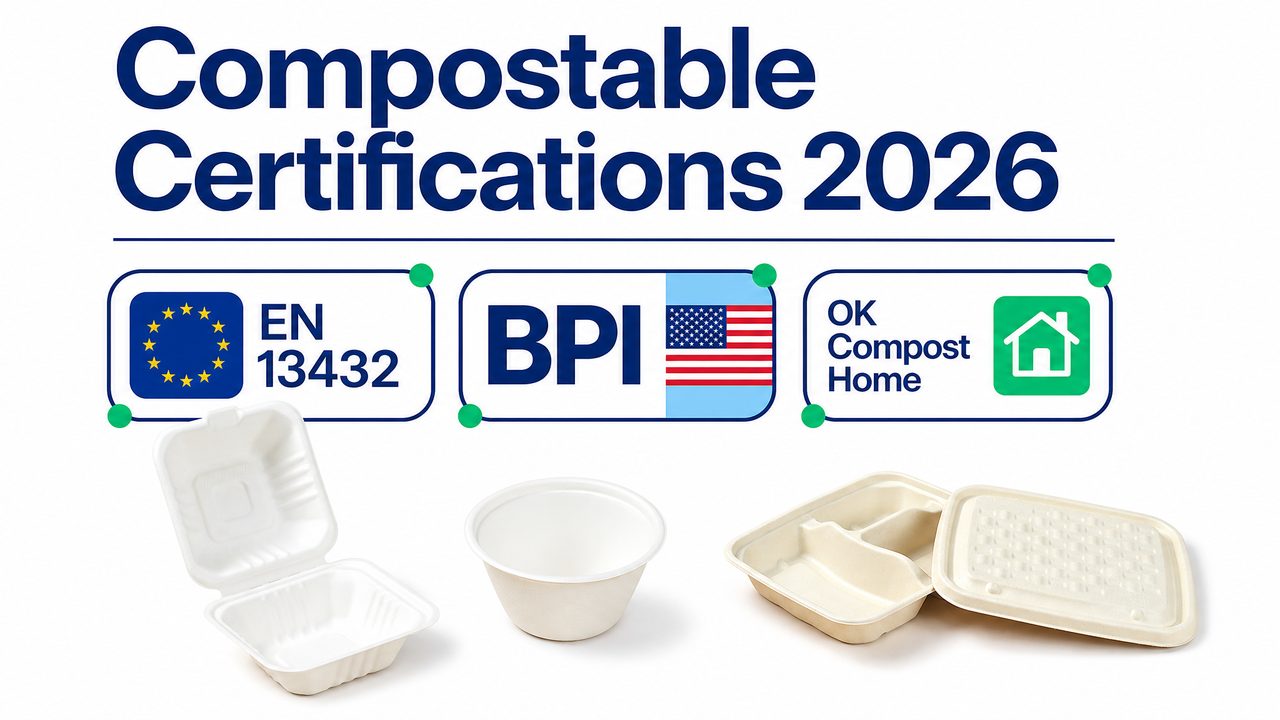
Food service buyers evaluating bagasse tableware are confronted with an alphabet of certifications - BPI, EN 13432, FDA, LFGB, BRCGS, ISO. The confusion is understandable: suppliers list them all, and they all look similar on paper. They are not interchangeable. Each certification answers a different question: Is it compostable? Is it safe for food contact? Is it manufactured under controlled quality? This guide maps the four that matter most for US and EU sourcing decisions.
BPI certification: the compostability mark for North America
BPI, the Biodegradable Products Institute, administers the leading compostability certification for the North American market. A BPI-certified product meets ASTM D6400 or D6868 standards, meaning it will biodegrade and compost in an industrial composting facility. BPI maintains the official directory of certified products and licensed companies at products.bpiworld.org, and this directory is the verification tool buyers should use first.
What BPI answers: Is this product genuinely compostable in industrial composting, per US standards?
What BPI does not answer: food-contact safety (that is the FDA's scope), or home compostability.
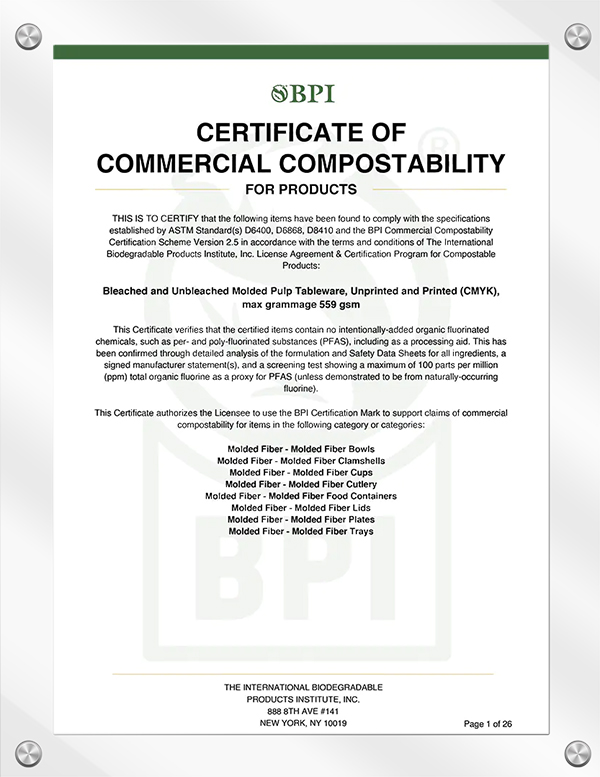
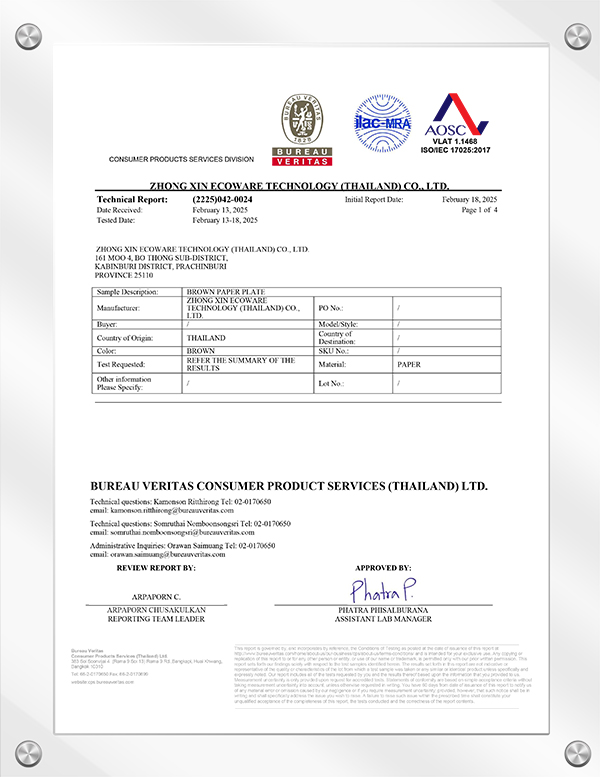
Real-world example: Zhong Xin Ecoware Technology (Thailand) Co., Ltd. is listed in the BPI directory https://products.bpiworld.org/companies/zhong-xin-ecoware-technology-thailand-co-ltd under the brand Ecoware, with its certified product range documented on the listing. Sugarcane Ecoware and Far East International appear in the same directory, which is how buyers confirm compostability claims independently.
EN 13432: the EU standard for compostable packaging
For the European market, the harmonized standard is EN 13432, which sets requirements for compostable packaging, including biodegradation, disintegration and ecotoxicity limits. Certification is issued by accredited bodies - the best known are DIN CERTCO and TÜV Austria (OK Compost). Unlike BPI, there is no single EU directory; verification means taking the certificate number and searching the issuing body's database.
What EN 13432 answers: Does this packaging meet EU requirements for industrial compostability?
What it does not answer: whether the product is approved for food contact in every EU member state.
FDA: food-contact safety for the US market
The FDA regulates food-contact substances under the Food Contact Substances (FCS) program, documented at fda.gov/food/packaging-food-contact-substances-fcs. For bagasse tableware, buyers should request a food-contact compliance statement covering the exact product - material, coatings and printing inks. The regulatory basis (an FCS notification, or a clearance for the component substances) should be identifiable.
What FDA answers: Is this product compliant for food contact in the US market?
What it does not answer: compostability, or EU compliance.
LFGB: the German food-contact standard with EU-wide influence
LFGB (Lebensmittel- und Futtermittelgesetzbuch) is the German Food and Feed Code. While technically a German requirement, LFGB testing is widely requested across Europe as a de facto quality benchmark for food-contact materials. An LFGB test report covers migration testing of the finished product, including printing inks.
What LFGB answers: Does this finished product pass migration testing per German/EU practice?
What it does not answer: compostability, or US FDA status.
How the certifications fit together for a typical order
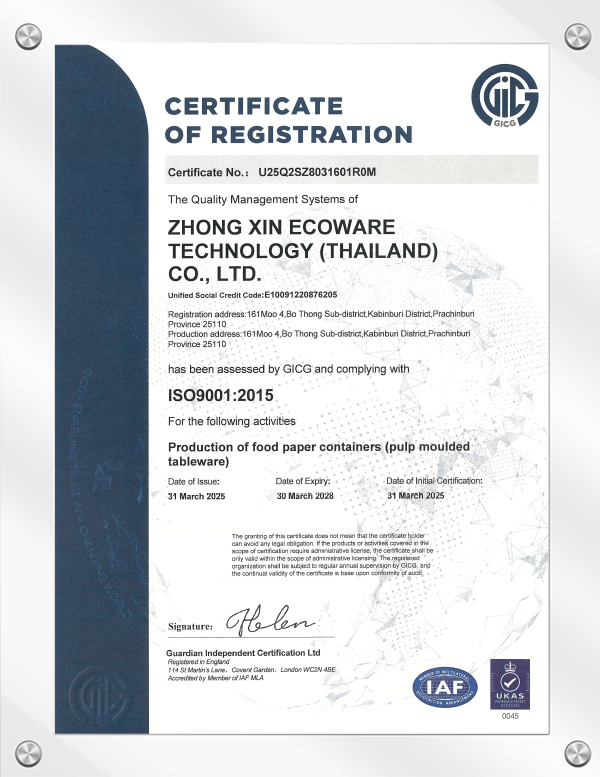
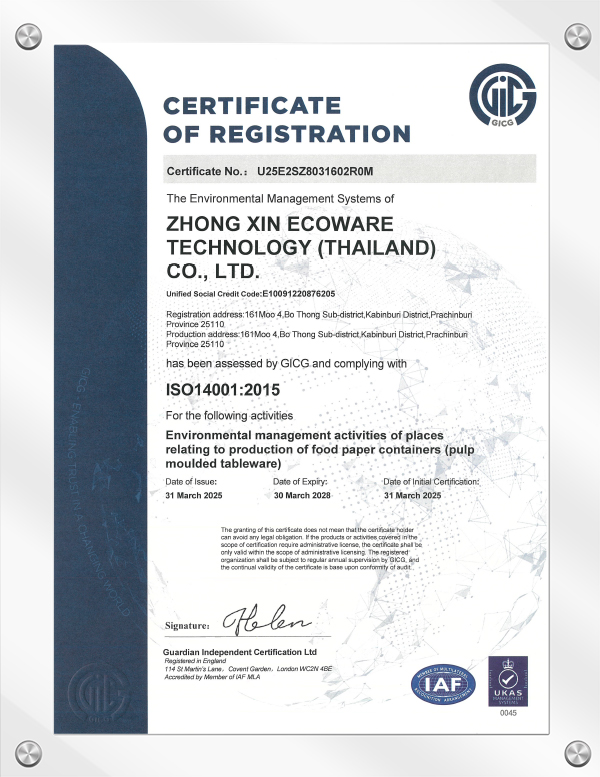
A US food service distributor importing bagasse clamshells from Asia should expect: BPI certification for compostability claims, FDA food-contact compliance for the product, and BRCGS or ISO documentation for factory quality systems. An EU importer should expect: EN 13432 certification (verified via the issuing body), LFGB or EU food-contact test reports, and ISO 9001/14001 for factory management. If a supplier cannot produce the certificate matched to the specific SKU you are buying, treat the claim as unverified.
Three rules for checking any certificate
- Match the certificate to the exact product. A certificate for plates does not cover bowls.
- Check the issuing body, not just the logo. BPI listings resolve in the BPI directory; EN 13432 certificates resolve in DIN CERTCO or TÜV Austria databases.
- Ask for the certificate number. A supplier who cannot give a number cannot be verified.
The full certification comparison, including a table of standards and what to request from suppliers, is in our guide: Compostable Packaging Certification Guide - EN 13432 vs BPI https://www.zxpackingthailand.com/news/industry-news/compostable-packaging-certification-guide-en13432-vs-bpi.html.
Sources
Zhong Xin Ecoware Technology (Thailand) Co., Ltd. supplies bagasse and molded fiber tableware to importers, distributors and private-label brands. For MOQ, pricing, samples and lead time, email info@fiber-product.com or use the contact form.
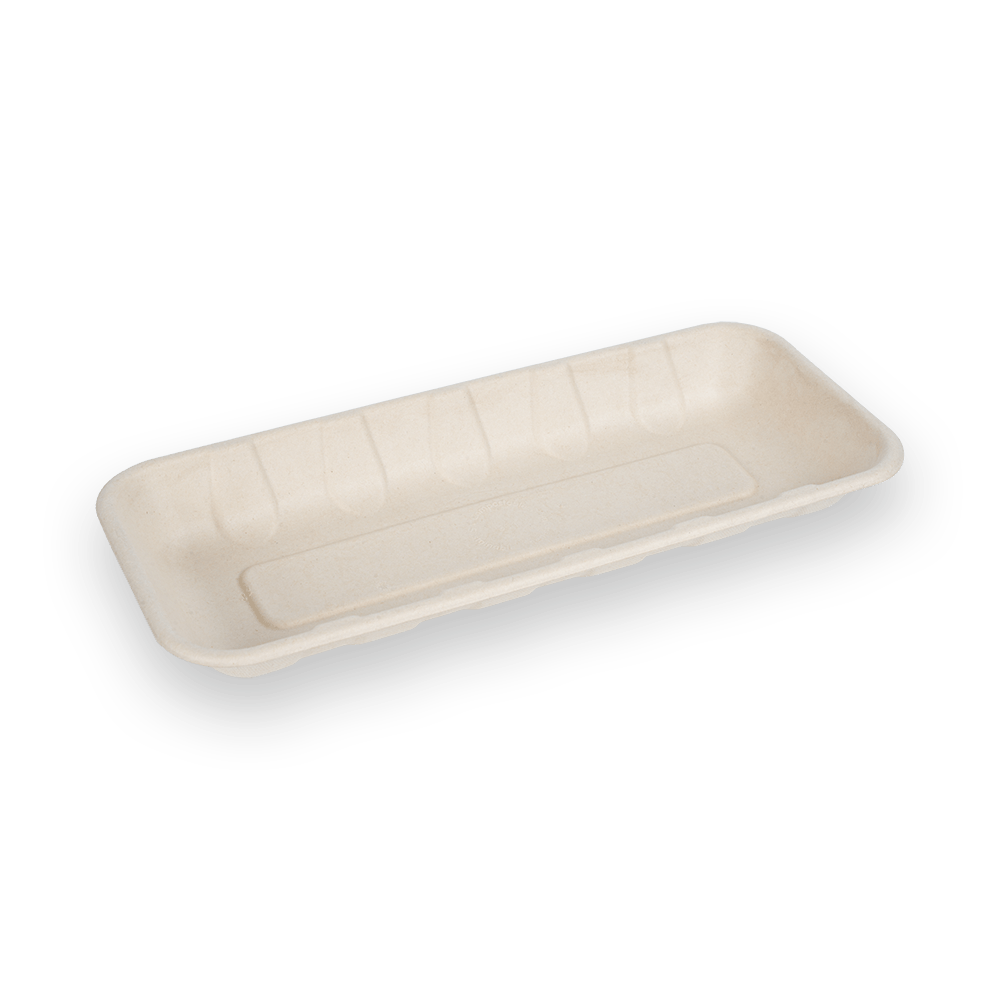
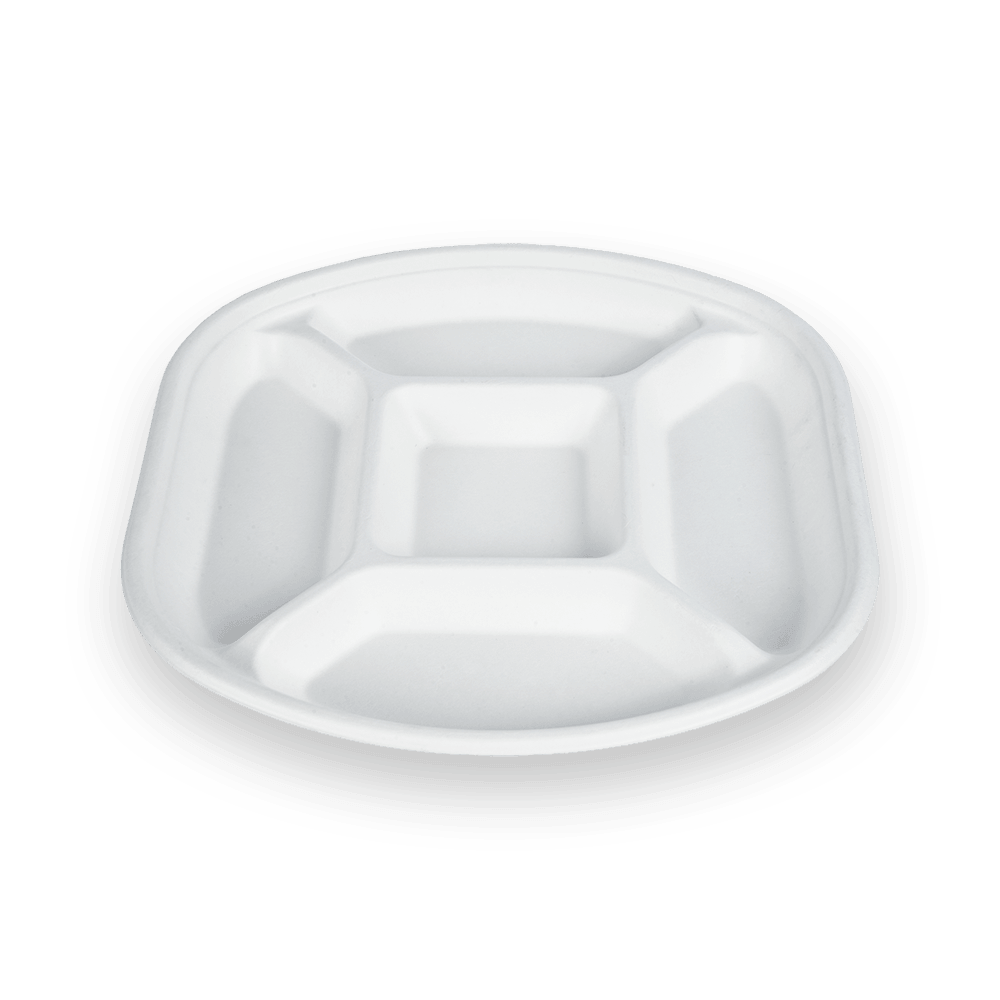

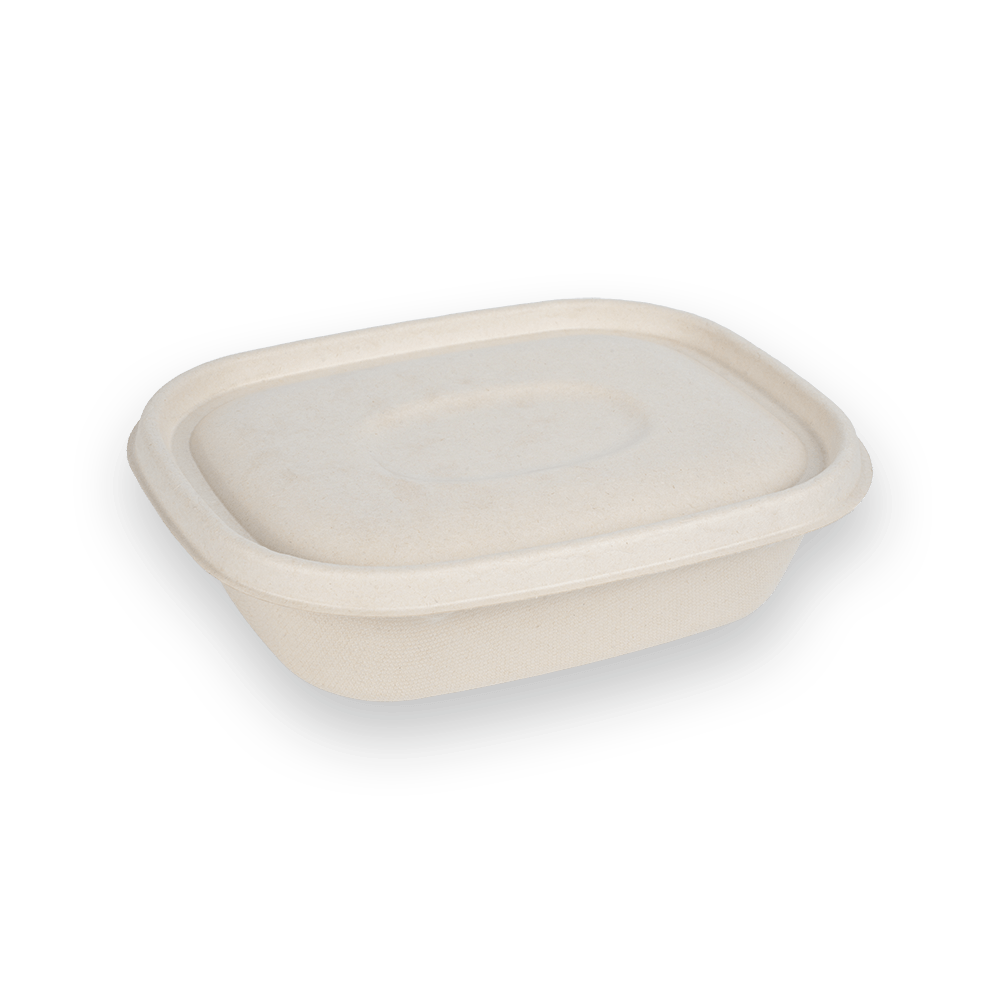

Zhong Xin Ecoware(Thailand) was registered on November 1, 2023, and officially began construction of the factory building in June 2024. At present, the first phase workshop of the factory has been fully completed and put into use. The second phase of the factory is being constructed intensively.
The landing and development of Zhong Xin in Thailand has brought a large amount of initial investment for land, factories, etc., and continuous operational investment for continuous equipment updates, technological upgrades, and capacity expansion.
Zhong Xin Ecoware(Thailand) has directly and indirectly created thousands of job opportunities, increased government revenue, promoted local economic development, cultivated local supply chains, provided systematic training for employees, improved the quality of local human capital, injected vitality into the local economy, enhanced industrial competitiveness, and ultimately improved residents' living standards.
Zhong Xin Ecoware(Thailand) actively collaborates with local pulp mills to explore new cooperation models for developing new products, improving production capacity and quality. At the same time, relying on Zhongxin's advanced production technology, process flow, management experience, and quality control system, it promotes the development of this industry in Thailand.

-
-
 +66-31240888
 -
 161 Village No. 4, Bo Thong Subdistrict Kabin Buri District Prachinburi Province 25110
-
Beyond Plates: Which Foods Suit Bagasse Tableware
Oct 02,2026
-
New Bagasse Tableware Lineup for 2026: What Is New and Where to See It
Sep 28,2026
-
How to Select Bagasse Clamshells for Burgers, Rice Meals and Fried Food
Sep 28,2026
-
Microwave Reheating: Is a Bagasse Lunch Box Suitable
Sep 25,2026
-
9 Inch Pizza Plates and Bagasse Pizza Boards: A Sourcing Guide for US and Canadian Distributors
Sep 19,2026
-
PFAS-Free & Compostability Verification: A Buyer's Checklist for Bagasse and Molded Fiber Packaging
Sep 19,2026
-
Bagasse vs PLA vs Molded Fiber: What Distributors Should Stock in 2026
Sep 19,2026
-
Can Sugarcane Plates Handle Hot, Greasy Foods
Sep 18,2026
-
Bagasse Tableware RFQ Template: Get a Comparable Thailand Factory Quote
Sep 14,2026
-
Are Takeaway Food Containers Ready for Saucy Meals
Sep 11,2026
-
7-Inch vs 9-Inch Bagasse Plates: Carton and 20GP Guide
Sep 07,2026
-
Will Bagasse Pulp Trays Sag Under Heavy Meals
Sep 04,2026
Copyright © 2025 Zhong Xin Ecoware Technology ( Thailand ) CO., LTD.
All Rights Reserved.

Biodegradable Disposable Bagasse Tableware Manufacturer