

 English
 Español
 ไทย
ไทยWhat determines the price of bagasse packaging?
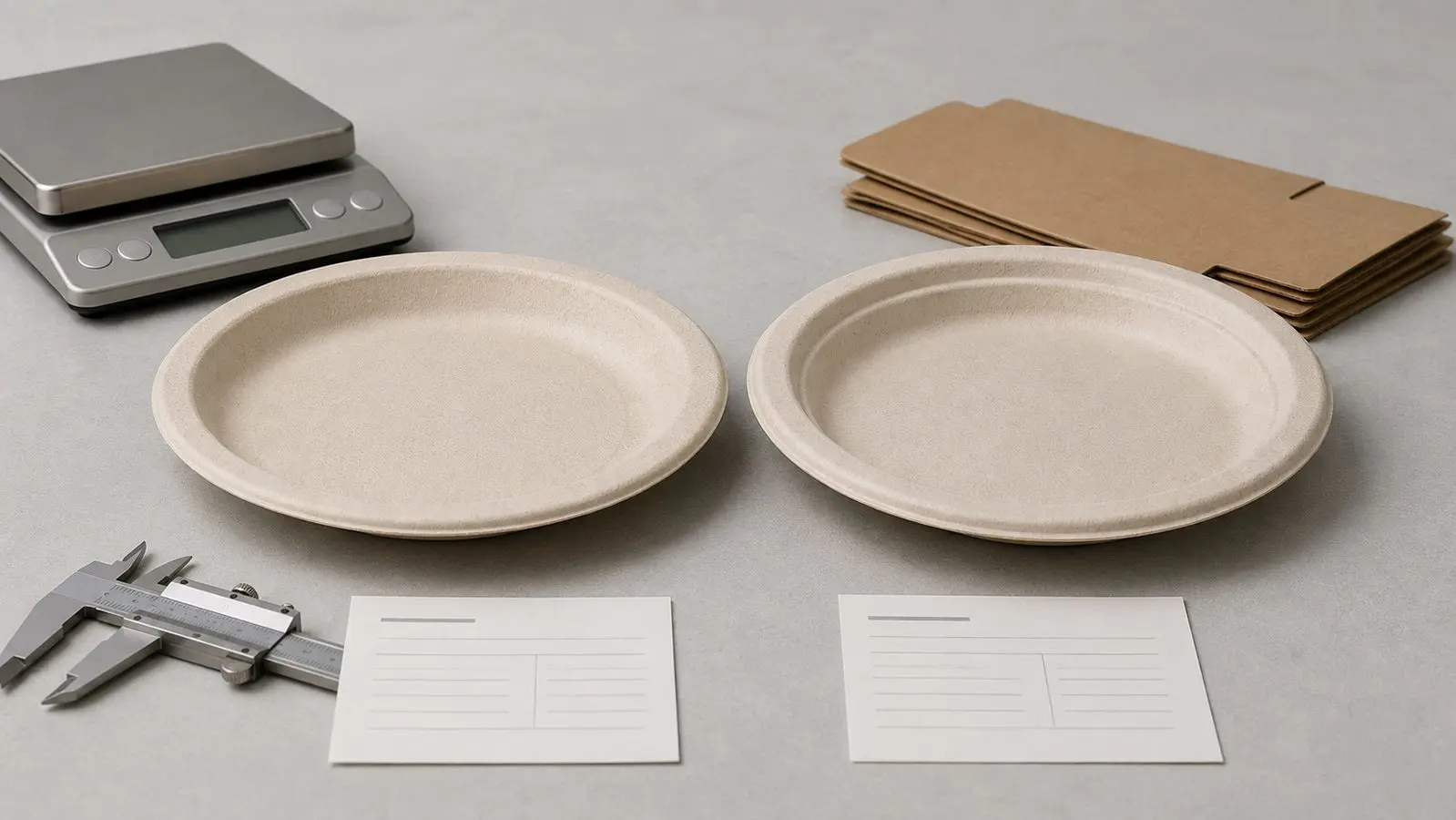
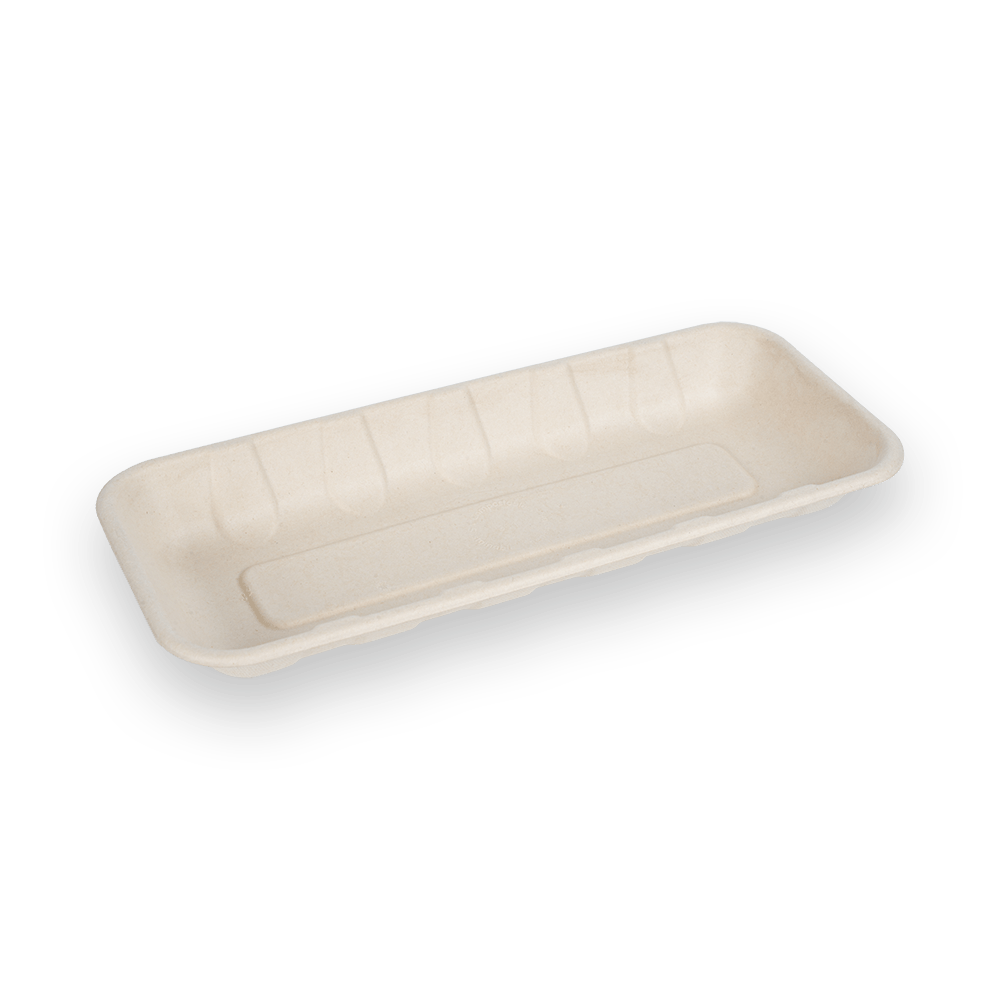
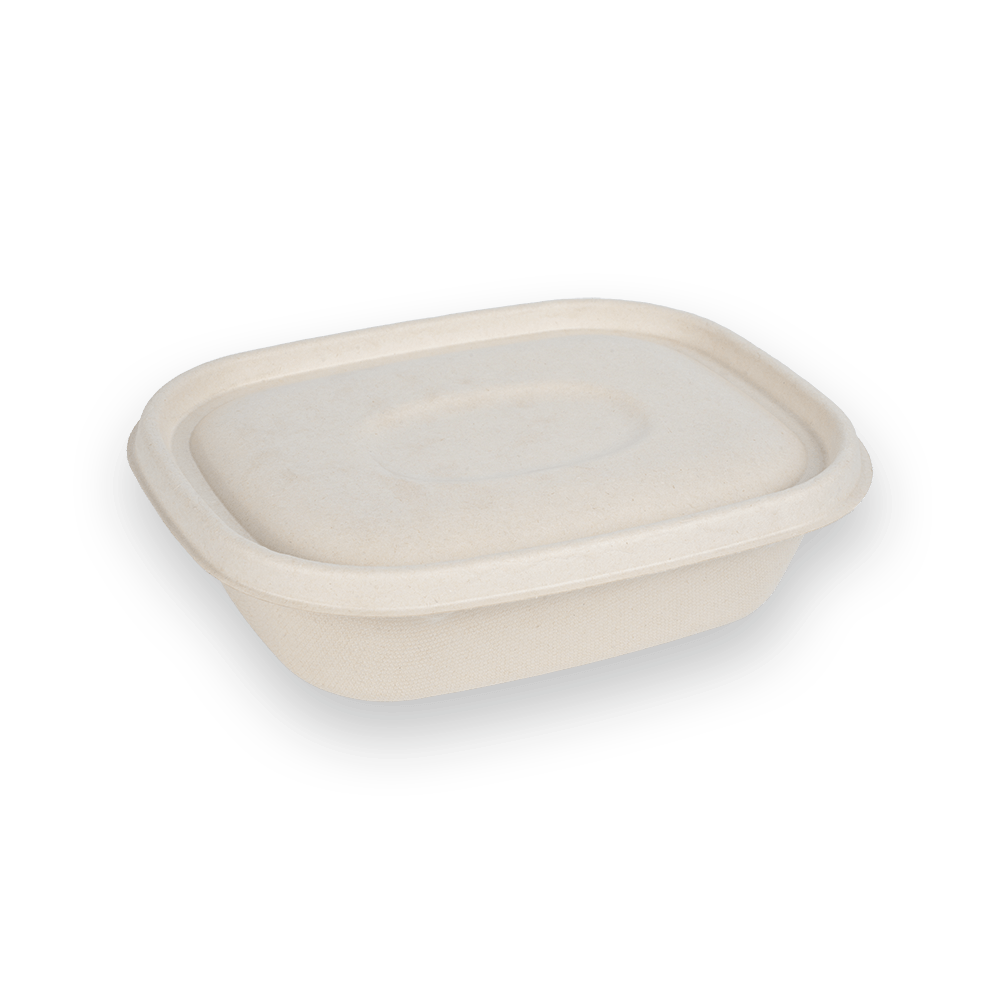
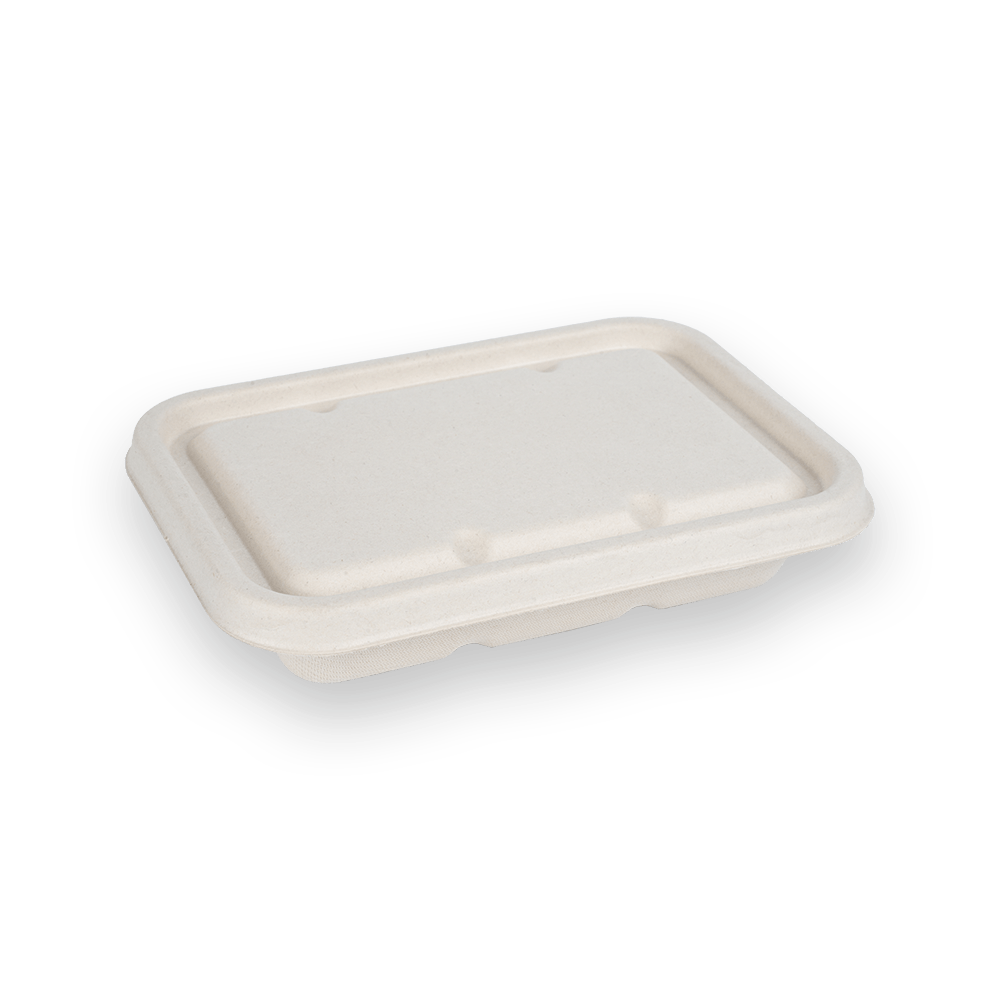
The main cost drivers are product geometry, material input, forming cycle, finishing, packaging and order complexity. A lightweight round plate from an existing mold is not priced the same way as a deep three-compartment clamshell with a new tool, private-label cartons and market-specific testing.
| Cost driver | What the buyer should specify | Why it changes the quote |
|---|---|---|
| Product and dimensions | Plate, bowl, tray or clamshell; length, width, depth and compartment layout | Geometry determines mold, forming time and trimming complexity. |
| Unit weight and tolerance | Target grams per piece and acceptable tolerance | Fiber consumption and process control affect both cost and performance. |
| Color and finish | Natural or white; surface and edge expectations | Fiber preparation and finishing requirements may differ. |
| Existing or custom mold | Stock SKU, modified design or completely new shape | New tooling adds development cost, validation time and usually a different MOQ. |
| Printing and private label | Product embossing, sleeve, polybag, label and carton artwork | Each customized component adds setup, artwork approval and material minimums. |
| Case packing | Pieces per bag, bags per carton, carton size, pallet or floor loading | Molded fiber is volume-sensitive; packing efficiency changes freight per piece. |
| Compliance scope | Destination market, food type, temperature, contact time and required claim | Testing and documentation must match the intended use and exact product scope. |
| Quantity and trade term | Pieces by SKU, shipment frequency, destination port and FOB/CIF/DDP | Production utilization, logistics and risk allocation change the comparable total. |
Why can two quotes for the same 9-inch plate differ?
“9-inch bagasse plate” is not a complete specification. Two plates with the same diameter may differ in unit weight, rim design, depth, stiffness, color, packing count, carton volume, grease-resistance formulation, testing scope and quality tolerance. One quote may be for an existing stock mold and plain cartons; another may include private-label packaging, inspection and a different trade term.
Before choosing the lower price, normalize both quotations into the same comparison sheet. If a field is blank, treat it as an unanswered commercial risk rather than as a saving.
What MOQ should buyers expect for bagasse tableware?
MOQ is SKU-specific. Existing molds and standard packing normally support a lower starting quantity than a custom shape, new tooling, embossed logo or printed retail pack. Ask for the MOQ for each SKU, not one MOQ for the entire product family, and confirm whether mixed-SKU container loading is allowed.
A useful MOQ answer should state:
- minimum pieces per SKU;
- minimum cartons per artwork or packing format;
- whether sample, pilot and production quantities differ;
- whether the order can combine plates, bowls, trays or clamshells;
- whether tooling or printing setup is charged separately.
Zhong Xin Ecoware Thailand's existing bagasse factory ordering guide reports a typical production lead-time range of 25–45 days, depending on order size and new tooling. This is a planning reference, not a binding promise; the current quotation and production schedule should control.
How do carton packing and container utilization change landed cost?
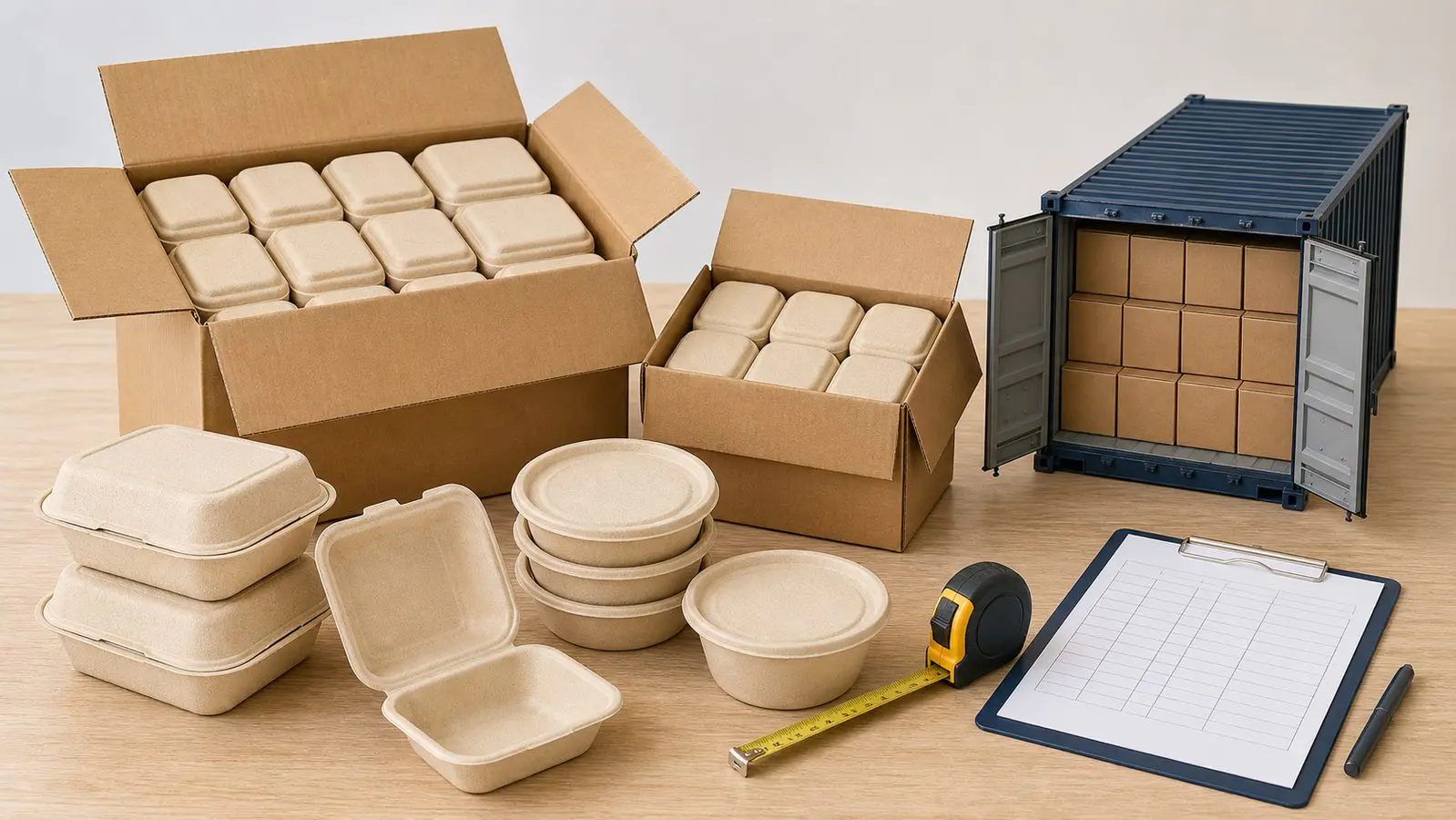
Bagasse products are relatively bulky, so freight per piece can change materially when the pieces-per-carton, carton dimensions or loading method changes. A low factory unit price may produce a higher landed cost if the cartons use container space inefficiently.
Request these fields before comparing offers:
- pieces per bag and bags per carton;
- pieces per carton;
- carton length, width and height;
- carton cubic volume, net weight and gross weight;
- cartons and total pieces per planned container;
- palletized or floor-loaded configuration;
- estimated loading loss and spare-carton policy.
A simple comparison formula is:
Estimated landed cost per sellable piece = (goods + allocated tooling + printing + inland logistics + ocean freight + insurance + duty/tax + customs/brokerage + inspection) ÷ sellable pieces received.
Use the expected sellable quantity after the agreed quality allowance—not only the nominal quantity on the purchase order.
How should buyers compare FOB Thailand, CIF and DDP?
Incoterms allocate transport obligations, costs and risks between the seller and buyer. The International Chamber of Commerce identifies Incoterms 2020 as the current set of 11 rules. The table below is a purchasing summary; the signed sales contract and named place or port remain decisive.
| Term | Useful for | Main comparison risk |
|---|---|---|
| FOB named port | Importers who manage ocean freight and destination clearance | Freight, insurance, duties and destination charges are outside the factory price. |
| CIF named destination port | Buyers who want freight and minimum insurance arranged to the port | Destination handling, import clearance and local delivery may still be excluded. |
| DDP named place | Buyers asking for a delivered comparison | Confirm importer-of-record, duty assumptions, tax treatment and exclusions in writing. |
Do not compare an FOB unit price with a DDP unit price and call the difference a manufacturing premium. First separate product cost, origin charges, freight, import charges and final delivery.
Which compliance documents can affect the quote?
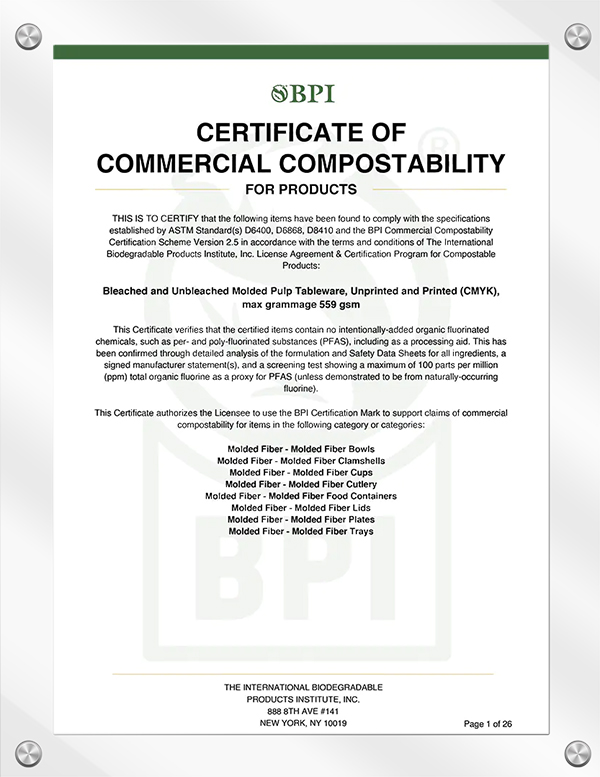
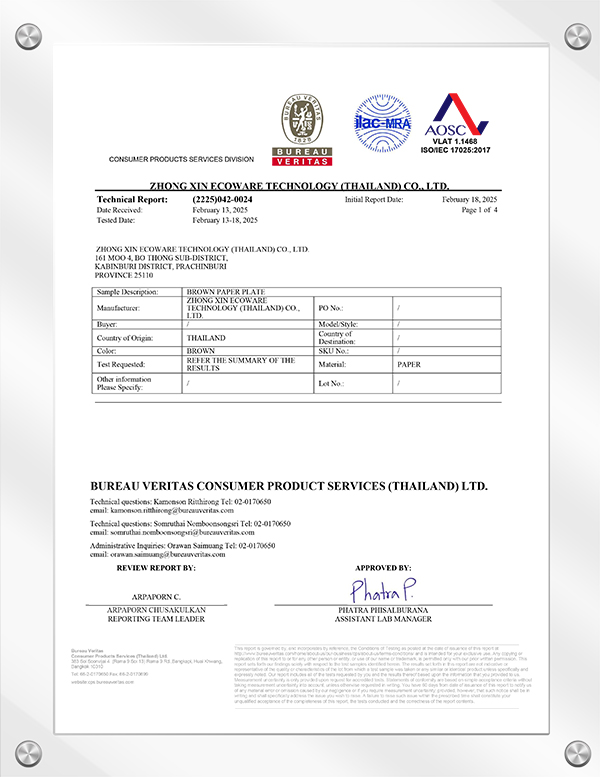
The required evidence depends on the destination market, intended food contact, temperature and time conditions, product construction and environmental claim. For U.S. food-contact use, the FDA explains that food-contact substances and packaging components must be safe for their intended conditions of use. For compostability claims, the U.S. Federal Trade Commission requires competent and reliable scientific evidence and says claims should be qualified when only commercial composting is supported.
BPI's public catalog lists certified products down to the item number. That is why a supplier's general certificate image is not enough: verify whether the exact product or authorized private-label arrangement appears within the applicable scope. BPI also distinguishes commercial compostability from home compostability.
Ask the supplier to identify, for each quoted SKU:
- the report or certificate holder;
- certificate or report number and validity date;
- covered item number, material, color, coating or additive;
- covered manufacturing site;
- test conditions and intended food-contact use;
- whether private-label use needs a sublicense or separate authorization.
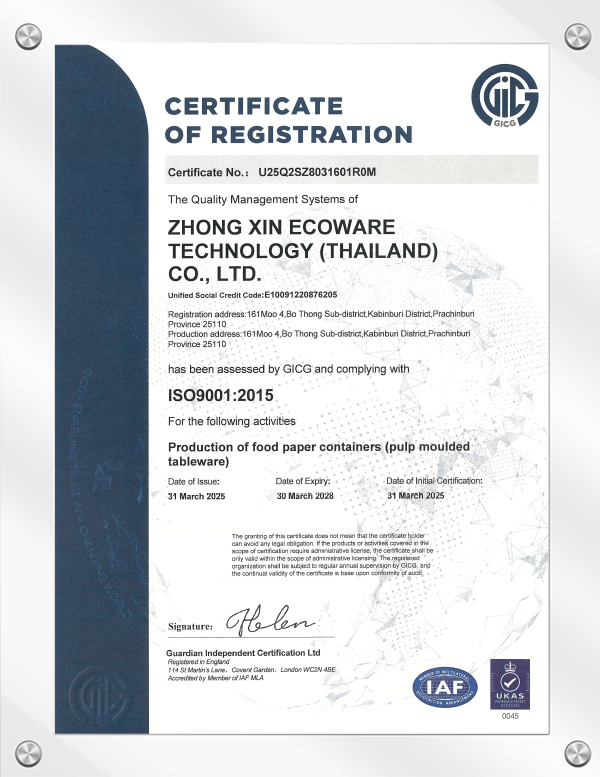
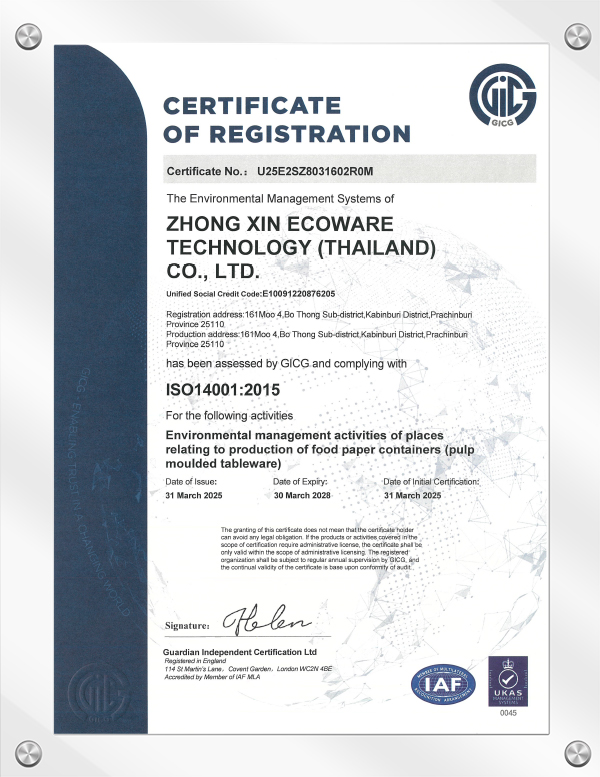
Use the Zhong Xin certification scope guide together with the official BPI product catalog, FDA food packaging information and FTC Green Guides summary.
What information should a buyer send for an accurate quotation?
| RFQ field | Example of a usable input |
|---|---|
| Product | 9-inch round bagasse plate, natural color, existing mold acceptable |
| Dimensions and performance | Drawing or reference sample; target unit weight; hot, oily or wet food; temperature and hold time |
| Quantity | Pieces per SKU for trial order and annual forecast |
| Packing | Pieces per bag, bags per carton, retail or master-carton artwork |
| Customization | Embossed logo, label, sleeve, printing colors or new shape |
| Compliance | Destination country, required product claims and buyer-required reports |
| Quality | Approved sample, dimensional tolerance, defect definitions and inspection level |
| Delivery | FOB Thailand port, CIF destination port or DDP named place; requested ship window |
Attach a drawing, current sample photo and packing requirement whenever possible. If you are switching suppliers, identify the performance problem you are trying to solve—such as lid fit, edge cracks, oil leakage, nesting, carton damage or inconsistent unit weight.
How should a distributor evaluate the final quote?
- Confirm that every supplier quoted the same SKU specification.
- Check MOQ and mixed-SKU rules line by line.
- Normalize carton loading and trade terms.
- Verify certificate scope for the exact item and destination.
- Approve physical samples before production.
- Agree lead time, payment milestone and quality acceptance in writing.
- Calculate landed cost per sellable piece and record all assumptions.
For the full sequence from RFQ and samples to AQL inspection and shipping documents, read How to Order from an Asian Bagasse Factory. Buyers planning custom molds or private-label programs can also review the OEM/ODM bagasse manufacturing guide.
Frequently asked questions
How much does bagasse packaging cost wholesale?
Wholesale cost cannot be compared reliably without an exact SKU, unit weight, packing format, order quantity, compliance scope and Incoterm. Request a written cost breakdown and calculate landed cost per sellable piece.
What is the MOQ for bagasse tableware from Thailand?
MOQ depends on the SKU, mold, packaging and customization. Stock shapes with standard cartons usually have a lower starting quantity than custom molds, embossing or printed retail packs. Confirm MOQ per SKU and ask whether mixed-SKU loading is permitted.
Is bagasse packaging cheaper than plastic?
Not in every application. The result depends on product design, purchase volume, freight, local duties, waste-system requirements and the performance being compared. Use a like-for-like landed-cost and compliance comparison instead of a general material claim.
Does private-label printing increase MOQ?
It often can because printed bags, sleeves, labels and cartons have their own setup and material minimums. Ask the factory to separate product MOQ from packaging MOQ.
What documents should U.S. importers request?
Request food-contact documentation appropriate to the intended use, item-level compostability evidence when making compostable claims, PFAS-related evidence where required, product specifications, packing list, commercial invoice and country-of-origin documents. Verify the exact scope rather than relying on a general factory certificate.
How long does a bagasse tableware order take?
The site's existing procurement guide gives 25–45 days as a typical production range, depending on order size and whether tooling is new. Sampling, artwork, tests, holidays, material planning and shipping are additional; confirm the current schedule in writing.
Request a comparable Thailand factory quotation
Send the product drawing or sample photo, quantity by SKU, packing format, destination market, required documents, target trade term and requested ship window to [email protected]. Zhong Xin Ecoware Technology (Thailand) Co., Ltd. can then quote against a written specification instead of an ambiguous product name.
Sources and verification links
- Zhong Xin Ecoware Thailand: How to Order from an Asian Bagasse Factory
- Zhong Xin Ecoware Thailand: Certification and Scope Guide
- Biodegradable Products Institute: Find Certified Products
- U.S. Food and Drug Administration: Food Ingredients & Packaging
- U.S. Federal Trade Commission: Environmental Claims Summary
- International Chamber of Commerce: Incoterms 2020