-
 [email protected]
-
 +66-31240888



 English
 Español
 ไทย
ไทยHow to Partner with an OEM/ODM Bagasse Tableware Manufacturer: Complete Process Guide
How to Partner with an OEM ODM Bagasse Tableware Manufacturer: Complete Process Guide 2026
Why Source from Zhong Xin Ecoware?
Zhong Xin Ecoware supplies international packaging groups and serves end-use applications for leading foodservice, retail, and supermarket brands.
- China and Thailand production bases
- Nearly 200,000 tons of combined planned and operating capacity
- Thailand base fully operational with 75,000 tons of capacity
- Products exported to 80+ countries and regions
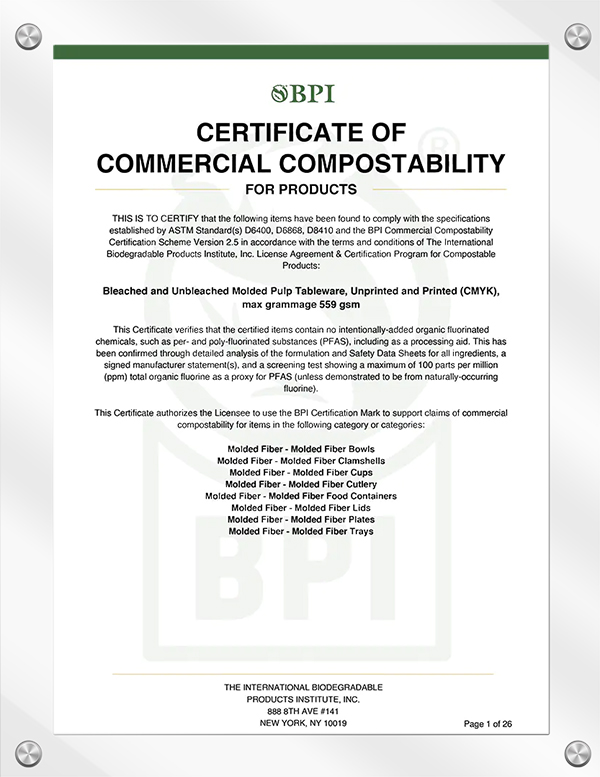
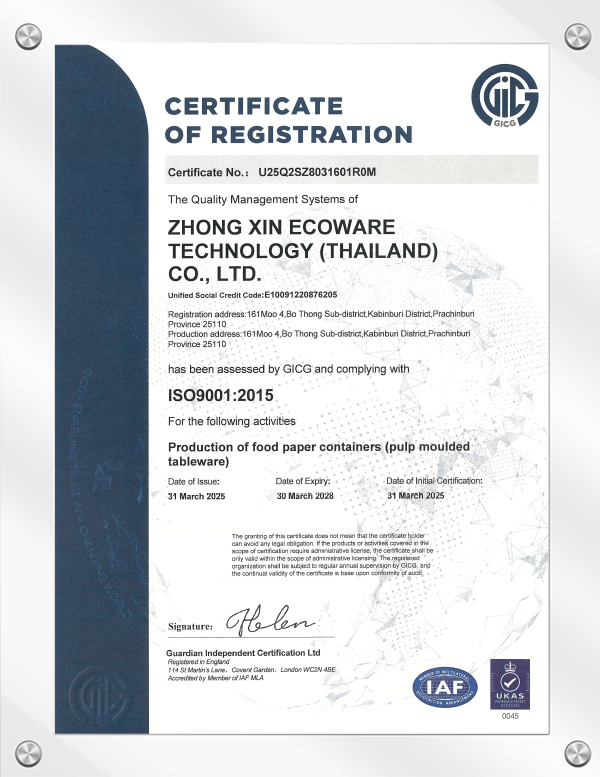
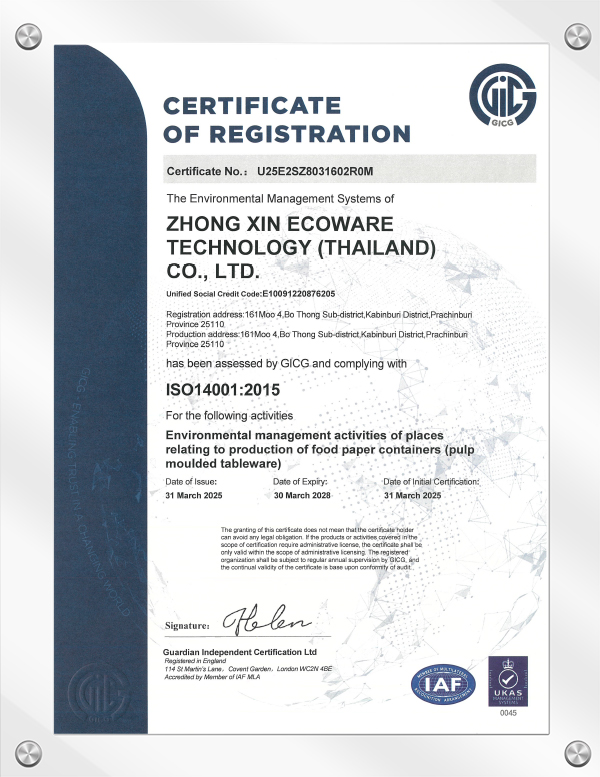
- FDA, EU, LFGB, BfR, BRC, BSCI, ISO9001, BPI, OK COMPOST HOME, ABA
- Serving global packaging groups and end-use brands across foodservice and retail
- 115 patents in molded pulp packaging and related technologies
- MOQ from 100,000 pieces
- PFAS-free and compostable packaging options for US and EU markets

Working with an oem odm bagasse tableware manufacturer is now one of the fastest routes for foodservice brands, supermarket chains, and cross-border sellers to launch sustainable packaging. Building a new factory from zero can require tens of millions in investment and more than 18 months of setup. For most buyers, that is not a practical route.
A qualified oem odm bagasse tableware manufacturer gives buyers access to existing molds, production lines, certifications, sampling support, and export experience. The real challenge is not finding a supplier; it is finding one that can manage design, compliance, quality control, production ramp-up, and delivery together.
This guide explains the full bagasse tableware OEM process from product requirements to shipment. It is written for buyers sourcing Molded Pulp food containers, molded fiber tableware, sugarcane tableware, and eco-friendly food containers from China and Thailand.
Why Brands Choose an OEM ODM Bagasse Tableware Manufacturer
Global plastic restrictions are accelerating, and demand for sugarcane tableware is rising across restaurants, supermarkets, food delivery platforms, and retail packaging channels. For brands that need fast market entry, partnering with an oem odm bagasse tableware manufacturer is usually more efficient than investing in in-house production.
OEM(Original Equipment Manufacturer)means the buyer provides drawings, samples, specifications, or private mold requirements, and the factory produces according to those requirements. It is suitable for mature brands with clear product concepts or exclusive packaging structures.
ODM(Original Design Manufacturer)means the factory provides existing mold libraries, product structures, and design options. The buyer selects a model, adjusts branding, logo, size, or packaging details, and launches faster with lower development cost.
A leading ODM supplier such as Zhong Xin Ecoware can support both dry-press and wet-press processes, with 115 patents and more than 200,000 tons of annual production capacity. For buyers seeking a sustainable food packaging OEM partner, this dual-process capability helps cover standard food containers, deep-cavity bowls, clamshells, trays, and customized molded pulp packaging.
OEM vs ODM for Bagasse Tableware Buyers
| Cooperation Model | How It Works | Best Fit | Buyer Risk |
|---|---|---|---|
| OEM | Buyer provides drawings, samples, 3D files, or technical specifications; factory produces accordingly. | Mature brands, private molds, patented structures, chain restaurant packaging. | Buyer owns design responsibility; poor drawings may still lead to poor products. |
| ODM | Factory provides existing mold library; buyer selects models and customizes logo, size, or packaging details. | Fast launch, trial orders, private-label products, cross-border e-commerce. | Public mold similarity; competitors may use similar structures. |
For early-stage product testing, ODM is often the safer entry point. Once sales volume becomes stable, buyers can move toward OEM development for stronger differentiation and long-term control.
Step 1 – Define Your Product Requirements
The first step in the bagasse tableware OEM process is defining the product before speaking with factories. A vague inquiry such as “send me your best clamshell price” usually leads to inaccurate quotes, wrong samples, and repeated revisions.
A strong inquiry should include target market, product category, food type, size, compartment count, lid requirement, print method, certification needs, annual volume, and shipment terms. A good customized molded pulp packaging supplier will ask these questions before quoting.

Target Market and Regulations
Different markets have different requirements for food-contact materials, compostability, labeling, and chemical safety. Before choosing an oem odm bagasse tableware manufacturer, confirm where the final product will be sold.
| Market | Main Certification / Regulation | Special Requirement |
|---|---|---|
| United States | FDA 21 CFR 176.170 | Food-contact material declaration is required. |
| European Union | Regulation (EC) No 1935/2004 | Material type and intended use must be declared. |
| Australia | AS 5810 | Compostability certification may be required for disposal claims. |
| China | GB 4806.7-2016 | Production qualification and food-contact compliance should be checked. |
Australia’s detailed EN 13432 parameter requirements should be confirmed by market and claim type.
Product Category Selection
Molded fiber tableware covers several common foodservice categories. Each category has different mold requirements, forming challenges, and cost ranges.
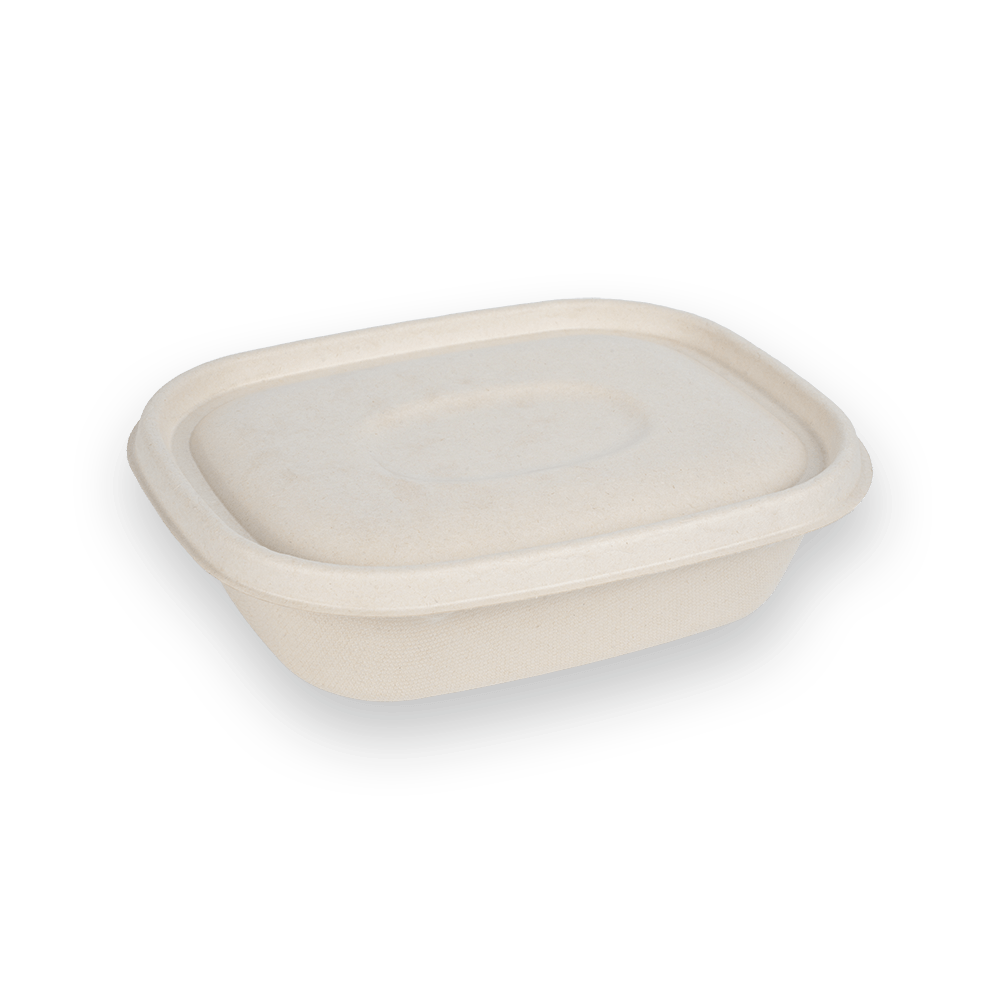
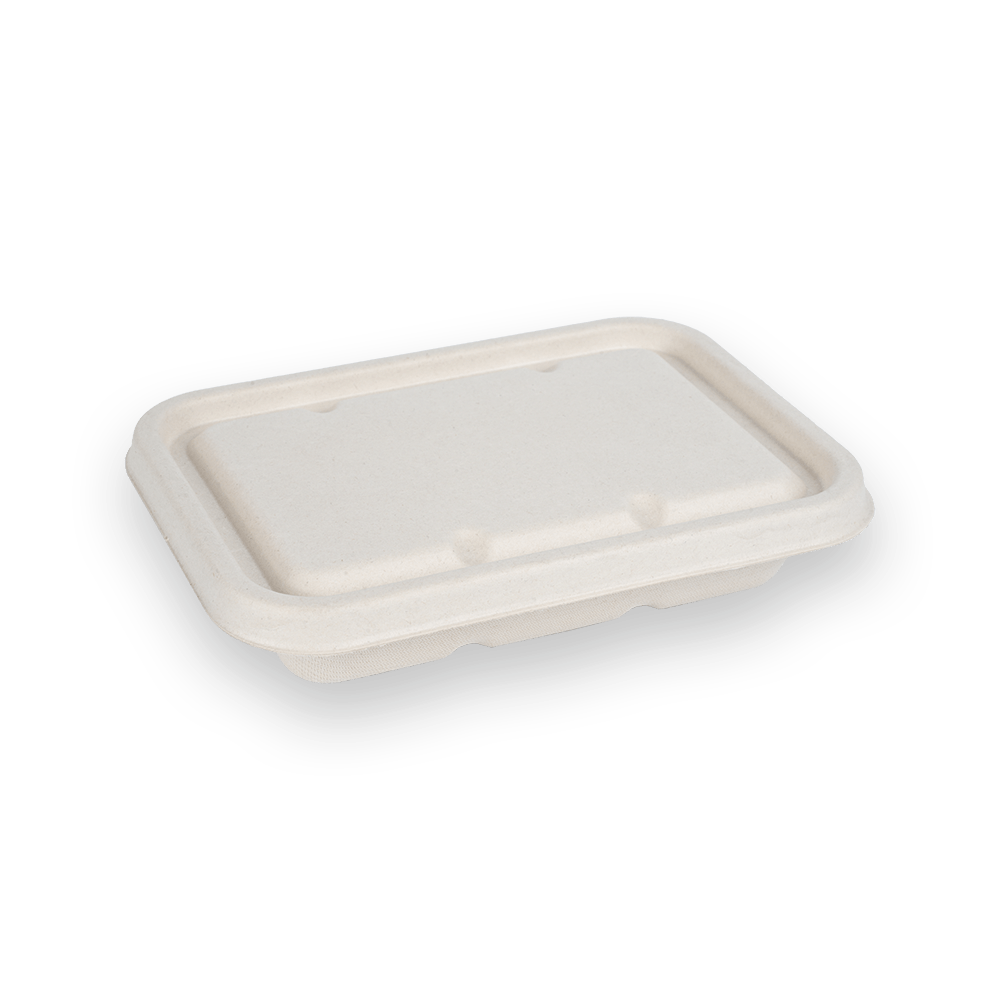
Clamshell containers are the most common format, usually available in 6-inch, 8-inch, and 9-inch models with three-lock or four-lock structures. They are widely used for takeaway meals, deli food, rice dishes, and combo meals.
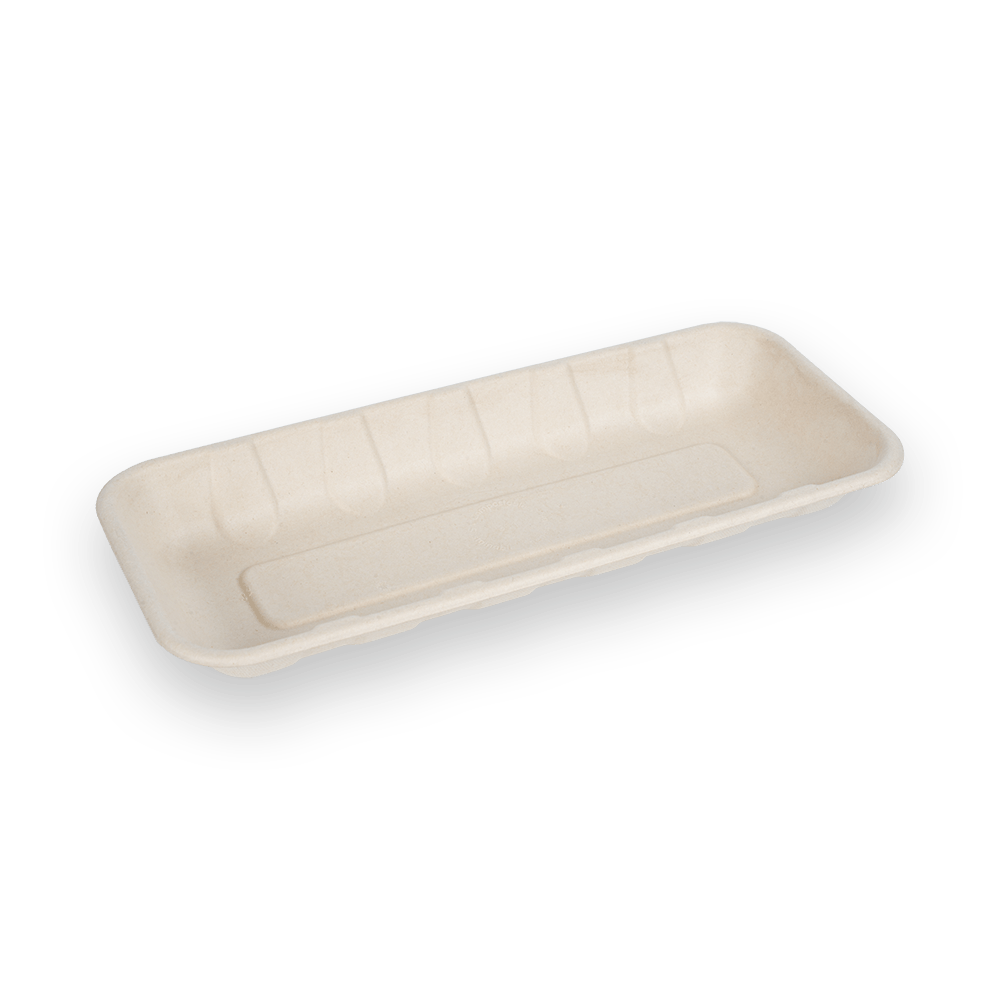
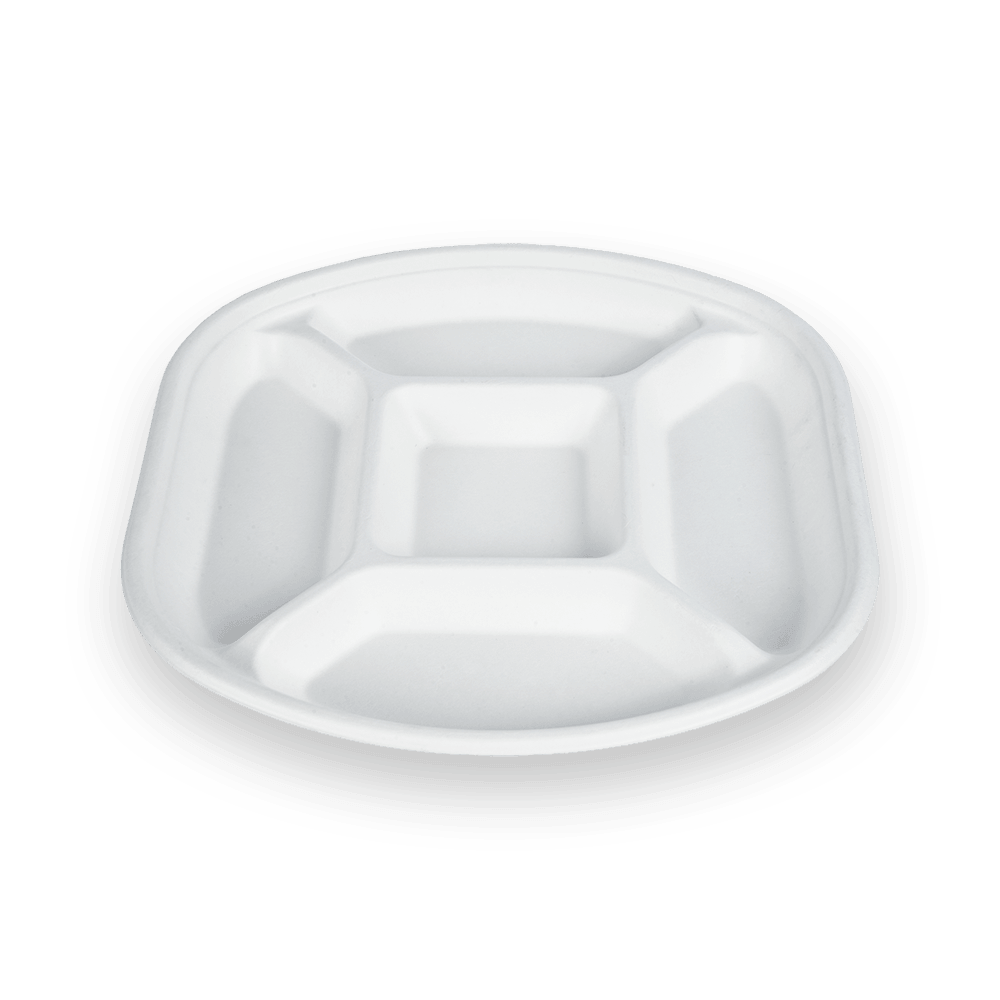
Plates and trays are often used for supermarket bakery, fresh food, and ready-meal display. Bowls are used for soup, salad, noodles, and deep-cavity applications where wet pressing has an advantage.
Cup holders and cup sleeves usually require higher rigidity, so dry pressing is often preferred. Mold opening cost for these categories can range from RMB 20,000 to RMB 150,000 depending on structure, size, cavity complexity, and precision requirements.
Step 2 – Evaluate and Select the Right Supplier
Supplier evaluation is where many projects fail. A qualified oem odm bagasse tableware manufacturer should be able to prove capacity, certification scope, material control, process capability, and delivery reliability.
For buyers sourcing from China or Thailand, selecting a sustainable food packaging OEM partner should involve more than checking a catalog. Factory audit, document review, sample testing, and production-line verification are all required.
Red Flags in Supplier Assessment
Be cautious if a supplier claims very large capacity but cannot show production-line evidence. Capacity numbers should be supported by machine count, running status, staffing, warehouse space, and delivery history.
Fake or mismatched certifications are another common problem. Buyers should request original certificates, verify them through official channels, and confirm whether the certificate covers the actual SKU and production line.
MOQ traps also matter. A supplier may quote a low price with a 500,000-piece MOQ but fail to guarantee delivery. This creates risk for first-time buyers who need flexibility before scaling.
Very low pricing is another warning sign. Bagasse raw material, mold cost, labor, forming energy, QC, and export packaging are relatively transparent. If the price is below a reasonable cost level, the supplier may be cutting corners on material, testing, or production control.
Factory Audit Checklist
A factory audit should check legal qualification, production capability, laboratory equipment, environmental compliance, and quality control. Video audits can be useful, but on-site audits are better for long-term supply agreements.
Key audit points include:
Business license and food-contact material production permit
ISO 9001 quality management certification
Production bottleneck analysis, such as pulping, forming, printing, trimming, or packing
Laboratory equipment for tensile strength, oil resistance, heat resistance, and moisture testing
Environmental qualification, wastewater treatment facilities, and environmental approval documents
A real food service packaging manufacturer should be able to show not only products, but also process records, inspection data, complaint handling, and batch traceability.
Step 3 – Design and Prototyping
Design and prototyping determine whether the project can move smoothly into mass production. In the bagasse tableware OEM process, the most important technical asset is the mold.
Zhong Xin Ecoware’s in-house mold development system supports faster iteration and better control over product structure. This is especially valuable for customized molded pulp packaging supplier projects that require clamshell locks, compartment depth, lid fit, or special stacking performance.
Mold Development Timeline
| Stage | Time | Key Point |
|---|---|---|
| 3D Modeling | 3-5 days | Buyer provides or confirms STEP / IGES files. |
| Mold Making | 15-25 days | Timing depends on structure, cavity depth, and precision. |
| Sample Production | 3-5 days | First sample review and performance check. |
| Mold Modification | 5-7 days | Required if fit, size, lock, or surface details need adjustment. |
| Total | 26-42 days | Mass production can start after final mold approval. |
For ODM projects using existing molds, the timeline can be shorter. For OEM private-mold projects, buyers should reserve enough time for structure review, testing, and modifications.
Material Specifications for Sugarcane Tableware
Sugarcane tableware should be made from 100% sugarcane bagasse fiber without PE plastic addition. If the product is marketed as plastic-free or compostable, the material composition must be verified by supplier declaration and third-party testing where required.
Dry-press products usually have a density of 0.85-0.95 g/cm³ and are better suited for flatter, high-rigidity products. Wet-press products usually have a density of 0.75-0.85 g/cm³ and perform well in deep-cavity structures, rounded corners, and premium foodservice designs.
Heat resistance depends on material, moisture control, wall thickness, and process. Dry-press products may cover -20°C to 200°C in certain applications, while wet-press products commonly cover -20°C to 120°C depending on structure and test conditions.
The degradation cycle is usually stated as 90-180 days, but the exact condition should be defined, such as industrial composting, home composting, natural soil, temperature, humidity, and product thickness.
Step 4 – Quality Control and Compliance Verification
Mass production is where supplier promises are tested. A professional oem odm bagasse tableware manufacturer should have a documented quality system from incoming material to final shipment.
For buyers, quality control should not start at pre-shipment inspection. It should begin with raw material control, production parameter monitoring, product testing, and third-party compliance verification.
Pre-Shipment Inspection Protocol
Incoming Quality Control should inspect bagasse pulp fiber length, pH value, moisture level, and material consistency. Raw material quality affects forming strength, surface finish, odor, and food-contact safety.
In-Process Quality Control should monitor forming moisture, hot-pressing temperature, pressure, drying, trimming, and visual defects. These parameters determine size stability, leak resistance, and edge strength.
Outgoing Quality Control should check dimensional tolerance, drop performance, printing color difference, stacking, packing integrity, and finished product appearance. For custom molded pulp packaging, dimensional tolerance of ±0.5 mm is often critical for lid fit and automated packing.
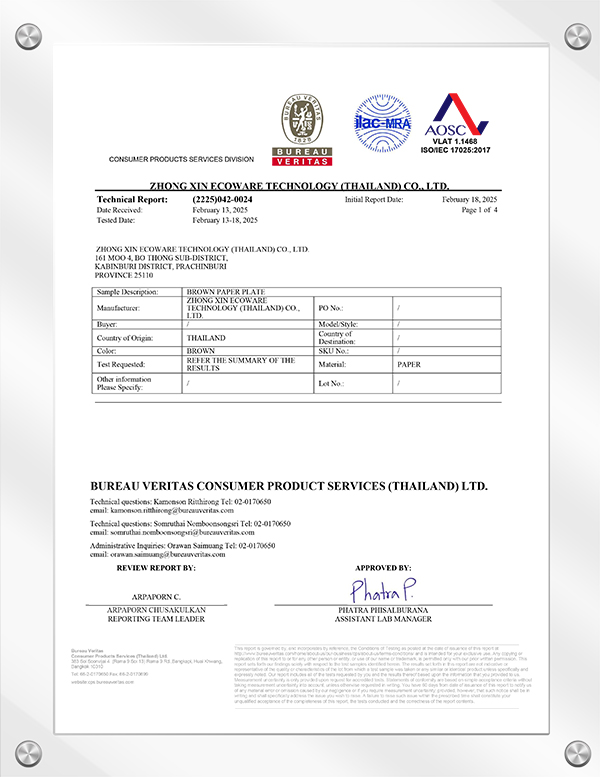
Third-party testing should be arranged according to target market requirements, such as FDA, LFGB, EN 13432, BPI, or other food-contact and compostability requirements.
PFAS-Free Verification
The EU PPWR implementation in August 2026 increases pressure on PFAS control for food-contact packaging. The source text states PFAS limits from 25 ppb for aqueous food contact to 50 ppm for fatty food contact.
Buyers should ask suppliers for three types of PFAS documentation. First, request a raw material PFAS-Free declaration. Second, request third-party laboratory test reports. Third, confirm batch-level traceability from raw material to finished product.
For eco-friendly food containers sold into Europe or North America, PFAS-Free status should be verified before shipment. A written claim without test data is not enough for major foodservice and retail customers.
Step 5 – Logistics and Delivery
Logistics planning affects landed cost, delivery risk, and inventory timing. Molded pulp tableware is bulky, so shipping terms can change the real cost structure significantly.
A professional customized molded pulp packaging supplier should help buyers compare FOB, CIF, and DDP options based on destination, order volume, container loading, customs capability, and delivery deadline.

Shipping Terms Explained
| Term | Seller Responsibility Boundary | Best Fit |
|---|---|---|
| FOB Laem Chabang, Thailand | Seller delivers goods on board at Laem Chabang port. | Importers with freight forwarders and import qualification. |
| CIF Destination Port | FOB plus ocean freight and insurance to destination port. | Buyers who want a more complete port-arrival cost. |
| DDP | Seller delivers goods to the buyer’s warehouse with duties paid. | Buyers who want simplified import handling. |
FOB is usually better for experienced importers with strong logistics partners. DDP is easier for new buyers but requires careful cost review because the supplier controls more of the logistics chain.
Lead Time and MOQ
Zhong Xin Ecoware’s MOQ for standard products should be confirmed by SKU and market. Customized products usually require 50,000-100,000 pieces depending on mold, size, structure, and printing requirements.
The key timing points are:
Mold confirmation to first samples: 28-35 days
Sample approval to mass production start: 7-10 days
Mass production to container loading and port departure: 15-25 days
Total timeline from mold confirmation to shipment departure: 50-70 days
For buyers using existing molds, rush orders can be faster. For new OEM private molds, the safest approach is to reserve extra time for sample testing, customer approval, and compliance review.
How to Work with a Sustainable Food Packaging OEM Partner
A sustainable food packaging OEM partner should not only manufacture products. It should help buyers reduce uncertainty across design, testing, production, and export.
For foodservice brands, the best supplier is one that can recommend the right process instead of only quoting the lowest price. Dry press may be better for rigidity and flat products, while wet press may be better for deep-cavity containers and premium appearance.
For distributors, the priority may be stable capacity, container loading efficiency, and repeat-order consistency. For retailers, certification files, PFAS-Free documentation, factory audits, and complaint response speed become more important.
This is why selecting an oem odm bagasse tableware manufacturer should be treated as a supply chain decision, not just a product inquiry.
FAQ – Frequently Asked Questions
What is the typical MOQ for custom bagasse tableware?
For custom molded designs, MOQ usually ranges from 50,000 to 100,000 pieces per SKU. Standard stock items may have lower MOQs of 10,000-20,000 pieces. Established manufacturers with multiple production lines can sometimes offer more flexibility by combining orders or using existing molds.
How long does the bagasse tableware OEM process take?
The full bagasse tableware OEM process usually takes 50-70 days from mold confirmation to port departure. This includes 26-42 days for mold development and sampling, plus 15-25 days for mass production. Projects using existing molds can move faster, sometimes within 15-20 days.
What certifications are required for selling bagasse tableware in the EU?
EU market entry usually requires food-contact compliance under Regulation (EC) No 1935/2004, EN 13432 for compostability claims, and PFAS-Free documentation under PPWR-related requirements. Buyers should request technical files, declarations of conformity, and test reports matched to the exact product and SKU.
Can bagasse tableware be customized with brand logos?
Yes. Customization options include offset printing, screen printing, hot stamping, embossing, and debossing. Dry-press and wet-press lines support different surface effects and print methods. Buyers should confirm ink safety, food-contact compliance, and whether the logo area affects compostability or PFAS-Free documentation.
What is the cost difference between OEM and ODM?
OEM requires higher upfront investment because new molds may cost RMB 30,000-150,000. ODM uses existing tooling, reducing mold modification cost to around RMB 5,000-30,000. OEM offers stronger exclusivity, while ODM is faster and cheaper for launch. Full cost should include molds, unit price, testing, and shipping.
How do I choose the right oem odm bagasse tableware manufacturer?
Choose an oem odm bagasse tableware manufacturer by checking real capacity, mold capability, certifications, sampling timeline, MOQ flexibility, QC procedures, PFAS-Free documents, and export experience. A reliable partner should provide samples, test reports, factory audit access, and clear lead-time commitments before mass production.
What should a customized molded pulp packaging supplier provide before production?
A customized molded pulp packaging supplier should provide 3D drawings, mold timeline, material specifications, test reports, certification coverage, sample approval records, and production schedule. For export projects, the supplier should also provide packing details, shipping terms, product traceability, and compliance documents for the destination market.
Is bagasse tableware suitable for hot food and delivery packaging?
Yes, bagasse tableware can be suitable for hot food and delivery packaging when the structure, wall thickness, and process are correctly selected. Wet-press products work well for deep food containers, while dry-press products offer higher rigidity. Buyers should test heat resistance, leakage, stacking, and lid fit before bulk ordering.
Request a Quote from Zhong Xin Ecoware
Zhong Xin Ecoware Technology (Thailand) Co., Ltd. supplies bagasse and molded fiber food packaging to importers, distributors, foodservice brands and private-label buyers. For MOQ, pricing, samples and lead time, contact the sales team through the contact page.
Related resources: China + Thailand dual-source supply | Certifications | Thailand factory | Contact us
Zhong Xin Ecoware Technology (Thailand) Co., Ltd. supplies bagasse and molded fiber food packaging to importers, distributors and foodservice brands. For MOQ, pricing, samples and lead time, email info@fiber-product.com or use the contact form.


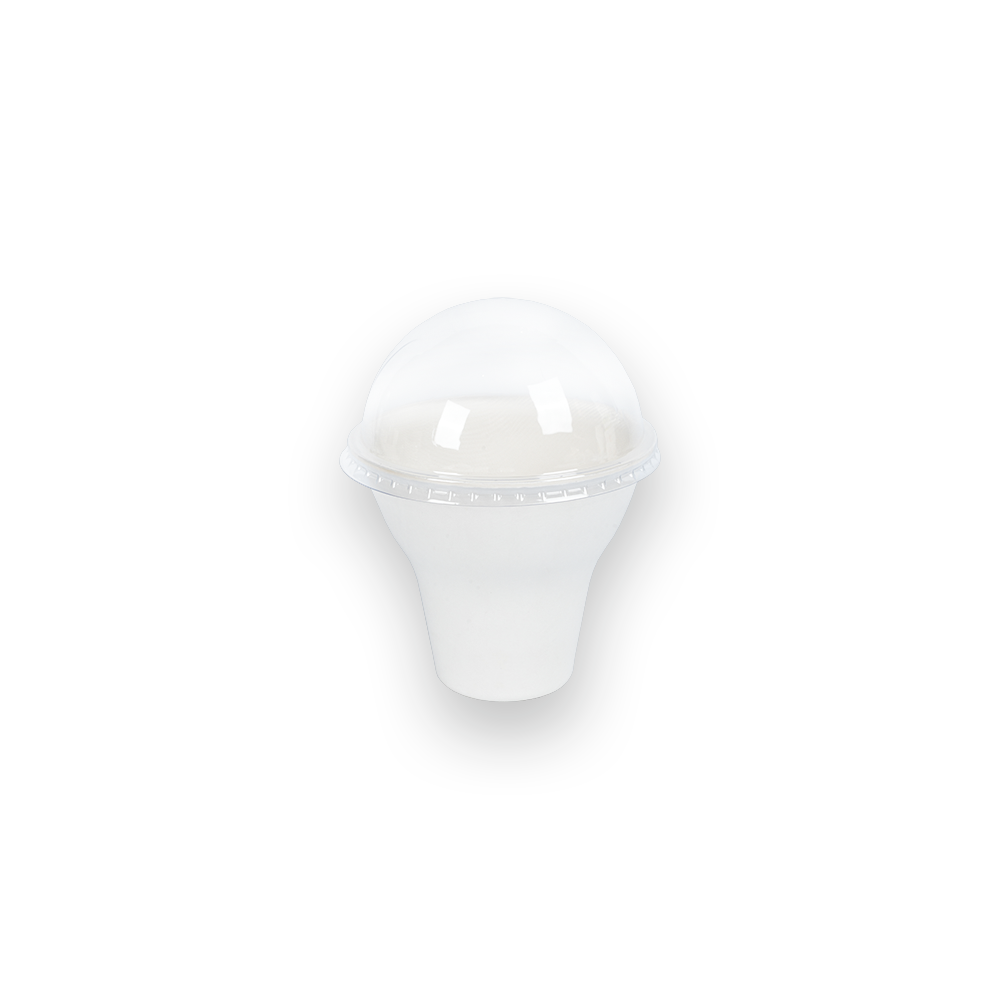
Zhong Xin Ecoware(Thailand) was registered on November 1, 2023, and officially began construction of the factory building in June 2024. At present, the first phase workshop of the factory has been fully completed and put into use. The second phase of the factory is being constructed intensively.
The landing and development of Zhong Xin in Thailand has brought a large amount of initial investment for land, factories, etc., and continuous operational investment for continuous equipment updates, technological upgrades, and capacity expansion.
Zhong Xin Ecoware(Thailand) has directly and indirectly created thousands of job opportunities, increased government revenue, promoted local economic development, cultivated local supply chains, provided systematic training for employees, improved the quality of local human capital, injected vitality into the local economy, enhanced industrial competitiveness, and ultimately improved residents' living standards.
Zhong Xin Ecoware(Thailand) actively collaborates with local pulp mills to explore new cooperation models for developing new products, improving production capacity and quality. At the same time, relying on Zhongxin's advanced production technology, process flow, management experience, and quality control system, it promotes the development of this industry in Thailand.

-
-
 +66-31240888
 -
 161 Village No. 4, Bo Thong Subdistrict Kabin Buri District Prachinburi Province 25110
-
New Bagasse Tableware Lineup for 2026: What Is New and Where to See It
Sep 28,2026
-
How to Select Bagasse Clamshells for Burgers, Rice Meals and Fried Food
Sep 28,2026
-
Microwave Reheating: Is a Bagasse Lunch Box Suitable
Sep 25,2026
-
9 Inch Pizza Plates and Bagasse Pizza Boards: A Sourcing Guide for US and Canadian Distributors
Sep 19,2026
-
PFAS-Free & Compostability Verification: A Buyer's Checklist for Bagasse and Molded Fiber Packaging
Sep 19,2026
-
Bagasse vs PLA vs Molded Fiber: What Distributors Should Stock in 2026
Sep 19,2026
-
Can Sugarcane Plates Handle Hot, Greasy Foods
Sep 18,2026
-
Bagasse Tableware RFQ Template: Get a Comparable Thailand Factory Quote
Sep 14,2026
-
Are Takeaway Food Containers Ready for Saucy Meals
Sep 11,2026
-
7-Inch vs 9-Inch Bagasse Plates: Carton and 20GP Guide
Sep 07,2026
-
Will Bagasse Pulp Trays Sag Under Heavy Meals
Sep 04,2026
-
Zhongxin Packaging at the 140th Canton Fair 2026: Booths and Buyer Meeting Guide
Sep 02,2026
Copyright © 2025 Zhong Xin Ecoware Technology ( Thailand ) CO., LTD.
All Rights Reserved.

Biodegradable Disposable Bagasse Tableware Manufacturer