-
 [email protected]
-
 +66-31240888



 English
 Español
 ไทย
ไทยChina + Thailand Dual-Source Supply for Bagasse Tableware: Why Global Buyers Should Not Rely on One Origin
China Thailand Dual Source Supply for Bagasse Tableware: Why Global Buyers Should Not Rely on One China Factory
Why Source from Zhong Xin Ecoware?
Zhong Xin Ecoware supplies international packaging groups and serves end-use applications for leading foodservice, retail, and supermarket brands.
- China and Thailand production bases
- Nearly 200,000 tons of combined planned and operating capacity
- Thailand base fully operational with 75,000 tons of capacity
- Products exported to 80+ countries and regions
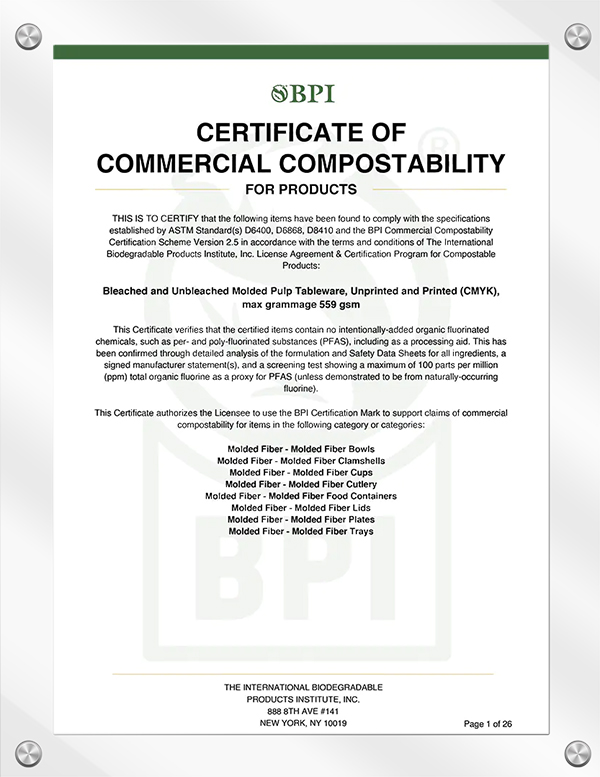
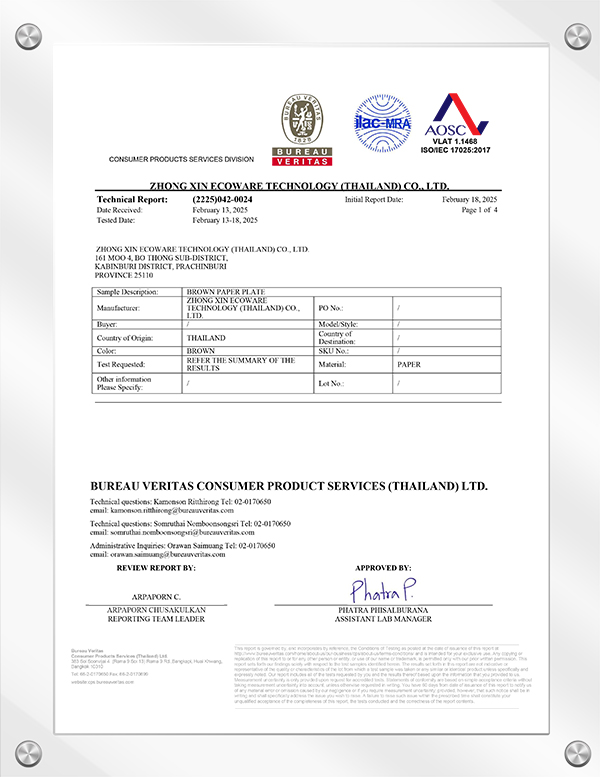
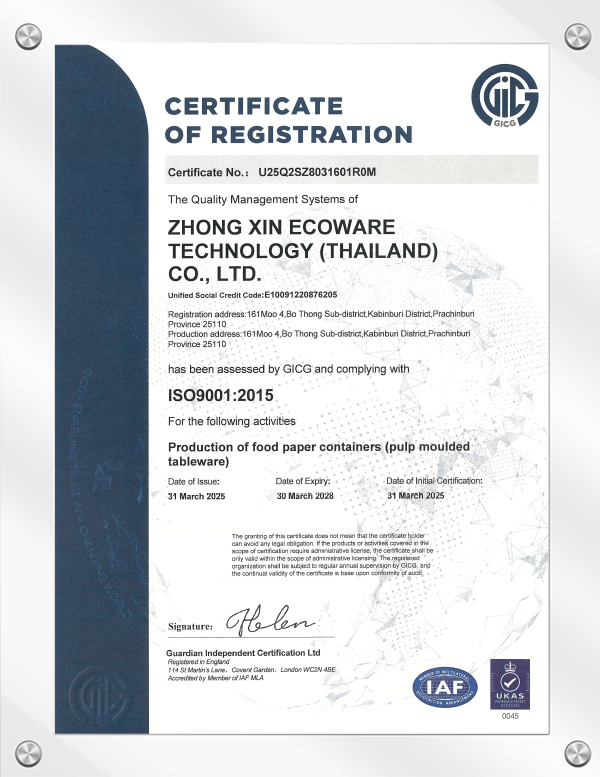
- FDA, EU, LFGB, BfR, BRC, BSCI, ISO9001, BPI, OK COMPOST HOME, ABA
- Serving global packaging groups and end-use brands across foodservice and retail
- 115 patents in molded pulp packaging and related technologies
- MOQ from 100,000 pieces
- PFAS-free and compostable packaging options for US and EU markets

China Thailand dual source supply is no longer a nice-to-have for bagasse tableware buyers. In 2026, sourcing only from China exposes importers to tariff hikes, customs delays, and sudden policy shocks. With U.S. anti-dumping rates reaching up to 120.5% and Canada’s anti-dumping rates reaching 111%, single-country sourcing can break the whole packaging supply chain.
For buyers of Bagasse Tableware and Molded Pulp Tableware , the logic is simple: China remains strong in capacity and cost, while Thailand gives buyers a second origin, tariff flexibility, and supply continuity. China Thailand dual source supply is not a backup plan after disruption happens. It is a basic hedge against sugarcane tableware tariff risk.
2026 Trade Reality: Why China Thailand Dual Source Supply Matters
Global molded pulp tableware capacity is still highly concentrated in China. According to industry data from the China National Pulp and Paper Research Institute, China accounts for about 20% of global molded pulp foodservice tableware output.

Concentrated capacity brings cost advantages, but it also creates exposure. Once trade policy tightens, buyers who rely on only one country may have no alternative origin ready.
In 2025-2026, several trade and compliance shocks already moved from risk discussion to actual market impact.
| Trade Measure | Impact Scope | Duty / Requirement | Effective Time |
|---|---|---|---|
| U.S. Anti-Dumping + Countervailing Duties | Heat-formed molded fiber tableware of Chinese origin | Anti-dumping duty up to 120.5%; countervailing duty 5.7%-11.8% | Final ruling in 2025 |
| Canada Final AD/CVD Ruling | Heat-formed molded fiber tableware of Chinese origin | Anti-dumping duty rates of 111% and 120.5% | Final ruling in May 2026 |
| EU PPWR Full Implementation | All fiber-based food packaging | PFAS limits, recyclability, and technical documentation requirements | August 12, 2026 |
This is not theoretical risk. U.S. and Canadian duties on Chinese-origin molded pulp tableware have already landed above 100% in some cases. For importers sourcing only from China, the choice is painful: accept a doubled landed cost or switch origin under pressure.
Sugarcane Tableware Tariff Risk: Three Problems Buyers Face
The first problem is cost shock. A 100%+ duty rate can turn a $0.05 food container into a $0.10+ product, wiping out margin for distributors and foodservice operators.
The second problem is lead time disruption. Once duties take effect, existing orders may be held, reclassified, or require duty payment before release, throwing delivery schedules into disorder.
The third problem is compliance pressure. Falsifying origin labels is a serious violation. U.S. CBP penalties for transshipment and duty evasion can be far more damaging than the tariff itself.
For this reason, molded pulp sourcing diversification should be built before purchase orders are at risk, not after a customs issue appears.
What China Thailand Dual Source Supply Actually Solves
China Thailand dual source supply does not mean finding one more supplier for price comparison. It means building independent production capacity in different trade zones, so if one origin is blocked or becomes too costly, the other can continue shipment.
That is the real value of a dual sourcing packaging supply chain.
| Dimension | China-Only Sourcing | China + Thailand Dual Source |
|---|---|---|
| U.S. / Canada Tariff Risk | Direct exposure to 100%+ duties | Thai-origin products are not affected by China-specific AD/CVD duties and can avoid extra punitive tariffs |
| Southeast Asia Logistics | 7-14 days by ocean freight from China | 1-5 days by land or sea from Thailand to many Southeast Asian markets |
| Raw Material Interruption | One origin disruption can stop supply | Two production regions provide seasonal and material-source flexibility |
| Certification System | China factory FDA / LFGB / BPI | Thailand factory also supports FDA / LFGB / BPI |
| Lead Time Flexibility | Single production route with tighter scheduling | Two production routes allow more flexible allocation |
| Compliance Documents | Single Certificate of Origin | Dual Certificates of Origin matched by destination market |
The key point is origin flexibility. Thailand is an ASEAN member and benefits from RCEP and ASEAN free trade agreements. Exports from Thailand to markets such as Japan, South Korea, Australia, and New Zealand may receive tariff reductions or zero-duty treatment, while the same products exported from China may face 5%-15% duties depending on destination and HS classification.
For buyers handling large-volume procurement, molded pulp sourcing diversification is not only about cost. It is about keeping goods moving when one route is under pressure.
Bagasse Tableware Thailand Factory: Zhong Xin Ecoware’s 75,000-Ton Capacity Ramp-Up

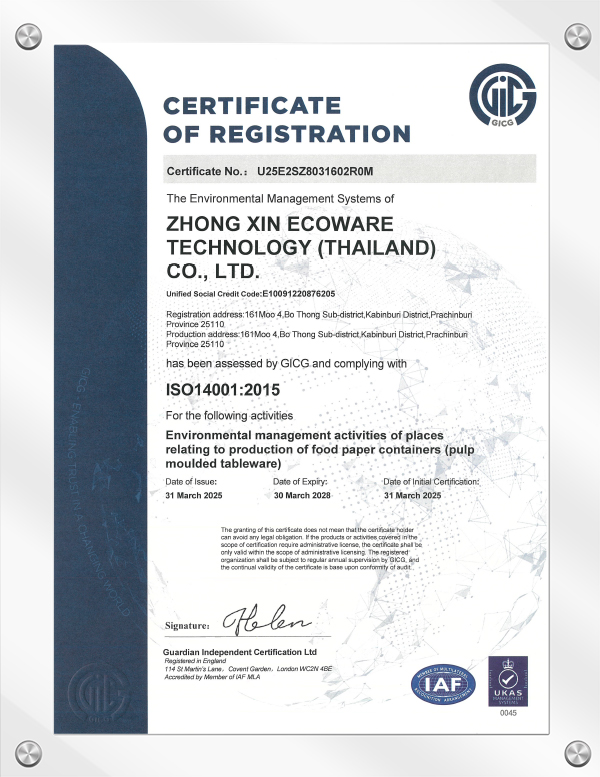
Zhong Xin Ecoware registered Zhong Xin Ecoware Technology (Thailand) Co., Ltd. in November 2023. The bagasse tableware Thailand factory officially started production in April 2025.
By the end of 2025, the Thailand base had formed 75,000 tons of annual capacity, with capacity utilization above 90%.
Key data of the Thailand base:
Address: Kabin Buri District, Prachinburi Province, Thailand, close to the Eastern Economic Corridor
Capacity: 75,000 tons per year by the end of 2025, with planned expansion to 100,000 tons per year
2025 revenue: RMB 432 million
2025 net profit: RMB 163 million
Net margin: 37.7%, with 2025H2 above 40%, far above the company average of 17.7%
Fastest ramp-up cycle for a new production line: 22 days
| Indicator | Zhong Xin Ecoware Thailand Base | Zhong Xin Ecoware China Bases, Average |
|---|---|---|
| Capacity | 75,000 tons/year | About 120,000 tons combined in China |
| Net Margin | 37.7% | 14.9%-27.3%, depending on base |
| Main Markets | U.S., Southeast Asia, Europe | Europe, Middle East, China domestic market |
| Tariff Advantage | No U.S. China-specific AD/CVD duties; ASEAN tariff advantage | U.S. AD/CVD exposure above 100%; ASEAN tariff exposure may apply |
| Raw Materials | Thai bagasse + imported pulp | Guangxi bagasse + imported pulp |
| Certifications | FDA / LFGB / BPI / EN 13432 | FDA / LFGB / BPI / EN 13432 |
What does a 37.7% net margin tell buyers? It does not simply mean Thailand production is naturally more profitable. It shows that Zhong Xin Ecoware’s self-developed equipment and in-house mold system helped the bagasse tableware Thailand factory reduce cost quickly after startup.
Reaching this level only eight months after production began is rare in overseas manufacturing. It also proves that overseas capacity is not just a sales office or assembly point. It is a real production base.
Why Thailand Has Natural Advantages for Bagasse Tableware Production
Thailand is not only an alternative origin. It has practical upstream and trade-zone advantages for molded pulp and sugarcane fiber products.
Thailand Is a Major Sugarcane Producer

Thailand is the world’s fourth-largest sugarcane producer, with annual sugarcane output of about 100 million tons. This creates abundant local bagasse resources for a Thailand paper pulp tableware manufacturer.
For Zhong Xin Ecoware’s Thailand base, local sourcing reduces long-distance raw material transport. When bagasse is sourced within 50 km of the factory, logistics-related emissions can be treated as minimal in practical carbon-footprint calculation.
ASEAN Tariff Advantage Molded Pulp Buyers Should Check
Thailand is a core ASEAN member. Thai-origin molded pulp packaging can benefit from multiple trade arrangements.
ASEAN 10 countries: most goods enjoy zero tariffs
China: under RCEP, molded pulp product tariffs are gradually reduced toward zero
Japan: tariff reduction under the ASEAN-Japan FTA
South Korea: tariff reduction under the ASEAN-Korea FTA
Australia / New Zealand: zero-tariff treatment under the ASEAN-Australia-New Zealand FTA
This ASEAN tariff advantage molded pulp buyers can use is one reason Thailand is becoming more relevant for foodservice packaging sourcing. It gives buyers options beyond China-only supply.
Thai-Origin Products Are Outside China-Specific AD/CVD Measures
The U.S. AD/CVD measures target heat-formed molded fiber tableware of Chinese origin. Products manufactured in Thailand are not within that China-origin scope.
A bagasse tableware Thailand factory can export to the U.S. with a Thai Certificate of Origin, provided local value-added requirements are met. This is the practical benefit of China Thailand dual source supply: the buyer does not need to move away from a proven manufacturer, but can choose the right origin for the right market.
BOI Incentives Support Overseas Production Capacity
The Thailand Board of Investment offers incentives for qualified environmentally friendly packaging manufacturing projects. These may include corporate income tax exemption for up to eight years, import duty reductions on equipment, and land ownership benefits.
For buyers, the point is not the policy detail itself. The point is that Thailand has built a manufacturing environment that supports nearshore manufacturing bagasse projects for Southeast Asia and North America.
Buyer Action Guide: 4 Steps to Build China Thailand Dual Source Supply

A sourcing plan should be built before a tariff notice, customs hold, or customer complaint forces action. Here is how buyers can start.
Step 1: Confirm Your Sugarcane Tableware Tariff Risk
Check the Certificate of Origin from your current supplier. If 100% of your supply comes from China and you export to the U.S. or Canada, your orders may already be exposed to 100%+ AD/CVD risk.
Do not only check the supplier’s sales address. Check the actual manufacturing origin.
Step 2: Request a Thai Certificate of Origin
Not every “Thailand factory” can provide a valid Thai Certificate of Origin. Local value-added content must meet the requirements of the relevant free trade agreement, often around 30%-40% or above.
Ask the supplier for a Thai Certificate of Origin sample and proof of local value-added ratio. If they cannot provide it, the tariff advantage may not be usable.
Step 3: Verify the Thailand Factory’s Capacity and Certifications
A bagasse tableware Thailand factory should have the same food-contact and compostability documentation as the China factory. Ask for FDA, LFGB, BPI, and EN 13432 documents.
Then verify real production capacity. The most reliable methods are an on-site factory visit, live video audit, production line footage, warehouse records, and recent shipment documents.
Step 4: Split Orders Instead of Moving 100% at Once
Dual sourcing works because it creates flexibility. It does not require a sudden full transfer.
A practical structure is 70% Thailand and 30% China, or market-based allocation: U.S. and Canada orders through Thailand, Europe and Middle East orders through China. The correct split depends on tariff exposure, lead time, SKU complexity, and customer requirements.
This is the operating logic behind a stable dual sourcing packaging supply chain.
Zhong Xin Ecoware Global Capacity: China + Thailand + Planned U.S. Base

Zhong Xin Ecoware is one of the few manufacturers with large-scale molded pulp capacity in both China and Thailand. The Thailand base is not only a tool for tariff risk control. It is also a nearshore delivery center for Southeast Asia and North America.
| Base | Location | Capacity | Status |
|---|---|---|---|
| Lanxi, Zhejiang | Jinhua, Zhejiang | Approx. 30,000 tons | Operating |
| Laibin, Guangxi | Laibin, Guangxi | 75,000 tons | Operating |
| Chongzuo, Guangxi | Chongzuo, Guangxi | 30,000 tons, Phase I | Operating |
| Hainan | Hainan | Small-scale capacity | Operating |
| Prachinburi, Thailand | Prachinburi, Thailand | 75,000 tons, planned 100,000 tons | Operating |
| Pennsylvania, U.S., Planned | Pennsylvania, U.S. | Planned 20,000 tons | Under preparation |
Zhong Xin Ecoware also plans to invest USD 36 million through Zhong Xin Ecoware Thailand to build a 20,000-ton annual capacity project in Pennsylvania, U.S., bringing production closer to North American customers.
For global buyers, this layout supports China Thailand dual source supply today and a more localized North American supply option in the future.
FAQ
Why is dual-source supply important for bagasse tableware?
Dual-source supply protects buyers from tariff shocks, origin restrictions, and factory-level disruptions. China-only sourcing now faces anti-dumping duties above 100% in the U.S. and Canada. A China + Thailand model lets buyers route orders through the origin that best fits tariff, lead time, and market requirements.
Does Thailand have bagasse raw material for tableware?
Yes. Thailand is the world’s fourth-largest sugarcane producer, with about 100 million tons of sugarcane output per year. This creates a strong local bagasse supply base. For a Thailand paper pulp tableware manufacturer, local raw material sourcing can reduce logistics cost and support lower-carbon production.
Can Thai-made bagasse tableware avoid U.S. anti-dumping duties?
Yes, if the products are genuinely manufactured in Thailand and have a valid Thai Certificate of Origin. U.S. AD/CVD duties apply to Chinese-origin heat-formed molded fiber tableware. Buyers must still verify local value-added content and avoid any false-origin or transshipment risk.
What is the ASEAN tariff advantage for molded pulp packaging from Thailand?
Thailand can export many products to ASEAN countries at zero or near-zero tariff rates. Under RCEP and bilateral FTAs, Thai-origin packaging may also receive tariff reductions in Japan, South Korea, Australia, New Zealand, and China. Buyers should confirm HS codes and destination-specific duty rules.
How fast can a new bagasse production line reach full capacity?
Zhong Xin Ecoware’s Thailand factory reached full production readiness on new lines in as fast as 22 days after installation. The base reached more than 90% capacity utilization within eight months of startup. This ramp-up speed was supported by Zhong Xin Ecoware’s proprietary equipment and in-house mold system.
Request a Quote from Zhong Xin Ecoware
Zhong Xin Ecoware Technology (Thailand) Co., Ltd. supplies bagasse and molded fiber food packaging to importers, distributors, foodservice brands and private-label buyers. For MOQ, pricing, samples and lead time, contact the sales team through the contact page.
Related resources: OEM/ODM guide | Certifications | Thailand factory | Contact us
Zhong Xin Ecoware Technology (Thailand) Co., Ltd. supplies bagasse and molded fiber food packaging to importers, distributors and foodservice brands. For MOQ, pricing, samples and lead time, email info@fiber-product.com or use the contact form.


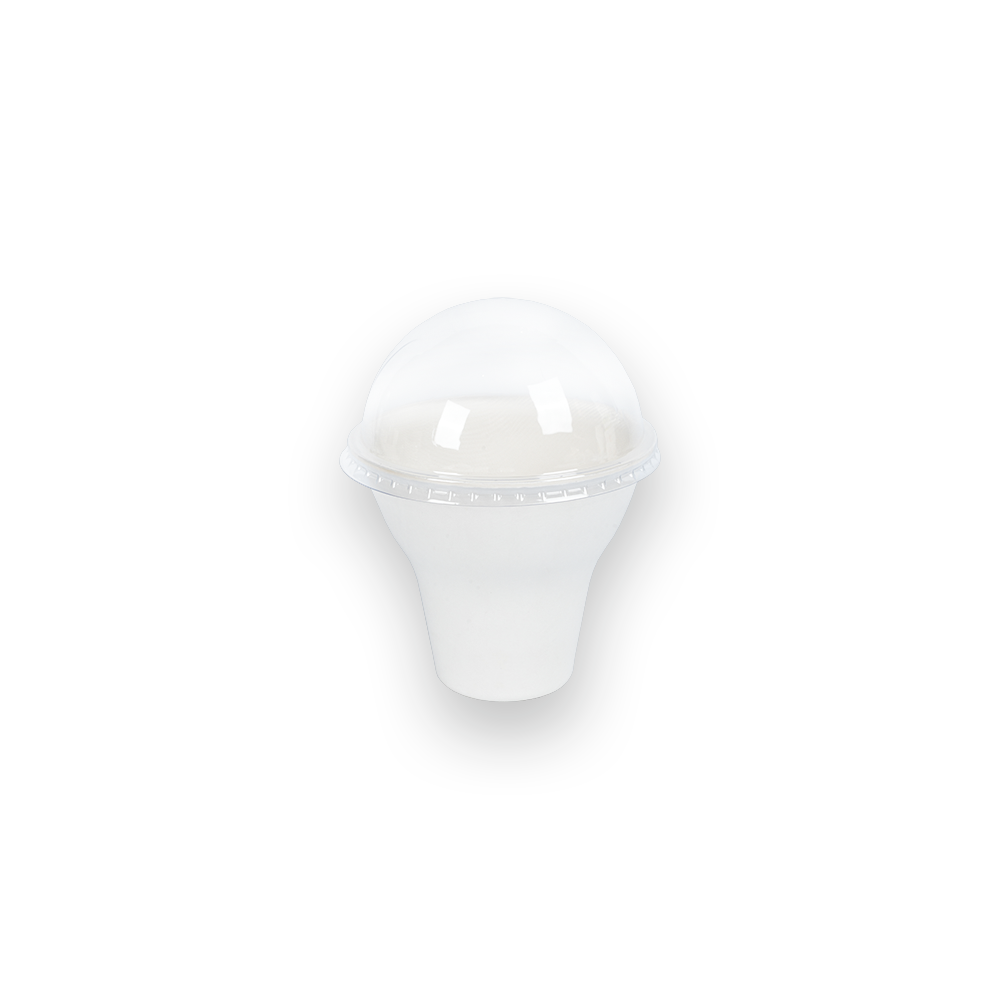
Zhong Xin Ecoware(Thailand) was registered on November 1, 2023, and officially began construction of the factory building in June 2024. At present, the first phase workshop of the factory has been fully completed and put into use. The second phase of the factory is being constructed intensively.
The landing and development of Zhong Xin in Thailand has brought a large amount of initial investment for land, factories, etc., and continuous operational investment for continuous equipment updates, technological upgrades, and capacity expansion.
Zhong Xin Ecoware(Thailand) has directly and indirectly created thousands of job opportunities, increased government revenue, promoted local economic development, cultivated local supply chains, provided systematic training for employees, improved the quality of local human capital, injected vitality into the local economy, enhanced industrial competitiveness, and ultimately improved residents' living standards.
Zhong Xin Ecoware(Thailand) actively collaborates with local pulp mills to explore new cooperation models for developing new products, improving production capacity and quality. At the same time, relying on Zhongxin's advanced production technology, process flow, management experience, and quality control system, it promotes the development of this industry in Thailand.

-
-
 +66-31240888
 -
 161 Village No. 4, Bo Thong Subdistrict Kabin Buri District Prachinburi Province 25110
-
New Bagasse Tableware Lineup for 2026: What Is New and Where to See It
Sep 28,2026
-
How to Select Bagasse Clamshells for Burgers, Rice Meals and Fried Food
Sep 28,2026
-
Microwave Reheating: Is a Bagasse Lunch Box Suitable
Sep 25,2026
-
9 Inch Pizza Plates and Bagasse Pizza Boards: A Sourcing Guide for US and Canadian Distributors
Sep 19,2026
-
PFAS-Free & Compostability Verification: A Buyer's Checklist for Bagasse and Molded Fiber Packaging
Sep 19,2026
-
Bagasse vs PLA vs Molded Fiber: What Distributors Should Stock in 2026
Sep 19,2026
-
Can Sugarcane Plates Handle Hot, Greasy Foods
Sep 18,2026
-
Bagasse Tableware RFQ Template: Get a Comparable Thailand Factory Quote
Sep 14,2026
-
Are Takeaway Food Containers Ready for Saucy Meals
Sep 11,2026
-
7-Inch vs 9-Inch Bagasse Plates: Carton and 20GP Guide
Sep 07,2026
-
Will Bagasse Pulp Trays Sag Under Heavy Meals
Sep 04,2026
-
Zhongxin Packaging at the 140th Canton Fair 2026: Booths and Buyer Meeting Guide
Sep 02,2026
Copyright © 2025 Zhong Xin Ecoware Technology ( Thailand ) CO., LTD.
All Rights Reserved.

Biodegradable Disposable Bagasse Tableware Manufacturer