-
 [email protected]
-
 +66-31240888



 English
 Español
 ไทย
ไทยMicrowave Reheating: Is a Bagasse Lunch Box Suitable
Takeaway food is often prepared hours before it is eaten. A lunch box that can move directly from the refrigerator to the microwave offers a practical advantage, especially for meal-prep services, catering businesses, office lunches, and ready-to-eat food programs. This raises an important product question: is a Biodegradable Disposable Lunch Box suitable for microwave reheating?
Many bagasse lunch boxes are designed for microwave use, but microwave compatibility should be treated as a product specification rather than a general property of every molded-fiber container. Temperature ratings, heating duration, container construction, and lid material can all affect the result.
What Happens to Bagasse During Microwave Heating?
Microwaves heat food primarily through interaction with molecules containing moisture. The food becomes the main source of heat, and that heat is transferred to the surrounding container.
Bagasse containers are formed from compressed sugarcane fibers. Their performance during reheating depends on factors such as fiber density, wall thickness, moisture content, and any surface treatment. A well-formed container can retain its shape during ordinary reheating, while excessive heat or prolonged exposure may increase softening or deformation.
- Fiber density affects the rigidity of the molded structure.
- Wall thickness influences resistance to deformation.
- Moisture exposure can affect fiber stiffness during prolonged heating.
- Surface treatment may influence resistance to oil and moisture.
A review of molded-pulp food packaging research also notes that processing methods, fiber combinations, and additives can alter the properties of molded fiber products.
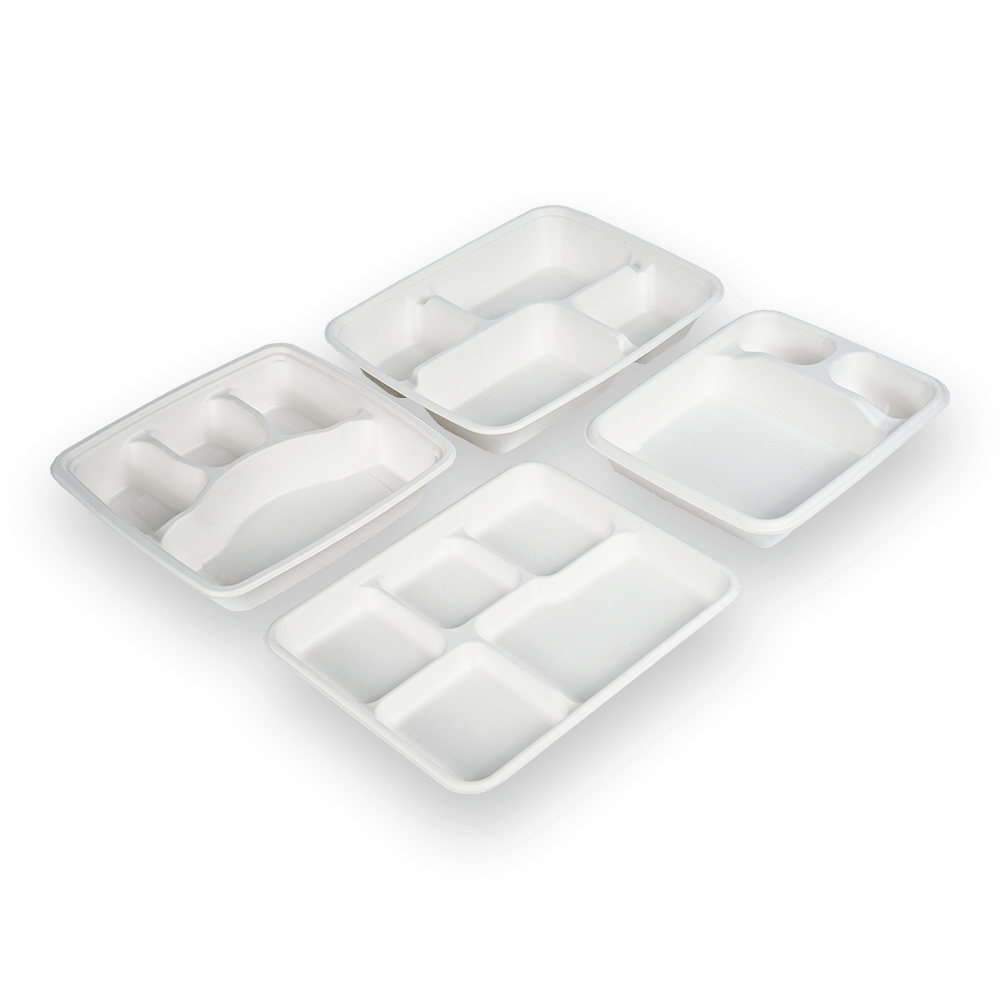
How Hot Can a Bagasse Lunch Box Get?
There is no single microwave temperature limit for every bagasse lunch box. Commercial specifications demonstrate considerable variation.
| Example Product | Capacity | Microwave Specification | Other Temperature Information |
| Bagasse rectangular container | 750 ml | Microwave-safe | Heat food up to 100°C |
| Bagasse rectangular container | 1000 ml | Microwave-safe | Heat food up to 100°C |
| Bagasse bento container | Various | Microwave-safe | Up to 120°C for specified products |
| 8-inch bagasse clamshell | Application-specific | Microwavable | Manufacturer specifies up to 3 minutes |
For example, one 750 ml sugarcane container measures approximately 220 × 146 × 50 mm and weighs 34 g, with a stated microwave limit of 100°C. A 1000 ml version measures around 220 × 146 × 70 mm and weighs 37 g, also with a 100°C heating specification.
Another commercial bagasse product line specifies microwave use up to 120°C, while a separate 8-inch clamshell specifies microwave heating for up to three minutes. These differences show why buyers should check the technical information for the exact model.
Does the Lid Need Special Attention?
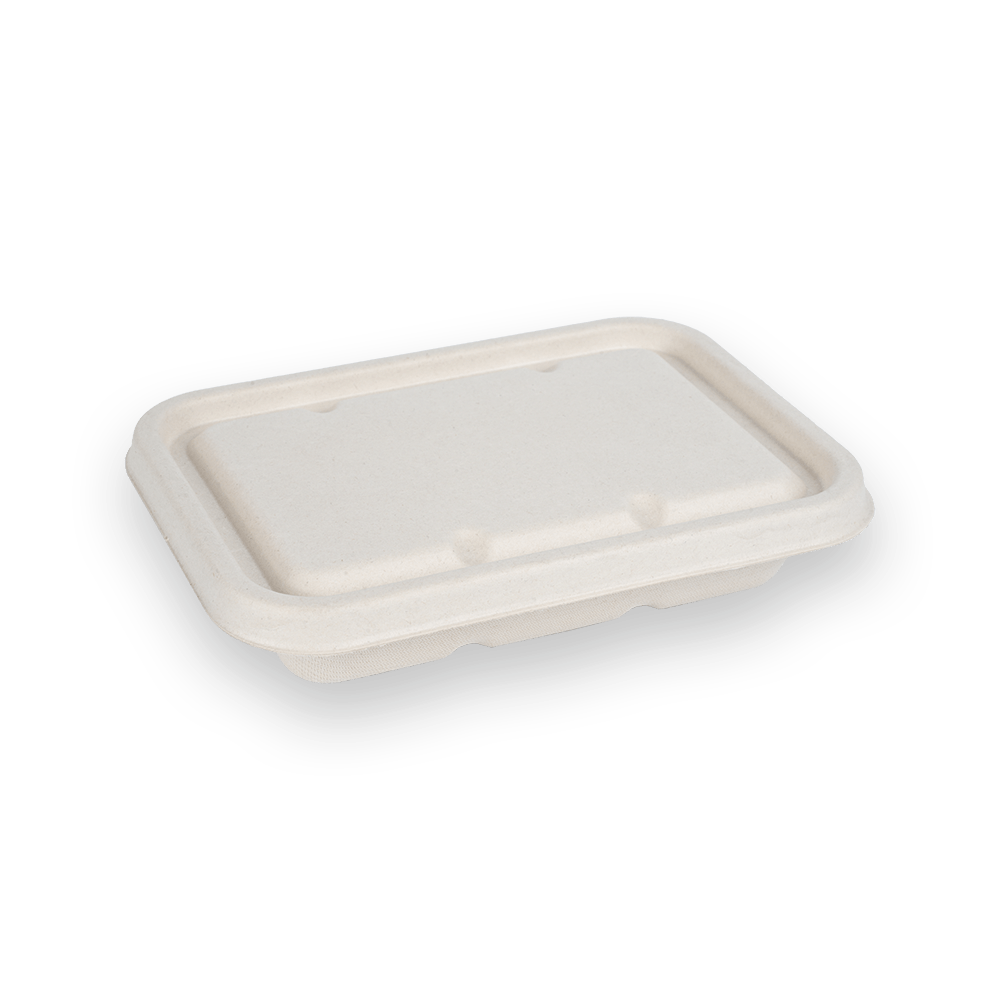
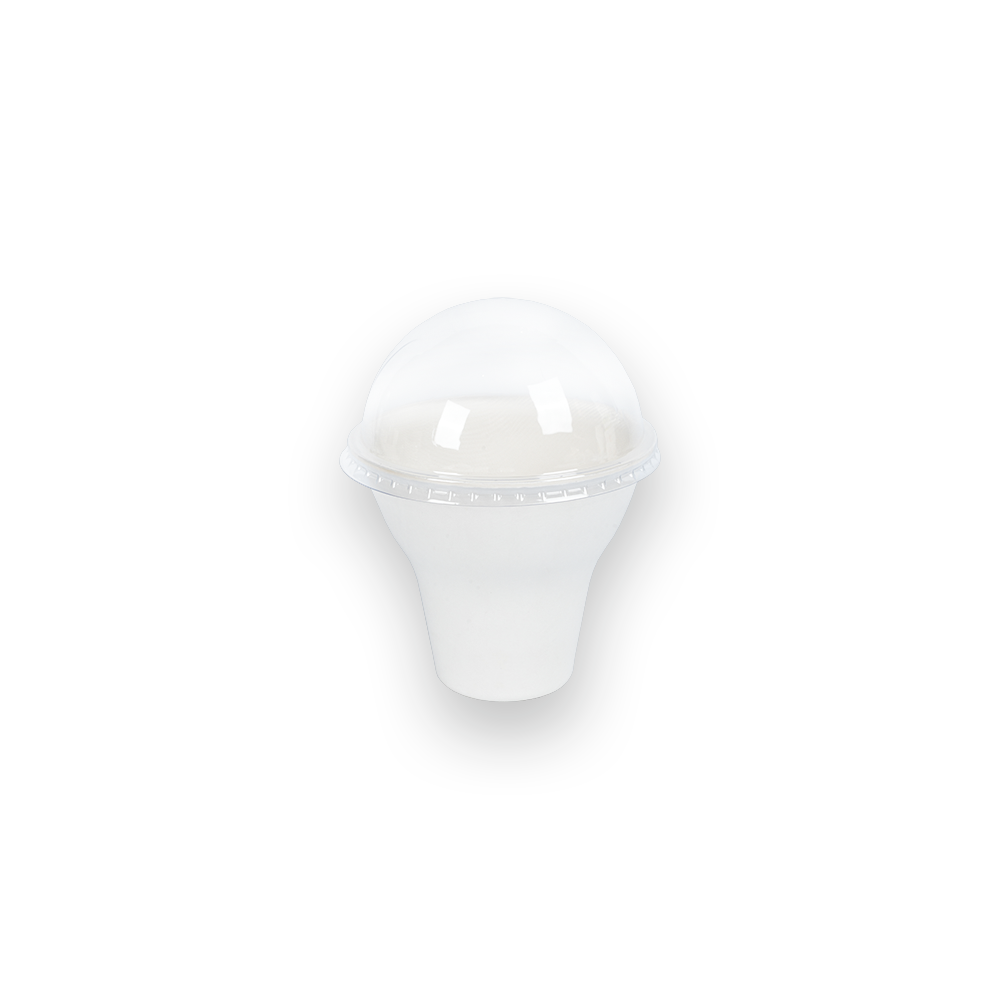
The container base is only part of the microwave equation. A lunch box may use a bagasse lid, PET lid, rPET lid, or another closure material. The microwave suitability of the lid can differ from that of the fiber base.
- Check whether the lid is approved for microwave use.
- Remove PET or rPET lids unless the product specification explicitly permits microwave heating.
- Avoid sealing the container completely during reheating if steam pressure could build up.
- Follow the supplier's instructions for venting and lid positioning.
Some bagasse packaging suppliers specifically state that their fiber bases are microwave suitable while requiring plastic lids to be removed. This distinction is particularly relevant for takeaway boxes supplied with clear display lids.
Which Foods Are More Challenging?
Microwave performance is also influenced by the food itself. Meals containing substantial moisture can generate significant steam, while oily foods may reach high local temperatures.
| Food Type | Reheating Consideration | Useful Container Characteristic |
| Rice and vegetables | Moderate moisture | Rigid molded structure |
| Pasta with sauce | Moisture and steam | Water-resistant surface |
| Curry | Liquid, oil, and high heat | Moisture and grease resistance |
| Fried food | Localized high oil temperature | Heat and grease resistance |
| Frozen meals | Longer heating cycle | Suitable temperature range |
A container rated for general reheating should not automatically be assumed to perform identically with every food type. Food quantity, starting temperature, moisture level, and microwave power can all change the heating pattern.
Short Heating Cycles vs. Extended Reheating
Microwave reheating normally involves a shorter exposure period than oven cooking. This distinction matters because container performance is affected by both temperature and duration.
A manufacturer may approve a product for a specific combination such as a defined temperature or a short microwave cycle. Another model may have a different rating. One commercial bagasse lunch box, for example, specifies microwave use for up to three minutes, while other products simply state a max food temperature.
- Short reheating: Generally places less thermal stress on the container.
- Long reheating: Creates greater cumulative heat exposure.
- High-power heating: Can produce uneven hot spots in some foods.
- High-moisture meals: Can generate more steam inside the container.
How Should Buyers Test Microwave Compatibility?
A simple real-food test can provide useful information before large-scale purchasing. Testing should reproduce the intended operating conditions rather than relying solely on a general marketing statement.
- Fill the container with the actual meal portion.
- Record the starting food temperature.
- Use the microwave power normally applied by customers.
- Follow the specified heating duration.
- Check the base, corners, and rim after heating.
- Inspect the container for softening, warping, leakage, or odor.
Testing should also cover the actual lid configuration. A microwave-safe fiber base paired with a lid that is not microwave compatible does not constitute a fully microwave-ready package.
Is a Biodegradable Disposable Lunch Box Suitable for Reheating?
Yes, selected bagasse lunch boxes are designed for microwave reheating, but the specification needs to match the intended application. Current commercial examples range from products rated around 100°C to models specified at 120°C, while some suppliers provide a max reheating duration instead of a simple temperature figure.
A Biodegradable Disposable Lunch Box intended for microwave use should therefore be evaluated through its complete specification: material, dimensions, capacity, wall structure, temperature rating, microwave instructions, lid compatibility, and recommended heating duration.
For foodservice buyers, the useful question is not simply whether bagasse can enter a microwave. The better question is whether the specific lunch box has been designed and tested for the food, portion size, microwave power, and reheating time expected in real use.


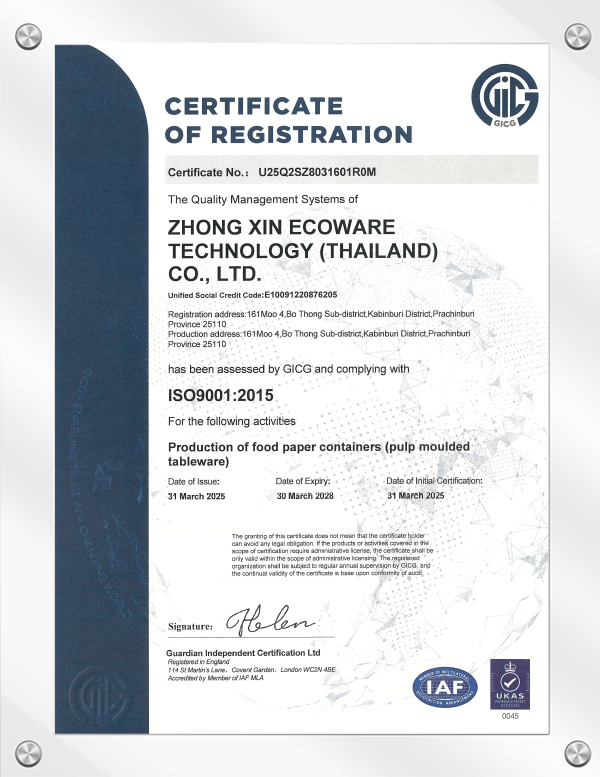
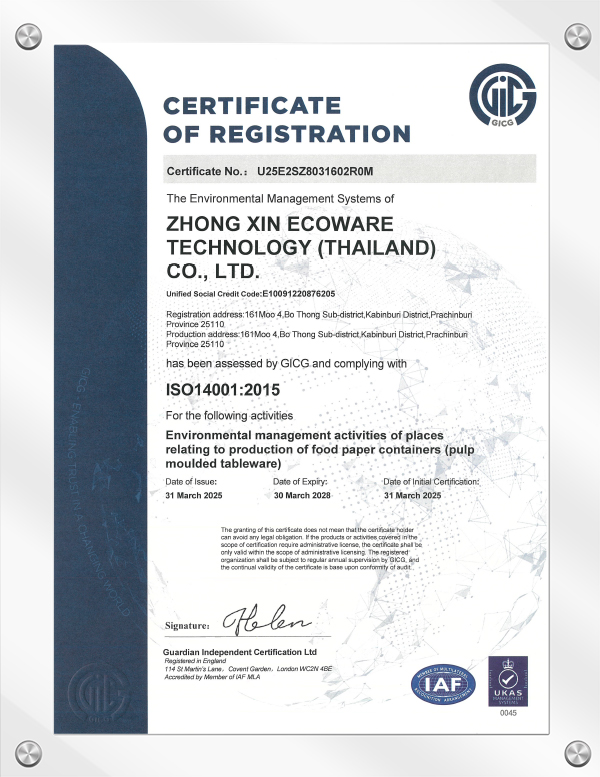
Zhong Xin Ecoware(Thailand) was registered on November 1, 2023, and officially began construction of the factory building in June 2024. At present, the first phase workshop of the factory has been fully completed and put into use. The second phase of the factory is being constructed intensively.
The landing and development of Zhong Xin in Thailand has brought a large amount of initial investment for land, factories, etc., and continuous operational investment for continuous equipment updates, technological upgrades, and capacity expansion.
Zhong Xin Ecoware(Thailand) has directly and indirectly created thousands of job opportunities, increased government revenue, promoted local economic development, cultivated local supply chains, provided systematic training for employees, improved the quality of local human capital, injected vitality into the local economy, enhanced industrial competitiveness, and ultimately improved residents' living standards.
Zhong Xin Ecoware(Thailand) actively collaborates with local pulp mills to explore new cooperation models for developing new products, improving production capacity and quality. At the same time, relying on Zhongxin's advanced production technology, process flow, management experience, and quality control system, it promotes the development of this industry in Thailand.

-
-
 +66-31240888
 -
 161 Village No. 4, Bo Thong Subdistrict Kabin Buri District Prachinburi Province 25110
-
New Bagasse Tableware Lineup for 2026: What Is New and Where to See It
Sep 28,2026
-
How to Select Bagasse Clamshells for Burgers, Rice Meals and Fried Food
Sep 28,2026
-
Microwave Reheating: Is a Bagasse Lunch Box Suitable
Sep 25,2026
-
9 Inch Pizza Plates and Bagasse Pizza Boards: A Sourcing Guide for US and Canadian Distributors
Sep 19,2026
-
PFAS-Free & Compostability Verification: A Buyer's Checklist for Bagasse and Molded Fiber Packaging
Sep 19,2026
-
Bagasse vs PLA vs Molded Fiber: What Distributors Should Stock in 2026
Sep 19,2026
-
Can Sugarcane Plates Handle Hot, Greasy Foods
Sep 18,2026
-
Bagasse Tableware RFQ Template: Get a Comparable Thailand Factory Quote
Sep 14,2026
-
Are Takeaway Food Containers Ready for Saucy Meals
Sep 11,2026
-
7-Inch vs 9-Inch Bagasse Plates: Carton and 20GP Guide
Sep 07,2026
-
Will Bagasse Pulp Trays Sag Under Heavy Meals
Sep 04,2026
-
Zhongxin Packaging at the 140th Canton Fair 2026: Booths and Buyer Meeting Guide
Sep 02,2026
Copyright © 2025 Zhong Xin Ecoware Technology ( Thailand ) CO., LTD.
All Rights Reserved.

Biodegradable Disposable Bagasse Tableware Manufacturer