-
 [email protected]
-
 +66-31240888



 English
 Español
 ไทย
What GSM Paper Bag Do You Need? 50, 60 and 110 g/m2 Explained
Paper bag buyers often assume heavier paper is always the safer choice. In practice, a 110 g/m2 twisted handle bag and a 50 g/m2 SOS bag do completely different jobs, and picking by weight alone is how projects end up with bags that tear at the handle or cost twice as much to freight.
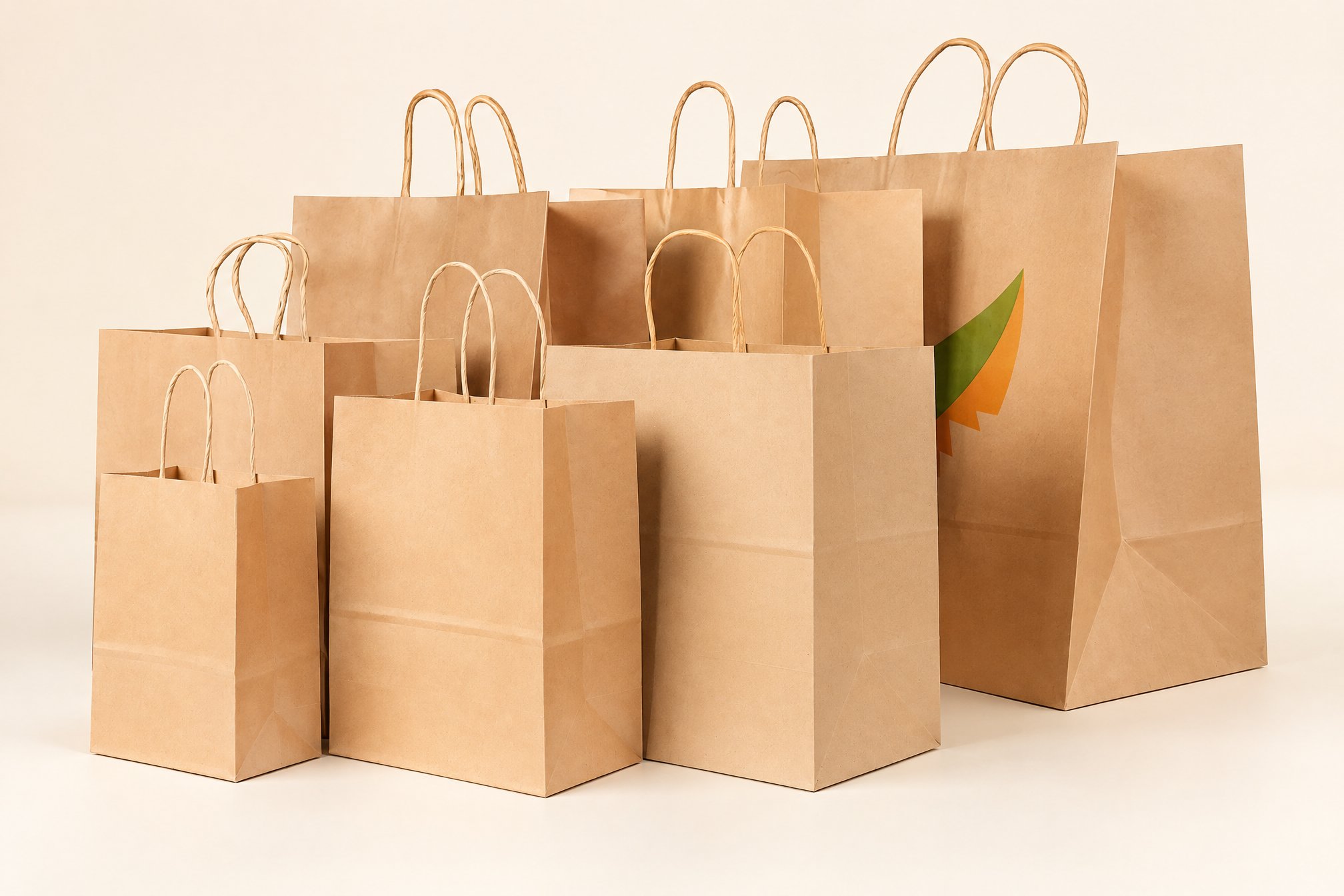
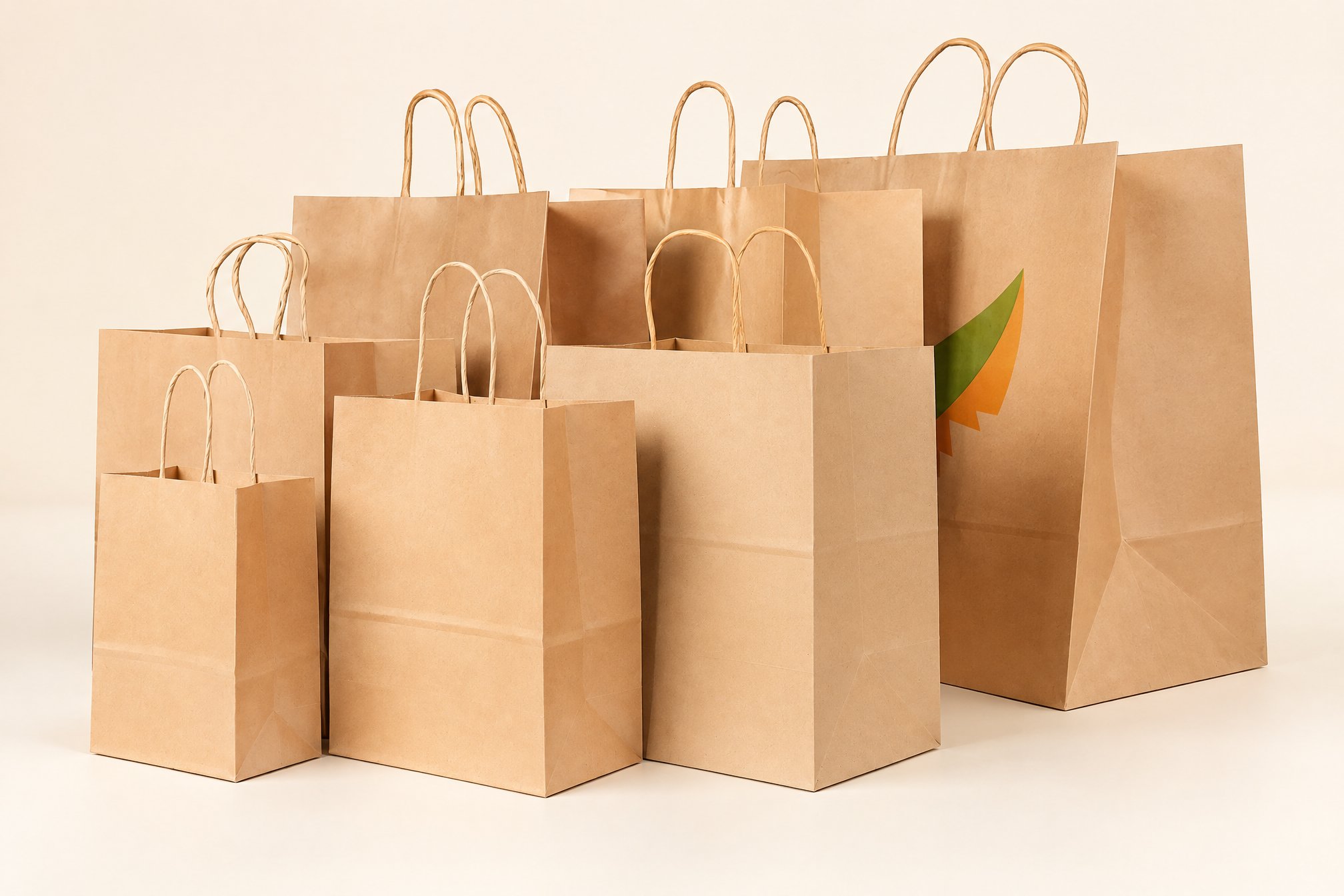
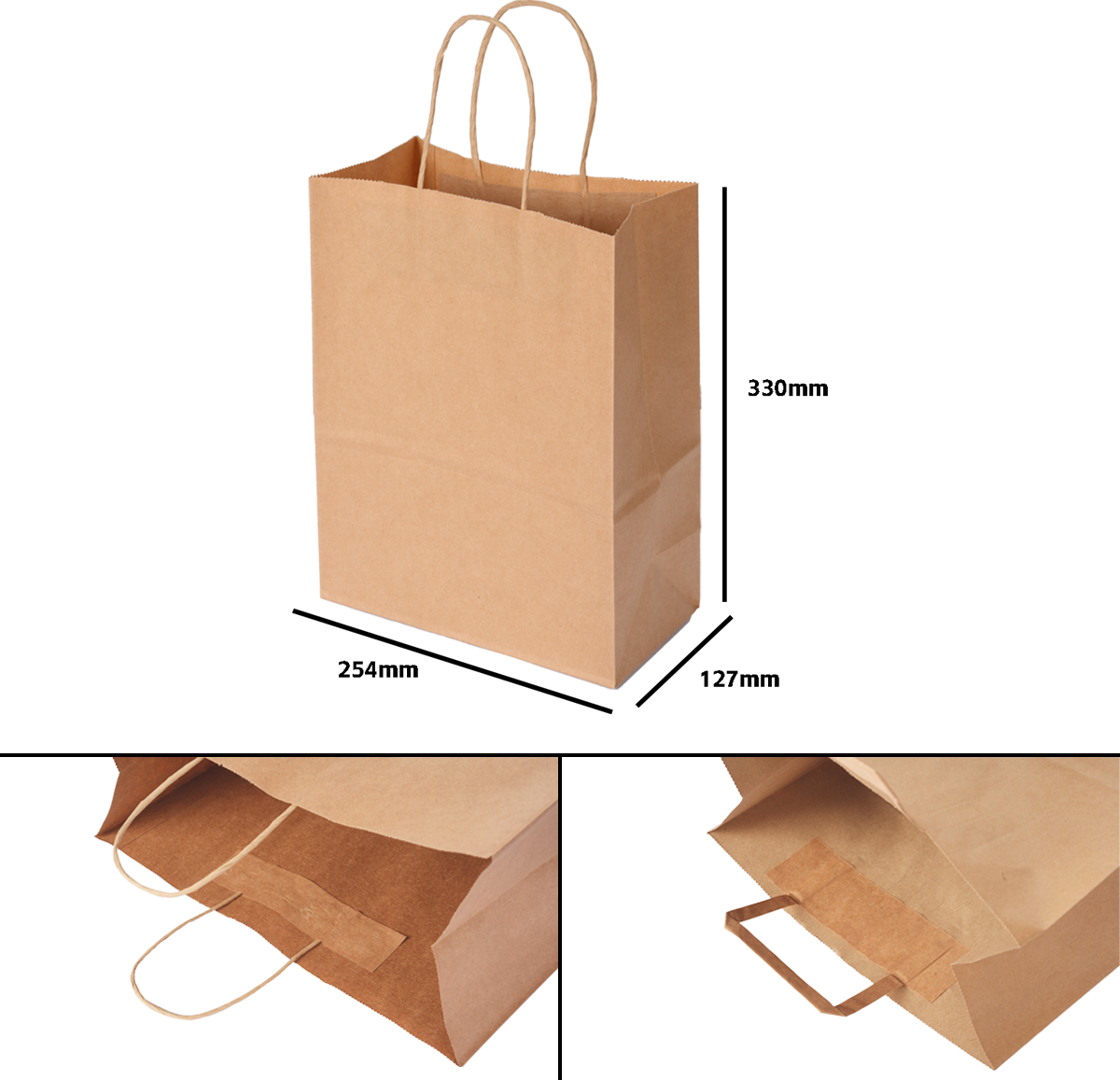
Twisted handle bags in kraft and white, 110 g/m2, seven stock sizes shown together.
Quick summary: what each basis weight is for
Short answer: 50 g/m2 handles light retail and small takeaway loads, 60 g/m2 is the working weight for medium and large SOS bags, and 110 g/m2 is for handled retail bags that carry branded goods. The weight sets the load ceiling, but the bag style decides whether the bag can be used at all — a flat bag at 110 g/m2 still cannot stand on a counter, and a 50 g/m2 SOS bag still cannot hold a full grocery run.
- Basis weight is paper weight per square metre, not bag strength on its own. Structure, base fold and handle construction matter as much.
- The stock range uses three weights: 50 g/m2, 60 g/m2 and 110 g/m2.
- Heavier paper costs more per bag and takes more carton volume, which shows up in freight.
- Buyer rule: choose the bag style first, then the weight inside that style, then confirm on a production sample.
The counterintuitive part: heavier is not automatically stronger in use
A 110 g/m2 twisted handle bag feels like a premium product in the hand. Hand it three takeaway boxes and it will not stand on a counter, because it has a gusset base that folds but no SOS block base. A 50 g/m2 SOS bag of the same footprint will stand, open and take the boxes one-handed.
That is the core confusion. Basis weight describes the paper, not the bag's ability to do a job. A 110 g/m2 sheet is roughly twice the mass of a 50 g/m2 sheet, so it resists punctures and holds a heavier static load, but it does nothing for standing stability, one-handed loading or grease resistance.
Core rule: basis weight sets the load ceiling; bag construction sets what the bag can be used for. Neither one replaces the other.
Four checks that decide the weight
Treat weight selection as four separate questions. Passing one does not answer the next.
| Check | What it establishes | What it does not establish |
|---|---|---|
| 1. How much weight goes in | Whether the paper can carry the static load | Whether the base will hold when the bag is set down |
| 2. Whether there is moisture or grease | Whether an uncoated sheet will soften | That a heavier sheet is grease-resistant |
| 3. Whether the bag is stacked or carried | Whether the paper will crease and collapse | Whether the handle will stay attached |
| 4. What the freight budget allows | How much carton volume per bag you can afford | Whether the bag suits the counter workflow |
The three weights in the stock range
| Basis weight | Used on | Typical load | Bags per case | Carton volume |
|---|---|---|---|---|
| 50 g/m2 | SOS 1# to 8#, all merchandise bags | Pastry, single meal, apparel, pharmacy | 500 to 2,000 | 0.013 to 0.045 CBM |
| 60 g/m2 | SOS 10# to 25# | Full meal, grocery run, family order | 500 to 1,000 | 0.036 to 0.049 CBM |
| 110 g/m2 | All 8 twisted handle bags | Retail goods, wine, boutique, gift | 200 to 250 | 0.034 to 0.087 CBM |
Check 1: how much weight actually goes in
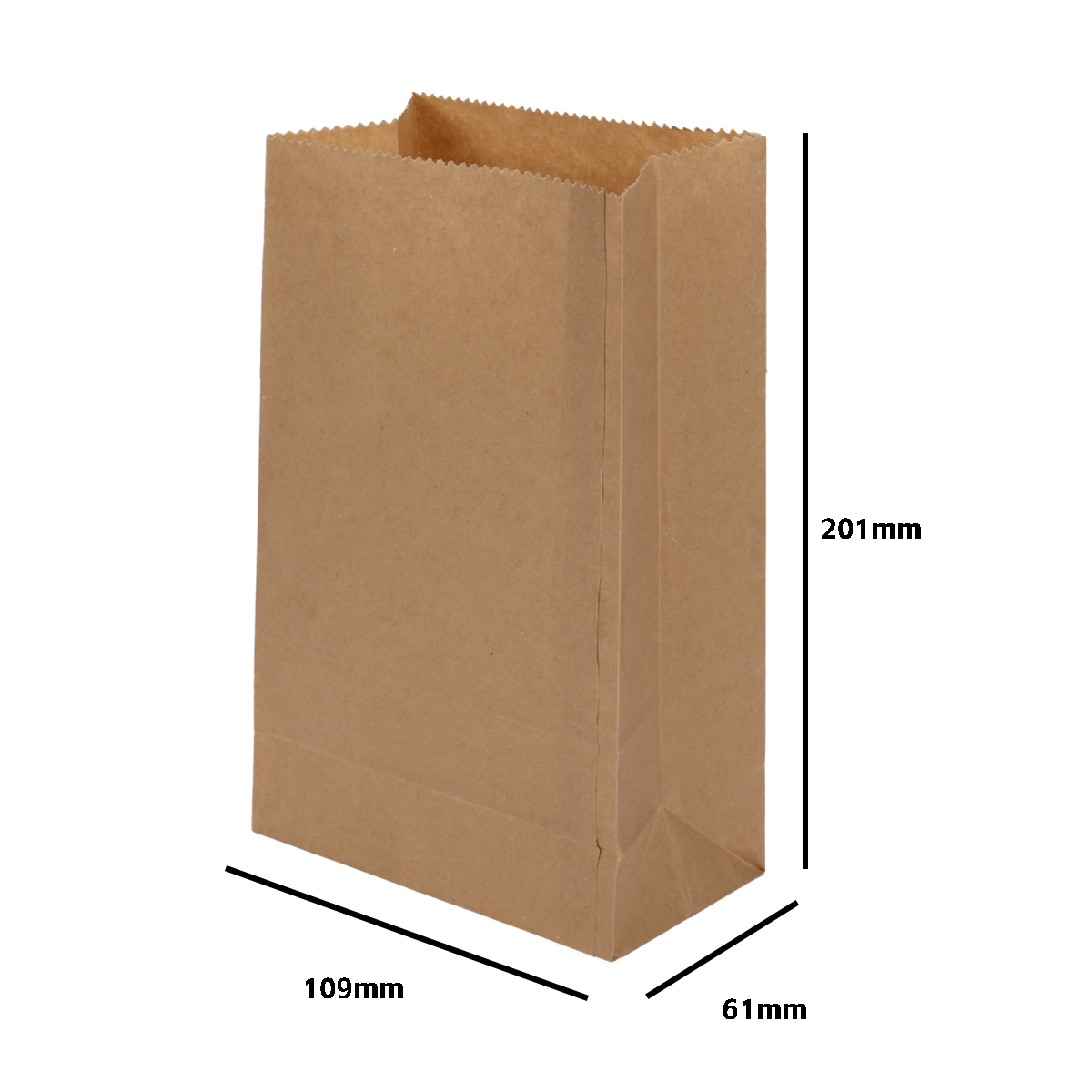
Paper weight scales roughly with load capacity, but the failure point is usually the base fold or the handle attachment rather than the sheet itself. For takeaway, a 50 g/m2 SOS bag up to ZX-SOS-8# covers a single meal plus a drink. From ZX-SOS-10# upward, the range switches to 60 g/m2 because the bags are wider and deeper, and a wide bag at 50 g/m2 sags at the corners when loaded.
If your packer regularly fills above two thirds of the bag height, treat the next weight up as the default rather than the exception.
Check 2: moisture and grease change the answer
Uncoated kraft paper absorbs moisture and softens. A 60 g/m2 bag carrying a dripping container can perform worse than a 50 g/m2 bag carrying dry goods. Weight does not compensate for the absence of a barrier.
For hot, oily or saucy food, the question is not whether to go heavier but whether the bag needs a coating or a liner. Ask the supplier what the paper construction is before agreeing a weight, and test with the real menu item rather than a placeholder.
Check 3: stacking and handling
Retail bags are usually carried one at a time; takeaway bags are often packed in a hall, stacked on a trolley and loaded into a delivery bag. The second pattern creases the paper at the gusset and the base, so a sheet that resists a single trip may still fail by the tenth.
For stacked delivery workflows, a 60 g/m2 SOS bag holds its shape noticeably better than 50 g/m2 in the larger sizes, which is why the range changes weight at ZX-SOS-10# rather than at the top of the list.
Check 4: freight is where weight really costs
Cost per bag rises with weight, but the larger effect is carton volume. A case of 200 to 250 handle bags at 110 g/m2 occupies 0.034 to 0.087 CBM, while a case of 1,000 to 2,000 SOS bags at 50 g/m2 occupies 0.024 to 0.045 CBM. On a full container you move far fewer units per cubic metre with the heavier stock.
That is not an argument against 110 g/m2 — it is an argument for not using it where 50 g/m2 already does the job.
Inside the handle bag: the reinforcement tape that carries the load
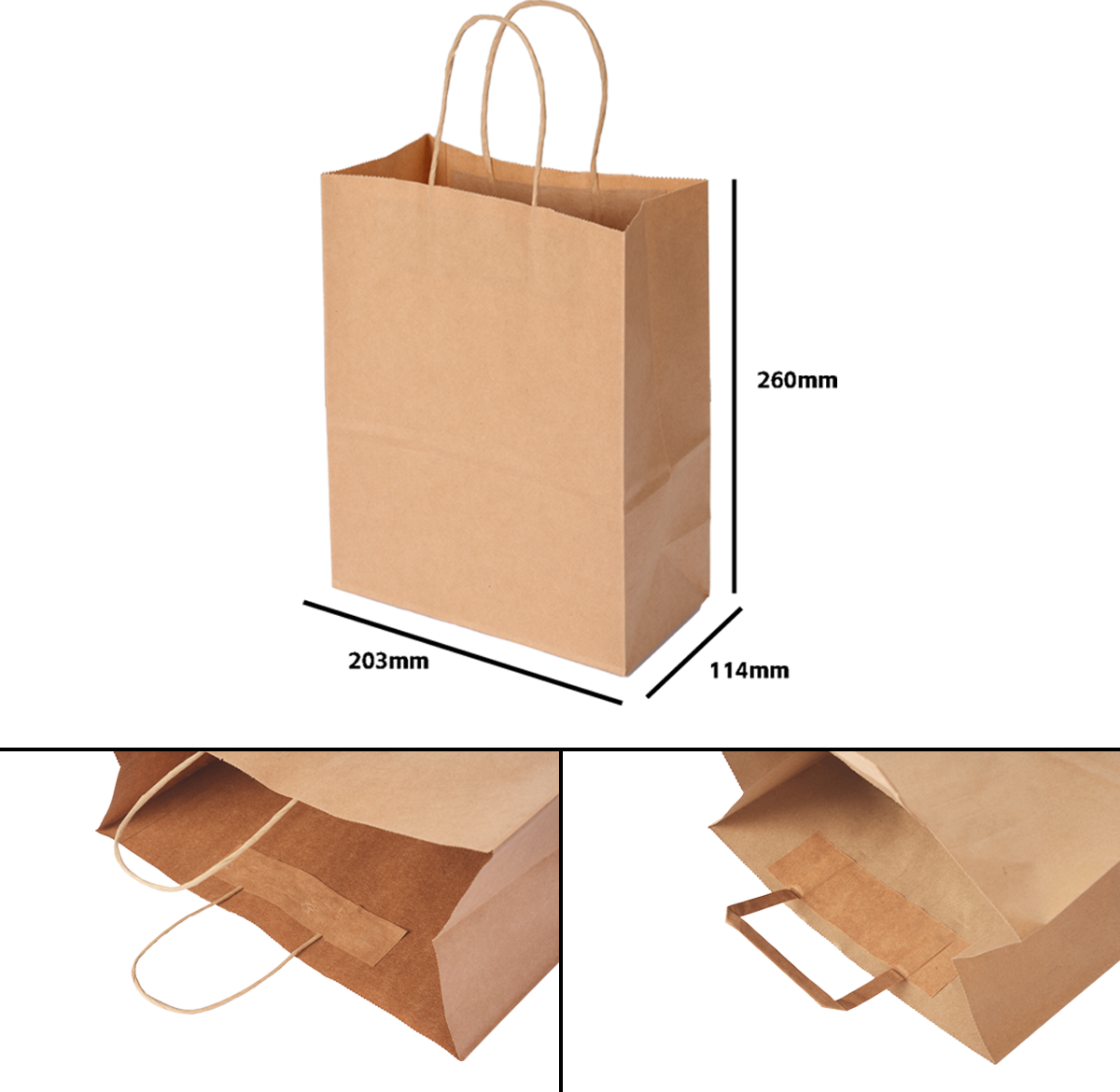
The difference between a handle bag that survives a season and one that tears at the mouth is rarely the paper weight. It is the strip of paper tape glued inside the mouth, across the point where the handle roots are fixed.
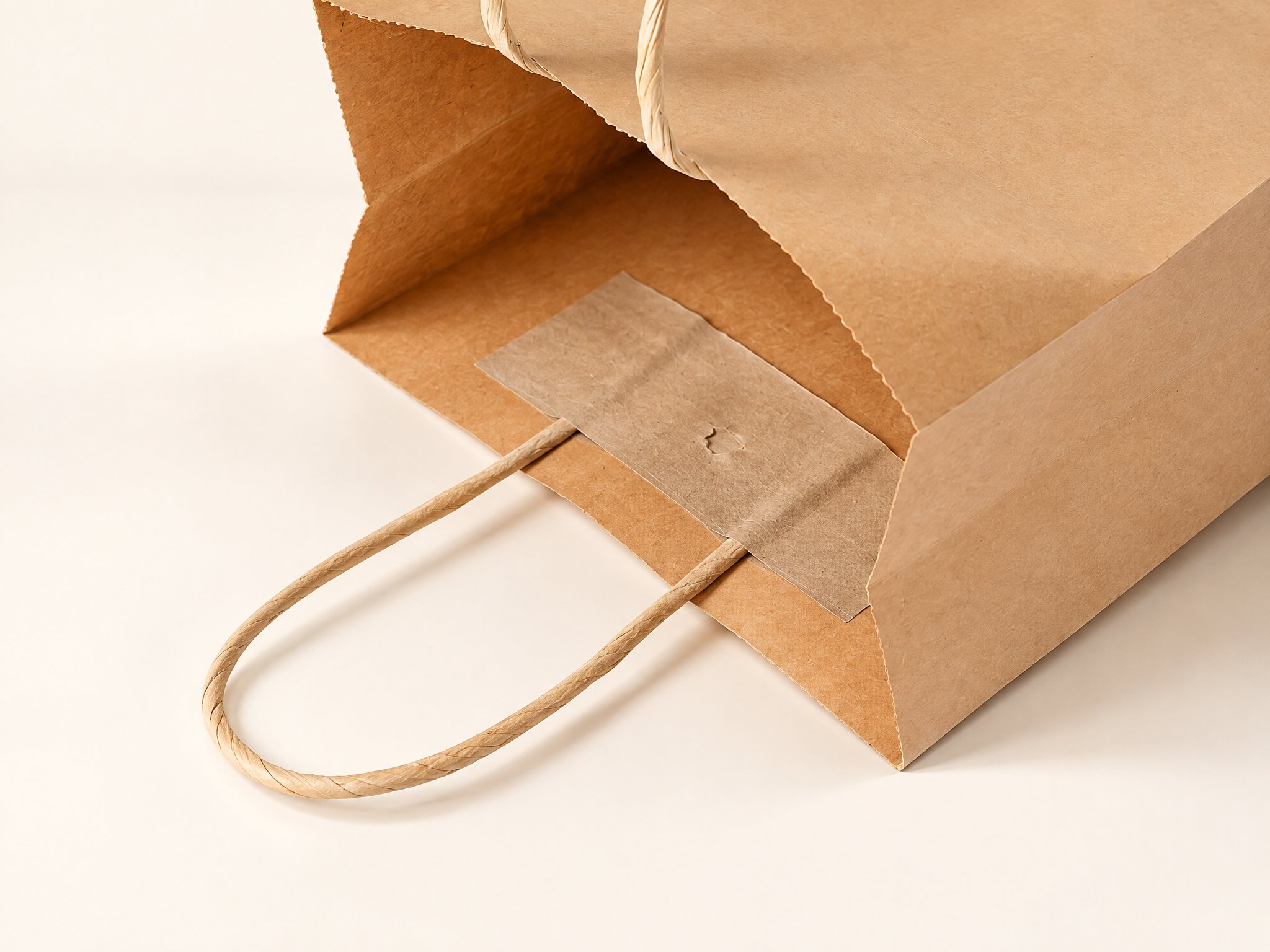
Paper reinforcement tape across the mouth, where the handle roots take the load.
That tape distributes the pull from the handles across the full width of the mouth instead of concentrating it at two punched holes. On a 110 g/m2 retail bag carrying a bottle or a boxed gift, it is the part doing the structural work, and it is one of the things a buyer should look at on a production sample rather than in a photo.
It is also the clearest structural line between our three bag families: SOS bags rely on a folded block base for standing strength, flat merchandise bags have neither base nor handle, and handle bags rely on the mouth tape plus the handle construction.
Handle types and colours in the stock range
| Item | Options in stock | What it changes |
|---|---|---|
| Colour | Kraft, white | Retail presentation and print contrast |
| Handle | Twisted rope | Soft in the hand, suits heavier retail bags |
| Handle | Flat paper, folded inside | Tucked into the mouth, cleaner edge |
| Handle | Flat paper, turned outside | Sits on the face of the bag, more visible brand area |
| Mouth reinforcement | Paper tape inside the mouth | Carries the load across the full mouth width |
| Basis weight | 110 g/m2 | Retail and gift loads |
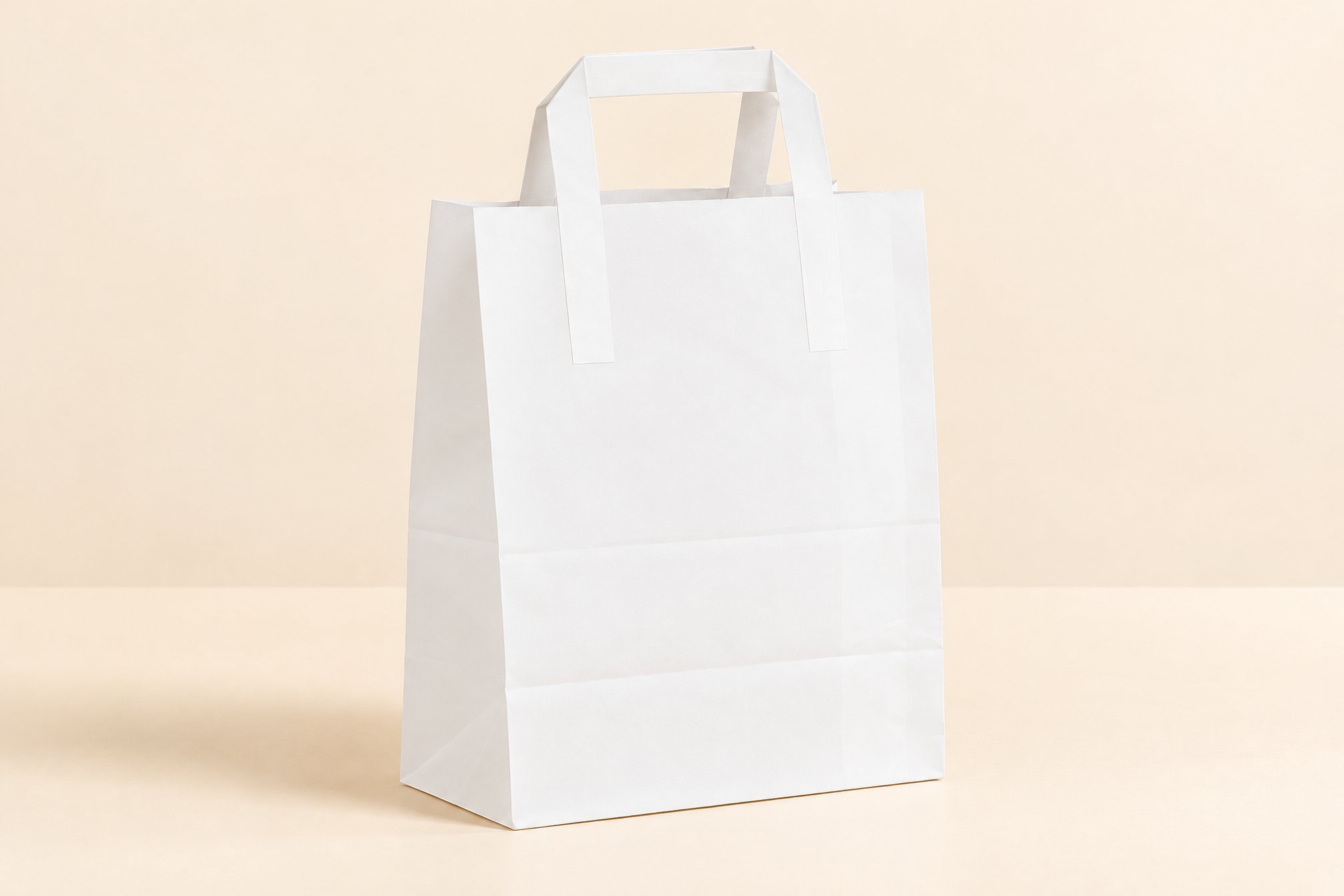
White option with a flat paper handle: same 110 g/m2 construction, different retail look.
Material choices on top of weight
| Option | What it changes | When to ask for it |
|---|---|---|
| Recycled kraft or white | Fibre source, not paper weight | When the buyer needs a recycled-content statement |
| Virgin kraft or white | More consistent colour and strength | When print consistency matters most |
| Window (SOS only) | Removes paper from the panel; not available on handle bags | Bakery and deli where the product should be visible |
| Peel-and-stick tie | Adds a resealable closure | Bakery and grocery lines that reopen bags |
| Up to 6 colour print | Ink coverage, not weight | Branded retail and promotional bags |
Manufacturer insight: when going lighter is the wrong saving
The most common quote request we receive is to take a 60 g/m2 SOS bag down to 50 g/m2 to save cost. It works when the bag is small and the load is dry. It fails when the same request is applied to ZX-SOS-16# or ZX-SOS-25#, where the footprint is too large for the sheet and the base starts to sag under a grocery load.
The saving is in the paper, but the cost is in the complaints. A retailer who loses one bag of goods on a wet pavement stops buying the bag, not just the weight.
A four-step decision path
- Identify the bag style from the workflow: standing and food-facing means SOS; flat and retail means merchandise; carried and branded means twisted handle.
- Identify the load: light dry goods, full meal, or grocery run. That points to 50, 60 or 110 g/m2 within the style.
- Check moisture and stacking: if the contents are wet or the bags are stacked, do not drop below the range default.
- Confirm on a production sample with the actual contents before agreeing a carton and pallet plan.
What to request from a paper bag supplier
- The basis weight and paper type for the exact SKU, not for the product family.
- Bags per case, package configuration and carton dimensions.
- Whether the SKU uses recycled or virgin fibre, and the recycled content statement if claimed.
- Food-contact documentation if the bag will touch food directly.
- A production sample tested with your actual contents.
- The MOQ and lead time for the specific weight, since heavier stock is often quoted separately.
FAQ
Is 110 g/m2 always stronger than 60 g/m2?
As a sheet, yes — the paper is heavier and resists puncture and static load better. As a bag for takeaway, no: a 110 g/m2 twisted handle bag cannot stand open on a counter, so it is the wrong choice regardless of strength.
Why do the larger SOS bags use 60 g/m2?
Because a wider, deeper bag at 50 g/m2 sags at the corners under load. From ZX-SOS-10# upward the footprint is large enough that the extra 10 g/m2 keeps the base flat when the bag is set down.
Does heavier paper make a bag grease-resistant?
No. Grease resistance comes from a barrier coating or liner, not from paper weight. For hot or oily food, ask what the construction is and test with the real menu item.
How much does basis weight affect freight?
Indirectly but significantly. A case of 200 to 250 handle bags at 110 g/m2 occupies 0.034 to 0.087 CBM, against 0.024 to 0.045 CBM for a case of 1,000 to 2,000 SOS bags at 50 g/m2.
Can I get 50 g/m2 in a handle bag?
The stock twisted handle range runs at 110 g/m2 because the handle and the retail load need the extra sheet strength. Lower weights are available on a custom basis, subject to a sample test with your product.
What is the difference between gsm and g/m2?
Nothing — both mean grams per square metre. Suppliers in different markets use the two abbreviations interchangeably.
The practical rule
The useful question is not "which weight is strongest" but "which style, at which weight, holds my load on my workflow and fits my freight budget". Start with the style the counter or shelf demands, then move up in weight until the load and the moisture profile are covered, then confirm on a sample. If any of those four checks fails, a heavier bag will not rescue it.
Sources
- BPI company listing — Zhong Xin Ecoware Technology (Thailand) Co., Ltd. — Biodegradable Products Institute (accessed 2026-11-17)
- Food Ingredients and Packaging — US Food and Drug Administration (accessed 2026-11-17)
Basis weights, case quantities and carton volumes on this page come from our current paper bag specification sheet. See the Kraft SOS Bags, Merchandise Bags and Twisted Handle Bags ranges for full dimensional tables, or the Paper Bags overview for the full stock range.
Zhong Xin Ecoware Technology (Thailand) Co., Ltd. supplies kraft paper bags and bagasse molded fiber food packaging to importers, distributors and foodservice brands. For MOQ, pricing, samples and lead time, email info@fiber-product.com or use the contact form.
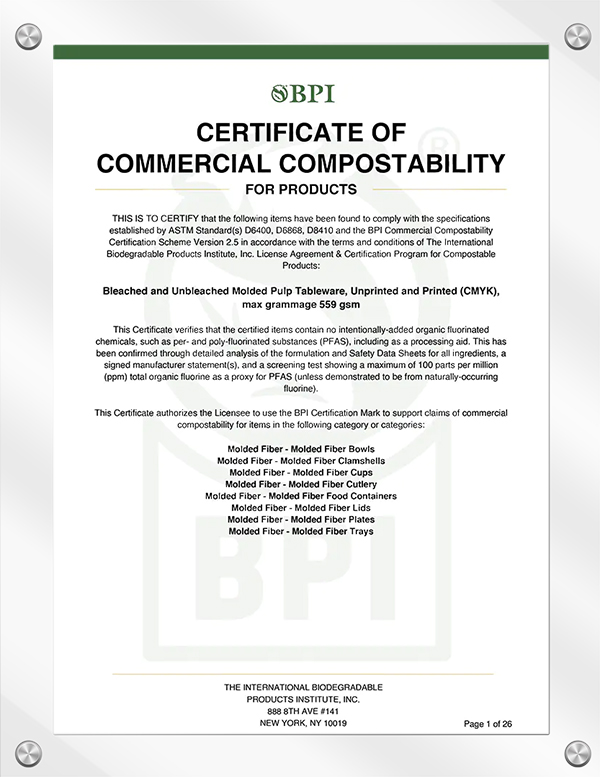
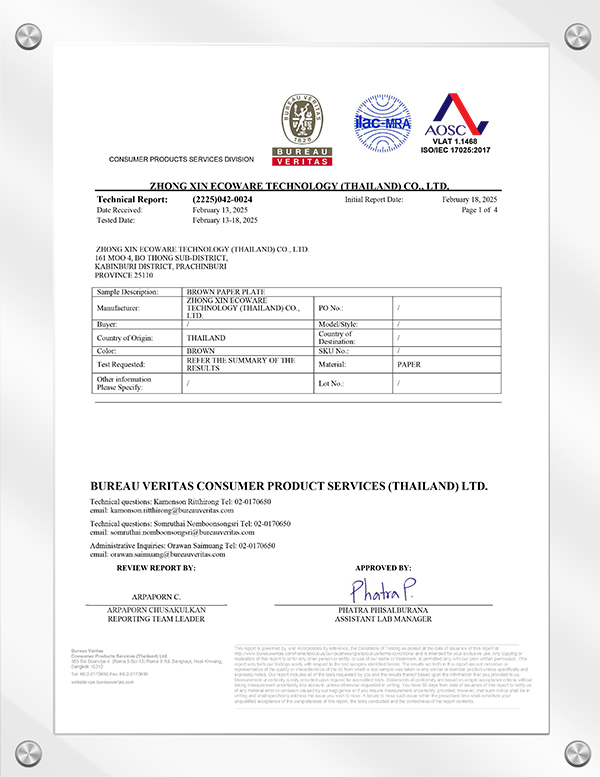
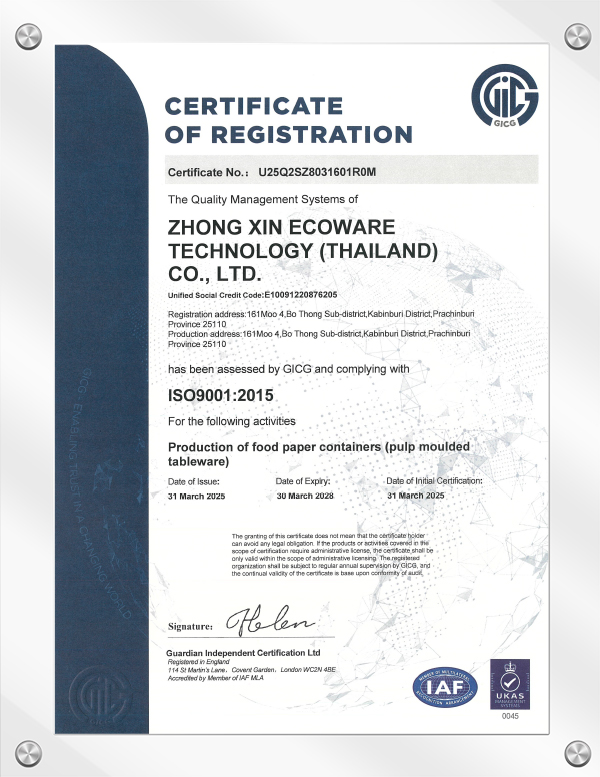
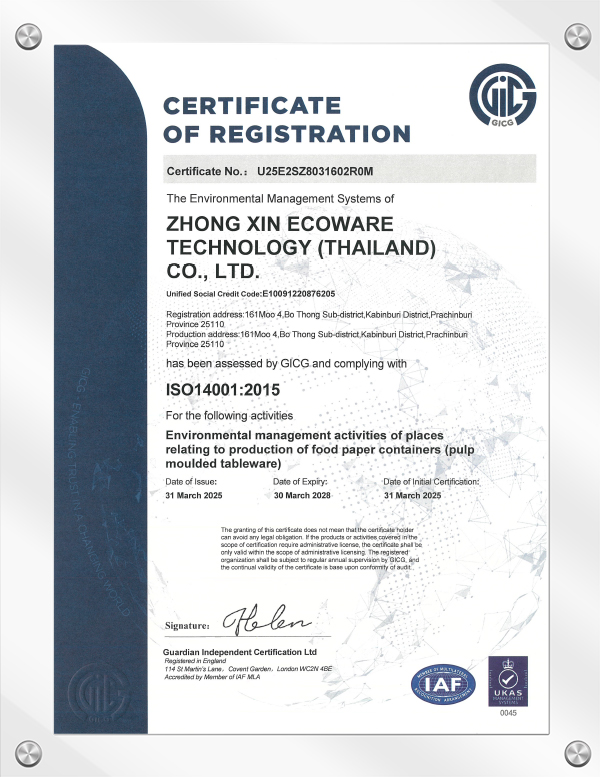
Zhong Xin Ecoware(Thailand) was registered on November 1, 2023, and officially began construction of the factory building in June 2024. At present, the first phase workshop of the factory has been fully completed and put into use. The second phase of the factory is being constructed intensively.
The landing and development of Zhong Xin in Thailand has brought a large amount of initial investment for land, factories, etc., and continuous operational investment for continuous equipment updates, technological upgrades, and capacity expansion.
Zhong Xin Ecoware(Thailand) has directly and indirectly created thousands of job opportunities, increased government revenue, promoted local economic development, cultivated local supply chains, provided systematic training for employees, improved the quality of local human capital, injected vitality into the local economy, enhanced industrial competitiveness, and ultimately improved residents' living standards.
Zhong Xin Ecoware(Thailand) actively collaborates with local pulp mills to explore new cooperation models for developing new products, improving production capacity and quality. At the same time, relying on Zhongxin's advanced production technology, process flow, management experience, and quality control system, it promotes the development of this industry in Thailand.

-
-
 +66-31240888
-
 161 Village No. 4, Bo Thong Subdistrict Kabin Buri District Prachinburi Province 25110
-
How Does Packaging Design Affect Tableware Shipping and Storage Costs
Nov 20,2026
-
What GSM Paper Bag Do You Need? 50, 60 and 110 g/m2 Explained
Nov 17,2026
-
Kraft SOS Bags vs Flat Merchandise Bags: Which for Takeaway and Retail
Nov 16,2026
-
Certifications and Compliance Documents for Bagasse and Molded-Fiber Packaging
Nov 14,2026
-
PFAS-Free Bagasse and Molded-Fiber Food Packaging
Nov 14,2026
-
How to Prove PFAS-Free Bagasse Tableware: Total Fluorine and Targeted PFAS
Nov 13,2026
-
Are Sugarcane-Based Packaging Claims Backed by Verifiable Certifications
Nov 13,2026
-
Are Bagasse Food Containers Safe for Hot Food and Takeout?
Nov 06,2026
-
Leakage and Heat Resistance: What Should Catering Buyers Test Before Ordering
Nov 06,2026
-
Can Compostable Packaging Go in the Compost Bin? Certification vs Facility Acceptance
Oct 31,2026
-
10-Inch Bagasse Plates: A Heavy-Duty Plate Sourcing Guide
Oct 31,2026
-
32oz Bagasse Bowls and PET Lids: A Sourcing Guide for Foodservice Buyers
Oct 31,2026
Copyright © 2025 Zhong Xin Ecoware Technology ( Thailand ) CO., LTD.
All Rights Reserved.

Biodegradable Disposable Bagasse Tableware Manufacturer