-
 [email protected]
-
 +66-31240888



 English
 Español
 ไทย
Can Compostable Packaging Go in the Compost Bin? Certification vs Facility Acceptance
Published: October 31, 2026 | By Zhong Xin Ecoware Technology (Thailand) Co., Ltd.
Can Compostable Packaging Go in the Compost Bin? Certification vs Facility Acceptance
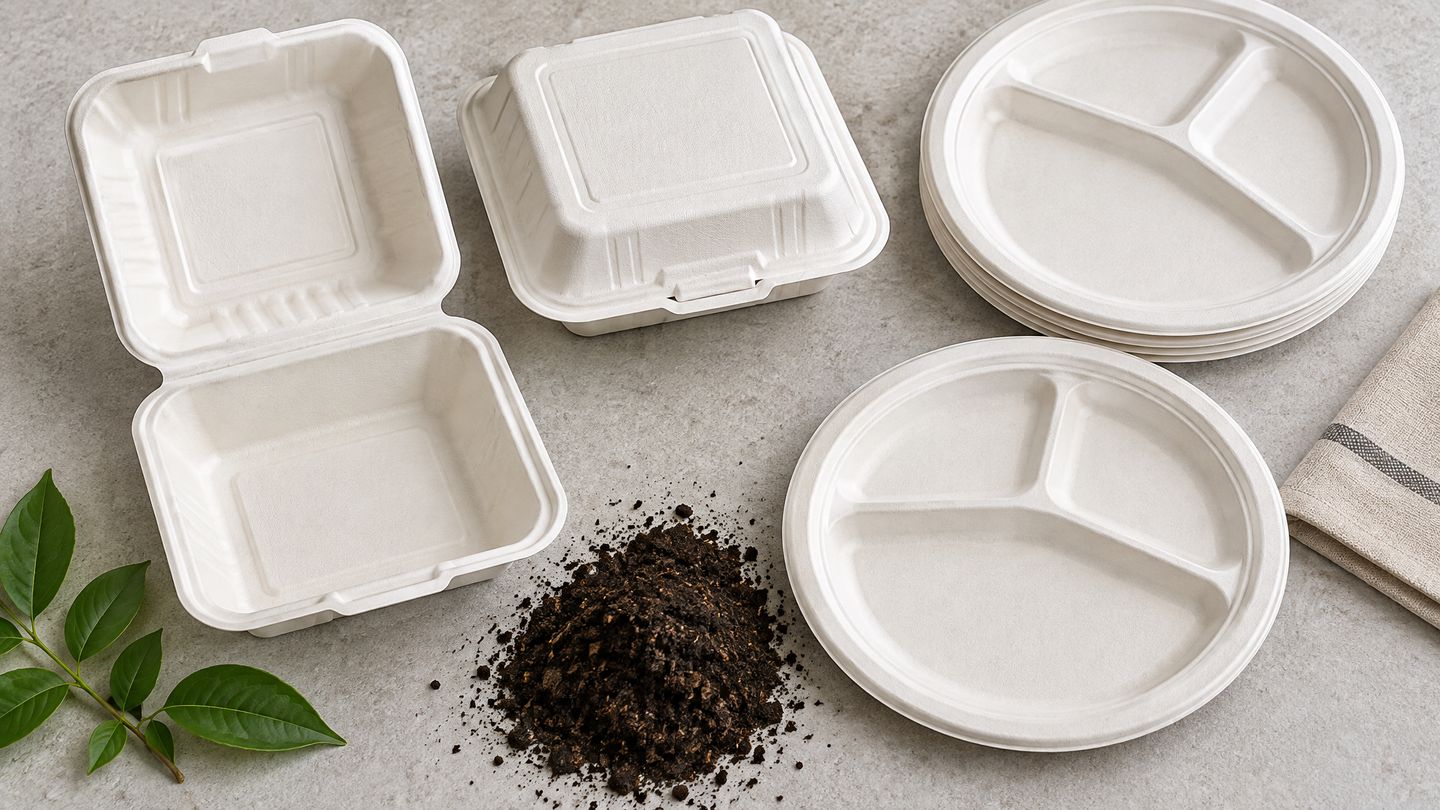
Not automatically. A bagasse clamshell can carry a valid industrial-compostability certificate, a legal "compostable" mark and a green bin printed on the lid, and still be screened out at the facility that receives it.
The confusion comes from mixing two different questions. One is what the material does under defined test conditions. The other is what a local waste system is willing to collect, sort and process. The first is a property of the product. The second is a property of the system around it.
This guide separates the gates a compostable food-service item has to pass in the United States and the European Union, explains what the main certificates actually cover, and lists what to confirm before a disposal instruction is printed on a package.
Quick Summary
- Certification is not acceptance. ASTM D6400, ASTM D6868, EN 13432 and the BPI or OK Compost marks describe technical performance under defined conditions. None of them obliges a hauler or a compost site to take the item.
- Labeling is a separate legal question. Several U.S. states restrict the words "biodegradable", "degradable" and "decomposable", and set specific conditions for the word "compostable".
- Collection is local. The same SKU can be accepted in one city programme and landfilled in the next.
- Material structure decides the path. A PLA cup, a PLA-coated paper cup, a plastic-free bagasse plate and food-soiled uncoated fibre are not treated the same way.
- Buyer rule: verify the finished SKU, the claim wording, the destination state or member state, the local collection programme and the receiving facility before printing a universal disposal instruction.
A package can be certified compostable and still belong in the trash in a particular city.
That sentence sounds like a contradiction, and it is the single most expensive misunderstanding in compostable food-service procurement. A certificate answers a laboratory question. It does not answer the question a restaurant manager asks at the bin: where does this actually go?
The distinction matters most for buyers comparing PLA cups, moulded fibre containers, coated paper products and compostable cutlery. Products sold under the same broad "compostable packaging" label can end up in completely different places, and the paperwork that proves one property is often mistaken for proof of the other.
Core rule: compostability is a product property; composting access is a system property. A certificate can establish the first. It cannot guarantee the second.
Certified, Labeled, Collected, Accepted, Composted
A more accurate way to evaluate compostable food packaging is to treat disposal as a five-gate system. Passing one gate does not guarantee passage through the next.
| Gate | What it establishes | What it does not establish |
|---|---|---|
| 1. Certified | The finished product or a defined product family has been evaluated against an applicable compostability standard or certification programme. | That any particular composting facility accepts the product. |
| 2. Legally labeled | The wording, certification mark, colour coding and disposal statement comply with the rules of the destination market. | That a local organics programme collects the item. |
| 3. Collected | The local hauler or organics programme permits that material or packaging category in its stream. | That every receiving facility deliberately processes it. |
| 4. Accepted | The receiving facility intentionally allows the item into its composting process. | That the item completes the process; routine screening can still remove it. |
| 5. Actually composted | The packaging stays in the process and follows its intended pathway to finished compost. | That the word "compostable" on the package will be true in every market it reaches. |
The same logic applies to recycling, where technical recyclability and real collection are also two different things. Material compatibility is only the entry ticket. Infrastructure decides the outcome.
What ASTM D6400 and ASTM D6868 Actually Prove
ASTM D6400 is the U.S. specification for plastics and products made from plastics designed to be aerobically composted in municipal or industrial facilities. ASTM D6868 covers coatings and films on paper and other substrates intended for composting. For moulded fibre tableware, the relevant route is usually the second one, applied to the finished article rather than to the raw pulp.
Both standards set test requirements rather than market rules: disintegration, biodegradation, ecotoxicity and regulated-metal limits under defined composting conditions. Passing them establishes that the material can compost in a controlled industrial process within the specified timeframe.
They do not establish that a facility in a given city runs that process, at that temperature, for that residence time, with that screening configuration.
ASTM D6400 and D6868 are technical specifications, not nationwide acceptance permits.
Two procurement details cause most of the problems. The first is the edition: a state law, a customer specification and a certificate may reference different editions of the same standard, and the buyer is usually bound by the most restrictive one. The second is scope: a certificate covers a defined product family, formulation, thickness and coating. A new colour, a new liner, or a switch from uncoated to coated board normally requires new evidence.
EN 13432, OK Compost and the Same Gap in Europe
In Europe the reference standard is EN 13432, which defines the requirements for packaging recoverable through composting and biodegradation. The OK Compost INDUSTRIAL and OK Compost HOME marks are certification schemes operated against that framework, and EN 13432 sits alongside the Packaging and Packaging Waste Regulation in the compliance stack.
The structure of the problem is identical to the U.S. one. EN 13432 describes how a package must behave in an industrial composting process. It does not oblige a municipality to collect packaging in its bio-waste stream.
Member states and local operators still decide. Some countries restrict which compostable items may enter organics collection, some exclude packaging from bio-waste collection entirely, and some accept only specific categories such as food-soiled fibre or certified bags used as liners.
For an exporter shipping to both markets, the practical consequence is that one certificate pack does not produce one disposal message. It produces at least two, and often more.
Before Disposal: Is the Environmental Claim Itself Legal?
For packaging sold in the United States, disposal is not the first compliance question. The artwork has to pass a legal test before the package ever reaches a customer.
Terms such as "biodegradable", "degradable", "decomposable", "compostable", certification marks, colours and recycling symbols are not governed uniformly across states. Wording that reads as harmless marketing in one market can be a violation in another.
| Jurisdiction | Biodegradable-type claims | Compostable claims | Procurement implication |
|---|---|---|---|
| Washington | Covered products generally cannot be labeled "biodegradable", "degradable", "decomposable" or similar terms, with a narrow exemption for agricultural mulch film. | Covered compostable products generally need applicable third-party certification and prescribed compostable identification. | A generic "biodegradable" design creates a compliance problem in Washington. |
| California | Restrictions apply to biodegradable, degradable and decomposable claims for covered products, and to environmental degradation representations. | Compostable plastic products must meet ASTM D6400; plastic-coated fibre products must meet ASTM D6868, plus labeling conditions. | Material construction and exact claim wording must be checked before artwork approval. |
| Colorado | Representations implying uncontrolled degradation in landfill or the environment are restricted. | Since July 1, 2024, products represented as compostable must hold recognised independent third-party certification and meet labeling requirements. | Certification and product identification are both relevant, not one or the other. |
| Minnesota | Covered products cannot use biodegradable, degradable or decomposable claims unless an applicable ASTM specification exists and certification conditions are met. | Compostable covered products must meet ASTM D6400, ASTM D6868 or specified uncoated wood and paper conditions; certification requirements apply from January 1, 2026. | The claim, the applicable standard and third-party certification should all be checked together. |
Washington: "Biodegradable" and "Compostable" Are Not Interchangeable
The Washington State Department of Ecology states that products cannot be labeled "biodegradable", "degradable", "decomposable" or another similar term, with biodegradable agricultural mulch film identified as a specific exception.
Washington treats "compostable" differently. Covered food-service products may need applicable industrial-compostability certification, a third-party certifier logo, the word "compostable", and green, beige or brown identification on the item.
The state also recognises an important fibre distinction: products made from wood, or products containing more than 98% fibre without plastic additives, coatings or waxes, are excluded from certain compostable-labeling requirements. That distinction matters for sugarcane bagasse tableware. A plastic-free moulded fibre article should not automatically be treated as if it were a PLA article or a plastic-coated paper product, and the reverse is also true: a fibre article with a polymer coating is a different legal object from an uncoated one.
California: "Compostable" Has Its Own Legal Conditions
California's CalRecycle guidance states that a compostable plastic consumer product must meet ASTM D6400, while a compostable plastic-coated fibre product must meet ASTM D6868. Additional labeling conditions apply to how the product is marked and identified.
This is why suppliers should not treat "compostable", "paper", "fibre" or "plant-based" as interchangeable descriptions. A PLA-coated paper cup has a different finished structure from an uncoated moulded fibre cup, and the two follow different evidence routes.
Colorado and Minnesota Add More State-Level Variation
Colorado requires products represented as compostable to have recognised independent third-party certification and prescribed labeling characteristics.
Minnesota's statute is another useful example. A covered product labeled "compostable" generally must meet ASTM D6400, ASTM D6868 or specified uncoated wood and paper conditions. Certification requirements phase in from January 1, 2026.
For export buyers the implication is simple: do not approve U.S. artwork because the product has a compostability certificate. The wording, the mark, the colour coding, the symbol and the disposal statement may each need to be checked against the destination state.
The FTC Green Guides Add a Federal Layer
State law is not the only consideration. The U.S. Federal Trade Commission's Green Guides address how environmental marketing claims can be communicated without misleading consumers, and they apply across the country.
The FTC states that marketers making compostable claims need competent and reliable scientific evidence supporting them, and that commercial-compostability claims should be qualified where suitable municipal or industrial composting facilities are not available to a substantial majority of consumers in the area.
The Green Guides also caution against unqualified degradable claims for products whose customary disposal routes include landfill, incineration or recycling, because those environments do not support rapid degradation.
That is why certification documents, environmental claims and destination-market disposal instructions should be reviewed as three separate items. One certificate does not answer three questions.
Legal Labeling Still Does Not Guarantee Collection
Washington provides one of the clearest official statements of the problem. After explaining its labeling requirements, the Department of Ecology warns that many service providers and compost facilities still do not accept compostable products. Some accept only specific categories; others accept none.
If a compostable product reaches a facility that does not accept it, it can be removed and disposed of instead.
A package can be certified compostable, legally labeled compostable, and still be prohibited from the customer's local compost bin.
Portland: Certified Compostable Can Still Be Trash
Portland, Oregon shows the issue at municipal level. The city's compost guidance permits food scraps and a limited group of non-food items. BPI-certified compostable bags can be used as approved bin liners, but the same guidance excludes coffee cups, paper plates and a range of other packaging.
In other words, a certified compostable cup does not become acceptable because certification appears on the cup. The city decides what enters its stream, and it decides category by category.
This matters for a chain operating across several states. The same SKU may need different end-of-life communication depending on the city, and a single national disposal instruction can be wrong in most of the markets where it is used.
Why Composters Reject Packaging That Is Technically Compostable
A composting facility is not running an ASTM laboratory test. It has to produce usable compost at commercial throughput while managing contamination, processing time and operating cost. Those constraints, not the certificate, decide acceptance.
1. Conventional Plastic Lookalikes Create Contamination Risk
A conventional plastic fork and a compostable fork can be difficult to separate on a sorting line. Clear PLA cups can resemble PET cups. Coated paper and fibre items are also hard to classify visually once they are food-soiled.
If composters cannot reliably distinguish compliant products from lookalikes, accepting compostable packaging raises the risk of plastic contamination in the finished compost. For many operators, the safe answer is to exclude the whole category.
2. Real Facility Residence Time Can Differ
Industrial composting facilities do not run identical temperature profiles, aeration systems, moisture levels, turning schedules or residence times. A product tested to a standard can still be slower to disintegrate than a particular facility's cycle allows, which is exactly the gap that field-validation programmes are designed to study.
3. Screening Can Remove Packaging Before Disintegration
Composting operations screen material during or after processing. Visible fragments can be pulled out with contaminants before they have had enough time to continue breaking down. From the facility's point of view, the item never completed composting even though it may have been composting successfully.
4. Packaging Is Not Always the Desired Feedstock
Food scraps, yard trimmings and other organics carry the main feedstock value for many operations. Compostable food-service packaging can help capture food residue, but the packaging itself may add little value while adding volume and screening load.
That economic and operational reality explains why technical compostability alone cannot dictate facility acceptance. It also explains why buyers should ask a facility, not only a supplier.
PLA, Coated Paper and Bagasse Do Not Follow the Same Disposal Path
The broad term "compostable food packaging" hides major material differences. Procurement teams should identify the complete finished structure before choosing certification evidence or writing disposal instructions.
| Packaging type | Typical end-of-life issue | What the buyer should verify |
|---|---|---|
| PLA cold cup | Commercial compostability depends on controlled composting conditions; the cup does not belong in every organics system. | Finished-product certification, state labeling rules, local collection access and facility acceptance. |
| PLA-coated paper cup or bowl | The finished item is a fibre and polymer structure rather than plain paper; the coating affects certification and waste-system behaviour. | Complete coating structure, applicable D6868-related evidence where relevant, and local acceptance of coated fibre. |
| Plastic-free moulded bagasse | Fibre packaging may be treated differently from compostable plastics, but coatings and additives can change its status. | Whether the finished SKU contains polymer coatings, waxes, PFAS-related chemistry or other additives, plus local food-soiled fibre rules. |
| Uncoated food-soiled paper | Some organics programmes accept food-soiled uncoated fibre even while excluding certified compostable plastic packaging. | The exact accepted-material list of the destination programme. |
| CPLA or other compostable cutlery | Lookalike contamination is a major concern because conventional and compostable utensils can appear similar. | Certification, markings and explicit collection or facility acceptance. |
For buyers comparing the three main material routes, our guide to bagasse, PLA and moulded fibre explains how distributors should stock each one. For the compostability claim itself, the bagasse compostability guide covers what the material does and does not support.
What If Compostable Packaging Goes to Landfill?
Industrial compostability should not be confused with landfill biodegradation.
ASTM D6400 and commercial-compostability certification are based on defined aerobic composting conditions. A landfill has a different oxygen profile, moisture level, microbial environment and operational purpose. Washington Ecology states directly that organic waste and compostable products do not compost in a landfill.
A commercial compostability certificate is therefore not evidence that packaging will disappear rapidly in landfill, soil, marine environments or uncontrolled natural conditions. Any packaging that makes a landfill-disappearance claim is making a different claim, and it needs different evidence.
Manufacturer Insight: Approve Artwork After Market Review
For an export manufacturer, one of the easiest mistakes is to finalise a generic package design before confirming where the finished product will be sold. A buyer may request "BIODEGRADABLE", "100% COMPOSTABLE", a recycling symbol or a green leaf, and the artwork is approved because it looks right rather than because it is legal in the destination market.
For U.S. and EU projects we recommend separating four approvals: product specification, certification evidence, environmental artwork, and local disposal communication. They are related, but they should not be treated as the same review.
In practice this also protects the supplier. When a buyer changes the claim wording after the mould or the print plate is approved, the cost is rarely carried by the buyer alone.
A Procurement Decision Tree for U.S. and EU Buyers
- Identify the complete finished structure. Is the product PLA, CPLA, plastic-free bagasse, PLA-coated paper, another coated fibre structure or a blend?
- Define the intended environmental claim. Does the product actually need to say "compostable", "home compostable" or another environmental term, or is a material statement enough?
- Identify the applicable technical standard. Confirm whether ASTM D6400, ASTM D6868, EN 13432 or another assessment route fits the finished construction.
- Verify the certification scope. Check the certificate holder, product family or SKU, formulation, thickness, colour and coating.
- Check destination labeling rules. Review whether the proposed wording, logo, colour coding and symbols are permitted or required in each target state or member state.
- Check the local organics programme. Do not assume certification overrides the accepted-material list.
- Identify the receiving facility where practical. Confirm whether it deliberately accepts the relevant packaging category.
- Write disposal instructions that match the market. Avoid universal "place in compost bin" artwork when distribution spans jurisdictions with different infrastructure.
For national restaurant groups and food-service distributors, the practical solution is often to separate the packaging specification from the consumer disposal instruction. One product can serve several markets; one disposal line cannot.
What Buyers Should Request From a Compostable Packaging Supplier
- The complete material composition of the finished product.
- The applicable standard and the edition used for testing or certification.
- Current third-party compostability certification where required.
- Evidence that the certificate covers the actual product or relevant product family.
- The proposed artwork showing environmental claims and certification marks.
- Separate material information for lids, coatings, liners, labels and accessories.
- Destination states or member states and the intended distribution markets.
- Local collection or facility-acceptance verification where compost disposal will be actively promoted.
A supplier answering only "yes, it is compostable" has not provided enough information for a labeling or disposal decision. The useful answer names the standard, the edition, the certificate scope and the market.
How Zhong Xin Ecoware Supports Compostable Packaging Projects
Zhong Xin Ecoware manufactures moulded bagasse and fibre food-service packaging in Thailand and China for distributors, food-service operators and private-label buyers. For compostable projects we supply the finished-product composition, the relevant certification and test documentation, and the artwork review input that a buyer needs before a disposal claim is printed.
The useful sourcing question is not simply whether a product is eco-friendly. It is whether the exact finished SKU can perform in service, support the intended environmental claim, and fit the realistic end-of-life path in the market where it will be sold.
Related reading: bagasse packaging certifications by market, PFAS-free and compostability verification checklist, is bagasse compostable, and U.S. vs EU import documentation.
FAQ
Does BPI certification mean a composting facility will accept the product?
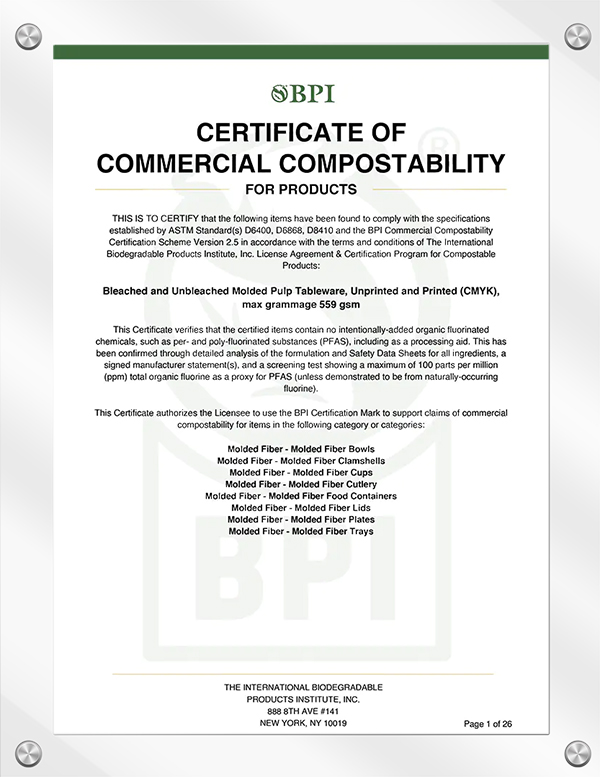
No. BPI certification provides third-party evidence that a product meets the applicable certification requirements, but local collection programmes and composting facilities still decide which products they accept. Facility acceptance is a local operational decision, not a certification outcome.
Can ASTM D6400 packaging go in any commercial compost bin?
No. ASTM D6400 sets technical requirements for products intended for controlled municipal or industrial aerobic composting. It does not require any municipality, hauler or facility to accept a specific package.
Can PLA cups go into commercial composting?
PLA cups can be designed and certified for commercial composting, but they should enter an organics stream only where the collection programme and receiving facility accept that category. Some cities exclude compostable cups from their programmes entirely.
Are bagasse containers accepted by composting facilities?
Some facilities and organics programmes accept food-soiled moulded fibre, but acceptance is not universal. Coatings, waxes and additives can change how the finished container is treated, and local rules on food-soiled fibre vary.
What happens if compostable packaging goes to landfill?
A landfill does not reproduce controlled composting conditions. Industrial compostability certification should not be read as evidence that the product will degrade rapidly after landfill disposal.
Can a compostable product still be labeled "biodegradable"?
Not legally in several U.S. states. Compostability performance and environmental marketing wording are separate issues, and states such as Washington prohibit covered products from using "biodegradable", "degradable", "decomposable" and similar terms.
How can a restaurant know whether compostable packaging is accepted locally?
Check the current organics guidance from the municipality or waste hauler, and where possible identify the receiving facility. Search for the exact category, such as cups, utensils, moulded fibre or lined paper, rather than for the general word "compostable".
The Practical Rule
The useful question is not simply, "is this package compostable?"
The complete question is: is the finished package supported by the appropriate technical evidence, legally labeled for the destination market, collected by the local organics programme, accepted by the receiving facility, and likely to complete the process?
If one of those gates fails, the package may never reach its intended end of life, and the buyer carries the cost of a claim that the system around it does not support.
Get a Quote
Tell us the product, the destination market and the disposal claim you intend to print, and we will confirm the specification, the certification evidence and the packing. Email your enquiry to info@fiber-product.com.
Authoritative References
- ASTM International - ASTM D6400
- ASTM International - ASTM D6868
- BPI - Field Validation Program
- Washington State Department of Ecology - Compost labeling
- CalRecycle - Plastic labeling
- Colorado General Assembly - SB23-253
- Minnesota Statutes 325E.046
- U.S. FTC - Environmental Claims: Summary of the Green Guides
- City of Portland - Compost guidance
About Zhong Xin Ecoware
Zhong Xin Ecoware Technology (Thailand) Co., Ltd. is part of the Zhong Xin Group, a moulded fibre and bagasse tableware manufacturer with production bases in China and Thailand. The group supplies biodegradable and compostable food-service packaging to distributors, food-service operators and private-label buyers worldwide.
Last updated: October 31, 2026.
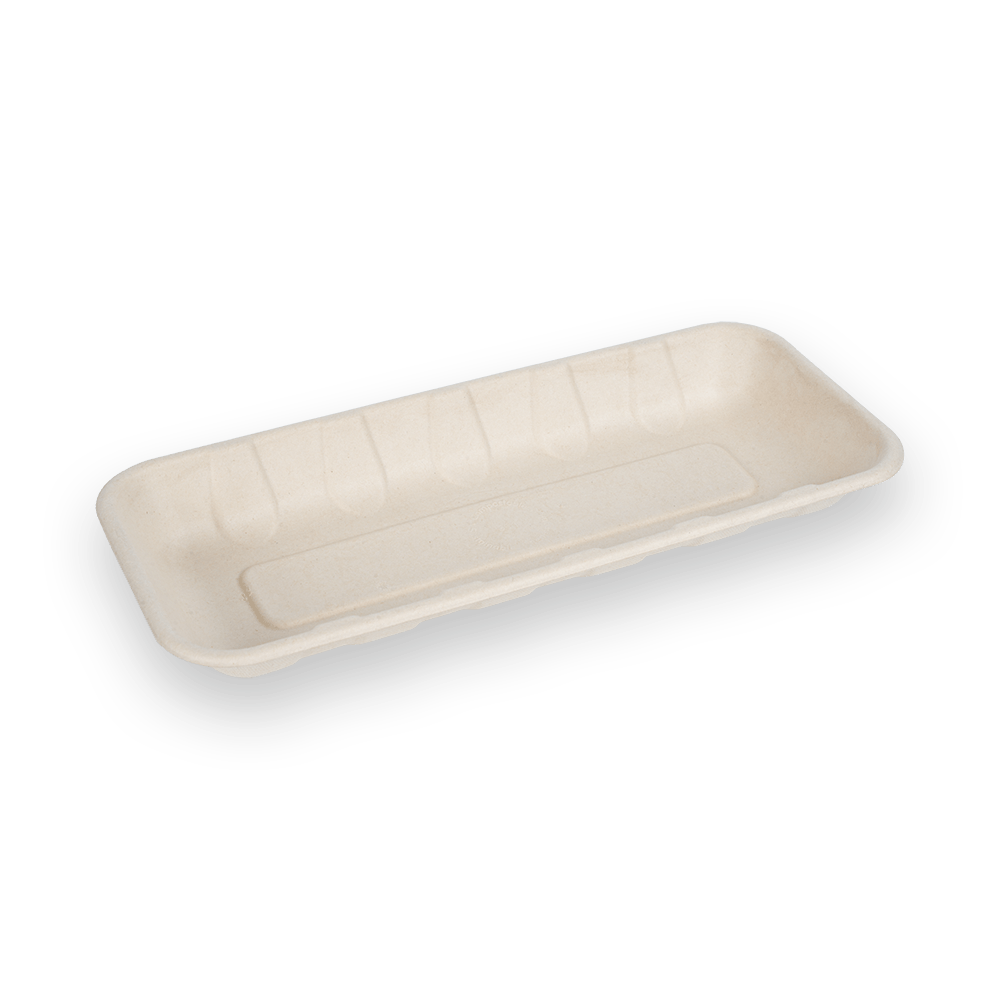
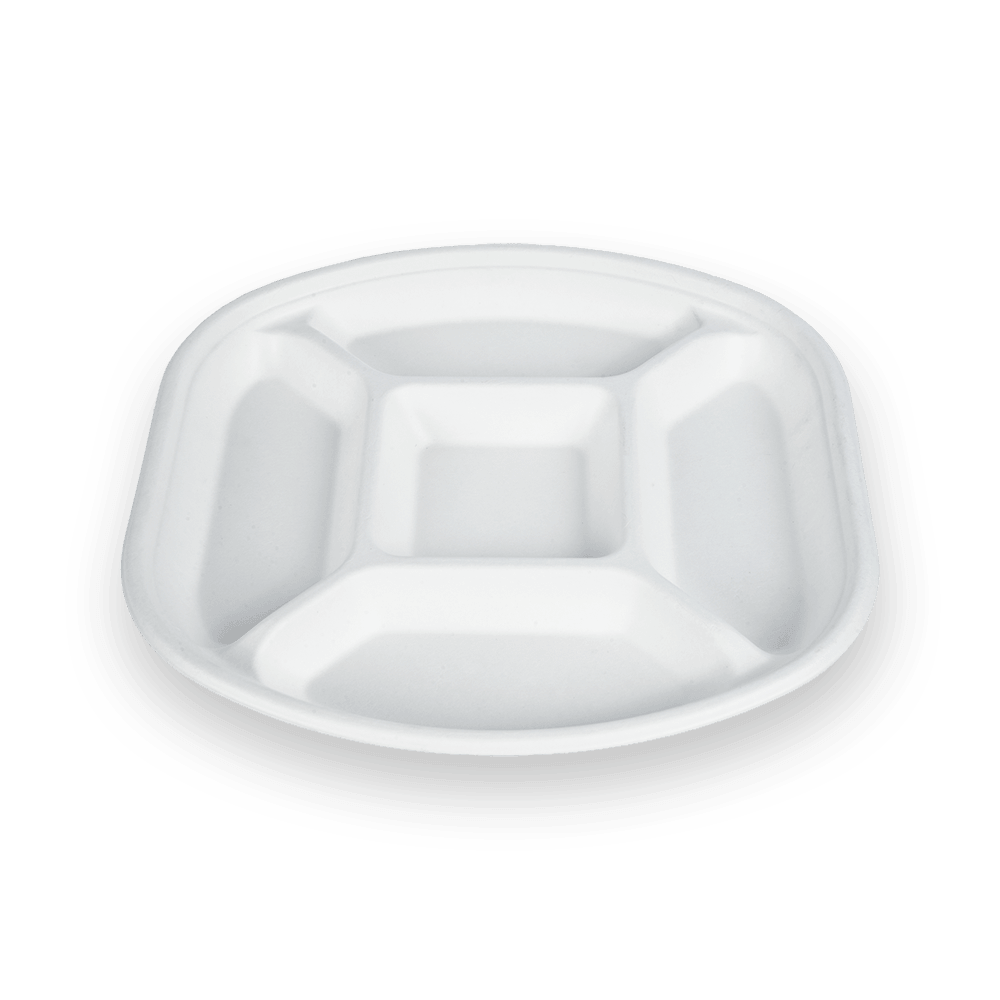

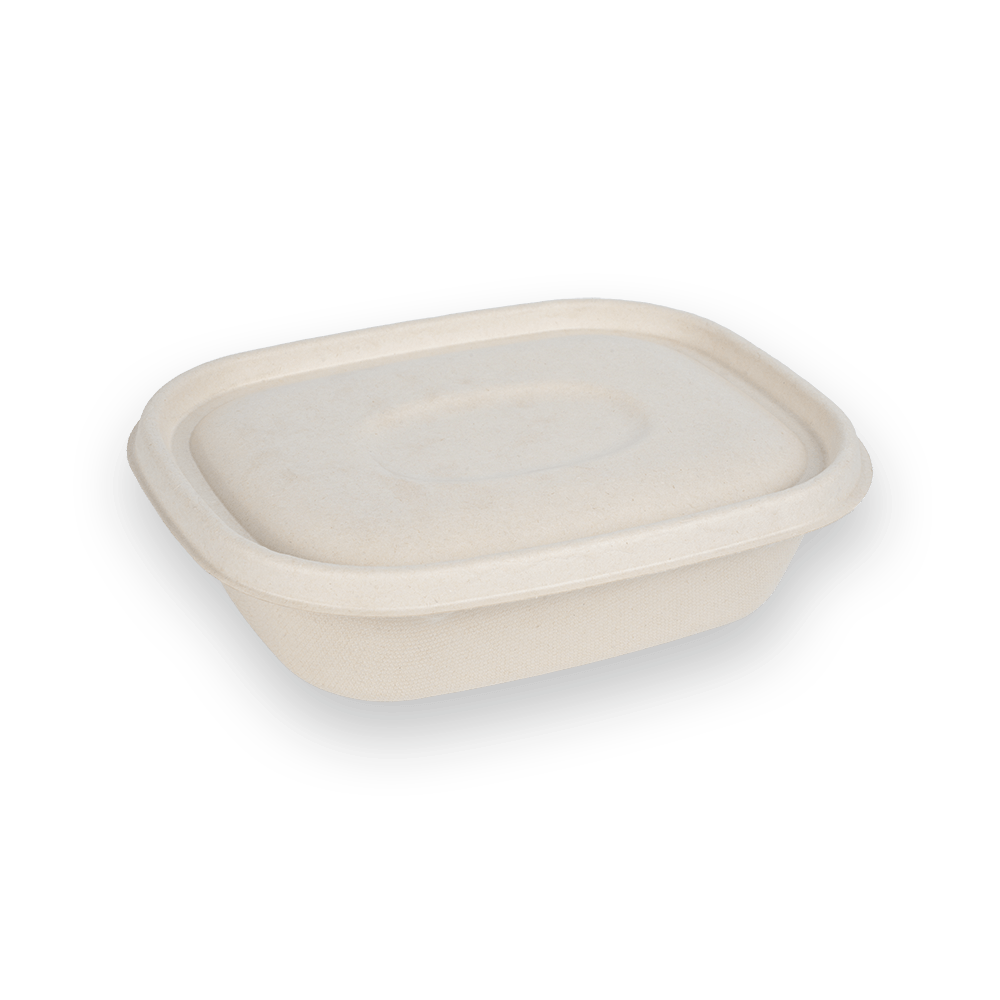

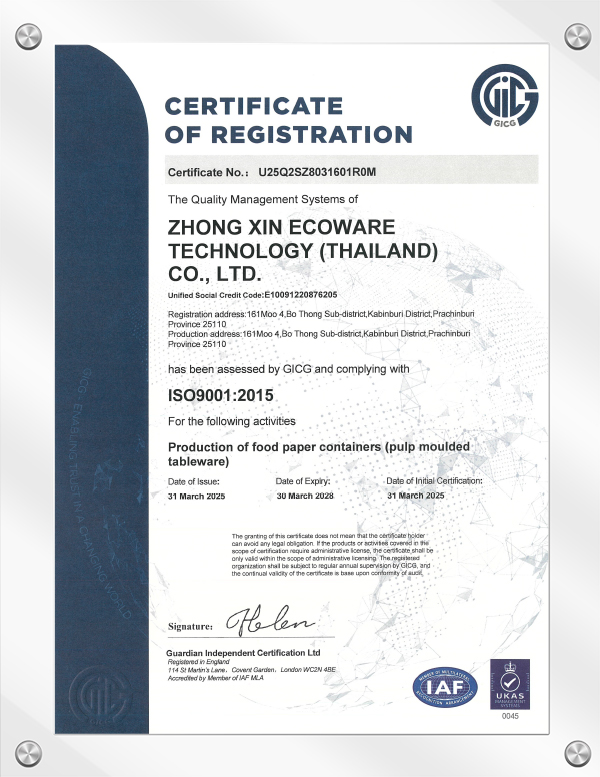
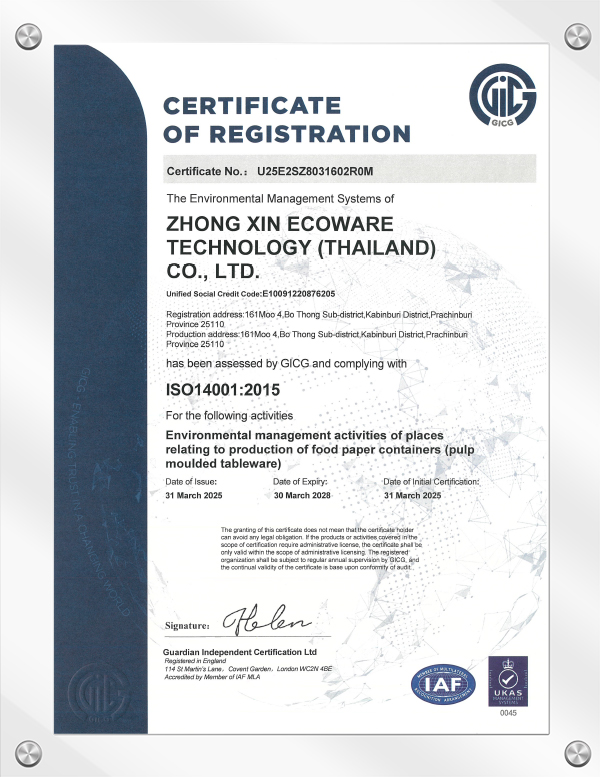
Zhong Xin Ecoware(Thailand) was registered on November 1, 2023, and officially began construction of the factory building in June 2024. At present, the first phase workshop of the factory has been fully completed and put into use. The second phase of the factory is being constructed intensively.
The landing and development of Zhong Xin in Thailand has brought a large amount of initial investment for land, factories, etc., and continuous operational investment for continuous equipment updates, technological upgrades, and capacity expansion.
Zhong Xin Ecoware(Thailand) has directly and indirectly created thousands of job opportunities, increased government revenue, promoted local economic development, cultivated local supply chains, provided systematic training for employees, improved the quality of local human capital, injected vitality into the local economy, enhanced industrial competitiveness, and ultimately improved residents' living standards.
Zhong Xin Ecoware(Thailand) actively collaborates with local pulp mills to explore new cooperation models for developing new products, improving production capacity and quality. At the same time, relying on Zhongxin's advanced production technology, process flow, management experience, and quality control system, it promotes the development of this industry in Thailand.

-
-
 +66-31240888
-
 161 Village No. 4, Bo Thong Subdistrict Kabin Buri District Prachinburi Province 25110
-
Are Bagasse Food Containers Safe for Hot Food and Takeout?
Nov 06,2026
-
Leakage and Heat Resistance: What Should Catering Buyers Test Before Ordering
Nov 06,2026
-
Can Compostable Packaging Go in the Compost Bin? Certification vs Facility Acceptance
Oct 31,2026
-
10-Inch Bagasse Plates: A Heavy-Duty Plate Sourcing Guide
Oct 31,2026
-
32oz Bagasse Bowls and PET Lids: A Sourcing Guide for Foodservice Buyers
Oct 31,2026
-
Does Custom Packaging Require New Molds, Artwork, or Testing
Oct 30,2026
-
Bagasse Cutlery Sets: A Sourcing Guide for Foodservice Buyers
Oct 29,2026
-
Can Paper Packaging Meet Retail Shelf and Branding Requirements
Oct 23,2026
-
Bagasse Cups and Cup Lids: A Sourcing Guide for Foodservice and Takeaway Buyers
Oct 20,2026
-
How to Find Zhong Xin at the 140th Canton Fair: A Visitor Navigation Guide
Oct 16,2026
-
Thailand vs China Bagasse Tableware: 8 Comparisons Buyers Should Verify
Oct 16,2026
-
Will Takeout Containers Fit Your Existing Lids and Delivery Workflow
Oct 16,2026
Copyright © 2025 Zhong Xin Ecoware Technology ( Thailand ) CO., LTD.
All Rights Reserved.

Biodegradable Disposable Bagasse Tableware Manufacturer