-
 [email protected]
-
 +66-31240888



 English
 Español
 ไทย
Does Custom Packaging Require New Molds, Artwork, or Testing
Custom packaging projects often begin with a practical question: can an existing design meet the product's requirements, or does the packaging need further development? The answer depends on product geometry, protection requirements, branding expectations, order volume, and the intended distribution environment.
At Zhong Xin Ecoware Technology (Thailand) Co., Ltd., we provide customized molded-pulp packaging options for industrial applications, including electronics, cosmetics, pharmaceuticals, and gift products. Buyers evaluating sustainable eco friendly packaging should identify the required changes early, as tooling, artwork preparation, and testing involve different costs and approval procedures.
Quick Summary
- New molds: May be required for changes to the package shape, cavity dimensions, or product-support structure.
- Artwork: Usually requires review when branding, labels, printed cartons, or customized markings are requested.
- Testing: Depends on product fragility, shipping conditions, material requirements, and performance expectations.
- Cost control: Confirm tooling fees, sample charges, revision policies, and testing expenses before production approval.
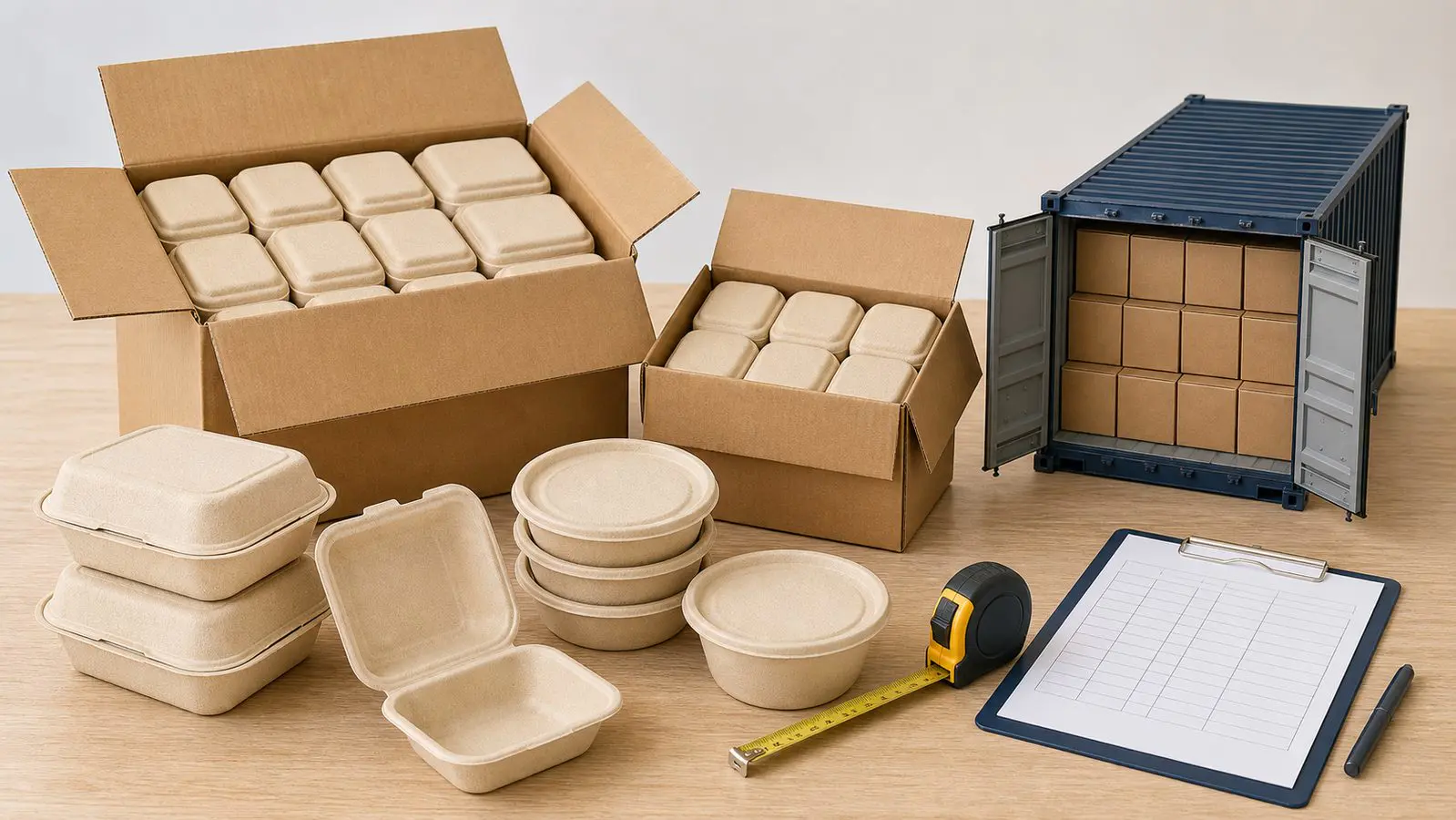
1. When Does Custom Packaging Need a New Mold?
Molded-pulp packaging is shaped around a defined product geometry. A standard tray may be suitable for a common item, but a customized structure may be necessary for irregular shapes, multiple components, or specific cushioning requirements.
Changes that may require new tooling
- Different product dimensions or cavity depth.
- Additional compartments or revised support points.
- Changes to the product's orientation inside the package.
- Special nesting, stacking, or outer-carton requirements.
- Customized molded shapes or recessed branding.
Zhong Xin's industrial packaging range includes molded-pulp trays, protective inserts, and three-dimensional inner packaging. Our product page describes applications involving protective cushioning and customized structures. The actual tooling requirement depends on the requested design and whether an existing mold can accommodate it.
Buyer tip: Provide a product drawing, accurate dimensions, photographs, or a physical sample. These references help us assess the proposed cavity design and identify whether existing tooling is suitable.
2. Does Custom Branding Require New Artwork?
Branding changes do not always require a new product mold. The necessary work depends on whether the request involves printed packaging, labels, surface marking, or a physical change to the molded structure.
| Customization request | Possible development requirement |
| Logo on an existing outer carton | Revised artwork and print approval. |
| New label or barcode | Updated label layout and content verification. |
| Different package dimensions | Structural review and possible tooling modification. |
| Embossed or recessed logo | Mold assessment and possible tooling changes. |
| New material color or surface finish | Material feasibility review and sample approval. |
Artwork preparation should account for the available print area, material texture, logo proportions, and any required product information. Buyers should supply editable artwork or clear design references, together with color specifications and packaging dimensions.
Before mass production, review a representative sample or approved proof. This step allows the purchasing team to confirm positioning, readability, surface appearance, and consistency with the brand's packaging guidelines.
3. Which Tests Should Be Included?
Testing requirements should reflect the product being protected and its distribution route. A lightweight cosmetic accessory may require different checks from a fragile electronic component shipped through several distribution centers.
- Fit testing: Confirm that the product sits securely and can be removed without unnecessary force.
- Drop testing: Evaluate the complete package under an agreed test method when impact protection is important.
- Compression testing: Assess resistance to stacking loads and external pressure.
- Vibration testing: Review product movement and abrasion during transport.
- Moisture assessment: Consider humidity and storage conditions that may affect fiber packaging performance.
Not every project requires every test. Buyers should define the acceptance criteria, test conditions, and documentation needed before sample development begins. Testing should use the actual product and, where relevant, the intended inner and outer packaging combination.
4. Compare the Main Cost Factors
Custom packaging quotations should distinguish recurring production expenses from project-specific development costs.
| Cost factor | Information to confirm |
| Tooling | New mold requirements, modification charges, and mold ownership terms. |
| Artwork | Design preparation, printing setup, labels, and branding changes. |
| Sampling | Prototype type, sample charges, shipping fees, and revision arrangements. |
| Testing | Required procedures, laboratory fees, and inspection records. |
| Production | Order volume, packaging configuration, carton dimensions, and unit pricing. |
A standard design may reduce initial development work, while a dedicated structure can provide a closer fit for specialized products. The commercial comparison should account for both initial investment and the expected volume of repeat orders.
5. Custom Packaging Approval Checklist
- [ ] Product dimensions, weight, and protection requirements are documented.
- [ ] Existing tooling has been reviewed for compatibility.
- [ ] Mold ownership and modification terms are confirmed.
- [ ] Artwork, colors, labels, and branding positions are approved.
- [ ] Required performance tests and acceptance criteria are defined.
- [ ] Sample approval and revision procedures are agreed.
- [ ] Order volume, packaging details, and delivery requirements are included in the quotation.
Frequently Asked Questions
Can an existing mold be reused for a custom project?
Possibly. Compatibility depends on the product dimensions, cavity design, and required structural changes. We review the specifications before confirming whether existing tooling can be used.
Does adding a logo require a new mold?
Not necessarily. Printed logos and labels generally involve artwork preparation, while embossed or recessed logos may require tooling changes.
Who determines which packaging tests are necessary?
The buyer and supplier should agree on testing based on product fragility, distribution conditions, and required performance. Applicable customer or regulatory requirements should also be considered.
Can buyers request samples before placing a bulk order?
Yes. Zhong Xin supports sample proofing. The available sample method, development requirements, and associated charges should be confirmed for the specific project.
Request a Custom Packaging Quotation from Zhong Xin
At Zhong Xin Ecoware Technology (Thailand) Co., Ltd., we review customized molded-pulp packaging projects according to product fit, structural requirements, branding needs, and intended use. Providing clear project information helps us assess the development process and prepare a relevant quotation.
Please include these details in your inquiry:
- Specifications: Product dimensions, weight, drawings, photographs, and required packaging structure.
- Quantity: Initial order volume, expected repeat orders, and product variants.
- Target market: Destination country, shipping method, and distribution conditions.
- Certification needs: Applicable material declarations, testing reports, and market-specific compliance requirements.
- Customization details: Logo artwork, color references, mold requirements, and requested testing procedures.
Contact us at [email protected] or visit our industrial packaging product page to discuss your requirements.
With the specifications, customization scope, and testing expectations defined before ordering, your team can evaluate development costs more clearly and establish a documented approval process before bulk production.


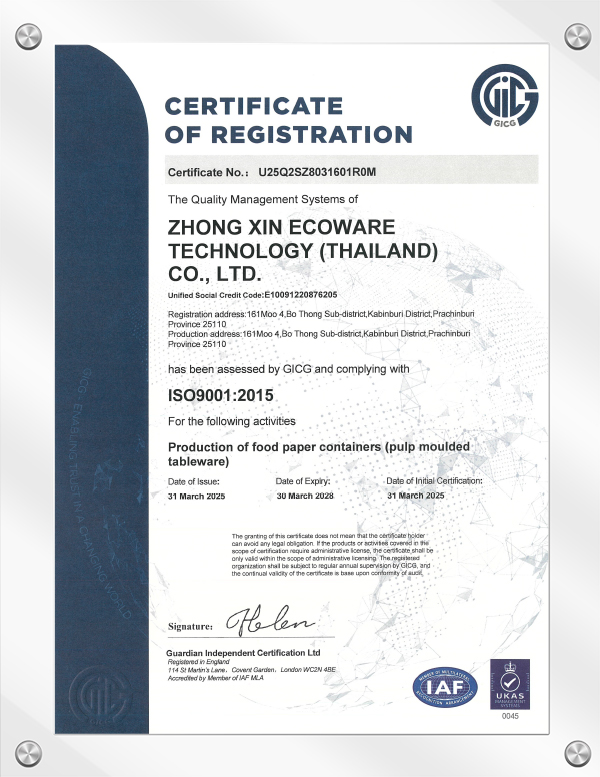
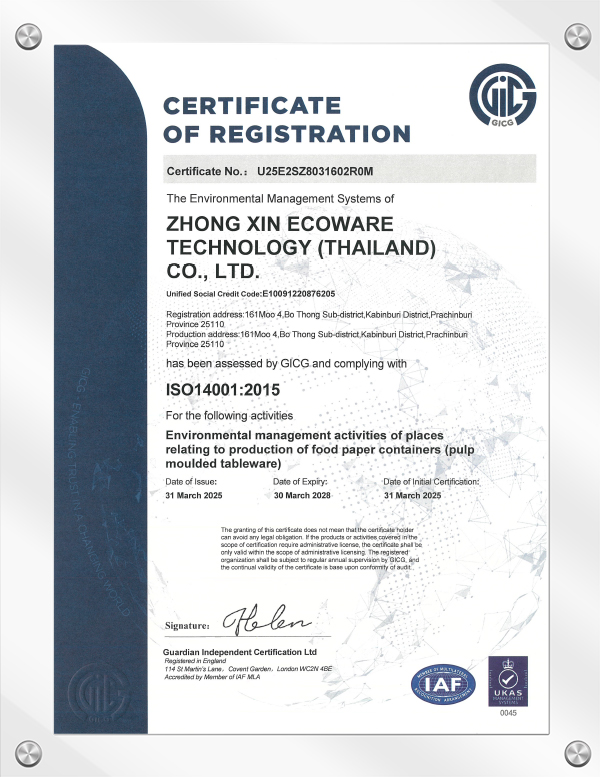
Zhong Xin Ecoware(Thailand) was registered on November 1, 2023, and officially began construction of the factory building in June 2024. At present, the first phase workshop of the factory has been fully completed and put into use. The second phase of the factory is being constructed intensively.
The landing and development of Zhong Xin in Thailand has brought a large amount of initial investment for land, factories, etc., and continuous operational investment for continuous equipment updates, technological upgrades, and capacity expansion.
Zhong Xin Ecoware(Thailand) has directly and indirectly created thousands of job opportunities, increased government revenue, promoted local economic development, cultivated local supply chains, provided systematic training for employees, improved the quality of local human capital, injected vitality into the local economy, enhanced industrial competitiveness, and ultimately improved residents' living standards.
Zhong Xin Ecoware(Thailand) actively collaborates with local pulp mills to explore new cooperation models for developing new products, improving production capacity and quality. At the same time, relying on Zhongxin's advanced production technology, process flow, management experience, and quality control system, it promotes the development of this industry in Thailand.

-
-
 +66-31240888
-
 161 Village No. 4, Bo Thong Subdistrict Kabin Buri District Prachinburi Province 25110
-
Are Bagasse Food Containers Safe for Hot Food and Takeout?
Nov 06,2026
-
Leakage and Heat Resistance: What Should Catering Buyers Test Before Ordering
Nov 06,2026
-
Can Compostable Packaging Go in the Compost Bin? Certification vs Facility Acceptance
Oct 31,2026
-
10-Inch Bagasse Plates: A Heavy-Duty Plate Sourcing Guide
Oct 31,2026
-
32oz Bagasse Bowls and PET Lids: A Sourcing Guide for Foodservice Buyers
Oct 31,2026
-
Does Custom Packaging Require New Molds, Artwork, or Testing
Oct 30,2026
-
Bagasse Cutlery Sets: A Sourcing Guide for Foodservice Buyers
Oct 29,2026
-
Can Paper Packaging Meet Retail Shelf and Branding Requirements
Oct 23,2026
-
Bagasse Cups and Cup Lids: A Sourcing Guide for Foodservice and Takeaway Buyers
Oct 20,2026
-
How to Find Zhong Xin at the 140th Canton Fair: A Visitor Navigation Guide
Oct 16,2026
-
Thailand vs China Bagasse Tableware: 8 Comparisons Buyers Should Verify
Oct 16,2026
-
Will Takeout Containers Fit Your Existing Lids and Delivery Workflow
Oct 16,2026
Copyright © 2025 Zhong Xin Ecoware Technology ( Thailand ) CO., LTD.
All Rights Reserved.

Biodegradable Disposable Bagasse Tableware Manufacturer