-
 [email protected]
-
 +66-31240888



 English
 Español
 ไทย
ไทยUS vs EU Bagasse Tableware Imports: 8 Documentation and Compliance Checks Buyers Should Run
Buyers sourcing bagasse and molded fiber tableware often plan one product range for several markets. The product can be identical; the documentation, the claims and the labelling requirements are not. This guide sets out eight checks that separate a US import file from an EU one, and shows which side of the transaction owns each requirement.
Quick Summary: US and EU Documentation for Bagasse Tableware
- Verify the food-contact file: US buyers work with FDA-related food-contact documentation, EU buyers with a Declaration of Compliance under the EU food-contact framework.
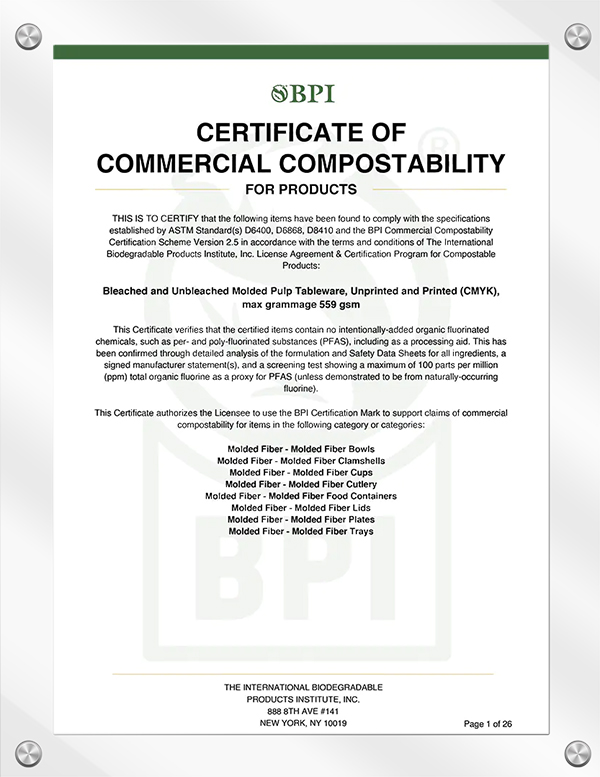
- Verify the compostability reference: BPI documentation is used for North American programs, EN 13432 and OK compost documents for European programs.
- Verify the PFAS evidence scope: a declaration and, where required, a test report must cover the finished article, not only the fibre.
- Verify who owns labelling and EPR: the importer or brand owner normally carries the market-facing obligation.
- Verify the entry file: invoice, packing list, bill of lading and, where a preference is claimed, a certificate of origin.
- Verify claim wording before printing: the wording must match the evidence held for the market where the product will be sold.
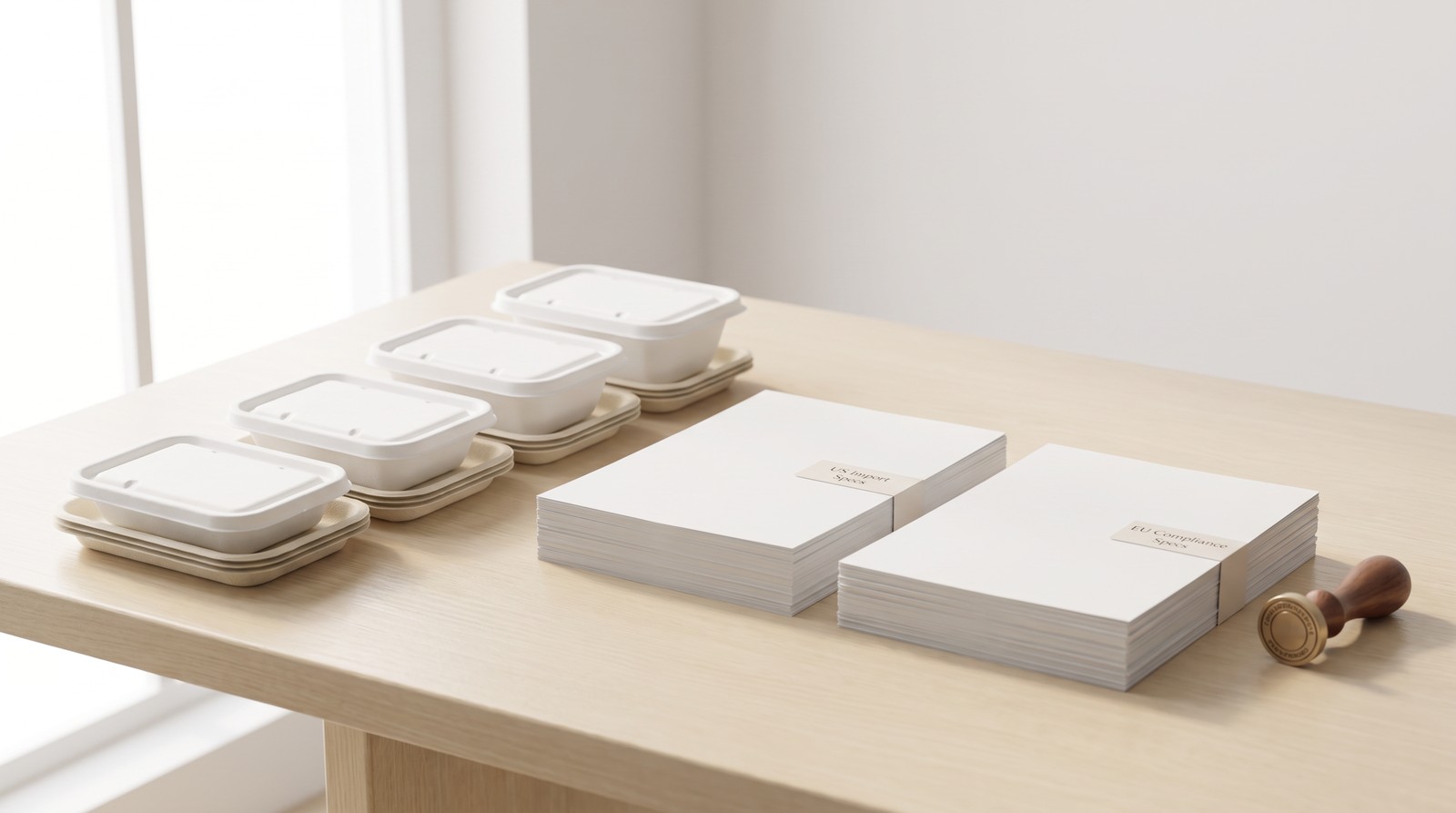
US and EU imports of bagasse tableware share a product but not a documentation file: food-contact evidence, compostability references, PFAS scope, labelling rules and entry documents differ by market.
The two markets ask similar questions in different formats. A supplier that can produce both files saves the buyer a review cycle, and a buyer who knows which document belongs to which market avoids the most common delay: discovering at the border that the evidence on file covers one product family and one region only.
Core buyer principle: evidence is market-specific. A compostability document is not food-contact evidence, food-contact evidence is not a compostability document, and neither one proves a PFAS-free claim on the finished article.
8 Documentation and Compliance Checks for US and EU Imports
| # | Check | What the buyer is really checking | Typical risk if ignored |
|---|---|---|---|
| 1 | Food-contact file matched to the market | Whether the evidence format is the one the destination recognises | File questioned or re-tested before release |
| 2 | Compostability reference matched to the market | Whether the scheme is recognised where the claim will be used | Claim withdrawn or relabelled |
| 3 | PFAS evidence scoped to the finished article | Whether the declaration covers coating as well as fibre | Unsupported PFAS-free claim |
| 4 | Labelling and EPR responsibility assigned | Whether the importer has registered and agreed the wording | Market access blocked by registration or label rule |
| 5 | Entry documents market-ready | Whether the document set matches broker expectations | Customs delay and storage cost |
| 6 | Claim wording approved in writing | Whether printing matches the evidence file | Reprint and launch delay |
| 7 | Compliance pack complete and dated | Whether every file names the product and the site | Audit findings and repeat requests |
| 8 | Change control when rules move | Whether someone tracks updates and re-checks claims | Evidence that quietly becomes out of date |
1. Is the Food-Contact File Matched to the Market?
Both markets ask the same underlying question — is this material safe for the intended food contact? — but they expect different documents.
What should buyers verify?
- For the United States, confirm food-contact documentation for the material and the finished article, covering base fibre, coating and intended use conditions.
- For the European Union, confirm a Declaration of Compliance for the food-contact material, supported by migration data where applicable.
- Confirm the document names the material, the production site and the contact conditions, not just the group company.
- Confirm whether the lid or liner is covered by the same document.
- Date-stamp each file in the compliance pack so superseded versions can be identified.
Buyer red flag: a general certification list offered as a substitute for a product-specific food-contact file.
How Zhong Xin Ecoware Supports This
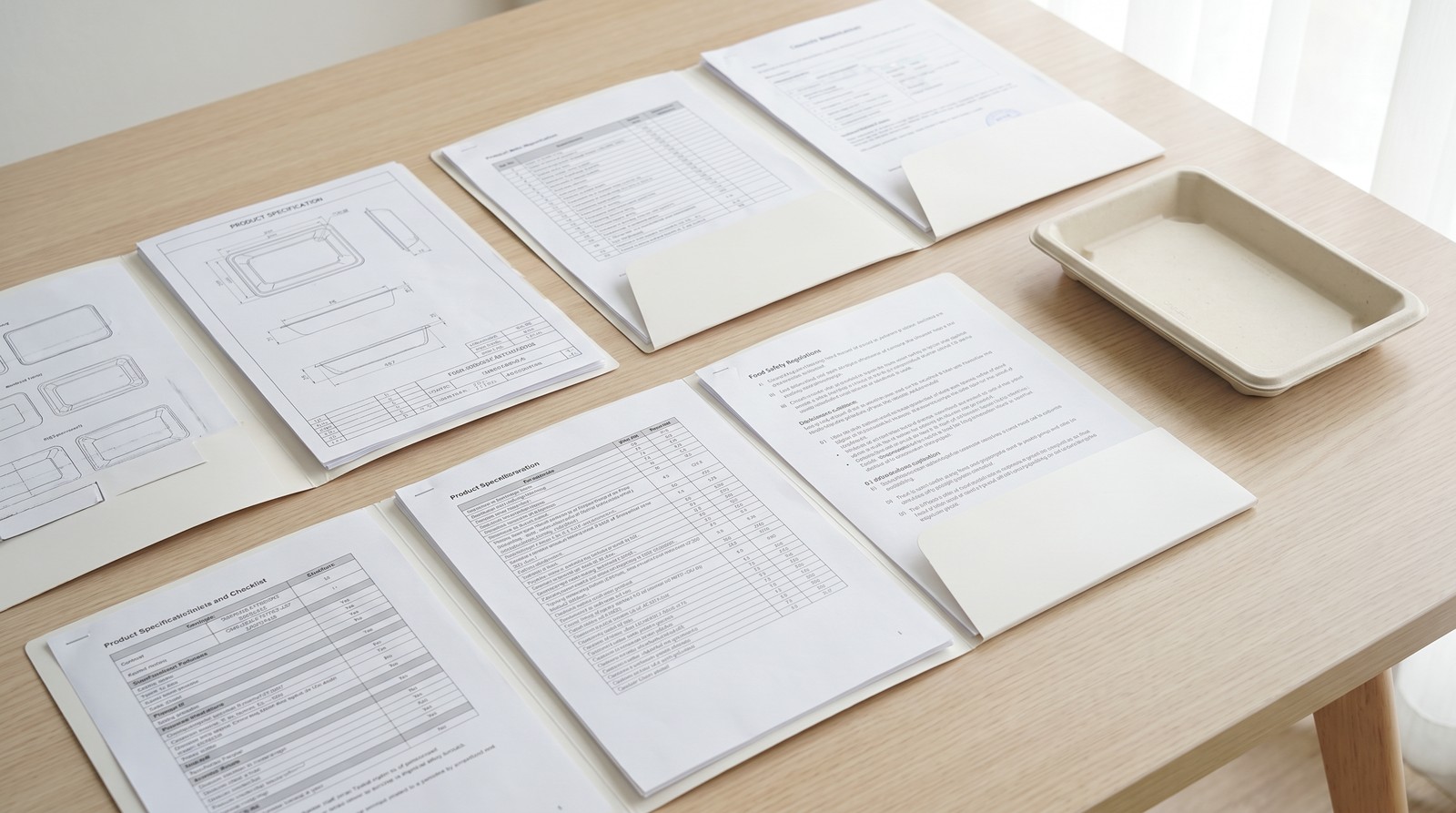
Food-contact documentation is provided per product family and production site, with the material system and intended use stated, so that US and EU buyers receive the format each market expects rather than a single generic pack.
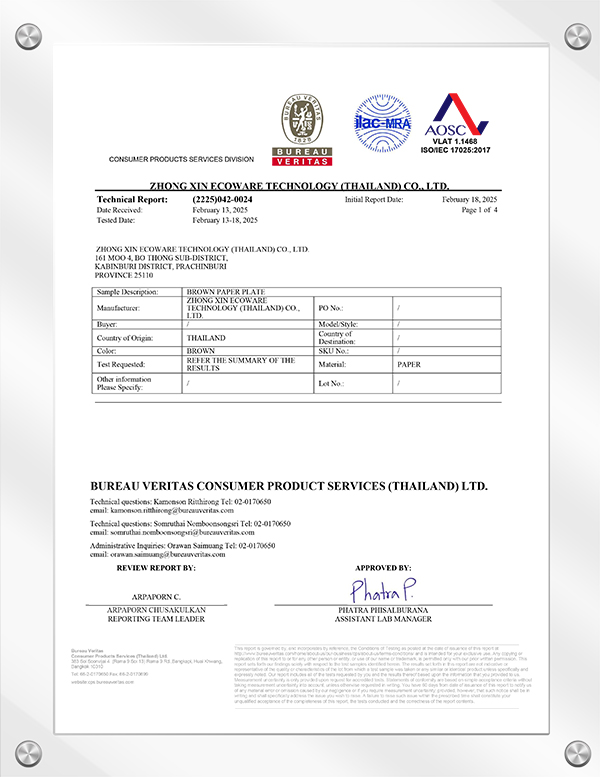
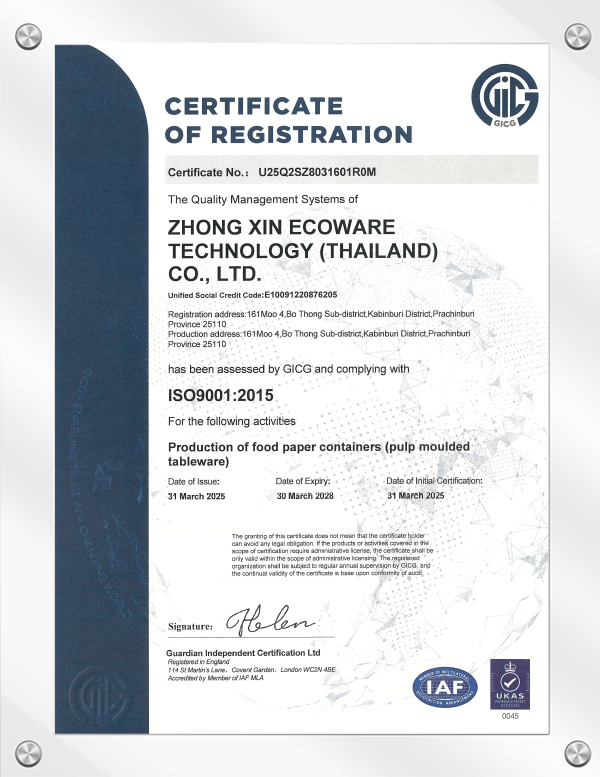
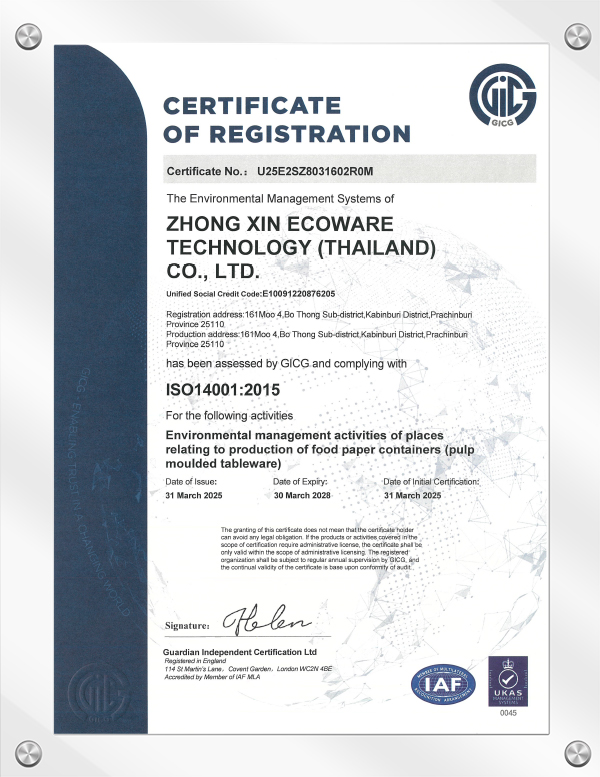
Evidence buyers can request: food-contact documentation by product family, material composition statement, production site declaration, certification index.
2. Is the Compostability Reference the One the Market Recognises?
Compostability is the claim most often carried across markets by mistake. The same product can be certified for one program and not recognised in another.
What should buyers verify?
- Confirm which scheme applies in the destination market and whether the product family is listed.
- Confirm whether the claim is industrial, home or both, and use only the wording the scheme supports.
- Confirm the certification covers the production site that will supply the order.
- Confirm the validity dates and the renewal schedule.
- Keep the scheme listing or database reference with the certificate.
Buyer red flag: a compostability certificate for a different product family, colour or material grade than the SKU being imported.
How Zhong Xin Ecoware Supports This
Compostability documentation is issued per product family with the scheme reference and validity period stated, and buyers are told which program the document supports so that the label wording matches the evidence.
Evidence buyers can request: compostability certificate by product family, scheme reference, validity dates, production site confirmation.
3. Is the PFAS Evidence Scoped to the Finished Article?
PFAS expectations are tightening in both markets, and the practical question is scope: does the evidence cover the article the buyer is importing, or only the raw fibre?
What should buyers verify?
- Confirm whether the declaration covers the finished article, the coating or the fibre only.
- Confirm the analytical basis where a test report is provided, and which parts were tested.
- Confirm whether the buyer’s destination market or customer requires additional testing.
- Confirm that the PFAS statement and any compostability claim are consistent with each other.
- Confirm who bears the cost of further testing if a customer demands it.
Buyer red flag: treating a compostability certificate as proof of a PFAS-free requirement. They are separate questions.
How Zhong Xin Ecoware Supports This
PFAS-related declarations state their scope explicitly, and where a market or customer requires a test report this is agreed before production so that the evidence and the shipment timeline match.
Evidence buyers can request: PFAS-related declaration with scope, test report where used, material composition statement, supplier statement of scope.

4. Is Labelling and EPR Responsibility Assigned?
This is where the two markets diverge most, and where responsibility sits with the importer or brand owner rather than the supplier.
What should buyers verify?
- In the European Union, confirm the packaging labelling format expected under the harmonised packaging rules and complete producer responsibility registration country by country.
- In the United States, confirm the claim wording against federal guidance on environmental marketing and any state-level packaging rules where the product will be sold.
- Confirm who registers, who renews and who holds the registration numbers.
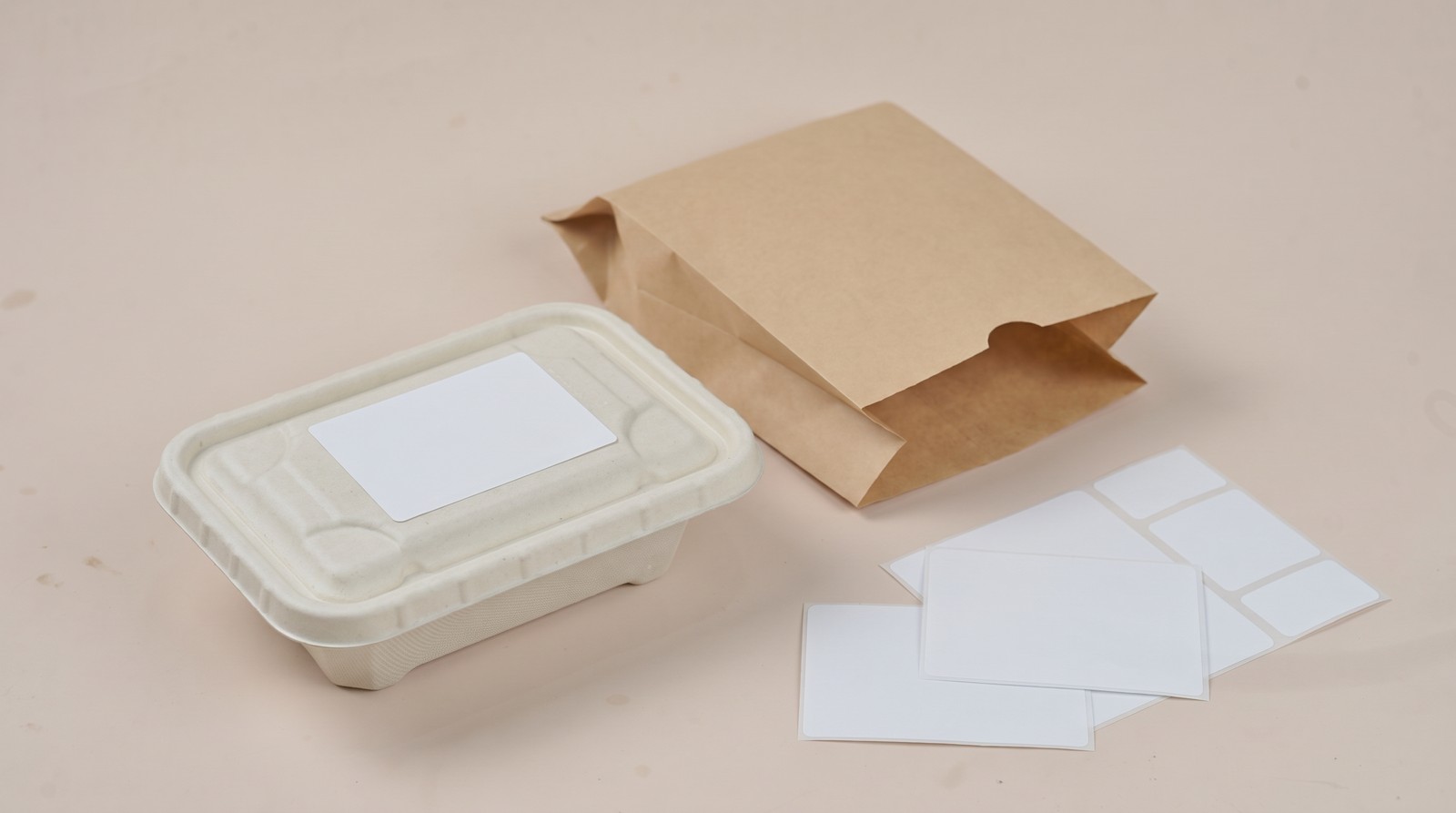
- Confirm the label artwork against the evidence held for that market.
- Confirm the timetable: registration lead times can exceed production lead times.
Buyer red flag: planning a launch date around production while leaving registration and label approval to the last weeks.
How Zhong Xin Ecoware Supports This
Product data, material information and test documentation are provided so the importer can complete registration and label approval, and proofs are issued for written approval before printing.
Evidence buyers can request: product data sheet, material composition, packaging specification, artwork proof, documentation pack for registration.
5. Are the Entry Documents Market-Ready?
The customs file is broadly similar in both markets, which is why it is often assumed to be fine. Most delays come from small disagreements between documents rather than from the goods.
What should buyers verify?
- Confirm the commercial invoice description, quantity and unit of measure match the packing list.
- Confirm consignee and notify party details on the bill of lading.
- Confirm a certificate of origin is issued where preferential treatment is claimed.
- Confirm classification references with your customs broker before the order, not at arrival.
- Confirm whether the destination market requires any additional documentation for food-contact articles.
Buyer red flag: assuming that goods produced at sites in two different countries share the same origin and duty treatment.
How Zhong Xin Ecoware Supports This
Draft commercial invoice, packing list and the supporting material declarations are shared for confirmation before shipment, with the production site stated for each order.
Evidence buyers can request: draft commercial invoice, packing list, bill of lading copy, certificate of origin where applicable, production site declaration.

6. Is the Claim Wording Approved in Writing?
The printed claim is what a regulator or a customer sees. If it is not matched to the evidence file for that market, the documentation does not help.
What should buyers verify?
- Confirm the exact wording of every environmental claim in writing.
- Confirm the certification reference that supports each claim.
- Confirm the artwork version and sign off a proof before printing.
- Confirm how wording changes are version-controlled after approval.
- Confirm the wording is valid in every market where the same artwork will be used.
Buyer red flag: one artwork used across two markets where the claim reference is only recognised in one of them.
How Zhong Xin Ecoware Supports This
Proofs are issued for written approval, and claim wording is checked against the documentation held for the product so that what is printed and what is evidenced agree.
Evidence buyers can request: approved proof, artwork file, claim-to-evidence mapping, print specification.
7. Is the Compliance Pack Complete and Dated?
A compliance pack is not a folder of PDFs. It is a dated index that tells an auditor, a customer or a new colleague which document covers which product and which market.
What should buyers verify?
- Confirm every file names the product family, the material and the production site.
- Confirm each file has an issue date and a validity period.
- Confirm the pack is indexed by market, so the correct file can be found without reading every document.
- Confirm superseded versions are removed or marked.
- Confirm who owns the pack and who updates it.
Buyer red flag: a certificate pack with no dates and no product mapping — the first question in an audit cannot be answered from it.
How Zhong Xin Ecoware Supports This
Documentation is supplied with product family and site references, and a certification index is available so that buyers can assemble a market-specific pack without guessing which file applies.
Evidence buyers can request: certification index, dated certificates and test reports, product family mapping, site references.
8. Is There Change Control When the Rules Move?
Both markets are moving. A compliance pack assembled once and never revisited drifts out of date, usually without anyone noticing until a customer asks.
What should buyers verify?
- Confirm who monitors regulatory change in each market you sell into.
- Confirm how a claim is re-checked when a rule changes or a certificate is renewed.
- Confirm that artwork and packaging are re-approved when a claim wording changes.
- Confirm that superseded documents are withdrawn from circulation.
- Confirm a review interval for the compliance pack, at least annually.
Buyer red flag: a compliance pack with no review date and no named owner.
How Zhong Xin Ecoware Supports This
Buyers are informed when documentation for a product family is renewed or replaced, so that the compliance pack and the printed claim can be reviewed against the current file.
Evidence buyers can request: renewal notification practice, updated certification index, revision dates on documentation.
Get a Quote for Your Next Order
Zhong Xin Ecoware Technology (Thailand) Co., Ltd. supplies molded fiber bagasse tableware for wholesale, distribution and private-label programs from production bases in China and Thailand. Send your item list, destination market and compliance requirements to info@fiber-product.com for a quotation with the documentation package.
Related Buyer Guides
- How to prepare a bagasse tableware import: 10 readiness checks
- Zhong Xin Ecoware certifications: BPI, FDA, LFGB, BRCGS and ISO
- PFAS-free and compostability verification: a buyer’s checklist
- Compostable packaging certifications: EN 13432 vs BPI vs OK compost
- PFAS-free food packaging: documents buyers should request
- Browse biodegradable food packaging
About Zhong Xin Ecoware
Zhong Xin Ecoware Technology (Thailand) Co., Ltd. supplies bagasse and molded fiber food packaging to importers, distributors and foodservice brands. For MOQ, pricing, samples and certification files, contact info@fiber-product.com.
Last updated: 6 October 2026.



Zhong Xin Ecoware(Thailand) was registered on November 1, 2023, and officially began construction of the factory building in June 2024. At present, the first phase workshop of the factory has been fully completed and put into use. The second phase of the factory is being constructed intensively.
The landing and development of Zhong Xin in Thailand has brought a large amount of initial investment for land, factories, etc., and continuous operational investment for continuous equipment updates, technological upgrades, and capacity expansion.
Zhong Xin Ecoware(Thailand) has directly and indirectly created thousands of job opportunities, increased government revenue, promoted local economic development, cultivated local supply chains, provided systematic training for employees, improved the quality of local human capital, injected vitality into the local economy, enhanced industrial competitiveness, and ultimately improved residents' living standards.
Zhong Xin Ecoware(Thailand) actively collaborates with local pulp mills to explore new cooperation models for developing new products, improving production capacity and quality. At the same time, relying on Zhongxin's advanced production technology, process flow, management experience, and quality control system, it promotes the development of this industry in Thailand.

-
-
 +66-31240888
 -
 161 Village No. 4, Bo Thong Subdistrict Kabin Buri District Prachinburi Province 25110
-
Compostable Cutlery Sets for Private Label: 7 Sourcing Checks for Retail and Foodservice Buyers
Oct 06,2026
-
US vs EU Bagasse Tableware Imports: 8 Documentation and Compliance Checks Buyers Should Run
Oct 06,2026
-
How to Prepare a Bagasse Tableware Import: 10 Readiness Checks for US and EU Buyers
Oct 06,2026
-
Beyond Plates: Which Foods Suit Bagasse Tableware
Oct 02,2026
-
New Bagasse Tableware Lineup for 2026: What Is New and Where to See It
Sep 28,2026
-
How to Select Bagasse Clamshells for Burgers, Rice Meals and Fried Food
Sep 28,2026
-
Microwave Reheating: Is a Bagasse Lunch Box Suitable
Sep 25,2026
-
9 Inch Pizza Plates and Bagasse Pizza Boards: A Sourcing Guide for US and Canadian Distributors
Sep 19,2026
-
PFAS-Free & Compostability Verification: A Buyer's Checklist for Bagasse and Molded Fiber Packaging
Sep 19,2026
-
Bagasse vs PLA vs Molded Fiber: What Distributors Should Stock in 2026
Sep 19,2026
-
Can Sugarcane Plates Handle Hot, Greasy Foods
Sep 18,2026
-
Bagasse Tableware RFQ Template: Get a Comparable Thailand Factory Quote
Sep 14,2026
Copyright © 2025 Zhong Xin Ecoware Technology ( Thailand ) CO., LTD.
All Rights Reserved.

Biodegradable Disposable Bagasse Tableware Manufacturer