-
 [email protected]
-
 +66-31240888



 English
 Español
 ไทย
ไทยCompostable Cutlery Sets for Private Label: 7 Sourcing Checks for Retail and Foodservice Buyers
Cutlery is the part of a tableware program that buyers notice last and customers notice first. A fork that snaps, a wrapped set that opens in transit, or a printed logo that rubs off will be attributed to the brand that supplied it, not to the factory that made it. For retail and private-label programs, the sourcing decision is therefore less about the cutlery itself and more about the pack format, the wrap, the print and the file of documents behind it.
Quick Summary: Compostable Cutlery Sets for Private Label
- Verify the material and grade: confirm the base material, the grade and the item codes that will be quoted, not just "eco cutlery".
- Verify the pack format: bulk, individually wrapped, or retail pack — the format drives labour, carton size and landed cost.
- Verify the wrap: the wrapping material is part of the product specification and is often the weakest link in a compostable claim.
- Verify the branding route: logo printing, artwork approval and print position should be agreed in writing before tooling or printing starts.
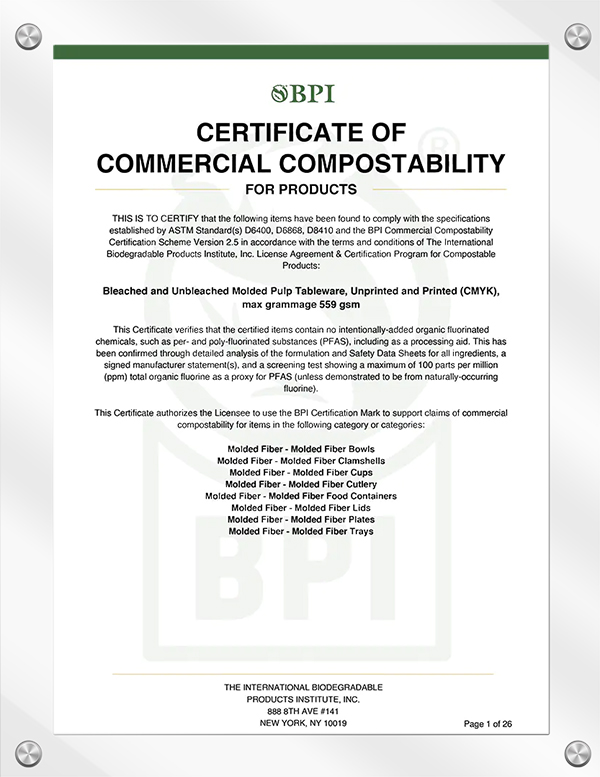
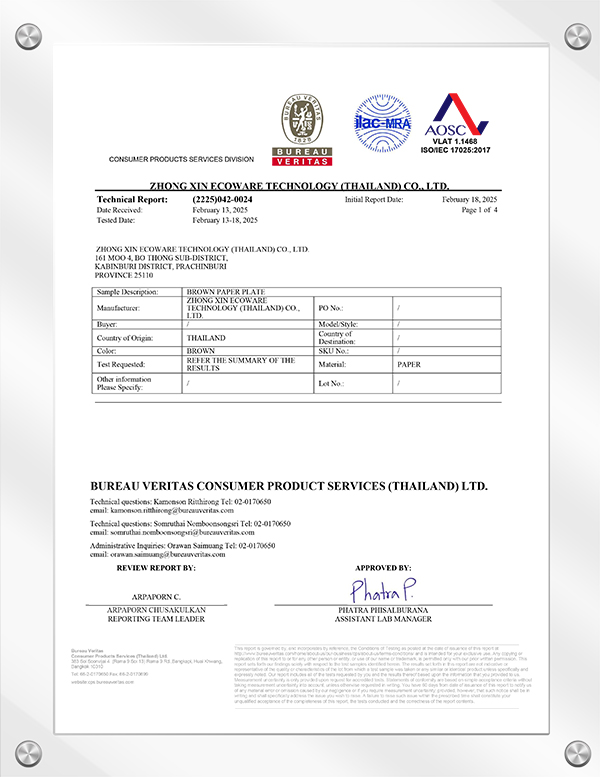
- Verify the documents: food-contact, PFAS-related and compostability evidence must match the item and the destination market.
- Verify the carton and loading plan: case quantity and carton dimensions per item code are confirmed in the packing specification, not estimated from a sample.
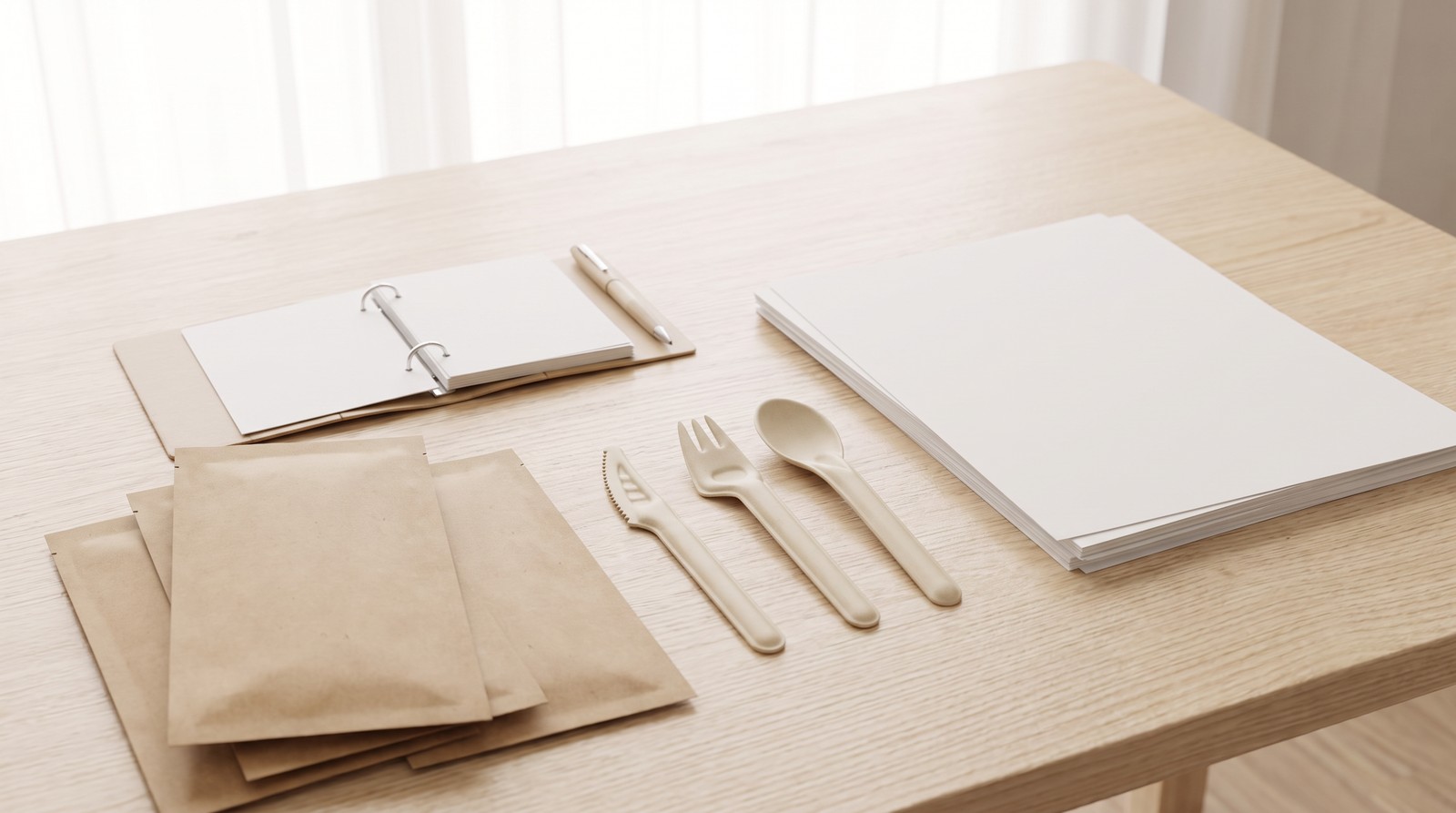
Private-label cutlery programs are decided by four specifications that sit behind the product: pack format, wrapping material, printed branding and the compliance file.
Buyers usually start a cutlery program from a price per thousand pieces. That number is useful, but it is only comparable once the pack format and the wrap are fixed, because the same fork ordered bulk and ordered individually wrapped are two different products commercially.
Core buyer principle: for cutlery, the specification is the product. Pack format, wrap material, print method and case pack determine both the unit cost and the compliance story, and none of them can be changed cheaply after production starts.
7 Sourcing Checks for Private-Label Cutlery Sets
| # | Sourcing check | What the buyer is really checking | Typical risk if ignored |
|---|---|---|---|
| 1 | Material, grade and item codes defined | Whether the quoted item is the item being compared | Quotes that cannot be compared |
| 2 | Pack format matched to the sales channel | Whether bulk, wrapped or retail pack fits the listing | Repacking cost at destination |
| 3 | Wrap material specified | Whether the wrap supports the compostable claim | Claim that cannot be defended |
| 4 | Branding and print route agreed | Whether printing is repeatable at production speed | Unreadable or rubbing logos |
| 5 | Compliance file matched to item and market | Whether the evidence names this cutlery, not the group | Import or retail compliance query |
| 6 | Carton and loading confirmed per item code | Whether the case pack supports the volume and the container | Poor cube utilisation, short shipment |
| 7 | Inspection and claims process agreed | Whether defects are documented in time | Loss that cannot be recovered |
1. Are the Material, Grade and Item Codes Defined?
"Compostable cutlery" describes a family, not a product. Two suppliers can both answer yes to the family question and still be quoting different items, different weights and different grades.
What should buyers verify?
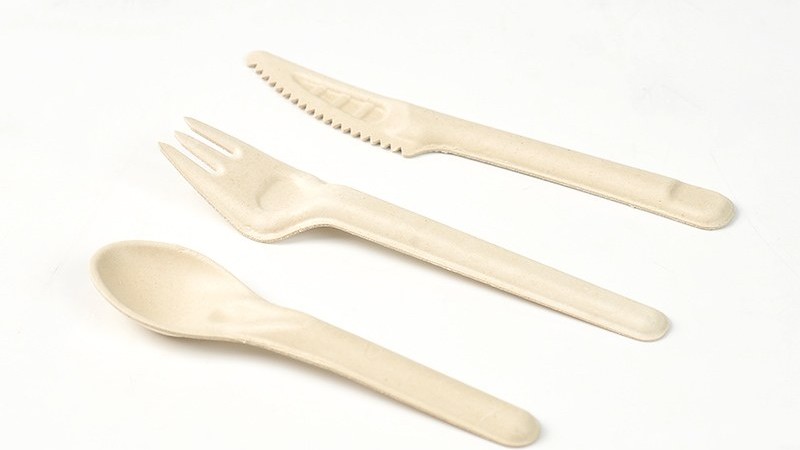
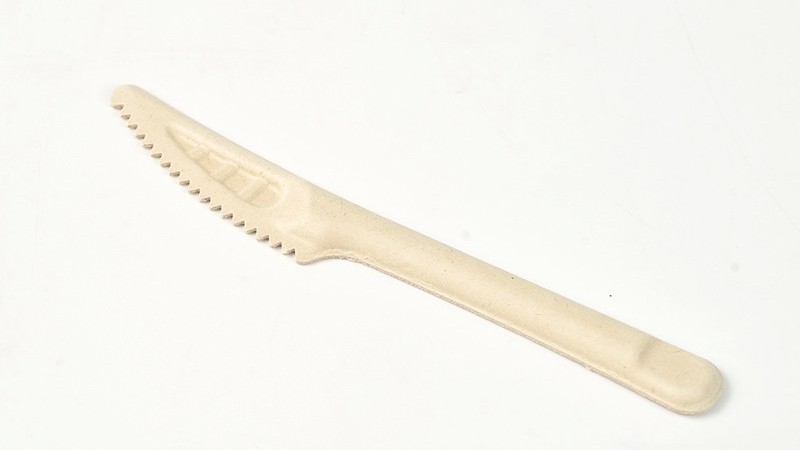
- Confirm the base material family and the grade used for each item (spoon, fork, knife, tang spoon).
- Confirm the item code and unit weight for the exact piece being compared.
- Confirm the length and gauge, because cutlery is often specified by length in the listing.
- Confirm whether the pieces are supplied as separate items or as a set, and how the set is assembled.
- Confirm which production site supplies the order.
Buyer red flag: a quotation that names only "eco cutlery set" with no item codes, weights or lengths — it cannot be compared with another supplier and cannot be used to control production.
How Zhong Xin Ecoware Supports This
Zhong Xin Ecoware Technology (Thailand) Co., Ltd. supplies plant-fiber cutlery items including spoons, forks, knives and tang spoons from production bases in China and Thailand, and quotes against written item codes so that options can be compared line by line.
Evidence buyers can request: item code list, unit weight and length per item, material description, production site declaration.
2. Is the Pack Format Matched to the Sales Channel?
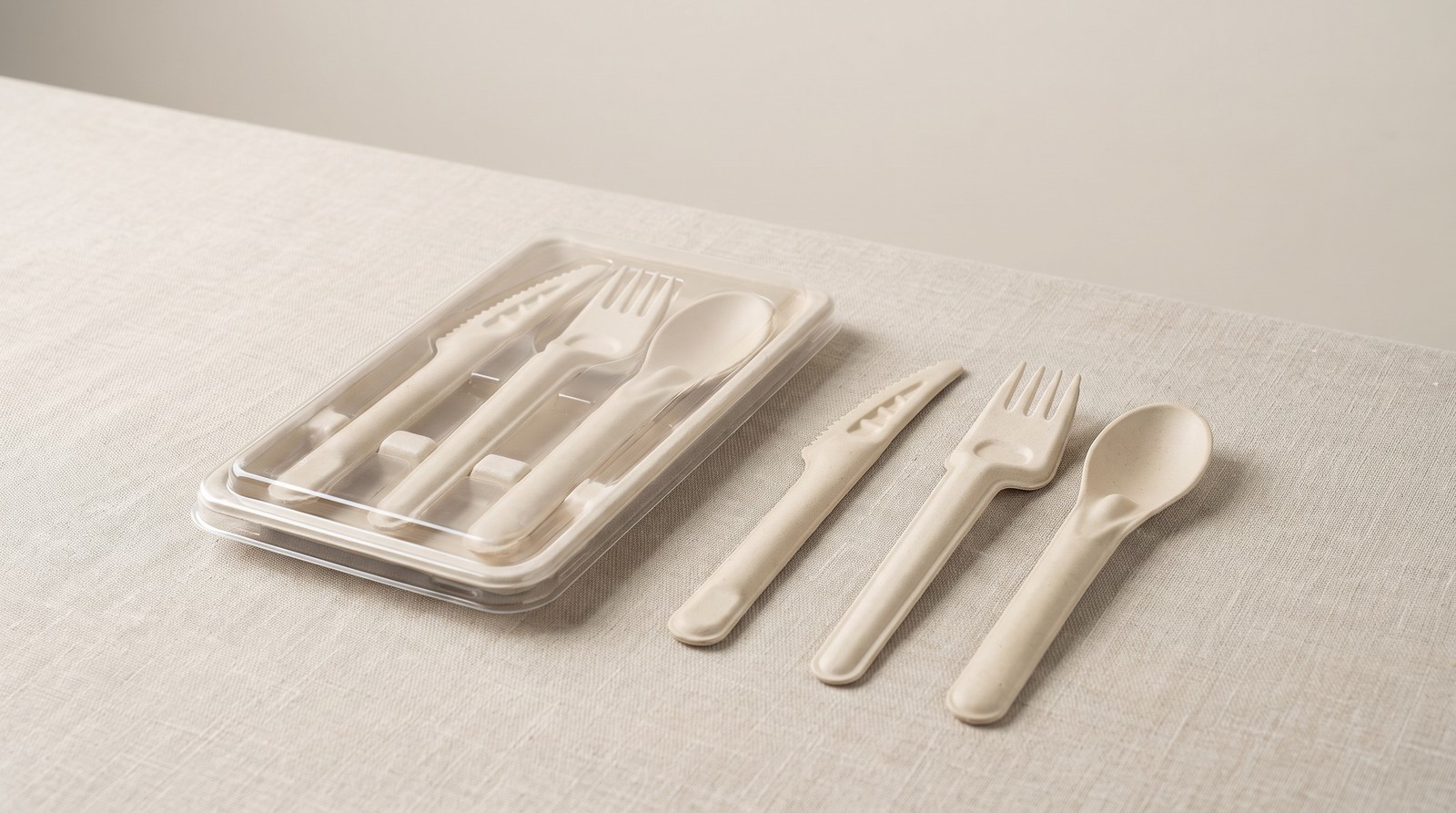
The same cutlery piece is sold in three commercially different formats, and the format usually decides the margin.
What should buyers verify?
- Bulk pack: pieces counted loose into a case — lowest unit cost, requires repacking or a dispenser at the point of use.
- Individually wrapped: each set wrapped and sealed — suited to foodservice hygiene requirements and delivery.
- Retail pack: wrapped and printed for shelf or e-commerce listing, with barcodes and artwork.
- Confirm who bears the packing labour and whether the wrap is done at the factory or at destination.
- Confirm how the format changes the case quantity and carton size.
Buyer red flag: choosing a bulk price for a delivery or retail channel, then discovering that repacking at destination costs more than the difference.
How Zhong Xin Ecoware Supports This
Cutlery programs are quoted by pack format, so bulk, individually wrapped and retail configurations can be compared on the same item codes, and the packing specification states the case pack that applies to each option.
Evidence buyers can request: pack format options per item, case pack by format, packing specification, repacking note.
3. Is the Wrap Material Specified?
The wrap is the most common gap in a compostable cutlery program: the cutlery passes, the wrap does not, and the claim on the outer carton has to be withdrawn.
What should buyers verify?
- Confirm the wrap material and whether it is covered by the same compostability evidence as the cutlery.
- Confirm whether the wrap is sealed by heat, adhesive or a paper band, and whether the seal survives transport.
- Confirm whether a napkin or condiment is included inside the wrap, and its status.
- Confirm the print on the wrap and whether it uses food-contact-safe inks.
- Confirm how the wrapped set behaves in humid conditions.
Buyer red flag: a compostable cutlery claim on a retail pack whose wrap has never been assessed.
How Zhong Xin Ecoware Supports This
The wrapping material forms part of the written specification for a wrapped program, and buyers are told which document covers the cutlery and which covers the wrap, so the claim matches the evidence.
Evidence buyers can request: wrap material specification, relevant documentation for the wrap, sealing method, humidity handling note.
4. Is the Branding and Print Route Agreed?
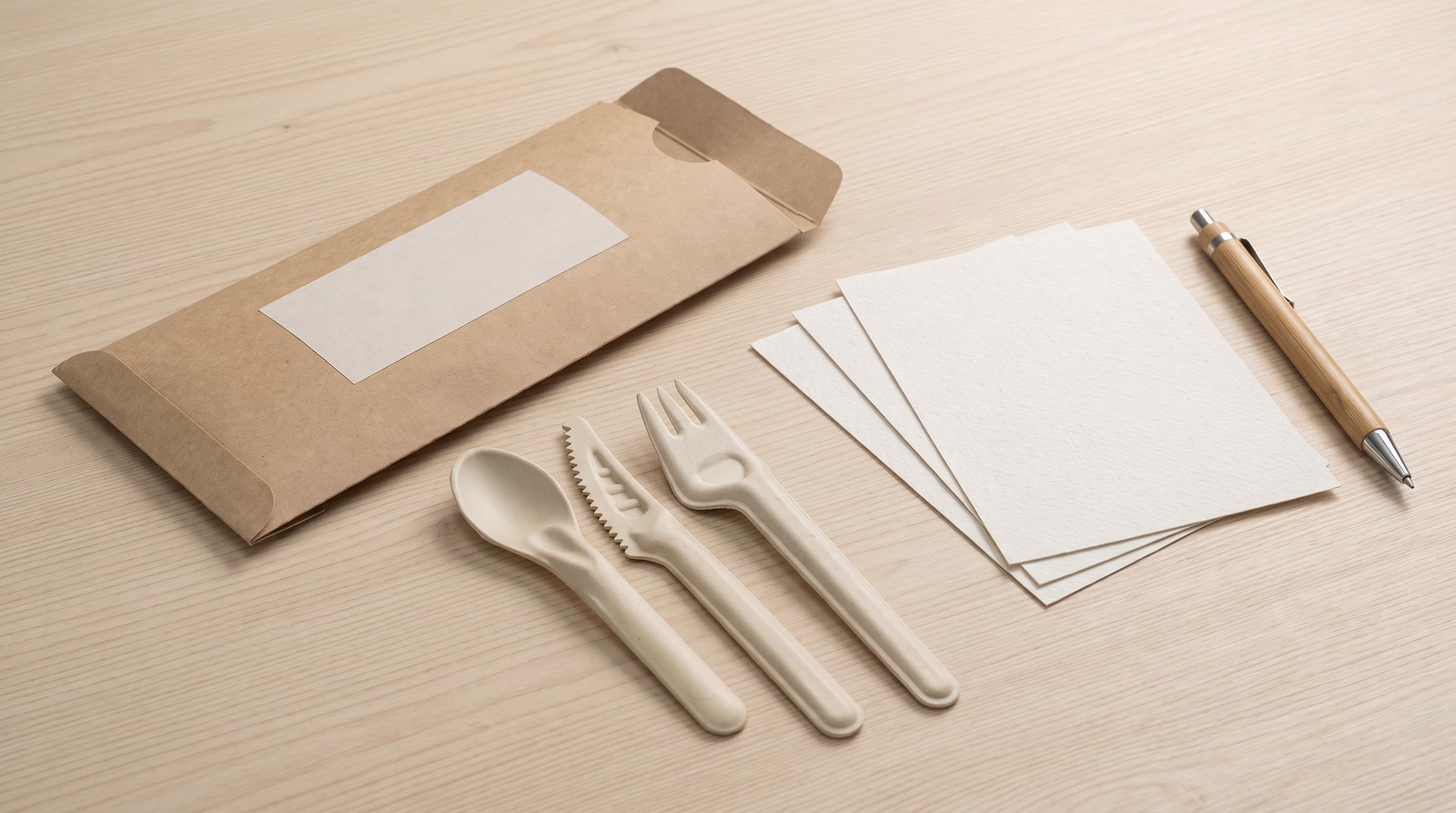
Private label is a printing project as much as a cutlery project. A logo that prints cleanly on a sample can be inconsistent at production speed, and a print position that changes after approval means a reprint.
What should buyers verify?
- Confirm the print method and whether it suits the material and the required resolution.
- Confirm the exact artwork, colour reference, print position and coverage before production.
- Confirm how the print behaves after contact with oil, water and heat.
- Confirm who owns the artwork file and how revisions are controlled.
- Confirm whether barcodes, batch codes and country-of-origin marks are required on the retail pack.
Buyer red flag: approving artwork verbally and discovering after printing that the colour reference or the position was interpreted differently.
How Zhong Xin Ecoware Supports This
Proofs are issued for written approval before printing, print position and coverage are agreed as part of the specification, and buyers can request printed samples before a bulk print run where the program size justifies it.
Evidence buyers can request: approved proof, print specification, pre-production printed sample, artwork version record.
5. Is the Compliance File Matched to the Item and the Market?
Cutlery is a food-contact article, so the same documentation logic applies as for plates and containers — with one addition: the wrap and any inserted item also sit inside the claim.
What should buyers verify?
- Confirm which document covers food-contact suitability for the cutlery item.
- Confirm the scope of any PFAS-related declaration: cutlery, wrap or both.
- Confirm the compostability reference recognised in the destination market.
- Confirm the documents name the item code or product family and the production site.
- Confirm whether the retail listing requires any additional market-specific labelling.
Buyer red flag: a certificate pack for the cutlery that does not mention the wrap, when the product is sold as a wrapped set.
How Zhong Xin Ecoware Supports This
Documentation is provided per product family and production site, with the scope of each document stated, so that buyers can match the evidence to the item, the wrap and the market where the claim will appear.
Evidence buyers can request: food-contact documentation, PFAS-related declaration with scope, compostability documentation, certification index by product family.
6. Is the Carton and Loading Data Confirmed Per Item Code?
For cutlery, the pack format changes the cube. A wrapped set occupies more volume per piece than loose pieces, so a loading plan built from a bulk sample will understate the container requirement for a wrapped program.
What should buyers verify?
- Confirm pieces per case and carton dimensions for the exact item code and pack format.
- Confirm gross and net weight per case for the entry file.
- Confirm whether the load is floor loaded or palletised and how many containers the program requires.
- Confirm shipping marks and case labelling.
- Confirm that the loading figure in the quotation and the one in the packing specification agree.
Buyer red flag: a container estimate carried over from a bulk quotation to a wrapped program without recalculating the case pack.
How Zhong Xin Ecoware Supports This
Carton data is confirmed per item code and pack format in the packing specification issued with the quotation, and a loading proposal is prepared per order so that the case pack, the pallet build and the container plan agree.
Evidence buyers can request: packing specification per item code and format, case dimensions and weights, reference container loading, loading proposal.
7. Is the Inspection and Claims Process Agreed?
Cutlery defects are small in size and large in consequence: a cracked handle or a weak tine is found by the end customer, not by the warehouse.
What should buyers verify?
- Agree the acceptance criteria for the characteristics that matter: crack, flash, tine strength, print quality, seal integrity.
- Confirm the inspection point and the sample size.
- Confirm how wrapped-set seal integrity is checked.
- Confirm what happens when a lot fails the criteria.
- Confirm how arrival damage is recorded and within what period a claim must be raised.
Buyer red flag: an inspection plan that counts pieces but never tests tine or seal integrity.
How Zhong Xin Ecoware Supports This
Acceptance criteria are agreed before production and the inspection record is issued against them; third-party inspection can be arranged at the buyer’s request.
Evidence buyers can request: agreed acceptance criteria, inspection record, print and seal check results, third-party inspection report where used.
Get a Quote for Your Next Order
Zhong Xin Ecoware Technology (Thailand) Co., Ltd. supplies plant-fiber cutlery and molded fiber tableware for wholesale, distribution and private-label programs from production bases in China and Thailand. Send your item list, pack format and destination market to info@fiber-product.com for a quotation with the packing specification and the compliance package.
Related Buyer Guides
- How to prepare a bagasse tableware import: 10 readiness checks
- US vs EU bagasse tableware imports: 8 documentation checks
- Zhong Xin Ecoware certifications: BPI, FDA, LFGB, BRCGS and ISO
- PFAS-free and compostability verification: a buyer’s checklist
- Browse biodegradable food packaging
About Zhong Xin Ecoware
Zhong Xin Ecoware Technology (Thailand) Co., Ltd. supplies bagasse and molded fiber food packaging to importers, distributors and foodservice brands. For MOQ, pricing, samples and certification files, contact info@fiber-product.com.
Last updated: 6 October 2026.



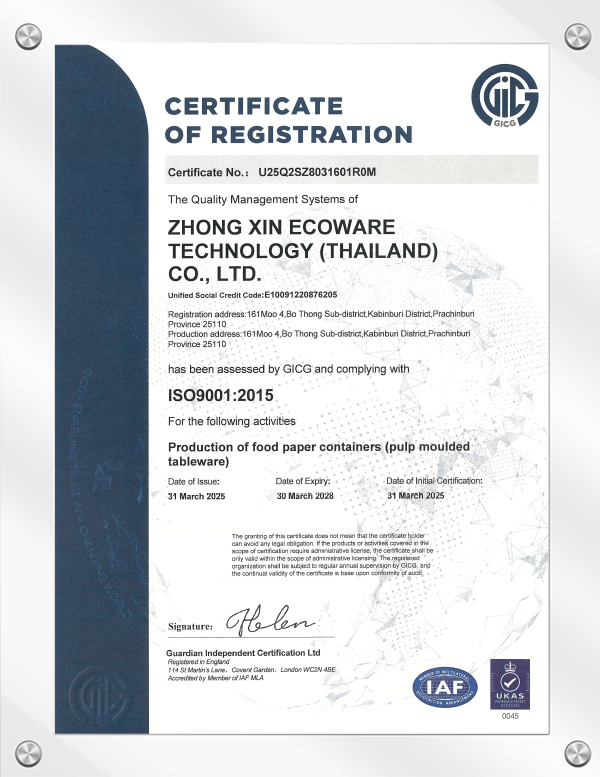
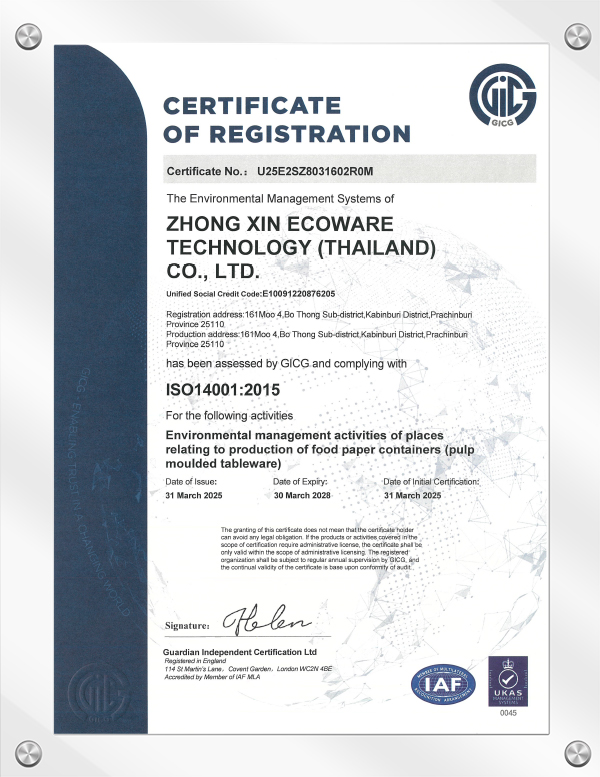
Zhong Xin Ecoware(Thailand) was registered on November 1, 2023, and officially began construction of the factory building in June 2024. At present, the first phase workshop of the factory has been fully completed and put into use. The second phase of the factory is being constructed intensively.
The landing and development of Zhong Xin in Thailand has brought a large amount of initial investment for land, factories, etc., and continuous operational investment for continuous equipment updates, technological upgrades, and capacity expansion.
Zhong Xin Ecoware(Thailand) has directly and indirectly created thousands of job opportunities, increased government revenue, promoted local economic development, cultivated local supply chains, provided systematic training for employees, improved the quality of local human capital, injected vitality into the local economy, enhanced industrial competitiveness, and ultimately improved residents' living standards.
Zhong Xin Ecoware(Thailand) actively collaborates with local pulp mills to explore new cooperation models for developing new products, improving production capacity and quality. At the same time, relying on Zhongxin's advanced production technology, process flow, management experience, and quality control system, it promotes the development of this industry in Thailand.

-
-
 +66-31240888
 -
 161 Village No. 4, Bo Thong Subdistrict Kabin Buri District Prachinburi Province 25110
-
Compostable Cutlery Sets for Private Label: 7 Sourcing Checks for Retail and Foodservice Buyers
Oct 06,2026
-
US vs EU Bagasse Tableware Imports: 8 Documentation and Compliance Checks Buyers Should Run
Oct 06,2026
-
How to Prepare a Bagasse Tableware Import: 10 Readiness Checks for US and EU Buyers
Oct 06,2026
-
Beyond Plates: Which Foods Suit Bagasse Tableware
Oct 02,2026
-
New Bagasse Tableware Lineup for 2026: What Is New and Where to See It
Sep 28,2026
-
How to Select Bagasse Clamshells for Burgers, Rice Meals and Fried Food
Sep 28,2026
-
Microwave Reheating: Is a Bagasse Lunch Box Suitable
Sep 25,2026
-
9 Inch Pizza Plates and Bagasse Pizza Boards: A Sourcing Guide for US and Canadian Distributors
Sep 19,2026
-
PFAS-Free & Compostability Verification: A Buyer's Checklist for Bagasse and Molded Fiber Packaging
Sep 19,2026
-
Bagasse vs PLA vs Molded Fiber: What Distributors Should Stock in 2026
Sep 19,2026
-
Can Sugarcane Plates Handle Hot, Greasy Foods
Sep 18,2026
-
Bagasse Tableware RFQ Template: Get a Comparable Thailand Factory Quote
Sep 14,2026
Copyright © 2025 Zhong Xin Ecoware Technology ( Thailand ) CO., LTD.
All Rights Reserved.

Biodegradable Disposable Bagasse Tableware Manufacturer