-
 [email protected]
-
 +66-31240888



 English
 Español
 ไทย
Kraft SOS Bags vs Flat Merchandise Bags: Which for Takeaway and Retail
Takeaway counters and retail floors both reach for a paper bag, but they are not the same bag. An SOS bag and a flat merchandise bag differ in how they open, how they stand, and what they cost to ship — and getting the choice wrong shows up as spills, torn handles or wasted freight.
Short answer: Use Kraft SOS bags when the bag must stand open on a counter and hold food, because the folded block base lets it stand alone and the 50/60 g/m2 paper carries takeaway loads in 12 sizes from 3.5 x 2.4 x 6.9 to 8.25 x 5.37 x 18 inch. Use flat merchandise bags when the bag is packed flat and handed to a customer for apparel, pharmacy or flat goods, because they fold flat before use, need no base fold, and ship far more efficiently — 500-600 bags per case against 500-2,000 for SOS at similar footprints.
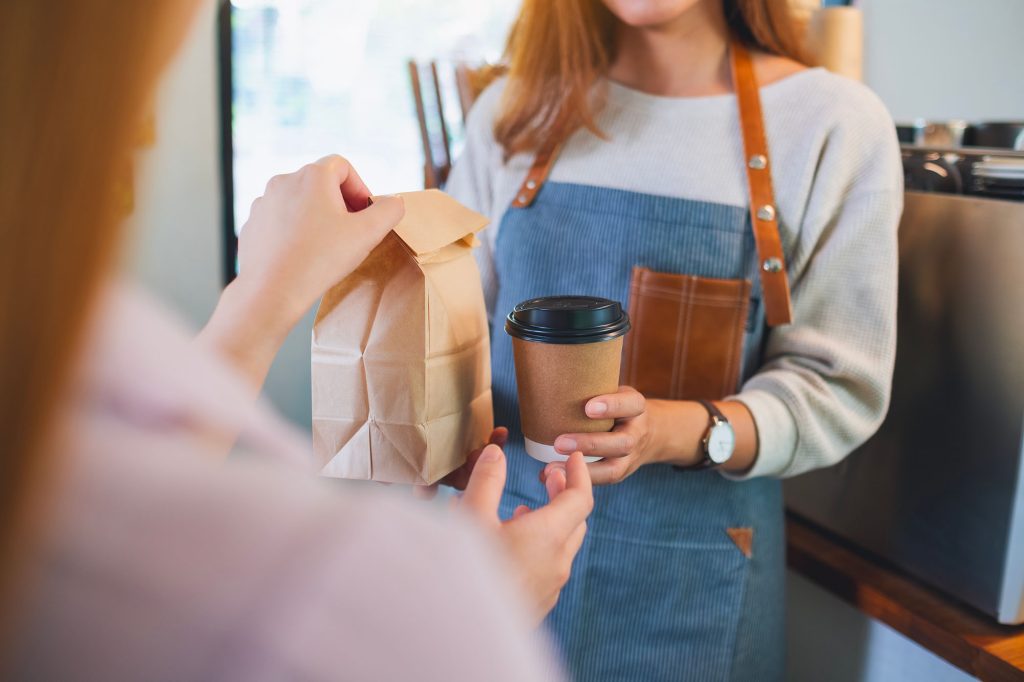
Handing over a kraft paper bag at the counter: the SOS base stands open while the other hand carries the drink.
The structural difference in one line
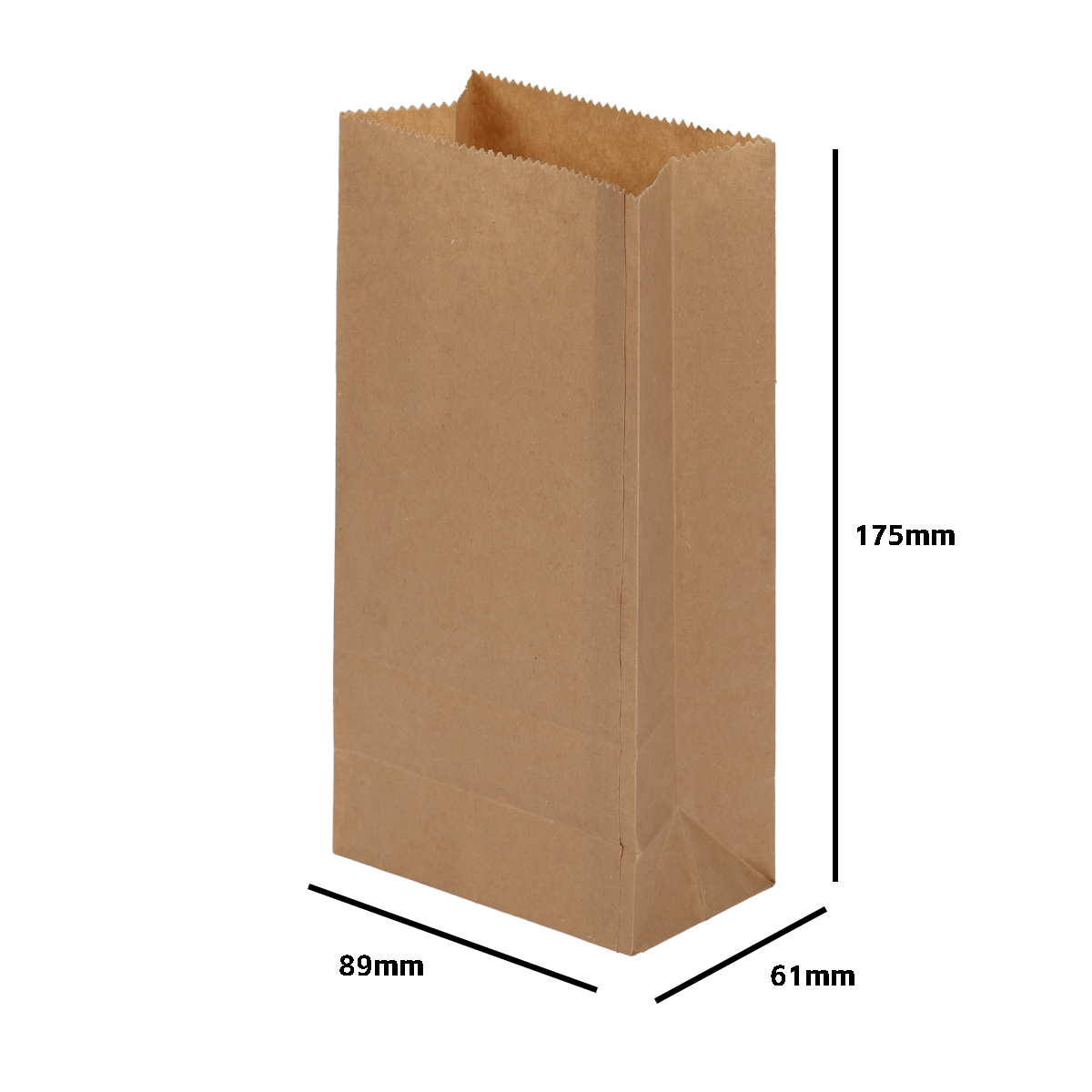
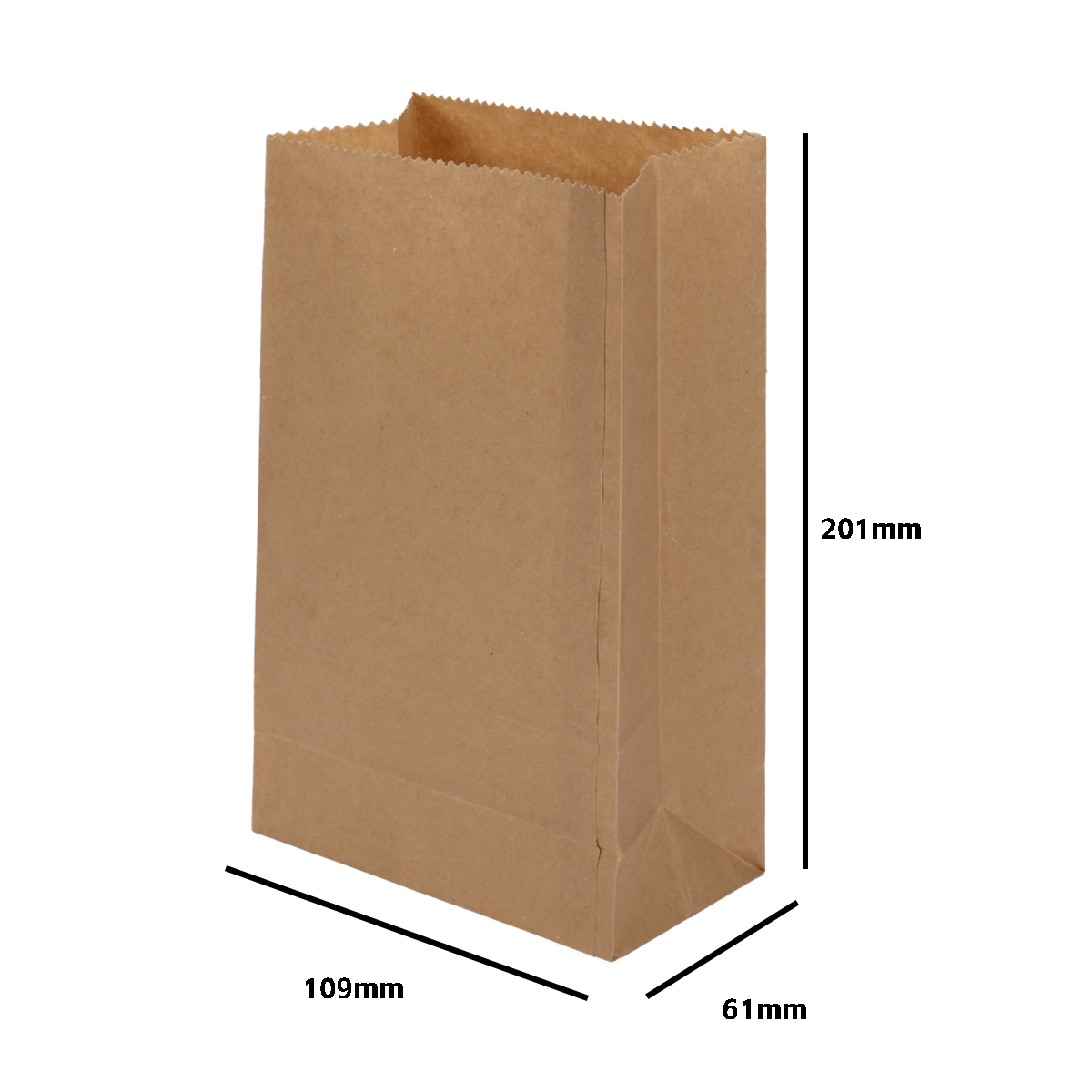
An SOS bag is a side-gusseted sack with a folded block bottom. It is delivered flat, but once you open it, the base drops into a rectangle and the bag stands on its own. That is why bakeries, grocery and takeaway can load it with one hand.
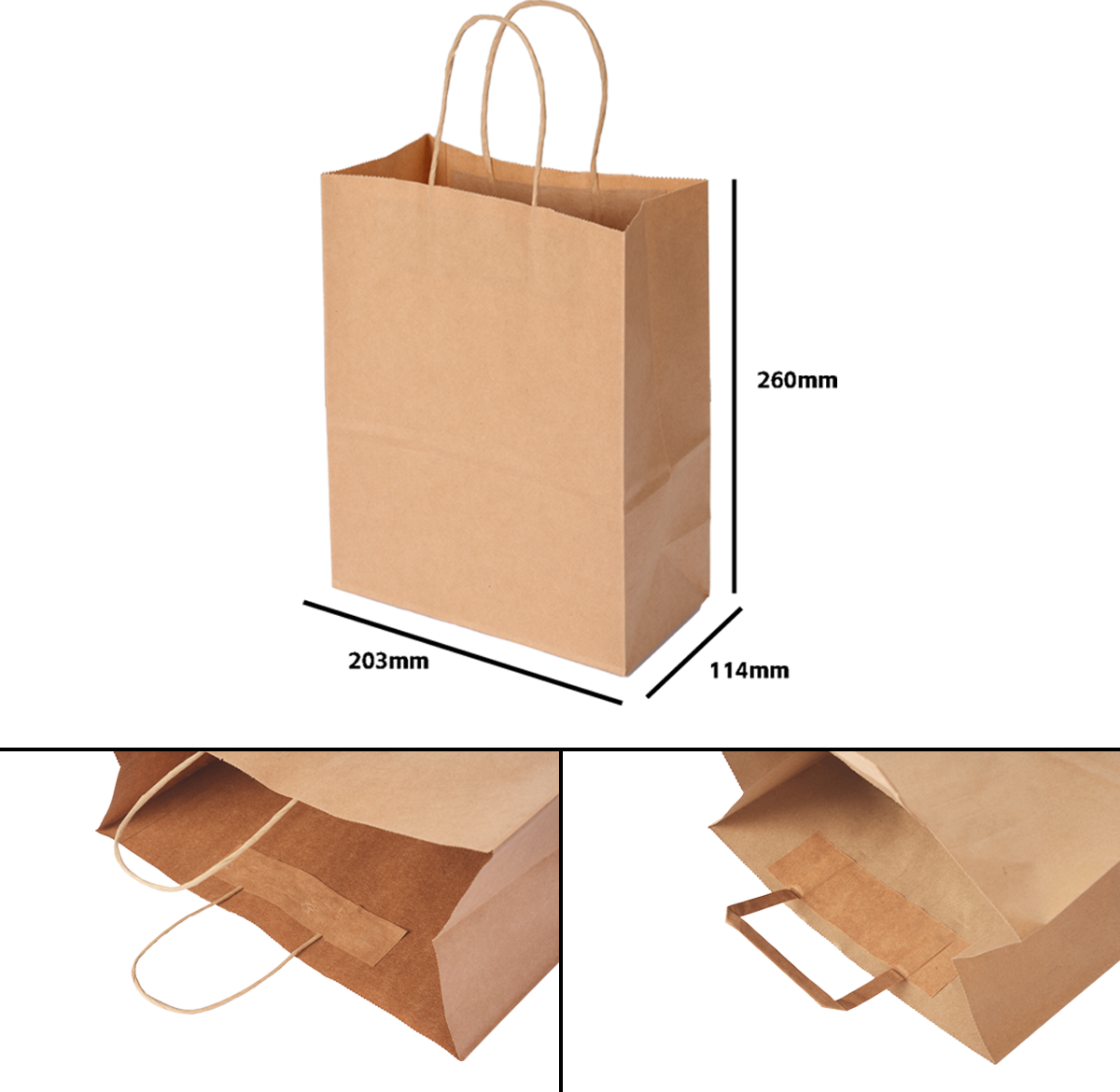
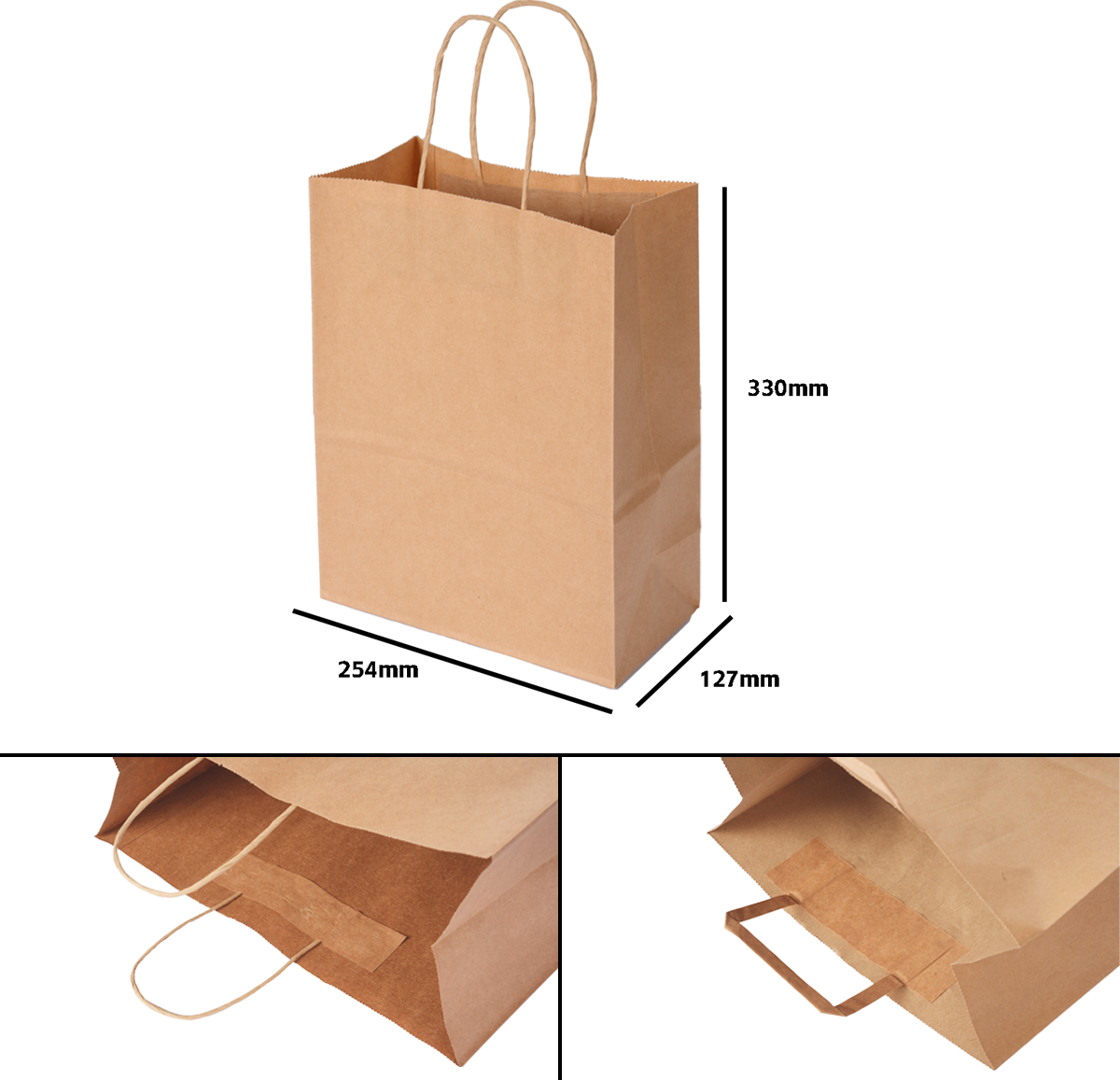
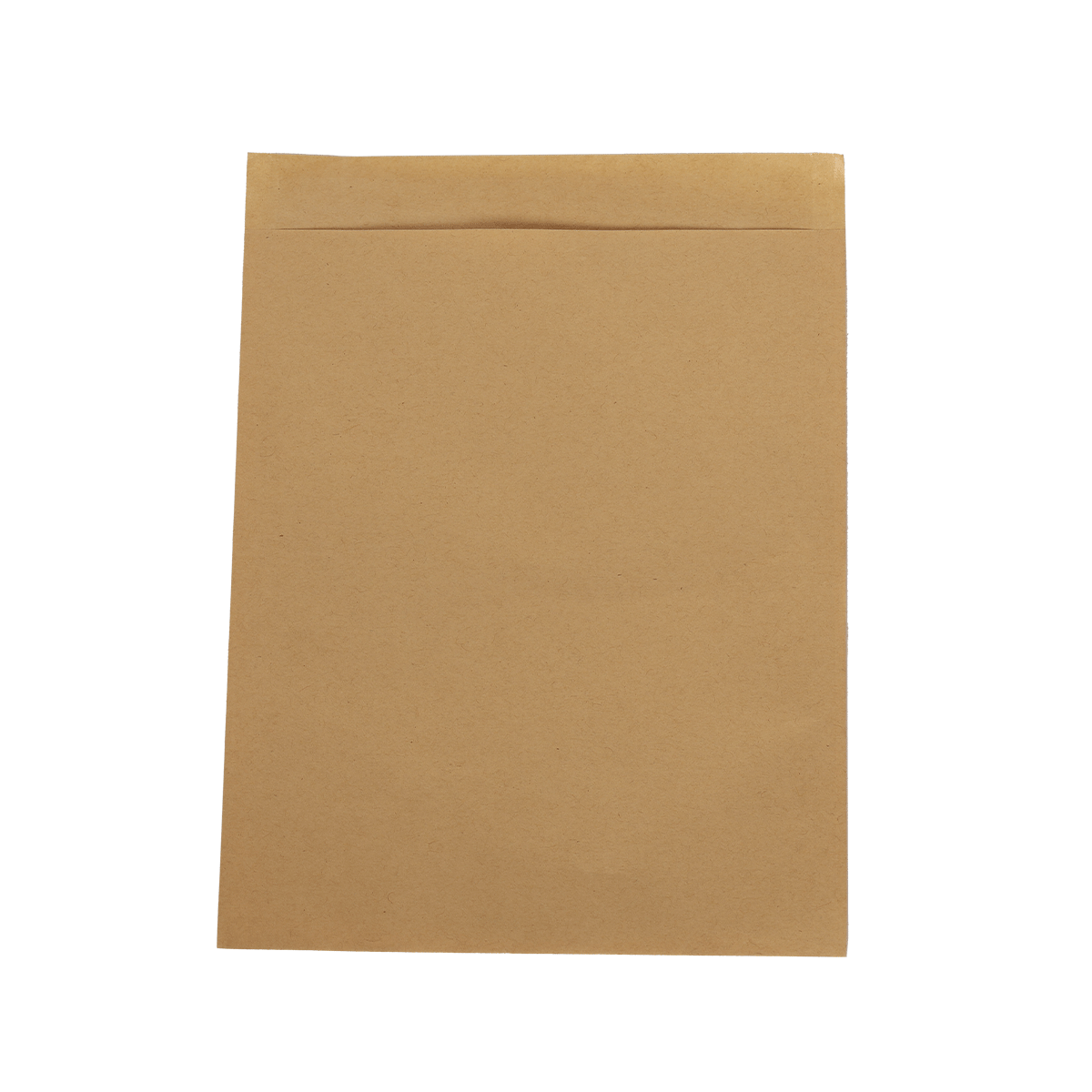
A flat merchandise bag is a pinch-bottom or flat bag with no gusset on the sides. It stays a flat sleeve until it is filled, then lies flat again. It has no standing capability, which is fine for a shirt, a bottle of supplements or a pharmacy order, and wrong for a dripping noodle box.
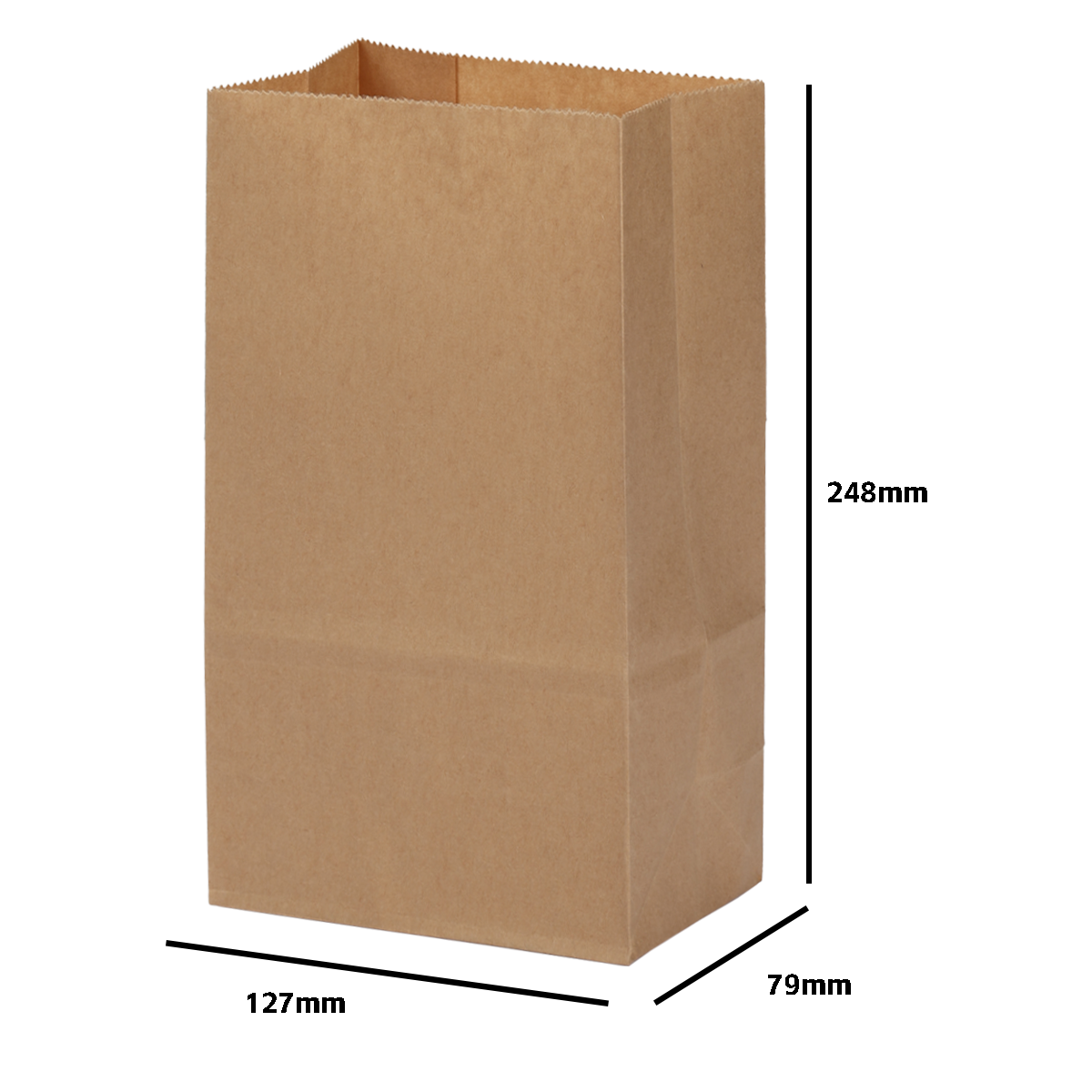
Kraft SOS bag: folded block base, side gusset, stands open.
Side-by-side comparison
| Item | Kraft SOS Bag | Flat Merchandise Bag |
|---|---|---|
| Base | Folded block base, stands open | Flat pinch bottom, no standing base |
| Side gusset | Yes, 2.4 to 5.4 inch deep | None except ZX-MB6 (2 inch) |
| Typical use | Takeaway, bakery, grocery, food delivery | Apparel, pharmacy, flat goods, promos |
| Basis weight | 50 g/m2 (sizes 1-8), 60 g/m2 (10-25) | 50 g/m2 across the range |
| Stock sizes | 12 | 5 |
| Size range | 3.5 x 2.4 x 6.9 to 8.25 x 5.37 x 18 in | 6.25 x 9.25 to 12 x 15 in |
| Bags per case | 500 to 2,000 | 500 to 600 |
| Case CBM (typical) | 0.024 to 0.049 | 0.013 to 0.033 |
| Handle | None | None |
| Window | Option | Not standard |
| Peel-and-stick tie | Option | Not standard |
When SOS wins
Pick SOS when the bag has to be loaded on a counter while the other hand rings up the sale. The block base is the whole point: it holds the bag upright so staff can drop items in without holding the top.
It is also the right choice when the contents are wet, greasy or irregular. The gusset expands around a container, and the 60 g/m2 paper from ZX-SOS-10# upward handles heavier grocery loads without the base collapsing. Bakeries use SOS for bread and pastries, grocery for produce and bottled drinks, and food delivery for single-meal takeaway.
The trade-off is freight. A case of 1,000 SOS bags occupies roughly 0.024 to 0.049 CBM depending on size, because the gusset and block base take space even when flat.
When merchandise wins
Pick flat merchandise bags when the bag travels with the product rather than holding a meal. Apparel, accessories, pharmacy and promotional giveaways all pack flat, stack flat and hand over flat.
The freight advantage is real. A case of 600 flat bags sits around 0.013 to 0.016 CBM — roughly half the volume of a comparable SOS case. For a buyer shipping full containers, that difference compounds across every carton.
The trade-off is loading. Nobody can stand a flat bag on a counter and drop a burger into it. If your staff are packing food at speed, a flat bag slows the line down.
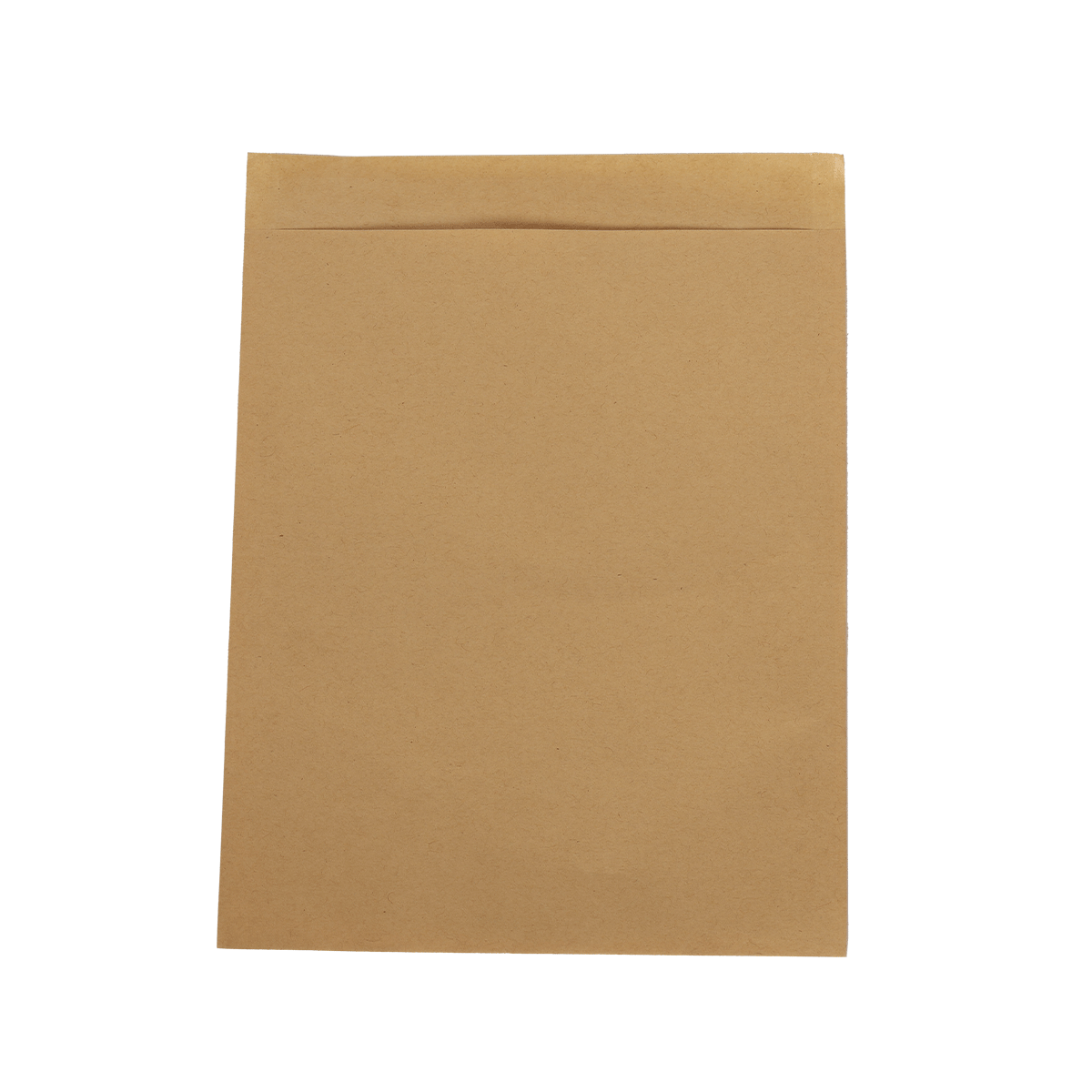
Flat merchandise bag: no side gusset except MB6, packs and ships flat.
Size selection by content
| What you are packing | Recommended style | Starting size |
|---|---|---|
| Single pastry, cookie, small bread | SOS | ZX-SOS-1# to 4# (3.5 to 5 in wide) |
| Meal box, sandwich plus drink | SOS | ZX-SOS-5# to 8# (5.25 to 6.1 in wide) |
| Full grocery run, family meal | SOS 60 g/m2 | ZX-SOS-16# to 25# (7.75 to 8.25 in wide) |
| Shirt, small apparel | Merchandise | ZX-MB1 or MB2 (6.25 to 8.5 in) |
| Multi-item apparel order | Merchandise | ZX-MB3 or MB4 (10 to 12 in) |
| Flat item with depth (box, book) | Merchandise | ZX-MB6 (10 x 2 x 15 in) |
Food safety: what carries over and what does not
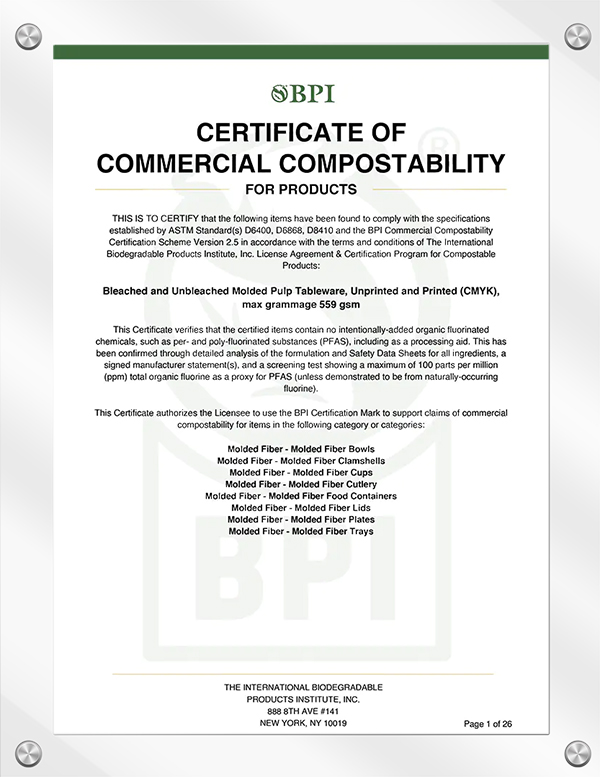
Both bags are made from kraft or white paper with recycled or virgin pulp. Neither is a food-contact certificate in itself: if you are selling into the US or EU, ask for the food-contact documentation for the exact SKU and paper grade, and check whether the supplier treats grease resistance with a barrier coating or relies on plain uncoated paper.
PFAS-free statements should be read carefully. A no-intentionally-added-PFAS declaration plus a total fluorine report is the evidence a buyer can check; a marketing line on a product page is not. For bags that will touch hot or oily food, confirm the grease behaviour on a production sample rather than assuming the paper weight is enough.
Cost and freight: where the real difference sits
Per bag, the two styles are close in material cost. Per carton, they diverge. SOS cases carry 500 to 2,000 bags at 0.024 to 0.049 CBM; merchandise cases carry 500 to 600 at 0.013 to 0.033 CBM. On a full container, flat bags move more units per cubic metre, while SOS buys you counter speed and food handling.
For a buyer weighing both, the decision usually comes down to which cost matters more: the labour cost of packing food slowly, or the freight cost of shipping air.
Can one bag do both jobs?
Partly. A flat merchandise bag with a side gusset, such as ZX-MB6, can carry a flat item with some depth, but it will not stand on a counter. An SOS bag can carry a folded shirt, but the block base wastes space and the bag will not lie flat for retail shelving.
Where a single SKU has to cover both a takeaway counter and a retail shelf, the practical answer is two SKUs on one purchase order rather than one compromise bag.
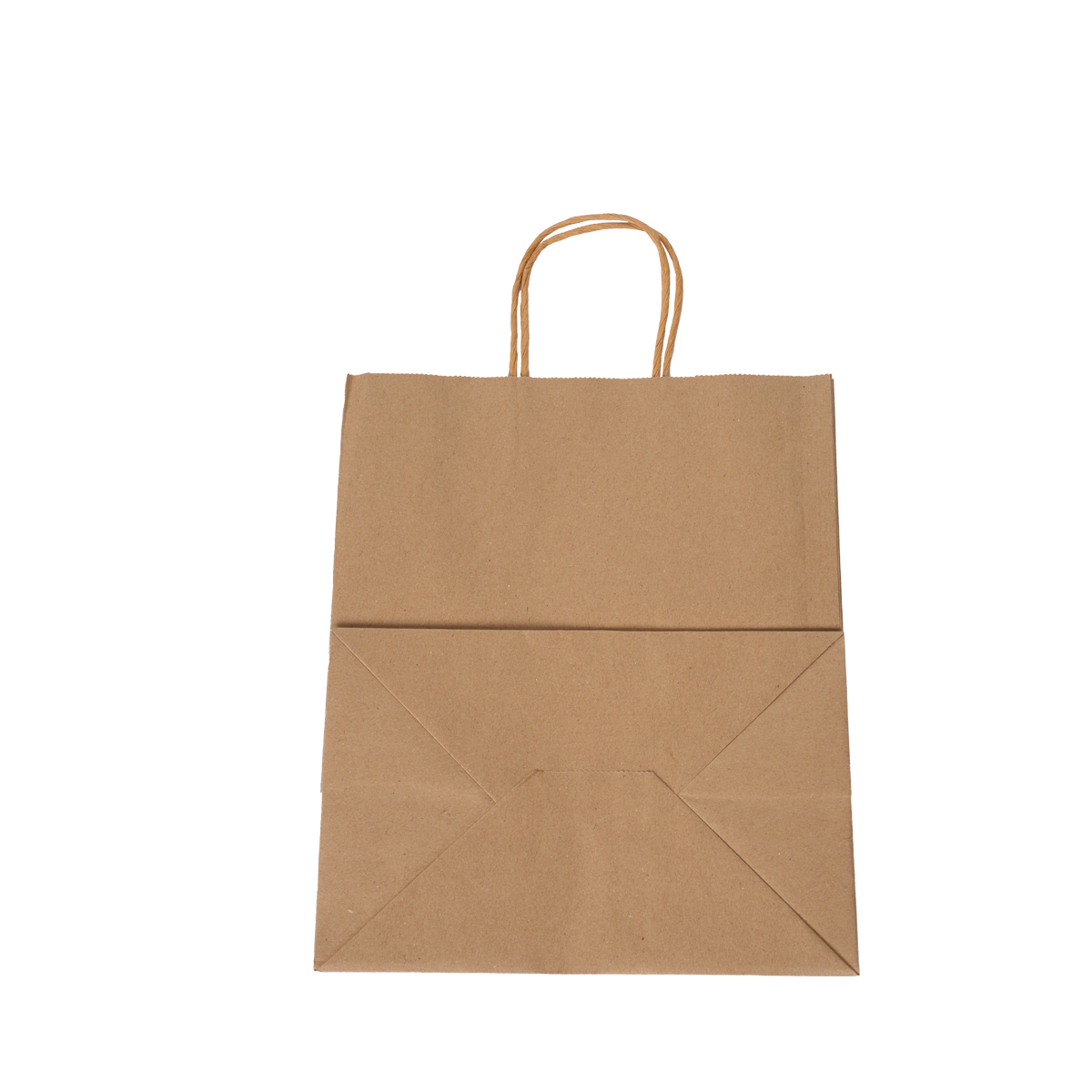
Need a carry handle? Twisted handle bags are a separate range.
FAQ
What does SOS stand for in paper bags?
SOS stands for self-opening sack. The name describes the folded block base that opens into a rectangle as soon as the bag is lifted, so it can stand on its own and be filled without a holder.
Can a flat merchandise bag stand up on a counter?
No. Flat bags have no standing base, so they collapse as soon as you let go of the top. If staff need one-handed filling, use an SOS bag instead.
Which style is cheaper to ship?
Flat merchandise bags ship more efficiently. A case of 600 occupies roughly 0.013 to 0.016 CBM, against 0.024 to 0.049 CBM for a case of 500 to 2,000 SOS bags. The difference matters most on full containers.
Are SOS bags stronger than flat bags?
Not by definition. Strength comes from paper weight and construction. SOS bags from ZX-SOS-10# upward use 60 g/m2 paper for heavier loads, while flat bags use 50 g/m2 because they typically carry lighter retail items.
Do either of these bags have handles?
Neither the SOS nor the flat merchandise bag has a handle. If you need a handle for retail or gifting, look at our twisted handle bags, which run from 8 x 4.5 x 10.25 to 16 x 6 x 12 inch.
Can SOS bags be printed with a logo?
Yes. Printing is available on all stock sizes in up to six colours on kraft or white paper. Send artwork and the size you need, and the print method and plate cost are confirmed with the quotation.
Sources
- BPI company listing — Zhong Xin Ecoware Technology (Thailand) Co., Ltd. — Biodegradable Products Institute (accessed 2026-11-16)
- Food Ingredients and Packaging — US Food and Drug Administration (accessed 2026-11-16)
Sizes, basis weights, case quantities and carton volumes on this page are taken from our current paper bag specification sheet. See the Kraft SOS Bags, Merchandise Bags and Twisted Handle Bags ranges for full dimensional tables.
Zhong Xin Ecoware Technology (Thailand) Co., Ltd. supplies bagasse and molded fiber food packaging and kraft paper bags to importers, distributors and foodservice brands. For MOQ, pricing, samples and lead time, email info@fiber-product.com or use the contact form.
Zhong Xin Ecoware(Thailand) was registered on November 1, 2023, and officially began construction of the factory building in June 2024. At present, the first phase workshop of the factory has been fully completed and put into use. The second phase of the factory is being constructed intensively.
The landing and development of Zhong Xin in Thailand has brought a large amount of initial investment for land, factories, etc., and continuous operational investment for continuous equipment updates, technological upgrades, and capacity expansion.
Zhong Xin Ecoware(Thailand) has directly and indirectly created thousands of job opportunities, increased government revenue, promoted local economic development, cultivated local supply chains, provided systematic training for employees, improved the quality of local human capital, injected vitality into the local economy, enhanced industrial competitiveness, and ultimately improved residents' living standards.
Zhong Xin Ecoware(Thailand) actively collaborates with local pulp mills to explore new cooperation models for developing new products, improving production capacity and quality. At the same time, relying on Zhongxin's advanced production technology, process flow, management experience, and quality control system, it promotes the development of this industry in Thailand.
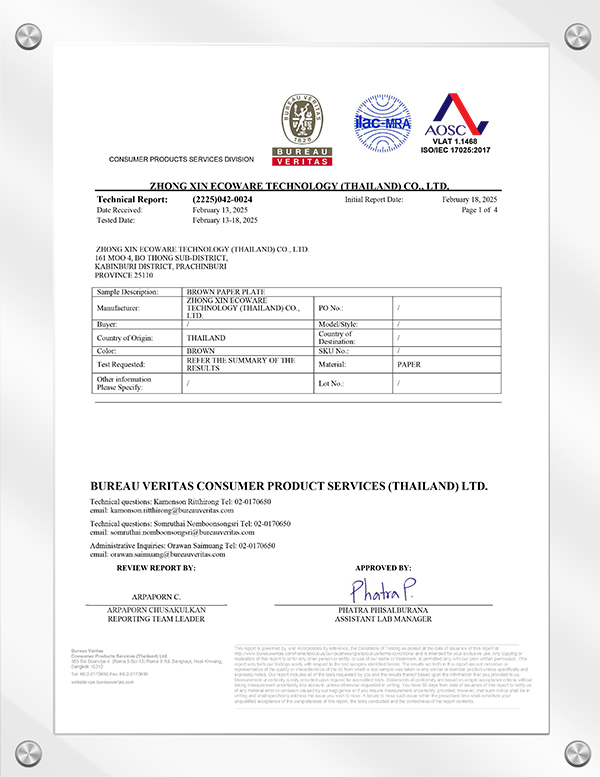
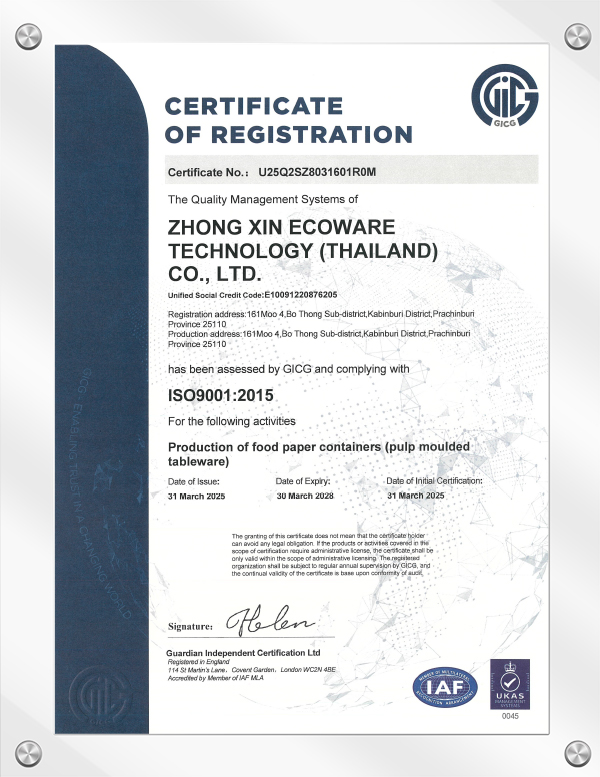
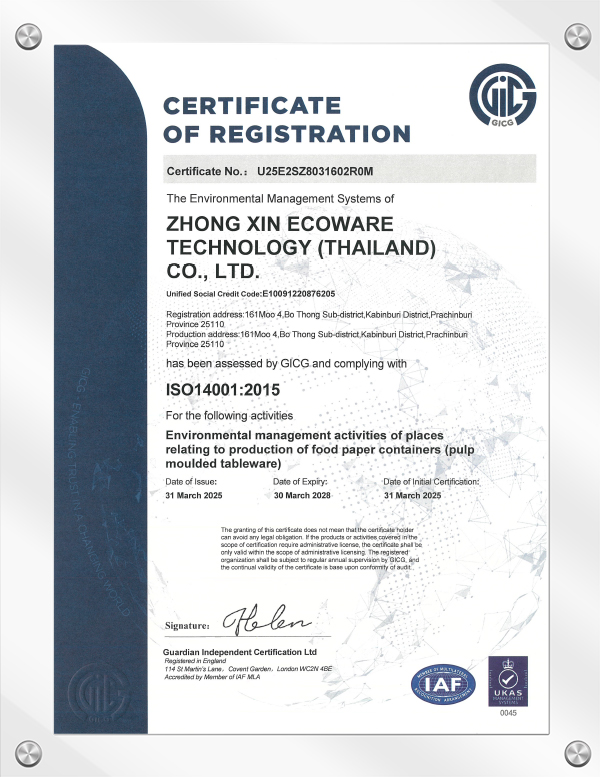

-
-
 +66-31240888
-
 161 Village No. 4, Bo Thong Subdistrict Kabin Buri District Prachinburi Province 25110
-
How Does Packaging Design Affect Tableware Shipping and Storage Costs
Nov 20,2026
-
What GSM Paper Bag Do You Need? 50, 60 and 110 g/m2 Explained
Nov 17,2026
-
Kraft SOS Bags vs Flat Merchandise Bags: Which for Takeaway and Retail
Nov 16,2026
-
Certifications and Compliance Documents for Bagasse and Molded-Fiber Packaging
Nov 14,2026
-
PFAS-Free Bagasse and Molded-Fiber Food Packaging
Nov 14,2026
-
How to Prove PFAS-Free Bagasse Tableware: Total Fluorine and Targeted PFAS
Nov 13,2026
-
Are Sugarcane-Based Packaging Claims Backed by Verifiable Certifications
Nov 13,2026
-
Are Bagasse Food Containers Safe for Hot Food and Takeout?
Nov 06,2026
-
Leakage and Heat Resistance: What Should Catering Buyers Test Before Ordering
Nov 06,2026
-
Can Compostable Packaging Go in the Compost Bin? Certification vs Facility Acceptance
Oct 31,2026
-
10-Inch Bagasse Plates: A Heavy-Duty Plate Sourcing Guide
Oct 31,2026
-
32oz Bagasse Bowls and PET Lids: A Sourcing Guide for Foodservice Buyers
Oct 31,2026
Copyright © 2025 Zhong Xin Ecoware Technology ( Thailand ) CO., LTD.
All Rights Reserved.

Biodegradable Disposable Bagasse Tableware Manufacturer