-
 [email protected]
-
 +66-31240888



 English
 Español
 ไทย
ไทยHow to Select Bagasse Clamshells for Burgers, Rice Meals and Fried Food
This article focuses on matching clamshell formats to burgers, rice meals and fried food. For exact dimensions and 6-inch vs 8-inch vs 9-inch specifications, use Zhong Xin Ecoware's clamshell container sizes guide.
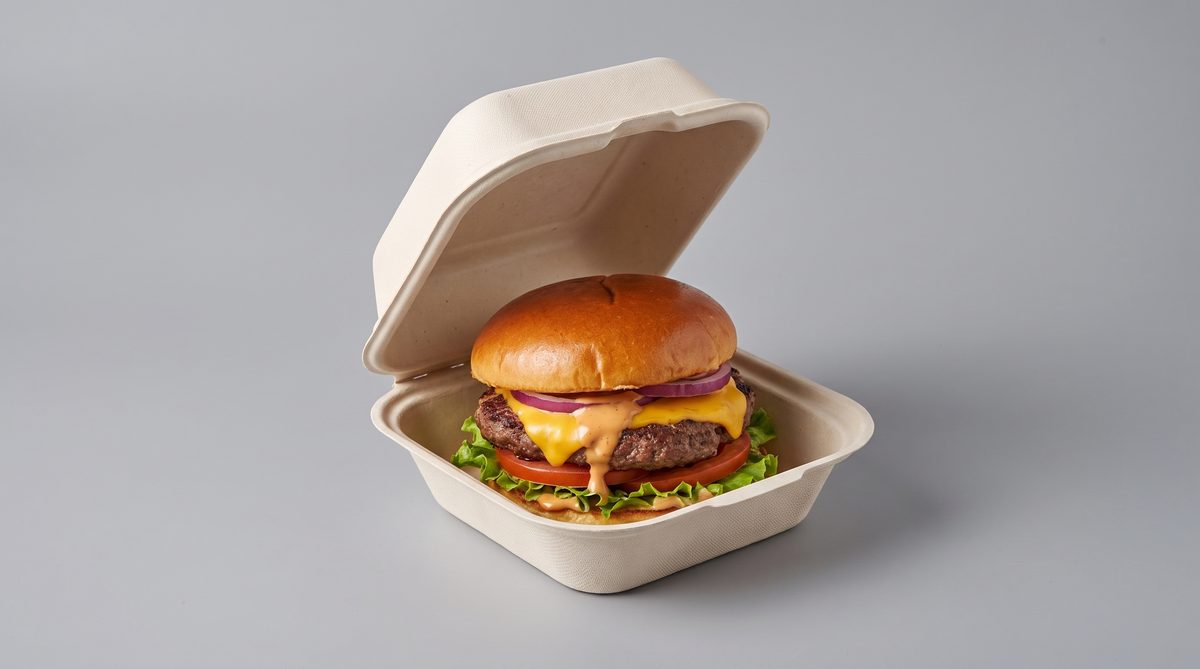
A bagasse clamshell that works for a burger may not work for a grain meal or fried food. The buyer needs to match the clamshell to moisture level, oil level, food height, compartment needs, delivery time and stacking conditions. This is a product-selection question, not a general sourcing guide.
This article is written for US foodservice buyers, distributors, QSR chains, school foodservice programs, supermarket deli teams, airline catering suppliers and importers comparing compostable clamshell containers within a broader food packaging program.
Quick Summary
- Match the clamshell to the menu item first: height and lid clearance for burgers, depth and moisture control for grain meals, steam management for fried food.
- 8 inch, 9 inch and 9 x 6 inch hinged containers cover most burger, rice-meal and fried-food programs.
- Single-compartment, 2-compartment and 3-compartment formats are available in the same outer size, so portion separation does not have to change the carton plan.
- Test the filled clamshell in stacks and delivery bags, not only on a table.
- Confirm PFAS-free, food-contact and compostability files before issuing the purchase order.
Menu-to-Clamshell Matching Table
| Food application | Recommended clamshell features | Main procurement risk | Sample test to run |
|---|---|---|---|
| Burgers and sandwiches | 1-compartment design, enough food height, strong lid closure and stable bottom. | Tall food may press into the lid; fries may need extra space. | Close the lid over the actual burger and check shape after stacking. |
| Grain or rice-style meals | Deeper base, optional 2-compartment layout, oil and moisture resistance for sauce and dressing. | Warm grains, vegetables and sauces can create moisture and soak risk. | Hold the meal hot for the intended service time and check bottom strength. |
| Fried food | Vented option where available, good lid clearance and enough surface area to avoid crowding. | Steam can soften fried texture; oil may pool in corners. | Compare vented and non-vented samples after delivery simulation. |
| Supermarket deli meals | Clean presentation, clear portion separation, stable stacking and consistent open-lid appearance. | Display quality may decline if food shifts or condensation forms. | Review appearance after chilled or warm display conditions. |
| School or airline meals | Controlled portion size, reliable closure, stackability and predictable case packing. | Space and handling constraints are stricter than restaurant takeout. | Test cart loading, stacking pressure and meal handoff speed. |
Clamshell Formats and Packing Data
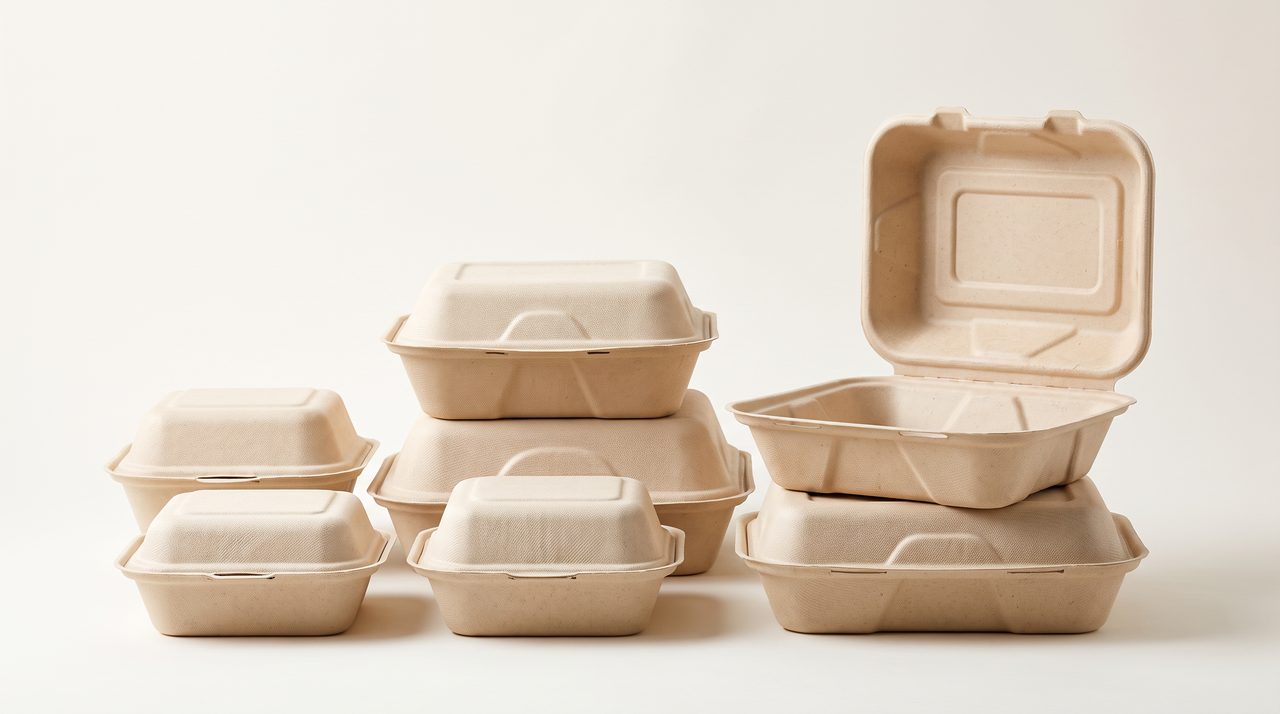
The table below lists the hinged containers most often used for burgers, rice meals, fried food and meal delivery. Dimensions, unit weights and carton data are taken from the official Zhong Xin Ecoware packing list.
| Model | Format | Size (mm) | Unit weight (g) | Pcs / ctn | Carton L x W x H (cm) |
|---|---|---|---|---|---|
| PC051 | 5 inch burger box | 127.4 x 127.4 x 45.4 / 75 | 14 | 500 | 48 x 26.5 x 18.5 |
| PCT061 | 6 inch burger box | 152 x 152 x 44 / 75 | 21 | 500 | 48 x 32 x 31.5 |
| PCT081 | 8 inch clamshell, 1 compartment | 220 x 200 x 45 / 77 | 38 | 200 | 45 x 39 x 21 |
| PCT082 | 8 inch clamshell, 2 compartments | 220 x 200 x 45 / 77 | 38 | 200 | 45 x 41 x 21 |
| PCT083 | 8 inch clamshell, 3 compartments | 220 x 200 x 45 / 77 | 38 | 200 | 45 x 36 x 21 |
| PCT091 | 9 inch clamshell, 1 compartment | 235 x 230 x 50 / 80 | 42 | 200 | 48 x 36 x 24 |
| PCT093 | 9 inch clamshell, 3 compartments | 235 x 230 x 50 / 80 | 42 | 200 | 48 x 36 x 24 |
| PCT096 | 9 x 6 inch clamshell, 1 compartment | 230 x 158 x 46 / 80 | 30 | 250 | 47 x 32 x 24 |
| PCT097 | 9 x 6 inch clamshell, 2 compartments | 251 x 166 x 47 / 63 | 32 | 250 | 52.5 x 33.5 x 26 |
| PC450 | 450 ml meal clamshell | 170 x 125 x 35 / 50 | 15 | 500 | 41 x 26.5 x 37 |
| PC600 | 600 ml meal clamshell | 183 x 135 x 45 / 65 | 18 | 500 | 46.5 x 28.5 x 37.5 |
| TACO-83 | 8 inch taco clamshell, 3 compartments | 368 x 209 x 80 | 39 | 300 | 38 x 36 x 42.5 |
In the size column, the two height figures follow the supplier's packing-list convention of base depth and closed height. Models, carton quantities and carton dimensions are confirmed on the quotation and packing list for each order.
Container Loading Reference
| Model | Pcs / ctn | 40HQ reference (cartons) | 40HQ reference (pcs) |
|---|---|---|---|
| PCT061 | 500 | about 1,280 | about 640,000 |
| PCT081 / PCT083 | 200 | about 1,650 | about 330,000 |
| PCT091 / PCT093 | 200 | about 1,490 | about 298,000 |
| PCT096 | 250 | about 1,700 | about 425,000 |
| PCT097 | 250 | about 1,350 | about 337,000 |
| PC450 | 500 | about 1,540 | about 770,000 |
| PC600 | 500 | about 1,240 | about 620,000 |
Loading figures are planning references based on the carton dimensions above and roughly 62 cubic metres of usable 40HQ space. Final loading is confirmed against the packing list at booking.
For Burgers: Check Height Before Width
Burger buyers often focus on bottom area, but food height is the real failure point. A tall bun, lettuce, tomato and fries can push against the lid. If the clamshell compresses the meal, the customer experience suffers even when the nominal size looks correct. For QSR and delivery kitchens, test the filled clamshell in stacks and delivery bags, not only on a table.
A 1-compartment clamshell is usually suitable when the burger is the main item and sides can share the same cavity. If fries, fruit or salad must stay separate, compare a 2-compartment format or a larger size such as the 8 inch 2-compartment or the 9 x 6 inch 2-compartment clamshell.
For Grain Meals: Control Moisture and Separation
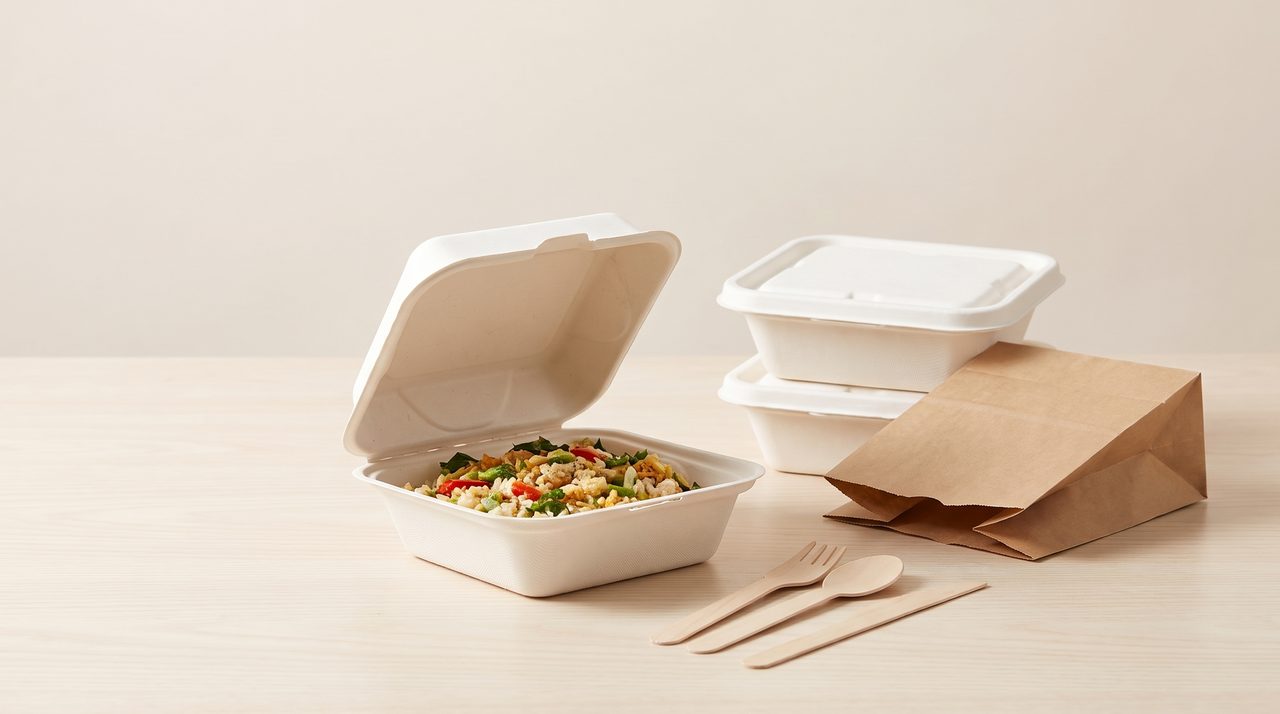
Grain meals, rice-style meals, pasta bowls, grilled chicken meals and vegetable entrees create a different challenge. They may contain warm moisture, dressing, sauce, vegetables and protein in the same package. A deeper base or compartment layout can help prevent the food from spreading into the lid or mixing during transport. In the 9 inch family the 3-compartment 9 inch clamshell keeps rice, protein and vegetables apart within the same outer footprint.
If the meal includes sauce, buyers should run a hold-time test with real food. Material, coating, bottom thickness and lid fit all matter. US buyers can review FDA's food-contact substance information when building internal review files. European buyers may also check European food-contact material guidance.
For Fried Food: Decide Whether Venting Matters
Fried food is sensitive to trapped steam. Fries, fried chicken strips, fried fish and toasted items may need a vented clamshell where available. If a vented version is not needed or not available, the buyer should test whether the non-vented design still protects texture for the target hold time.
Do not assume that a larger box solves fried-food quality. Too much empty space can reduce presentation quality and carton efficiency. The correct choice balances food texture, portion size, stacking and case quantity.
Procurement File Checklist
| File or evidence | Why buyers ask for it | When it matters most |
|---|---|---|
| PFAS-free declaration or test report | Supports brand, distributor and state-level material reviews. | US foodservice, supermarket deli and importer programs. |
| Food-contact documentation | Connects the material and SKU to destination market requirements. | FDA, LFGB, EU or SGS review before order approval. |
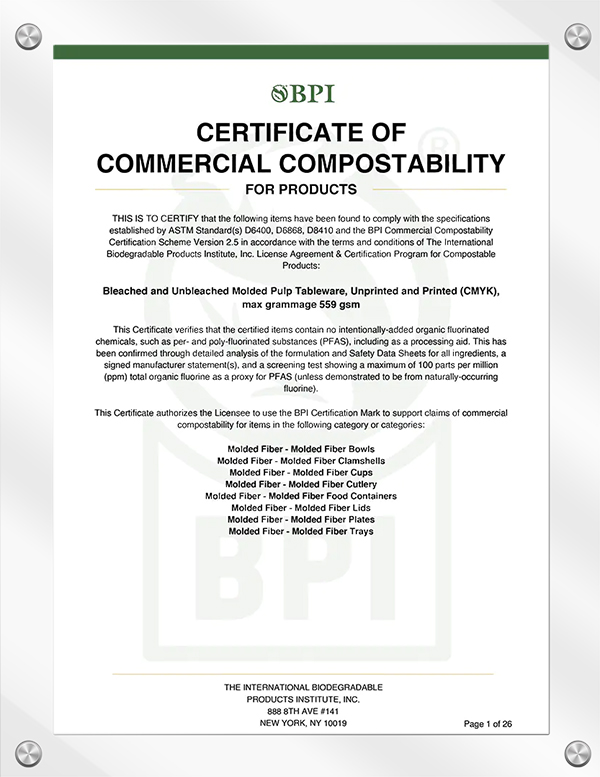
| BPI listing where required | Helps buyers verify compostability program claims. | US compostable packaging bids and distributor catalogs. |
| Sample test record | Shows how the selected clamshell performed with real menu items. | Burgers, grain meals, fried food and delivery programs. |
| Carton packing details | Confirms case quantity, warehouse fit and container loading. | Distributor and importer purchasing. |
Procurement Recommendation
For burgers, start with height and lid closure. For grain meals, start with depth, moisture and compartment needs. For fried food, start with steam management and texture. Then confirm compliance files, sample availability and carton packing before issuing the purchase order.
Buyers can verify Zhong Xin Ecoware's BPI company listing through the BPI official directory and request product-specific files through the Zhong Xin Ecoware contact page.
FAQ
What bagasse clamshell is best for burgers?
A 1-compartment clamshell with enough height and reliable lid closure is usually suitable for burgers. The 8 inch 1-compartment and 9 inch 1-compartment formats cover most burger programs. Buyers should test the actual burger, side portion, stacking and delivery bag conditions before bulk ordering.
Are bagasse clamshells suitable for grain meals or rice-style meals?
Yes, but buyers should check depth, moisture resistance, sauce behaviour and compartment needs. Warm grain meals with dressing or sauce should be tested with real food during the expected hold time. A 9 inch 3-compartment clamshell is a common starting point when rice, protein and vegetables must stay separate.
Should fried food use a vented bagasse clamshell?
Vented clamshells can help reduce trapped steam and protect fried texture. Buyers should compare vented and non-vented samples using the same food, hold time and delivery method.
What are the standard clamshell sizes and carton quantities?
Common formats are 5 inch and 6 inch burger boxes, 8 inch and 9 inch clamshells, 9 x 6 inch clamshells and 450 ml to 600 ml meal clamshells, in 1, 2 and 3 compartment layouts. Carton quantities range from 200 to 500 pieces depending on the model. Exact figures are listed in the packing-data table above and confirmed per order.
Can Zhong Xin Ecoware support OEM or ODM clamshell selection for QSR or deli programs?
Yes, OEM or ODM discussions can start from menu photos, target size, compartment needs, annual volume, destination market and required documents such as PFAS-free, FDA, LFGB, BPI or SGS files.
Get a Quote for Your Next Order
Zhong Xin Ecoware Technology (Thailand) Co., Ltd. supplies molded fiber bagasse tableware for wholesale, distribution and private-label programs. Send your product list and target market to info@fiber-product.com for a quotation with certification documentation.
Related Buyer Guides
- Bagasse clamshell container sizes: 6, 8 and 9 inch sourcing guide
- 6 inch sugarcane bagasse burger box supplier guide
- Bagasse takeaway packaging for food delivery
- Bagasse vs PLA vs molded fiber: what distributors should stock in 2026
- Browse our clamshell containers
About Zhong Xin Ecoware
Zhong Xin Ecoware Technology (Thailand) Co., Ltd. supplies bagasse and molded fiber food packaging to importers, distributors and foodservice brands. For MOQ, pricing and sample requests, contact info@fiber-product.com. Related reading: clamshell container sizes, burger box supplier guide, takeaway packaging for delivery and biodegradable food packaging.
Last updated: 28 September 2026.



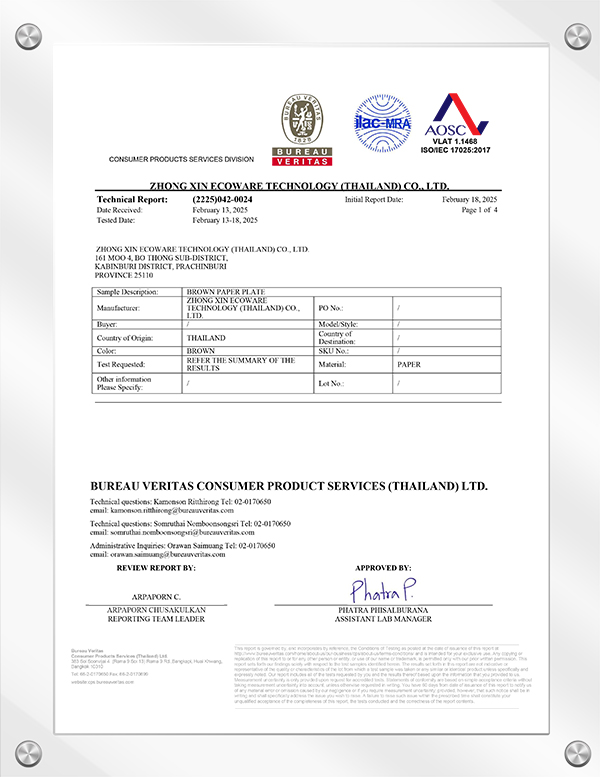
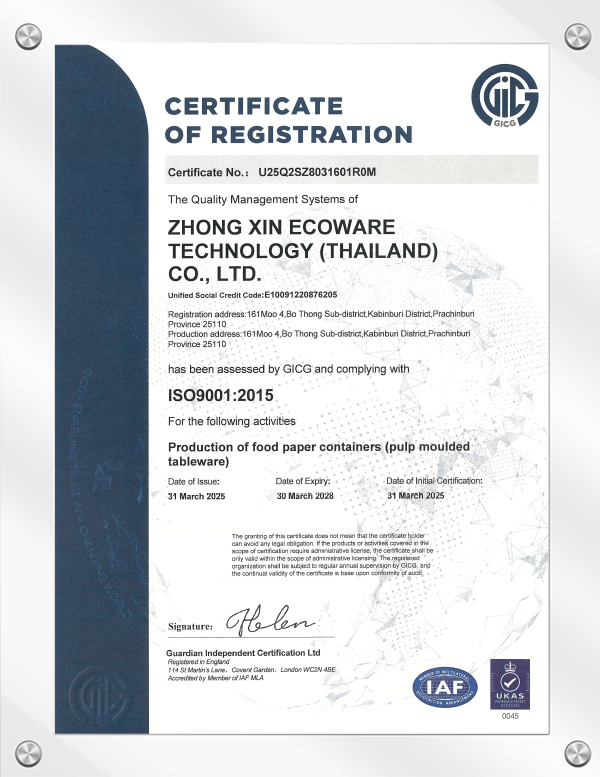
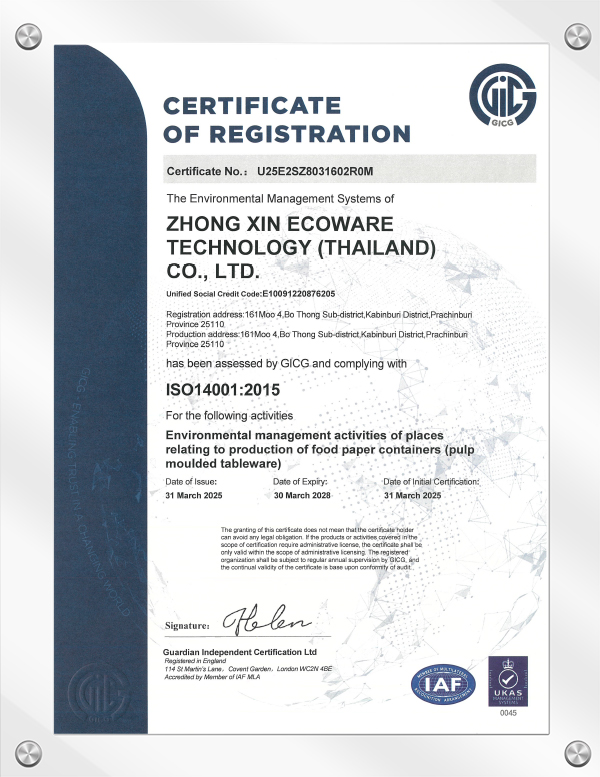
Zhong Xin Ecoware(Thailand) was registered on November 1, 2023, and officially began construction of the factory building in June 2024. At present, the first phase workshop of the factory has been fully completed and put into use. The second phase of the factory is being constructed intensively.
The landing and development of Zhong Xin in Thailand has brought a large amount of initial investment for land, factories, etc., and continuous operational investment for continuous equipment updates, technological upgrades, and capacity expansion.
Zhong Xin Ecoware(Thailand) has directly and indirectly created thousands of job opportunities, increased government revenue, promoted local economic development, cultivated local supply chains, provided systematic training for employees, improved the quality of local human capital, injected vitality into the local economy, enhanced industrial competitiveness, and ultimately improved residents' living standards.
Zhong Xin Ecoware(Thailand) actively collaborates with local pulp mills to explore new cooperation models for developing new products, improving production capacity and quality. At the same time, relying on Zhongxin's advanced production technology, process flow, management experience, and quality control system, it promotes the development of this industry in Thailand.

-
-
 +66-31240888
 -
 161 Village No. 4, Bo Thong Subdistrict Kabin Buri District Prachinburi Province 25110
-
New Bagasse Tableware Lineup for 2026: What Is New and Where to See It
Sep 28,2026
-
How to Select Bagasse Clamshells for Burgers, Rice Meals and Fried Food
Sep 28,2026
-
Microwave Reheating: Is a Bagasse Lunch Box Suitable
Sep 25,2026
-
9 Inch Pizza Plates and Bagasse Pizza Boards: A Sourcing Guide for US and Canadian Distributors
Sep 19,2026
-
PFAS-Free & Compostability Verification: A Buyer's Checklist for Bagasse and Molded Fiber Packaging
Sep 19,2026
-
Bagasse vs PLA vs Molded Fiber: What Distributors Should Stock in 2026
Sep 19,2026
-
Can Sugarcane Plates Handle Hot, Greasy Foods
Sep 18,2026
-
Bagasse Tableware RFQ Template: Get a Comparable Thailand Factory Quote
Sep 14,2026
-
Are Takeaway Food Containers Ready for Saucy Meals
Sep 11,2026
-
7-Inch vs 9-Inch Bagasse Plates: Carton and 20GP Guide
Sep 07,2026
-
Will Bagasse Pulp Trays Sag Under Heavy Meals
Sep 04,2026
-
Zhongxin Packaging at the 140th Canton Fair 2026: Booths and Buyer Meeting Guide
Sep 02,2026
Copyright © 2025 Zhong Xin Ecoware Technology ( Thailand ) CO., LTD.
All Rights Reserved.

Biodegradable Disposable Bagasse Tableware Manufacturer