-
 [email protected]
-
 +66-31240888



 English
 Español
 ไทย
ไทยThe Rise of Biodegradable Clamshell Food Containers
The Rise of Biodegradable Clamshell Food Containers
The global movement towards sustainable packaging has propelled biodegradable clamshell containers to the forefront of the food service industry. As consumers and businesses alike seek to reduce their environmental footprint, these containers offer a promising alternative to traditional petroleum-based plastics. Designed to hold everything from salads and burgers to hot meals, they represent a critical intersection of functionality, consumer experience, and ecological responsibility.
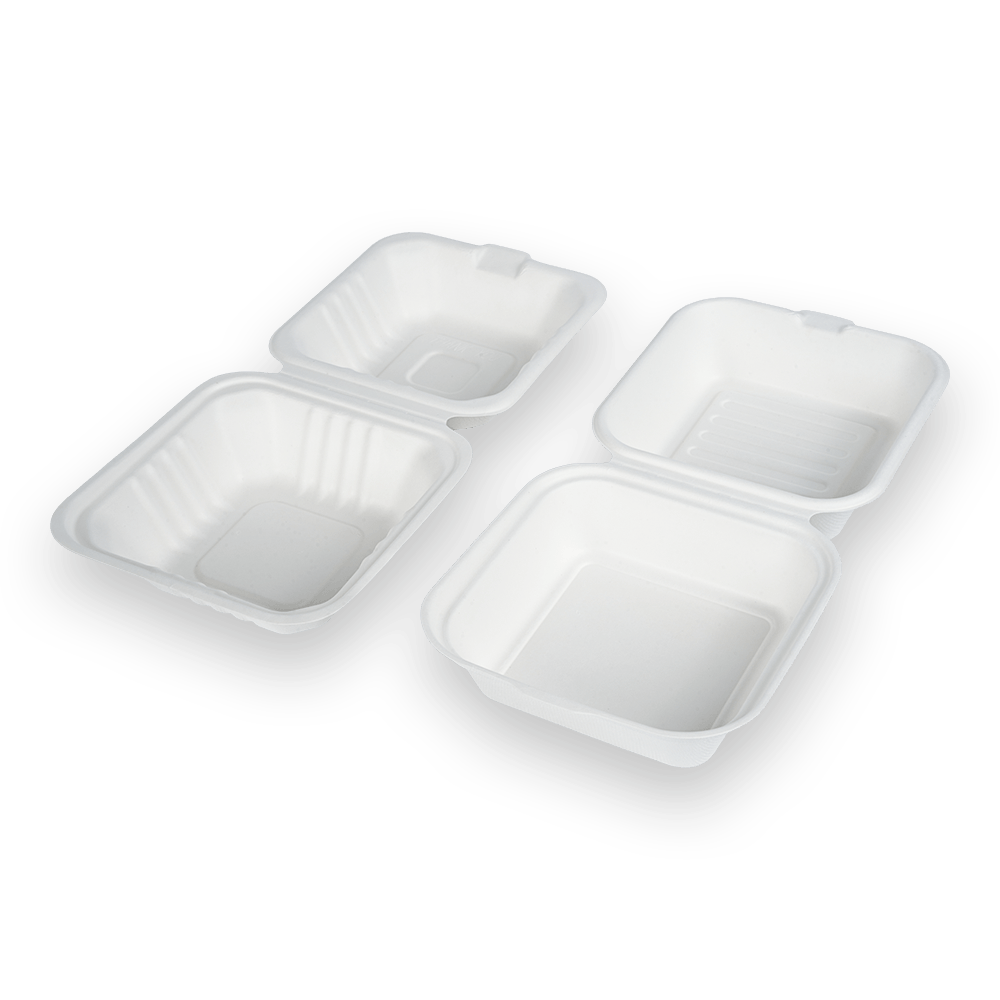
Characteristics of Biodegradable Clamshell Containers
The defining traits of these containers are rooted in their materials and environmental promise. Unlike conventional plastics, they are engineered to break down under specific conditions after use.
Material Composition: They are primarily made from renewable, plant-based fibers such as bagasse (sugarcane pulp), wheat straw, bamboo, or molded pulp from recycled paper. Some are also made from bio-polymers like PLA (polylactic acid) derived from corn starch.
Functional Integrity: A successful container must exhibit oil and moisture resistance for a practical period (often through a natural lining or coating), possess sufficient rigidity to prevent sagging, and have a secure latching mechanism to prevent spills during transport.
End-of-Life Profile: The core characteristic is their ability to undergo biodegradation or composting. In an industrial composting facility with controlled heat, moisture, and microbial activity, they break down into water, carbon dioxide, and organic matter (humus) within a specified timeframe, typically 90-180 days.
Sensory Attributes: They often have a natural, matte finish and a subtle, earthy scent. Their appearance visibly signals an eco-friendly choice to the consumer, which is a significant part of their market appeal.
Design Considerations for Biodegradable Clamshells
Creating an effective biodegradable container requires balancing environmental goals with practical performance. Manufacturers must address several critical factors:
Material Sourcing and Sustainability: The primary consideration is the origin of the raw material. It should be from rapidly renewable resources or agricultural by-products (like bagasse, a waste product from sugar refining) to ensure a low environmental impact from the very beginning of the lifecycle.
Food Safety and Barrier Properties: The container must be food-safe and non-toxic. Designers must incorporate effective, often plant-based, barriers to prevent grease from soaking through and to maintain container integrity with wet or oily foods, without compromising compostability.
Thermal Performance: For hot food applications, the material must withstand temperatures up to approximately 220°F (105°C) without warping, softening, or leaching. Conversely, for cold foods, it must not become brittle or absorb moisture from condensation too quickly.
Manufacturing and Cost Efficiency: The production process must be scalable and economically viable. This involves designing for efficient molding, minimizing material use through structural engineering, and managing costs to remain competitive with conventional plastic alternatives.
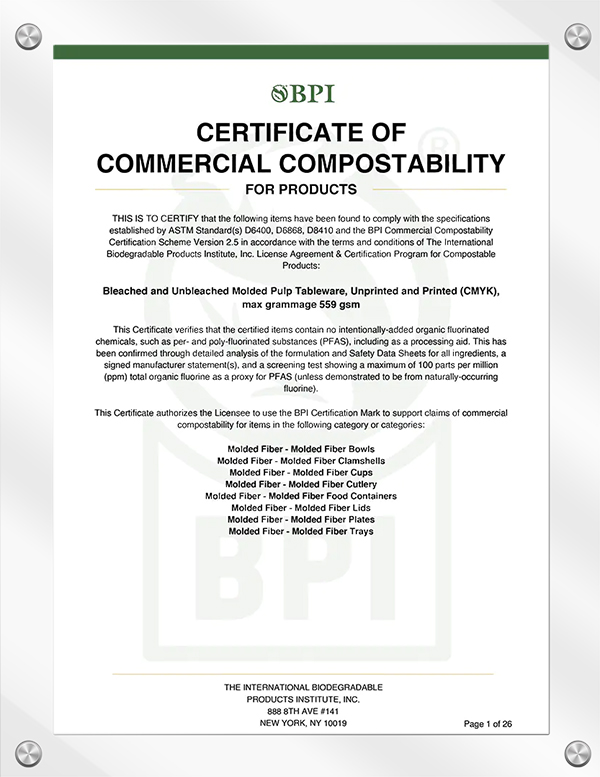
Clear End-of-Life Labeling: The design must include clear and accurate consumer labeling (e.g., "Certified Compostable in Industrial Facilities"). This is crucial to prevent contamination of recycling streams and to guide proper disposal, ensuring the container fulfills its environmental promise.
Applications and Practical Realities
While the ideal is clear, the real-world application of biodegradable clamshells involves navigating a complex system of infrastructure and consumer behavior.
→ Primary Use: They are widely adopted by restaurants, cafés, and food delivery services aiming to demonstrate environmental stewardship. They are suitable for a vast range of cold and hot prepared foods.
→ Infrastructure Dependency: Their environmental benefit is wholly dependent on proper disposal. If sent to a landfill without oxygen, they may decompose anaerobically and produce methane, a potent greenhouse gas. They are not typically recyclable and can contaminate plastic recycling if misplaced.
→ Performance Evolution: Early versions had issues with sogginess and leakage. Current designs have improved significantly with better molding and bio-based liners, though they may not yet match the absolute liquid-holding endurance of some plastics for extremely long periods.
→ Lifecycle Impact: A full assessment considers the entire lifecycle: agricultural practices for feedstocks, water and energy use in manufacturing, transportation emissions, and the availability of composting facilities. In areas with robust composting, their net environmental impact is generally favorable.
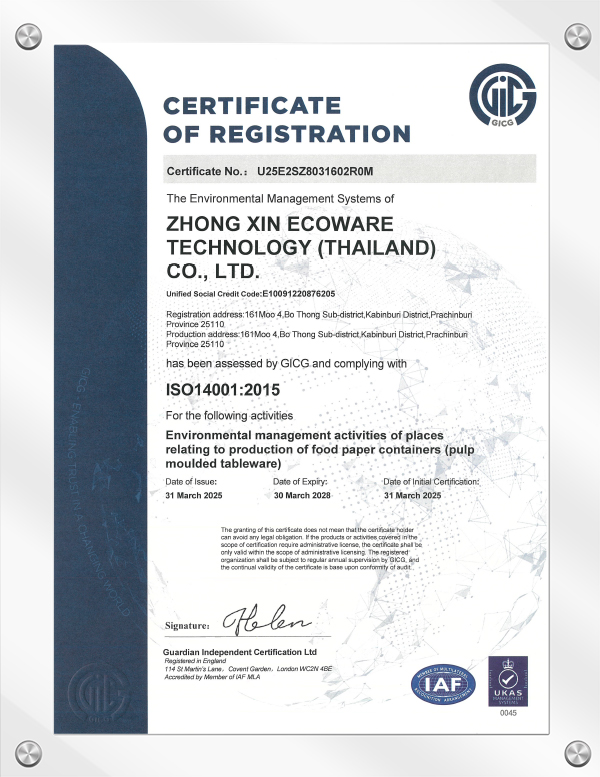
Zhong Xin Ecoware Technology (Thailand) Co., Ltd. supplies bagasse and molded fiber food packaging to importers, distributors and foodservice brands. For MOQ, pricing, samples and lead time, email info@fiber-product.com or use the contact form.
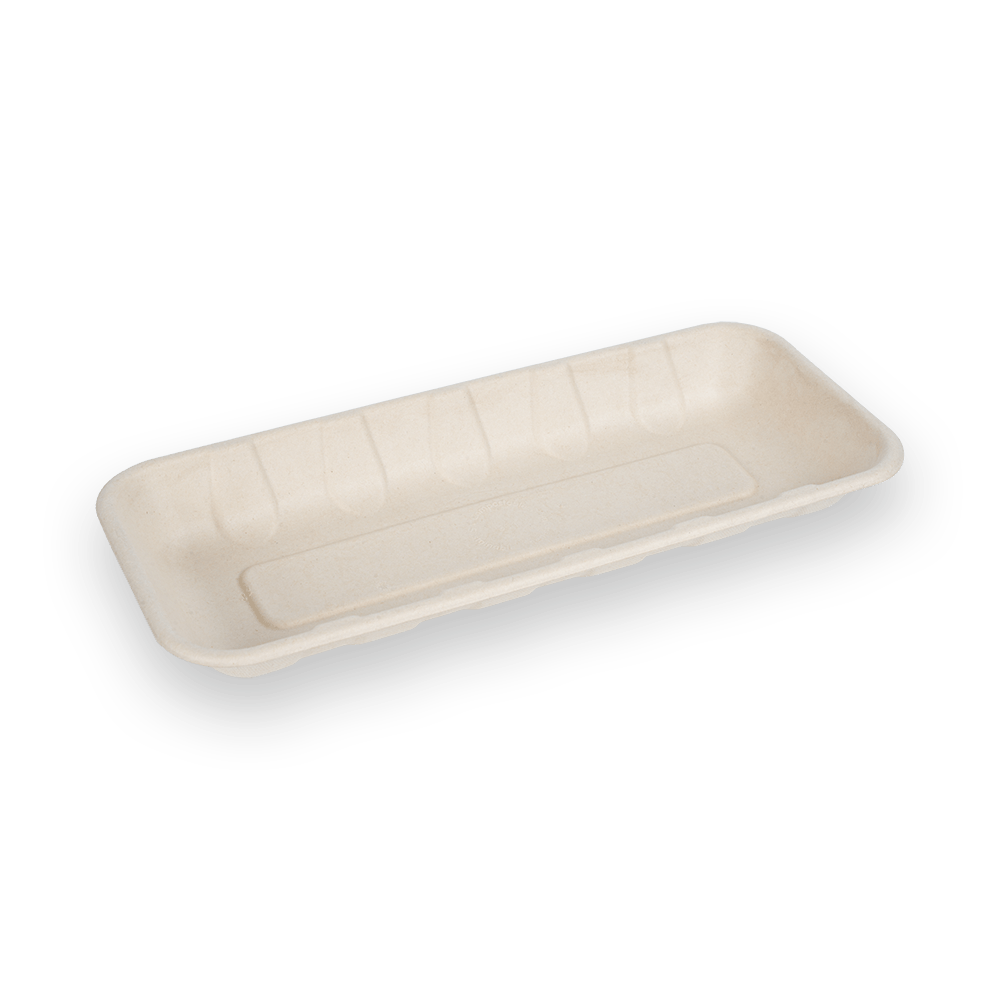


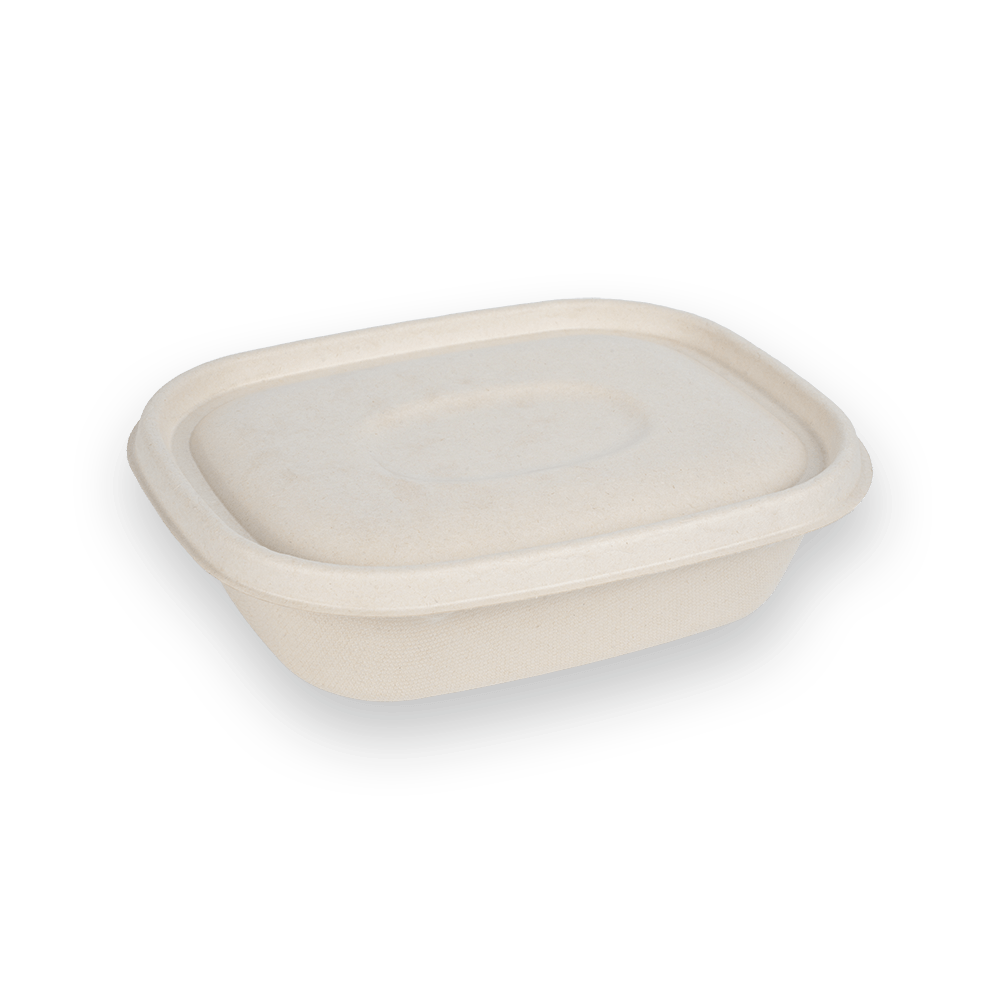
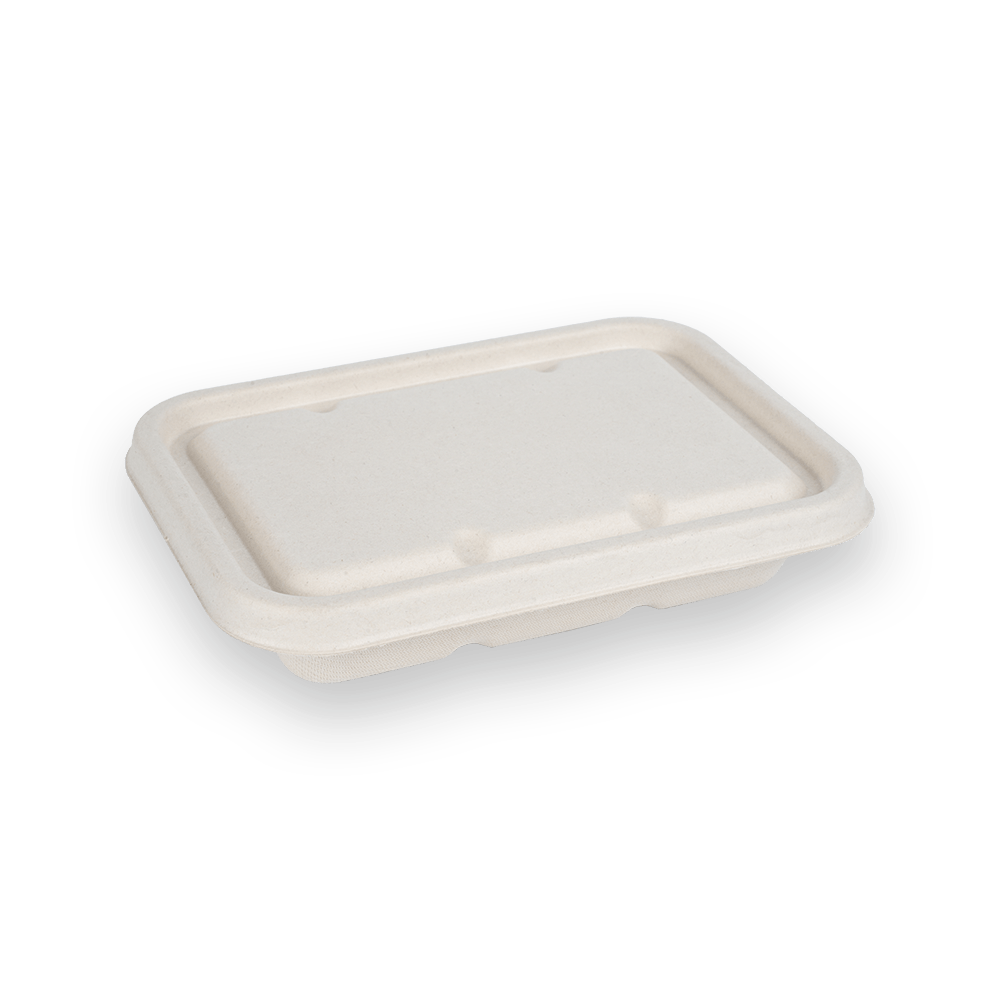

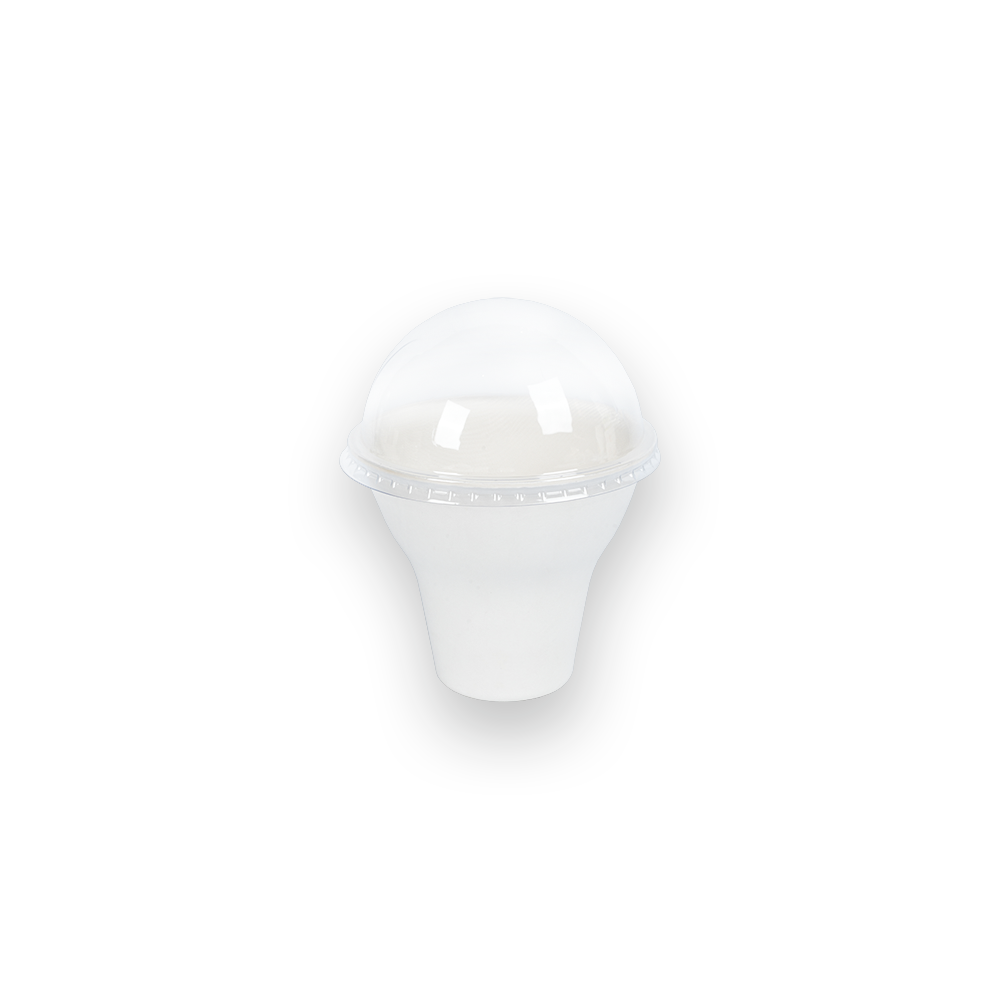
Zhong Xin Ecoware(Thailand) was registered on November 1, 2023, and officially began construction of the factory building in June 2024. At present, the first phase workshop of the factory has been fully completed and put into use. The second phase of the factory is being constructed intensively.
The landing and development of Zhong Xin in Thailand has brought a large amount of initial investment for land, factories, etc., and continuous operational investment for continuous equipment updates, technological upgrades, and capacity expansion.
Zhong Xin Ecoware(Thailand) has directly and indirectly created thousands of job opportunities, increased government revenue, promoted local economic development, cultivated local supply chains, provided systematic training for employees, improved the quality of local human capital, injected vitality into the local economy, enhanced industrial competitiveness, and ultimately improved residents' living standards.
Zhong Xin Ecoware(Thailand) actively collaborates with local pulp mills to explore new cooperation models for developing new products, improving production capacity and quality. At the same time, relying on Zhongxin's advanced production technology, process flow, management experience, and quality control system, it promotes the development of this industry in Thailand.

-
-
 +66-31240888
 -
 161 Village No. 4, Bo Thong Subdistrict Kabin Buri District Prachinburi Province 25110
-
Compostable Cutlery Sets for Private Label: 7 Sourcing Checks for Retail and Foodservice Buyers
Oct 06,2026
-
US vs EU Bagasse Tableware Imports: 8 Documentation and Compliance Checks Buyers Should Run
Oct 06,2026
-
How to Prepare a Bagasse Tableware Import: 10 Readiness Checks for US and EU Buyers
Oct 06,2026
-
Beyond Plates: Which Foods Suit Bagasse Tableware
Oct 02,2026
-
New Bagasse Tableware Lineup for 2026: What Is New and Where to See It
Sep 28,2026
-
How to Select Bagasse Clamshells for Burgers, Rice Meals and Fried Food
Sep 28,2026
-
Microwave Reheating: Is a Bagasse Lunch Box Suitable
Sep 25,2026
-
9 Inch Pizza Plates and Bagasse Pizza Boards: A Sourcing Guide for US and Canadian Distributors
Sep 19,2026
-
PFAS-Free & Compostability Verification: A Buyer's Checklist for Bagasse and Molded Fiber Packaging
Sep 19,2026
-
Bagasse vs PLA vs Molded Fiber: What Distributors Should Stock in 2026
Sep 19,2026
-
Can Sugarcane Plates Handle Hot, Greasy Foods
Sep 18,2026
-
Bagasse Tableware RFQ Template: Get a Comparable Thailand Factory Quote
Sep 14,2026
Copyright © 2025 Zhong Xin Ecoware Technology ( Thailand ) CO., LTD.
All Rights Reserved.

Biodegradable Disposable Bagasse Tableware Manufacturer