-
 [email protected]
-
 +66-31240888



 English
 Español
 ไทย
ไทยBiodegradable Trays: Dimensions, Applications, and Empirical Data
Picking the Right Biodegradable Food Tray
What Counts as a Biodegradable Food Tray?
Let's clear something up right away. A biodegradable food tray isn't just any paper or plastic-looking container that falls apart in the rain. It's a tray engineered to break down through natural processes—bacteria, fungi, moisture—into non-toxic components. Usually, within several months, assuming the conditions are right.
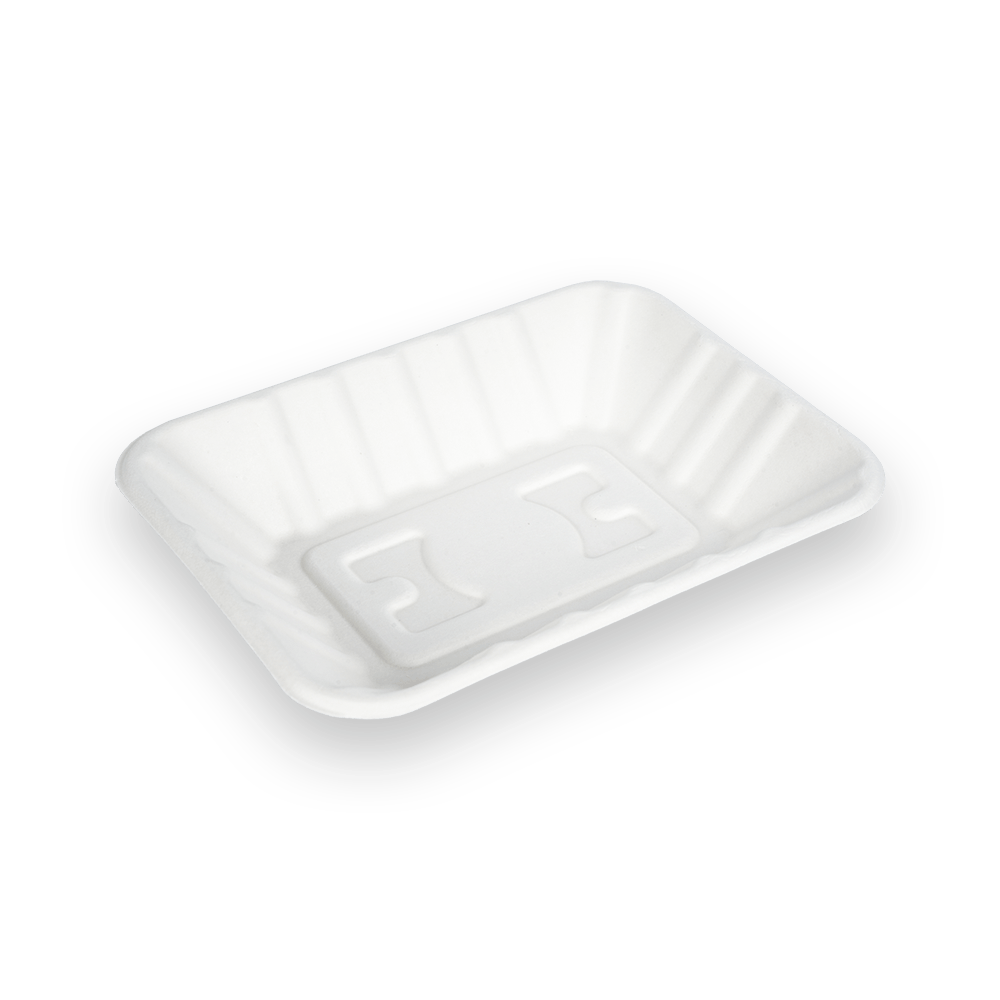
But here's where people get confused. Some trays are “compostable,” which means they break down faster and leave behind usable soil. Others are just “biodegradable,” which is a looser term. A tree branch is technically biodegradable. That doesn't mean you want to serve a burger on it.
So when you see a label that says biodegradable food tray, dig a little deeper. Ask: biodegradable where? A commercial compost facility? A home pile? A landfill? The answer changes everything.
What Are the Different Types of Biodegradable Food Trays Available?
You walk into a wholesaler or browse an eco-packaging site. Suddenly, there are fifteen options. Let me save you some time. Most biodegradable food trays fall into four real-world categories.
First, bagasse trays. These come from sugarcane fiber left over after juice extraction. They're sturdy, handle hot foods well, and feel slightly textured—like a thick paper product. Great for takeout, cafeteria lines, and food trucks. They'll break down in industrial compost in about 60 to 90 days.
Second, palm leaf trays. Made from fallen areca palm leaves. No trees were cut down. Each tray looks slightly different because it's literally a pressed leaf. These are your go-to if you want a rustic, high-end look—weddings, farmer's market stalls, artisan delis. They're surprisingly strong and can handle oily or wet dishes without turning to mush.
Third, bamboo pulp trays. Bamboo grows incredibly fast, so it's renewable. These trays tend to be smoother and lighter colored than bagasse. The trade-off? Manufacturing bamboo pulp takes more water and energy. Still better than plastic, but not the lowest-impact option.
Fourth, wheat straw trays. These come from the leftover stalks of wheat plants after harvest. They work well for dry or semi-dry foods like sandwiches, pastries, or sushi. One big caution, though: some wheat straw products sneak in polypropylene as a binder. You'll need to check the fine print for “100% plastic-free.”
And then there's PLA-coated paper trays. PLA is a corn-based plastic. These trays look and feel like conventional coated paper. They're fine for cold items like salads. But they only break down in industrial compost facilities—not your backyard pile. And they warp if you put anything above 110°F on them.
So, which type is best? That depends entirely on what you're serving and how you plan to dispose of it. Hot soup? Bagasse. Fancy charcuterie? Palm leaf. Cold wraps? Wheat straw works. There's no single winner.
How to Choose the Right Specifications for Biodegradable Trays with Lids
Let's say you've decided to switch. You want biodegradable trays with lids—maybe for a meal prep business, a deli counter, or a catering company that delivers. Now you have to pick the right specs. Here's what actually matters when you're standing in front of a product catalog.
Start with size and depth. Most trays are measured in ounces or by compartment count. For a single adult meal with a main dish and one side, look at 24 to 32 ounces. For family-style or large portions, go up to 48 ounces. And depth matters more than you'd think. Shallow trays (under 1.5 inches) are fine for pasta or rice. But anything with gravy, curry, or chili needs at least 1.75 inches to avoid spillage during delivery.
Lid fit is non-negotiable. A loose lid ruins everything—leaks in the delivery bag, cold food, angry customers. Look for trays with snap-on lids that audibly click. Some lids are also biodegradable; some are not. If the lid is PLA and the tray is bagasse, that's fine. Just make sure both can go to the same disposal stream. Mixing non-compostable lids with compostable trays defeats the purpose.
Temperature tolerance. This catches people off guard. Bagasse and palm leaf trays can usually handle up to 200°F or a bit more. PLA-based trays and lids? They start softening around 110°F. So if you're packaging hot stir-fry straight off the wok, avoid PLA lids. They'll warp and pop open.
Oil and moisture resistance. Some biodegradable trays come with an added coating—usually water-based or made from plant waxes. That coating helps with greasy foods like fried chicken or saucy barbecue. Without it, the tray might soak through after fifteen minutes. Read the spec sheet for terms like “oil-resistant” or “leak-proof.” Not every biodegradable tray is built for wet meals.
Compartment layout. Two compartments? Three? A dedicated spot for sauce? This sounds minor until you're actually packing meals. For school lunch programs or corporate catering, three-compartment trays work well: one for the main, two for sides. For soup and salad combos, you'll want a tray with a separate compartment or a removable cup insert.
Stackability and storage. If you run a high-volume kitchen, you need trays that nest inside each other when empty. Lids should stack flat, too. Otherwise, you'll burn through storage space fast. Some suppliers offer trays with raised rims specifically designed for stable stacking.
Price vs. volume. The price difference between types can be surprising. Palm leaf trays are often the most expensive, sometimes two to three times the cost of bagasse. Wheat straw sits in the middle. If you're buying for a busy food truck doing hundreds of orders a day, bagasse is usually the sweet spot—good performance, reasonable price, widely available.
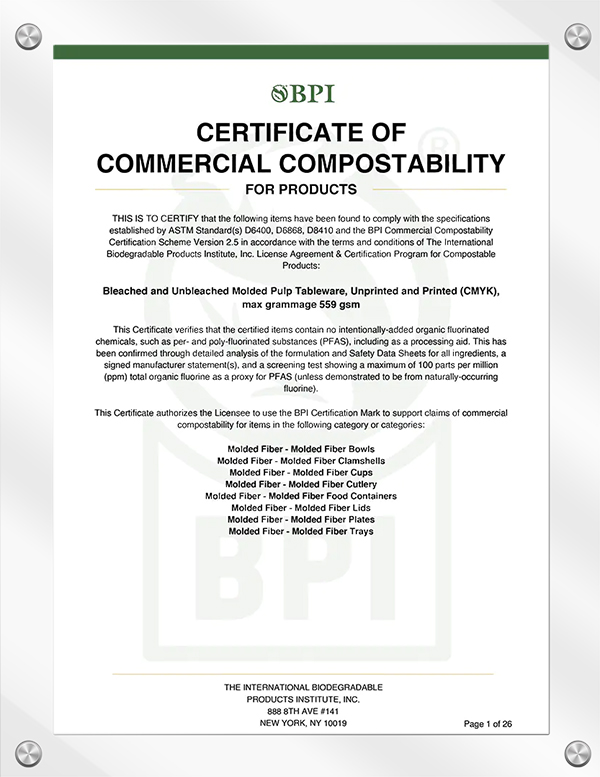
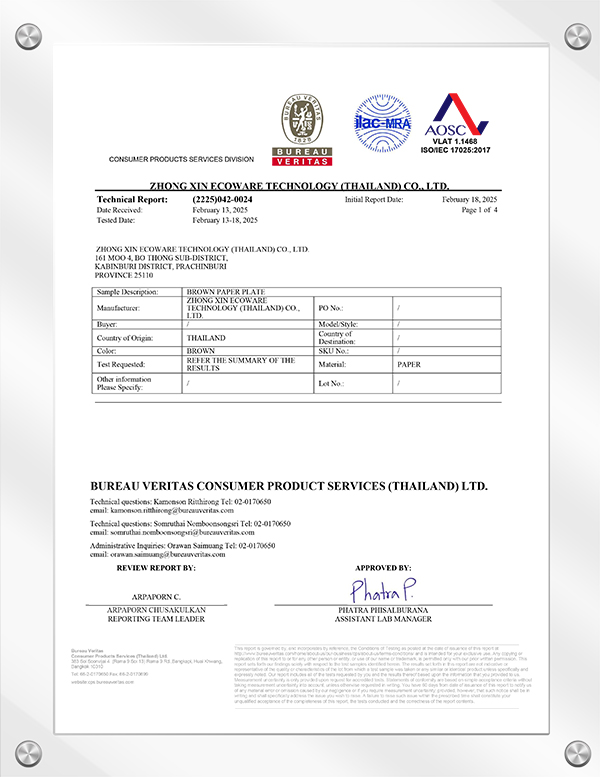
Certifications matter. Look for BPI Certified, OK Compost Industrial, or Home Compostable labels, depending on your disposal situation. A tray that claims “biodegradable” without any third-party certification is just marketing noise.
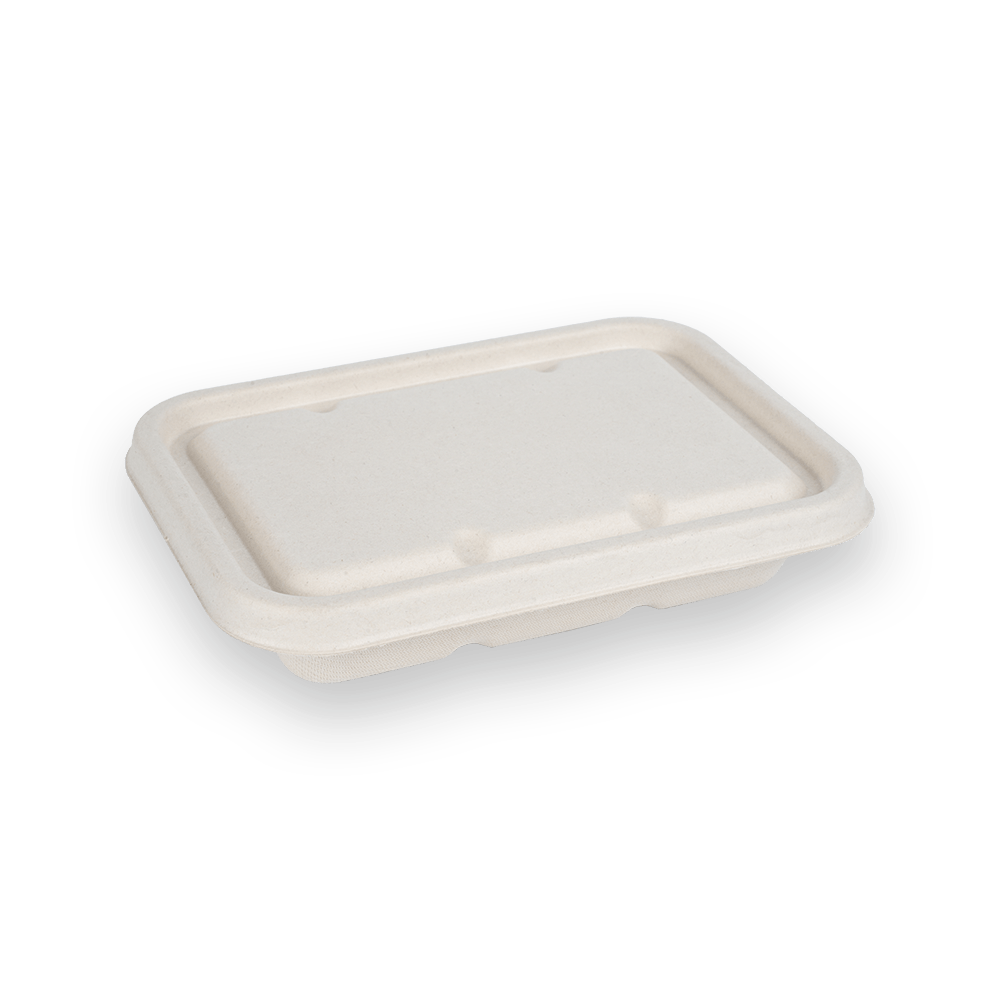
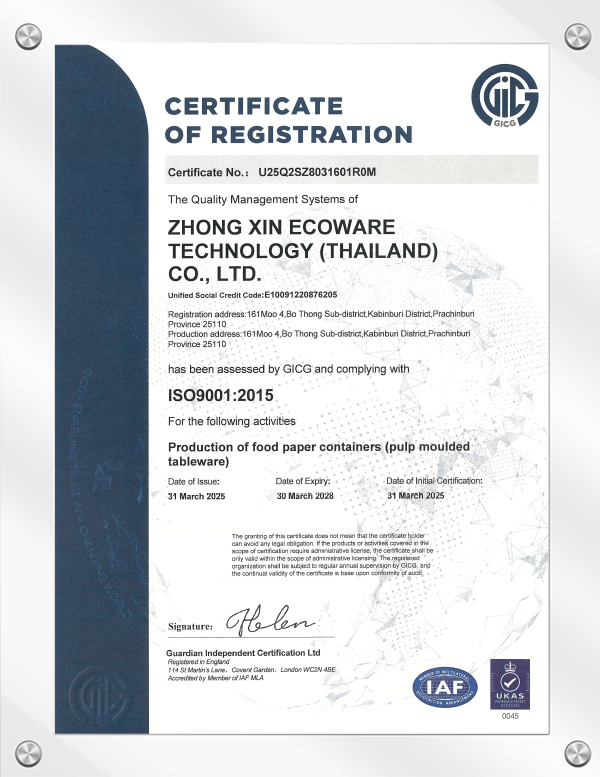
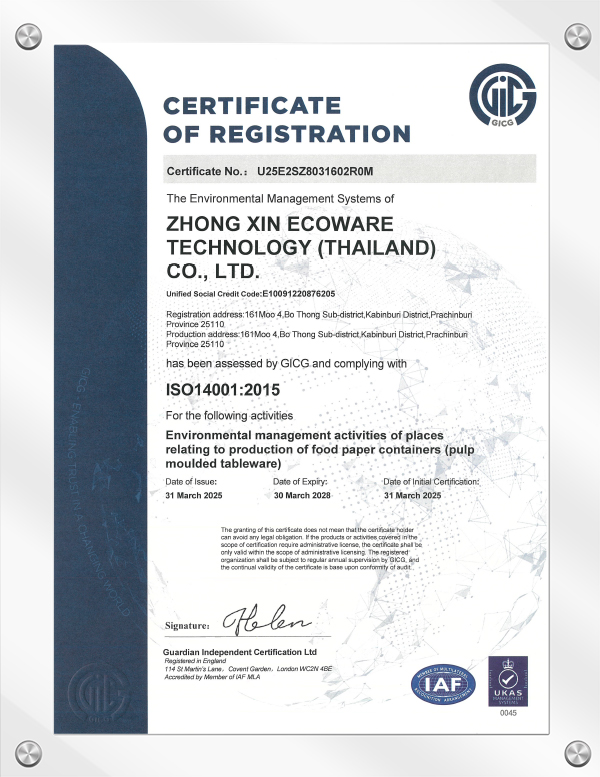
Zhong Xin Ecoware Technology (Thailand) Co., Ltd. supplies bagasse and molded fiber food packaging to importers, distributors and foodservice brands. For MOQ, pricing, samples and lead time, email info@fiber-product.com or use the contact form.
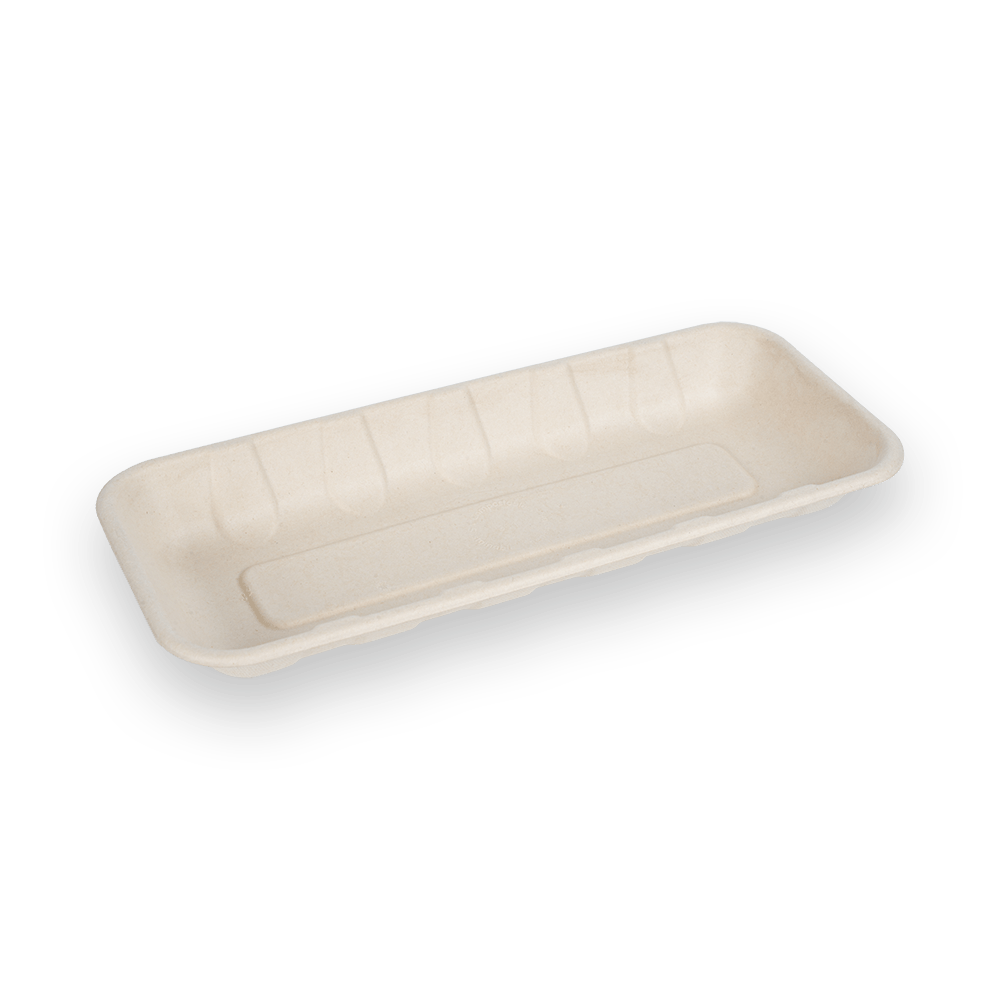
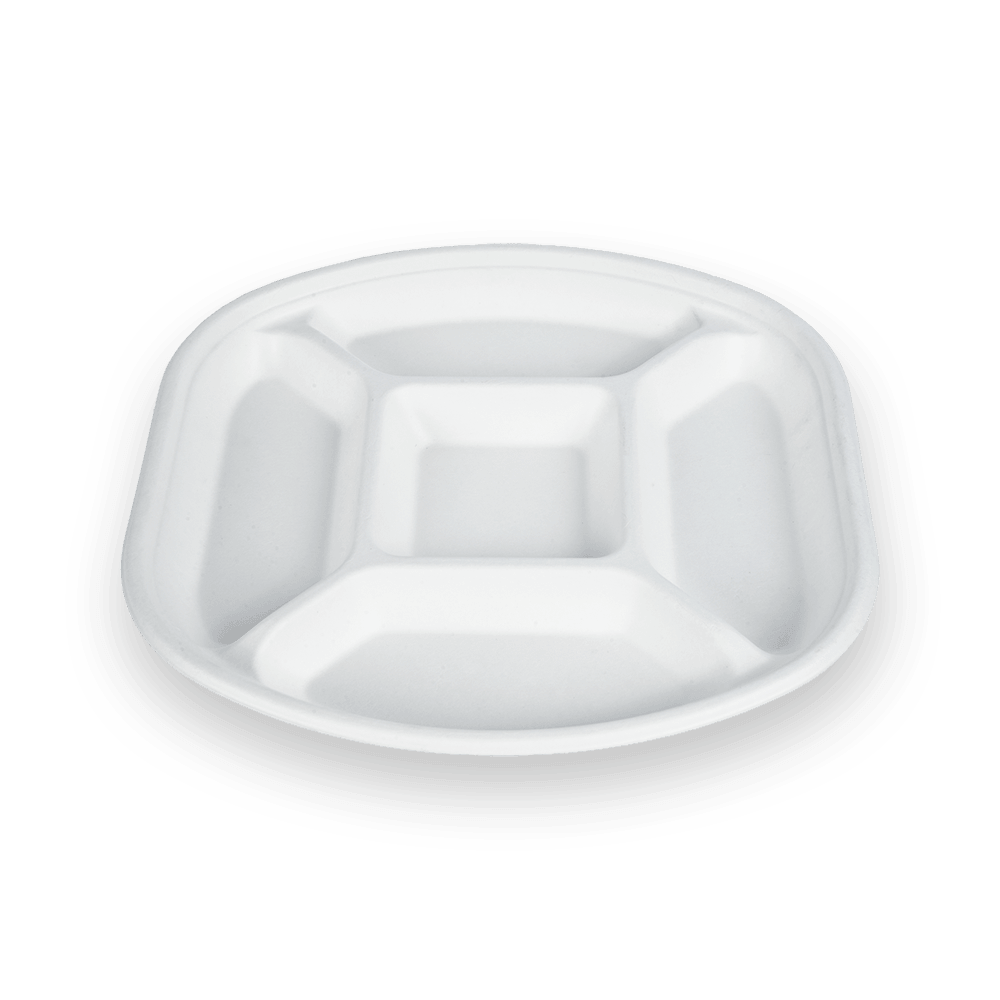

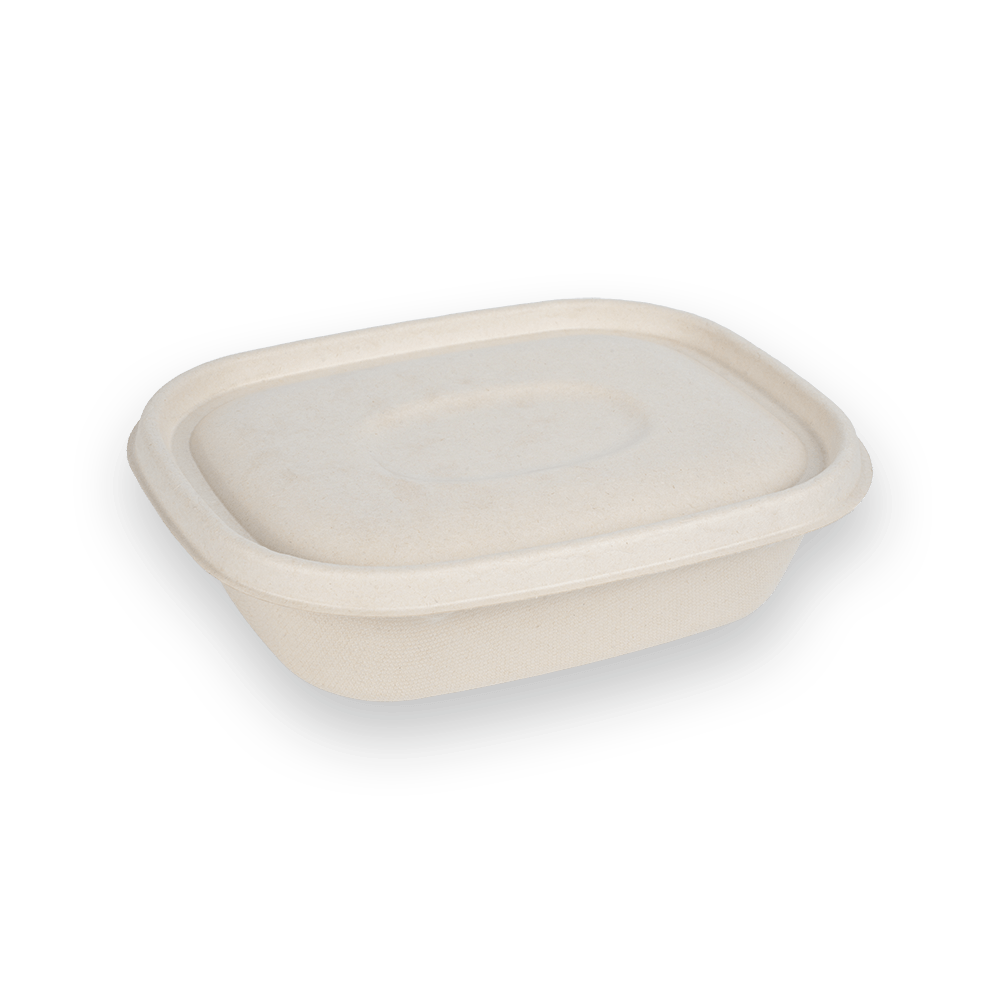

Zhong Xin Ecoware(Thailand) was registered on November 1, 2023, and officially began construction of the factory building in June 2024. At present, the first phase workshop of the factory has been fully completed and put into use. The second phase of the factory is being constructed intensively.
The landing and development of Zhong Xin in Thailand has brought a large amount of initial investment for land, factories, etc., and continuous operational investment for continuous equipment updates, technological upgrades, and capacity expansion.
Zhong Xin Ecoware(Thailand) has directly and indirectly created thousands of job opportunities, increased government revenue, promoted local economic development, cultivated local supply chains, provided systematic training for employees, improved the quality of local human capital, injected vitality into the local economy, enhanced industrial competitiveness, and ultimately improved residents' living standards.
Zhong Xin Ecoware(Thailand) actively collaborates with local pulp mills to explore new cooperation models for developing new products, improving production capacity and quality. At the same time, relying on Zhongxin's advanced production technology, process flow, management experience, and quality control system, it promotes the development of this industry in Thailand.

-
-
 +66-31240888
 -
 161 Village No. 4, Bo Thong Subdistrict Kabin Buri District Prachinburi Province 25110
-
How to Find Zhong Xin at the 140th Canton Fair: A Visitor Navigation Guide
Oct 16,2026
-
Thailand vs China Bagasse Tableware: 8 Comparisons Buyers Should Verify
Oct 16,2026
-
Will Takeout Containers Fit Your Existing Lids and Delivery Workflow
Oct 16,2026
-
What Is Bagasse Tableware? A 2026 Buyer Guide to Material, Performance and Documents
Oct 13,2026
-
Bagasse Tray Wholesale: How Bulk Buyers Cut Cost with Carton and Container Planning
Oct 09,2026
-
What Should a Bagasse Manufacturer Include in a Bulk Order Quote
Oct 09,2026
-
FOB, CIF or DDP? Incoterms for Bagasse Tableware Buyers Shipping from Thailand
Oct 06,2026
-
Packaging or Food Contact? Which EU Regime Applies to Bagasse Cups, Bowls, Plates and Cutlery
Oct 06,2026
-
Compostable Cutlery Sets for Private Label: 7 Sourcing Checks for Retail and Foodservice Buyers
Oct 06,2026
-
US vs EU Bagasse Tableware Imports: 8 Documentation and Compliance Checks Buyers Should Run
Oct 06,2026
-
How to Prepare a Bagasse Tableware Import: 10 Readiness Checks for US and EU Buyers
Oct 06,2026
-
Beyond Plates: Which Foods Suit Bagasse Tableware
Oct 02,2026
Copyright © 2025 Zhong Xin Ecoware Technology ( Thailand ) CO., LTD.
All Rights Reserved.

Biodegradable Disposable Bagasse Tableware Manufacturer