-
 [email protected]
-
 +66-31240888



 English
 Español
 ไทย
ไทยPlastic vs Pulp Takeout Containers: A Buyer’s Decision Guide
Last reviewed: August 28, 2026
Short answer: There is no universal winner between plastic and molded pulp for takeout packaging. Molded pulp, including sugarcane bagasse, is usually the stronger candidate when a buyer needs a fiber-based format, wants to reduce conventional plastic, and can support any compostability claim with product-specific certification and a suitable collection system. Food-grade polypropylene (PP) is often the more practical choice when clear presentation, a tight liquid seal, prolonged moisture resistance, or a validated plastic reheat system is the priority. The final decision must be made for the exact container, lid, coating, food type, temperature, contact time and destination market—not for the material name alone.
Plastic or pulp: which should a takeaway buyer choose?
Use molded pulp as the starting option for hot meals, rice dishes, fried food, burgers and compartment meals when a fiber appearance and plastic-reduction goal matter. Use PP as the starting option for soup-heavy menus, long holding times, transparent merchandising or operations that already have a tested PP container-and-lid system.
This is only a shortlist. A buyer should approve the full pack after a food test, transport test and document review. “Pulp” does not automatically mean compostable, and “plastic” does not identify one performance profile. This guide compares molded plant fiber with food-grade PP, a common plastic used in takeaway containers. PET, PS and other plastics have different properties and should be evaluated separately.
| Buying requirement | Molded pulp / bagasse | Food-grade PP | What the buyer should verify |
|---|---|---|---|
| Hot takeaway meals | Often a good fit when the exact SKU is rated for the food temperature and hold time | Can be a good fit when the resin, container and lid are rated for the same use | Maximum temperature, contact time and test method for the exact SKU |
| Oily or saucy food | Performance depends on fiber density, barrier treatment, food temperature and contact time | Usually provides a consistent moisture and grease barrier | Soak-through, staining, deformation and seal performance with the real menu |
| Soup and high-liquid delivery | Possible with a suitable structure, barrier and compatible lid, but must be transport-tested | Often easier to pair with a tight liquid-resistant lid | Filled-container tilt, vibration and delivery-time tests |
| Clear product display | The fiber base is opaque; a separate clear lid may be needed | Clear or translucent formats are commonly available | Whether the lid material has different heat and disposal instructions |
| Microwave reheating | Some SKUs are suitable; coating and lid can change the result | Many PP systems are designed for reheating, but not every PP pack is microwave-safe | Written temperature/time limits for both base and lid |
| Freezer or chilled storage | Condensation and fiber softening must be checked | Often a practical option, subject to grade and closure design | Freeze–thaw, cracking, condensation and stack tests |
| Compostability claim | Only make the claim when the exact finished item is certified and an appropriate composting route exists | Conventional PP is not compostable | Certificate holder, item/SKU, coating, lid, certification type and local facility access |
| Recycling claim | Food contamination and local acceptance determine the real route | Recyclability depends on local collection, sorting and food contamination | What the destination community actually accepts |
| Branding | Embossing and custom molded forms are possible, subject to tooling and order volume | Printing, labels and custom molds may be available | Artwork method, food-contact suitability, tooling ownership and MOQ |
Why the intended use matters more than the material label
A food-contact document is meaningful only when its scope matches the intended use. The U.S. Food and Drug Administration separates food types into categories such as aqueous, acidic, fatty, dairy and dry foods. It also separates use conditions such as hot filling, refrigerated storage, frozen storage, reheating in the container and cooking above 250°F. A document for dry food at room temperature does not by itself establish suitability for hot, oily curry delivered for 45 minutes.
Before comparing prices, define these six conditions:
- Food: dry, wet, acidic, fatty, oily or a combination.
- Fill temperature: the temperature when food enters the container.
- Hold time: how long the food remains hot and in contact with the pack.
- Use after sale: immediate consumption, refrigeration, freezing, microwave reheating or oven heating.
- Pack system: base, lid, coating, printing ink, adhesive and any liner.
- Destination market: the country and customer standard the shipment must satisfy.
The FDA also states that the overall regulatory status of a food-contact material depends on the individual substances that make up the article. A Food Contact Substance Notification is specific to the identified manufacturer, substance and conditions of use. Buyers should therefore request a compliance basis that can be traced to the actual material supply chain instead of accepting a generic “FDA approved” logo.
When molded pulp is the better fit
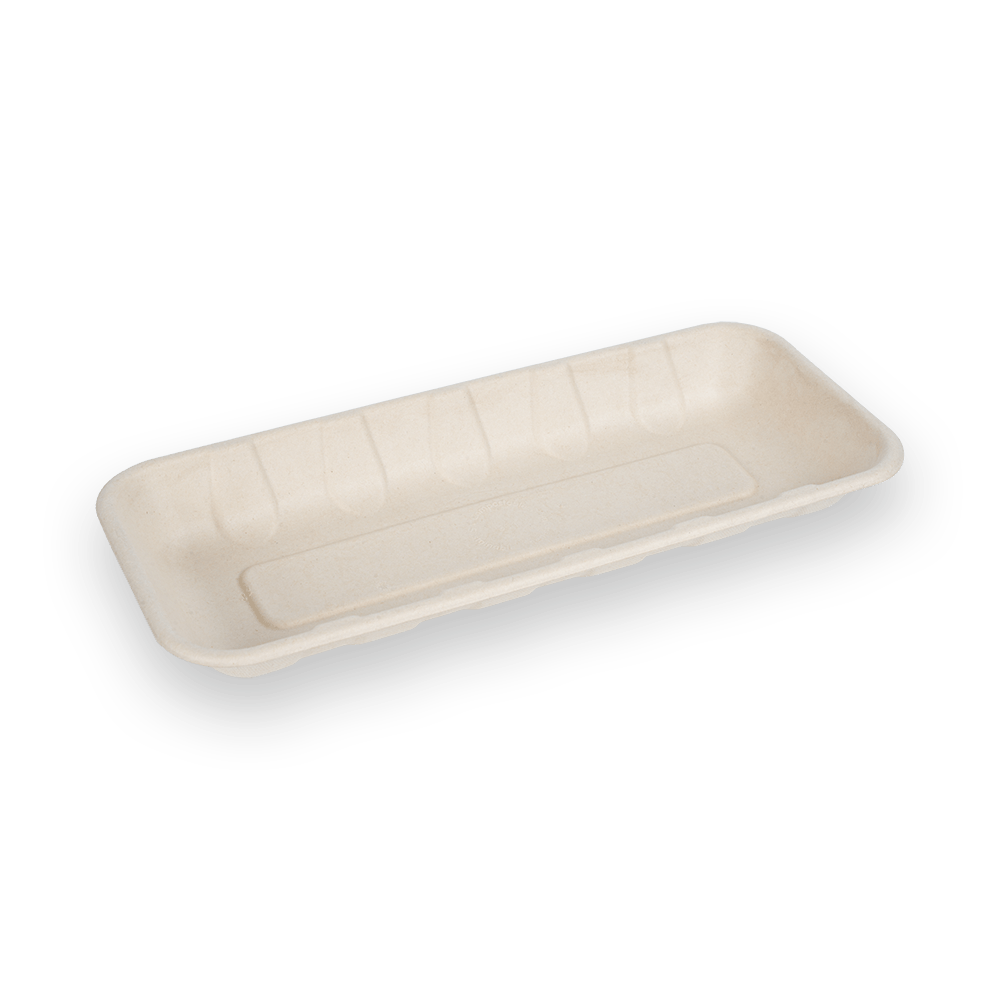
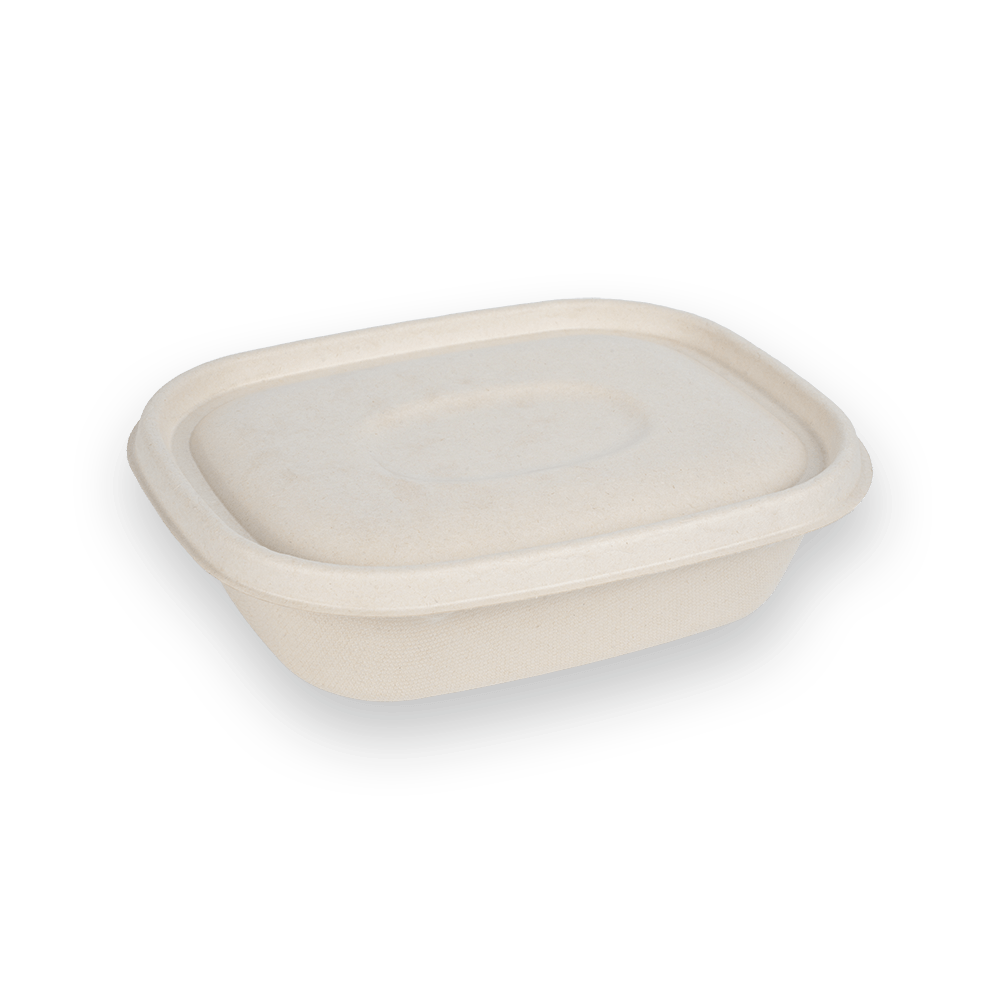
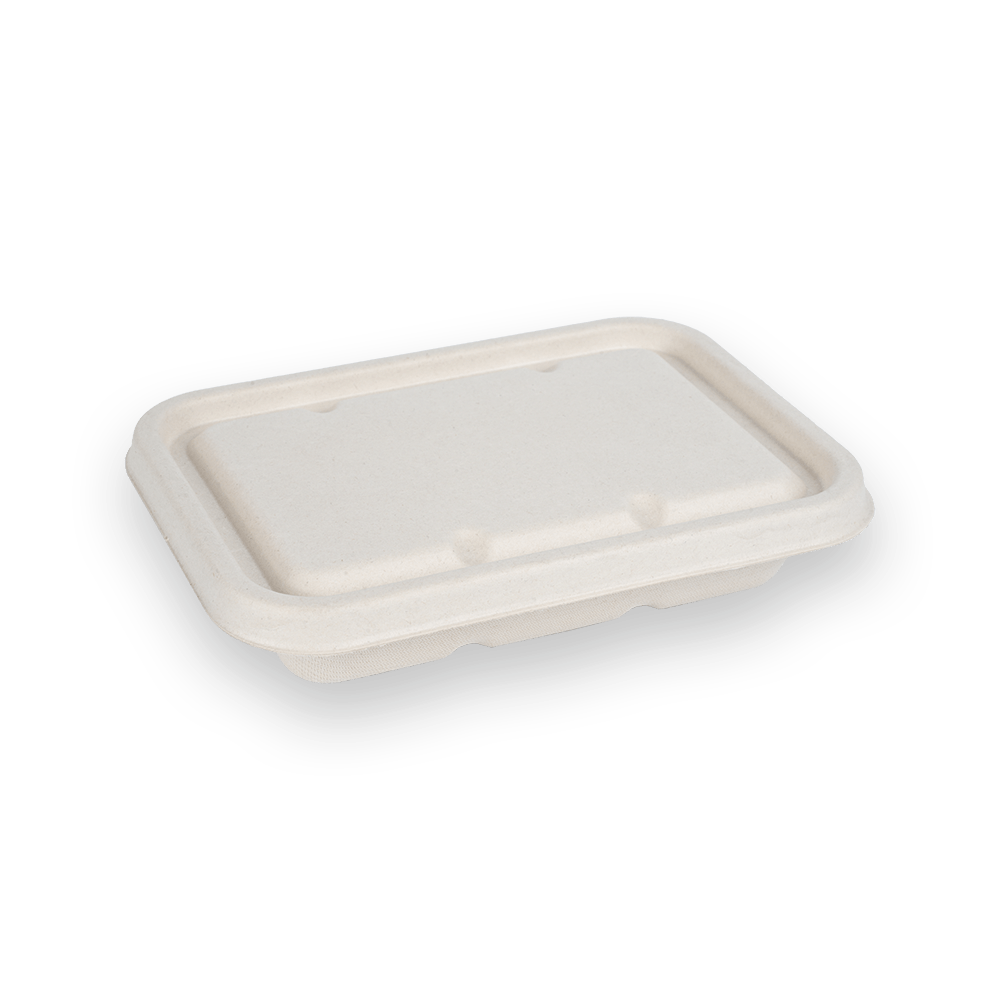
Molded pulp is the better starting point when the pack needs a rigid fiber structure, an opaque natural appearance and a credible path away from conventional plastic. Sugarcane bagasse is commonly molded into clamshells, trays, bowls, plates and separate-base containers for takeaway service.
It is especially relevant for:
- Rice, noodles, burgers, bakery items and compartment meals.
- Foodservice brands with a documented plastic-reduction policy.
- Programs that can collect food scraps and certified compostable foodservice items together.
- Buyers that want an embossed logo or a custom molded shape and can support the tooling and MOQ.
The limitation is not that fiber “cannot handle food”; it is that performance changes with the exact design. Long contact with hot liquid, high oil content, steam, an unsuitable lid or an unverified barrier can cause staining, softening or leakage. Request the specification and test result for the coated or uncoated SKU you will actually buy. Do not apply a test from one product to every container made from bagasse.
When PP plastic is the better fit
Food-grade PP is often the more practical choice when the operation needs a consistent moisture barrier, a snap-fit closure, clear or translucent presentation, or an established reheat workflow. It can be a better operational fit for soup, meal-prep, chilled distribution and longer delivery times when the exact pack has been validated.
PP still requires product-level verification. The base and lid may use different materials and have different temperature limits. Printing, colorants, recycled content and additives can also change the compliance file. In addition, a technically recyclable package may not be recycled after food use if local collection and sorting systems do not accept it. Avoid an unqualified “eco-friendly” or “recyclable everywhere” claim.
What compliance documents should an importer request?
Ask for a document pack tied to the quotation, item number and production configuration. A certificate bearing only a company name is not enough to establish that every item is covered.
| Document or evidence | What it should establish | Scope check before approval |
|---|---|---|
| Product specification sheet | Material, dimensions, weight, coating, lid, temperature and intended use | Exact SKU and revision date |
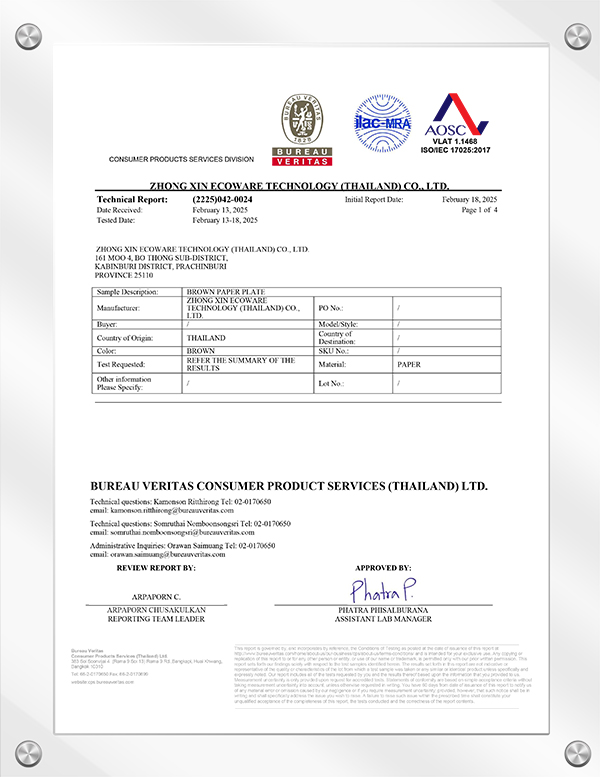
| Food-contact compliance declaration or test report | Compliance basis for the target market and use condition | Food type, temperature, duration, test simulants and every food-contact component |
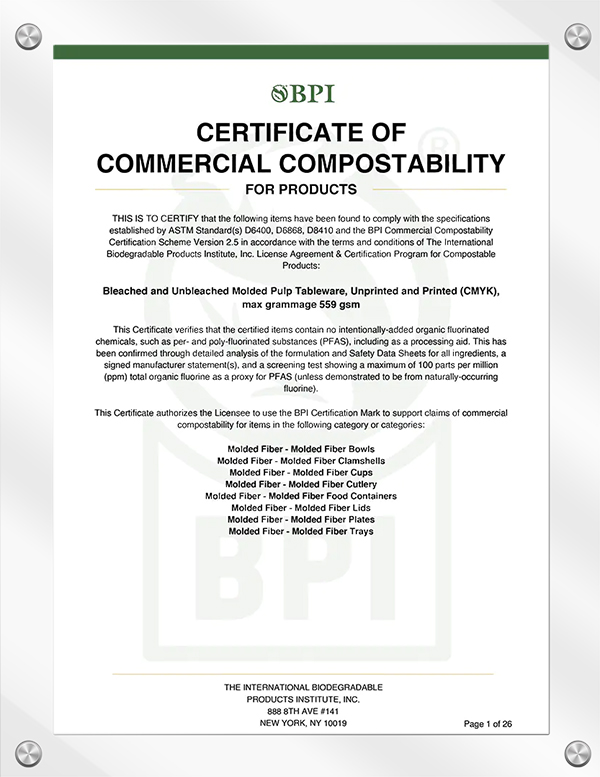
| Compostability certificate and public registry entry | Third-party certification of the finished item under the stated scheme | Certificate holder, item number, coating, lid and commercial vs home compostability |
| PFAS statement and supporting test information | Whether PFAS were intentionally added and what analytical scope was used | Exact formulation/SKU, method, detection limit and applicable legal threshold |
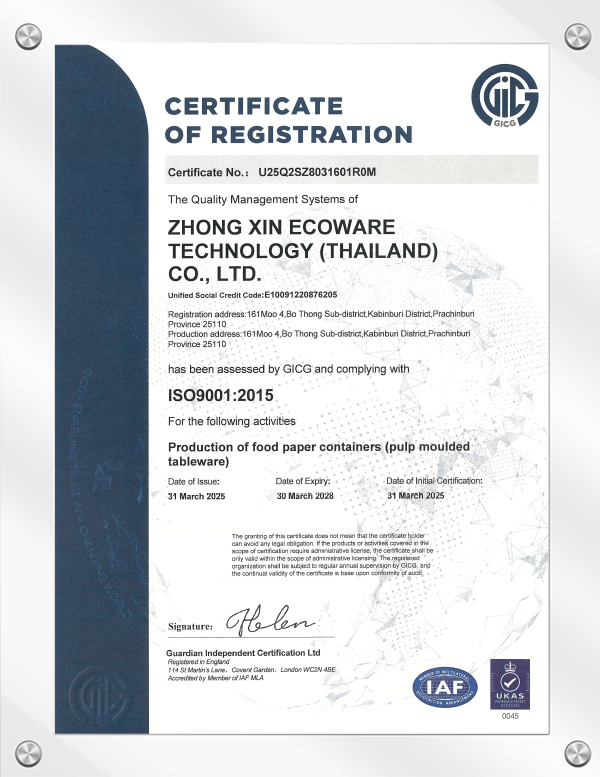
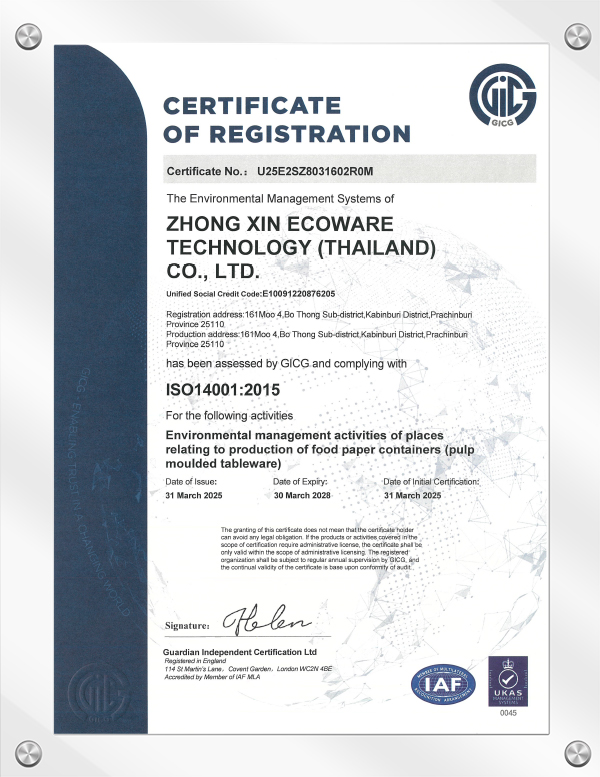
| Quality-control plan | Incoming material, forming, weight, dimensions, visual defects and functional checks | Agreed tolerances, sampling level and action on failed lots |
| Packing specification | Units per sleeve/carton, carton size, labels and pallet configuration | Matches freight and warehouse calculations |
| Sample approval record | Performance with the buyer’s real food and route | Signed sample or retained reference before mass production |
For North American compostability claims, BPI states that certified items can be checked in its public product database. BPI uses ASTM D6400 as the base assessment standard and may also assess eligible items under ASTM D6868 or D8410. Commercial and home compostability are not interchangeable. The U.S. Federal Trade Commission also says compostable claims need competent and reliable scientific evidence and should be qualified when the item is not home-compostable or when suitable facilities are not widely available.
What changed for PFAS and food packaging by August 2026?
PFAS evidence is now a separate procurement requirement, especially for grease-resistant fiber packaging. The FDA states that PFAS-containing substances are no longer sold in the U.S. market for use as grease-proofers on paper food packaging. In January 2025, the FDA determined that 35 related Food Contact Notifications were no longer effective because those uses had been abandoned.
In the European Union, Regulation (EU) 2025/40 on packaging and packaging waste entered into force on February 11, 2025 and applies from August 12, 2026. It includes PFAS concentration limits for food-contact packaging. An importer selling into the EU should check the exact legal thresholds, evidence method and any other applicable food-contact rules with a qualified compliance professional.
These developments do not mean that every fiber product is automatically PFAS-free. “No intentionally added PFAS,” total fluorine results and measured PFAS concentrations answer different questions. The supplier and buyer should agree on the required claim, test method, threshold and SKU scope before production.
How should a buyer test samples before a bulk order?
Use the buyer’s real menu and delivery route. A generic water test cannot represent hot oil, acidic sauce, steam and transport movement at the same time.
- Fill the container at the actual service temperature.
- Hold it for the longest expected delivery or display time.
- Test the complete base-and-lid system for tilt, vibration, stacking and reopening.
- Check staining, soak-through, deformation, odor, lid release and condensation.
- If reheating is required, follow the proposed consumer instruction and test the lid separately.
- Record the item number, sample lot, food, temperature, duration and result.
Approve the product only after the performance test and document scope both match the intended use.
What should be included in a plastic-or-pulp RFQ?
An RFQ should make the use case measurable. Include:
- Food type and representative menu items.
- Required capacity, dimensions and compartment layout.
- Fill temperature, holding time and delivery conditions.
- Refrigeration, freezing, microwave or oven requirements.
- Lid type, visibility and leak-resistance requirement.
- Coated or uncoated preference and PFAS requirement.
- Destination country and required food-contact or compostability documents.
- Annual forecast, first-order quantity and target delivery date.
- Printing, embossing, private-label, carton mark and pallet requirements.
If the use case points to molded fiber, review Zhong Xin Ecoware Technology (Thailand) Co., Ltd.’s bagasse takeaway box range and send the complete requirement through the contact page. MOQ, production schedule, price, sample policy, temperature range and certification coverage should be confirmed for the selected SKU in the quotation; this article does not assign one value to the entire product range.
For heat-use due diligence, also read Microwave and Oven Safe Compostable Containers: What Buyers Must Verify Before Ordering.
Frequently asked questions
Is molded pulp always better than plastic for takeaway food?
No. Molded pulp is often a good choice for fiber-based hot-meal packaging and plastic-reduction programs. PP can be more practical for clear display, prolonged liquid contact or a validated tight-seal system. Compare the exact base, lid and use condition rather than ranking materials in the abstract.
Is every bagasse container plastic-free?
No. The molded-fiber base may contain or be paired with coatings, liners, adhesives or lids made from another material. Ask for the material construction of the complete pack and verify any “plastic-free” claim against the exact SKU.
Can pulp and PP containers both go in a microwave?
Some can, but the material name alone is not a microwave instruction. Request the tested temperature and time for the exact container and lid. If the supplier cannot provide a matching specification or test record, treat microwave suitability as unverified.
Does compostable mean home-compostable?
No. Commercial and home composting use different conditions and certifications. Check the certificate and public registry entry for the exact finished item, then confirm that the intended users have access to the stated disposal route.
What does “FDA approved” mean on a food container quotation?
The phrase is often too vague to support a buying decision. Ask the supplier to identify the regulatory basis for every relevant food-contact component and show that the basis covers the intended food type, temperature and duration. FDA explains that an FCN is specific to the named manufacturer, substance and conditions of use.
What information should a buyer provide for a useful quotation?
Provide the container size, food type, temperature, holding time, lid requirement, target market, certification needs, order quantity, customization and delivery date. Without these inputs, price comparisons may involve products that are not functionally or legally equivalent.
Sources
- U.S. Food and Drug Administration, Food Types & Conditions of Use for Food Contact Substances.
- U.S. Food and Drug Administration, Determining the Regulatory Status of Components of a Food Contact Material.
- U.S. Food and Drug Administration, Authorized Uses of PFAS in Food Contact Applications.
- Federal Trade Commission, Environmental Claims: Summary of the Green Guides.
- Biodegradable Products Institute, Compostability Certification and Certified Product Database.
- EUR-Lex, Regulation (EU) 2025/40 on packaging and packaging waste and European Commission 2026 guidance.
What changed in this version?
- August 28, 2026: Rebuilt the article around the buyer’s actual use conditions instead of making a material-wide winner claim.
- Added a side-by-side procurement matrix, product-specific document scope checks and a sample test procedure.
- Added official FDA, FTC, BPI and EU sources.
- Added the August 2026 PPWR applicability update and separated PFAS claim types.
- Added six self-contained buyer FAQs and an RFQ checklist.



Zhong Xin Ecoware(Thailand) was registered on November 1, 2023, and officially began construction of the factory building in June 2024. At present, the first phase workshop of the factory has been fully completed and put into use. The second phase of the factory is being constructed intensively.
The landing and development of Zhong Xin in Thailand has brought a large amount of initial investment for land, factories, etc., and continuous operational investment for continuous equipment updates, technological upgrades, and capacity expansion.
Zhong Xin Ecoware(Thailand) has directly and indirectly created thousands of job opportunities, increased government revenue, promoted local economic development, cultivated local supply chains, provided systematic training for employees, improved the quality of local human capital, injected vitality into the local economy, enhanced industrial competitiveness, and ultimately improved residents' living standards.
Zhong Xin Ecoware(Thailand) actively collaborates with local pulp mills to explore new cooperation models for developing new products, improving production capacity and quality. At the same time, relying on Zhongxin's advanced production technology, process flow, management experience, and quality control system, it promotes the development of this industry in Thailand.

-
-
 +66-31240888
 -
 161 Village No. 4, Bo Thong Subdistrict Kabin Buri District Prachinburi Province 25110
-
Bagasse Tray Wholesale: How Bulk Buyers Cut Cost with Carton and Container Planning
Oct 09,2026
-
What Should a Bagasse Manufacturer Include in a Bulk Order Quote
Oct 09,2026
-
FOB, CIF or DDP? Incoterms for Bagasse Tableware Buyers Shipping from Thailand
Oct 06,2026
-
Packaging or Food Contact? Which EU Regime Applies to Bagasse Cups, Bowls, Plates and Cutlery
Oct 06,2026
-
Compostable Cutlery Sets for Private Label: 7 Sourcing Checks for Retail and Foodservice Buyers
Oct 06,2026
-
US vs EU Bagasse Tableware Imports: 8 Documentation and Compliance Checks Buyers Should Run
Oct 06,2026
-
How to Prepare a Bagasse Tableware Import: 10 Readiness Checks for US and EU Buyers
Oct 06,2026
-
Beyond Plates: Which Foods Suit Bagasse Tableware
Oct 02,2026
-
New Bagasse Tableware Lineup for 2026: What Is New and Where to See It
Sep 28,2026
-
How to Select Bagasse Clamshells for Burgers, Rice Meals and Fried Food
Sep 28,2026
-
Microwave Reheating: Is a Bagasse Lunch Box Suitable
Sep 25,2026
-
9 Inch Pizza Plates and Bagasse Pizza Boards: A Sourcing Guide for US and Canadian Distributors
Sep 19,2026
Copyright © 2025 Zhong Xin Ecoware Technology ( Thailand ) CO., LTD.
All Rights Reserved.

Biodegradable Disposable Bagasse Tableware Manufacturer