-
 [email protected]
-
 +66-31240888



 English
 Español
 ไทย
ไทยChina vs Thailand Bagasse Tableware Sourcing: Lead Time, Tariffs, Capacity and Supply Risk
China vs Thailand Bagasse Tableware Sourcing | Supplier Lead Time & Tariffs
Why Source from Zhong Xin Ecoware?
Zhong Xin Ecoware supplies international packaging groups and serves end-use applications for leading foodservice, retail, and supermarket brands.
- China and Thailand production bases
- Nearly 200,000 tons of combined planned and operating capacity
- Thailand base fully operational with 75,000 tons of capacity
- Products exported to 80+ countries and regions
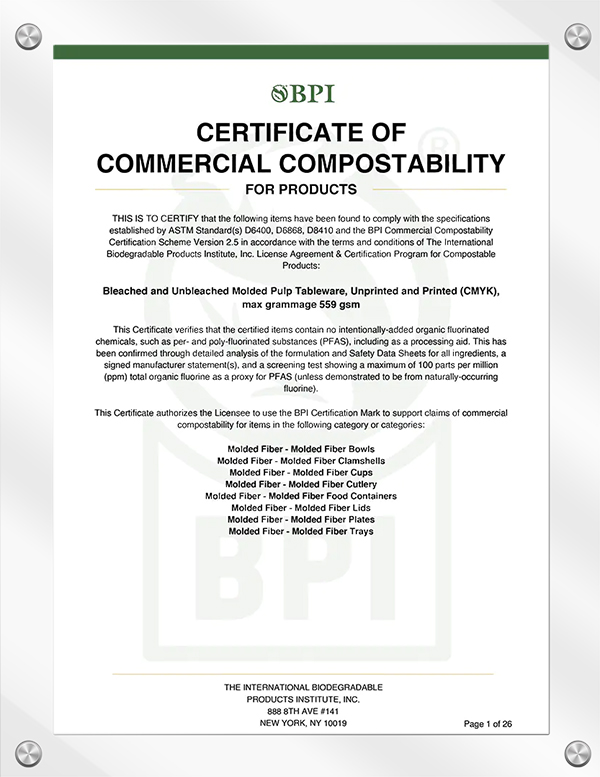
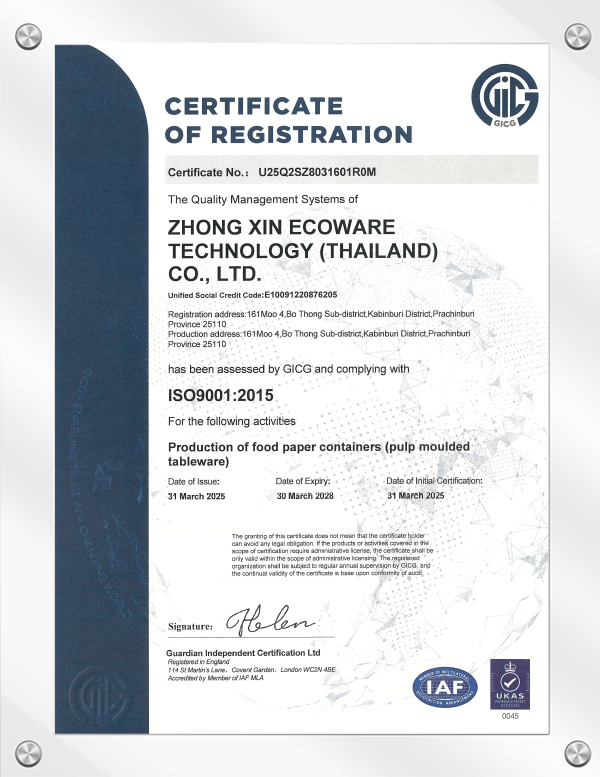
- FDA, EU, LFGB, BfR, BRC, BSCI, ISO9001, BPI, OK COMPOST HOME, ABA
- Serving global packaging groups and end-use brands across foodservice and retail
- 115 patents in molded pulp packaging and related technologies
- MOQ from 100,000 pieces
- PFAS-free and compostable packaging options for US and EU markets

China vs Thailand bagasse tableware sourcing is not a simple price comparison. For importers, distributors, QSR chains, school foodservice, supermarket deli teams and airline catering buyers, the real question is which origin gives the best mix of lead time, tariff position, available capacity, document scope and supply continuity for a specific program.
Zhong Xin Ecoware already has a strong dual-supply signal through its China and Thailand factory network. This article does not repeat a general dual-source story. It focuses on the procurement decision points buyers should compare before assigning SKUs to China, Thailand or both.
China vs Thailand Sourcing Comparison
| Decision Factor | China Sourcing | Thailand Sourcing | Buyer Action |
|---|---|---|---|
| Product breadth | Mature product families, broad SKU availability and established molds. | Useful for selected bagasse tableware programs and origin diversification. | Map each SKU to available mold, certificate and carton data. |
| Capacity planning | Strong scale across China production bases. | Publicly described Thailand capacity adds a second production route. | Request SKU-level available capacity, not only annual tonnage. |
| Lead time | Can be efficient for existing molds and mature export workflows. | Can support Southeast Asia and selected global programs depending on schedule. | Compare production queue, port route, transit time and sample approval stage. |
| Tariff exposure | May face China-specific trade remedies depending on market and classification. | Can reduce China-origin exposure when local origin requirements are met. | Check HS code, country of origin and current duty rules before ordering. |
| Document scope | Documents must match China factory, SKU and product family. | Documents must be checked for Thailand factory and product scope. | Do not assume certificates transfer automatically across factories. |
| Supply risk | Single-origin programs may be exposed to policy or logistics disruption. | Second origin can support continuity if planned correctly. | Align specification, sample, carton and labeling standards across origins. |
Tariff Checks Must Be Current and Product-Specific
Tariffs change by HS code, origin, destination market and active trade remedy. For U.S. imports, buyers can use the USITC HTS search and official information from USTR and CBP. CBP states that Section 301 additional duties apply to products of China, which is why origin verification matters. For Thailand market context, the International Trade Administration publishes an official Thailand import tariffs guide.
Buyers should not rely on a supplier’s verbal tariff estimate alone. The purchase file should include HS code review, product description, country-of-origin evidence, certificate-of-origin process and importer broker confirmation.
Do Not Duplicate Specifications by Memory
If the same bagasse tableware SKU may be produced in China and Thailand, the buyer should approve samples from each origin. Mold condition, fiber mix, forming settings, drying, trimming, packing material and carton compression can all affect repeat-order consistency.
Documents Buyers Should Compare by Origin
| Document | Why Buyers Need It | China vs Thailand Check |
|---|---|---|
| Product specification sheet | Defines size, weight, material, carton quantity and intended use. | Confirm the same version applies to each origin. |
| Food-contact files | Supports U.S., EU or other market review. | Compare against FDA or EU FCM expectations. |
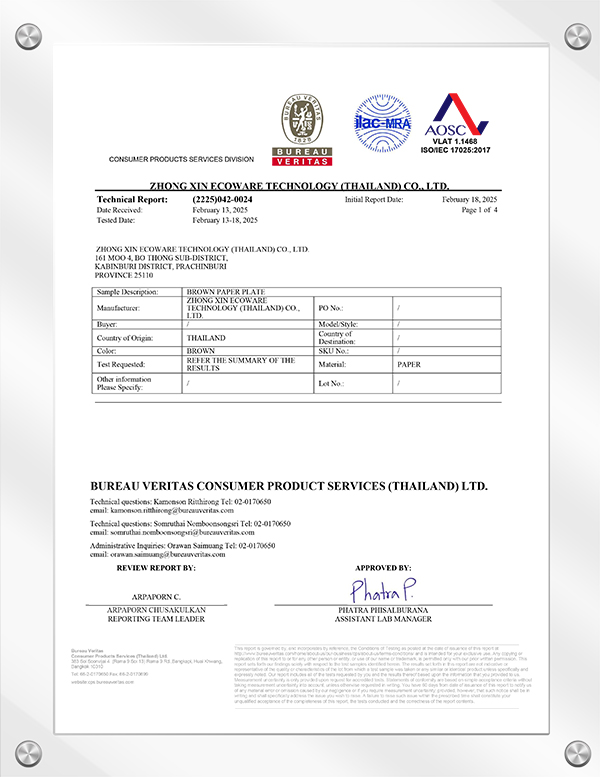
| PFAS-related reports | Supports PFAS-free procurement requirements. | Confirm material color, product family and test date. |
| BPI / compostability listing | Supports compostability claims where applicable. | Verify listed products in the BPI directory. |
| Certificate of Origin | Supports import declaration and tariff review. | Must match real manufacturing origin and shipment documents. |
| Factory audit files | Supports quality, hygiene and traceability review. | Check factory-specific scope, not only group name. |
When to Use China, Thailand or Both
- Use China when the SKU is already mature, the buyer needs broad product coverage and tariff exposure is acceptable.
- Use Thailand when origin diversification, customer requirements or trade-risk planning makes a second route valuable.
- Use both when a large annual program needs supply continuity, but align samples, specifications, cartons and certificate scope before launch.
To compare China and Thailand sourcing options for a real purchase plan, send SKU list, target annual volume, destination market, tariff concern, required documents and launch date through the Zhong Xin Ecoware contact page.
FAQ
Should US buyers source bagasse tableware from China or Thailand?
It depends on SKU, landed cost, tariff exposure, lead time, available capacity, certificate scope and customer requirements. China may offer mature product breadth and scale, while Thailand can provide origin diversification for selected programs.
Do China and Thailand bagasse tableware orders need different tariff checks?
Yes. Buyers should check the current HS code, country of origin, duty rate and trade remedies before ordering. Useful official references include the USITC Harmonized Tariff Schedule, USTR Section 301 tariff actions and CBP Section 301 FAQ.
Can Thailand-origin bagasse tableware use the same certificates as China-origin products?
Not automatically. Buyers should confirm certificate holder, factory scope, product family, material color, SKU and destination market. Some documents may be group-level, while others need factory-specific or product-specific confirmation.
Is dual sourcing useful for QSR chains, distributors and supermarket deli programs?
Yes. Dual sourcing can reduce single-origin exposure, but it must be planned before disruption. Buyers should align molds, specifications, samples, cartons, certificates, labels, and origin documents across both routes.
Get a Quote from Zhong Xin Ecoware
Zhong Xin Ecoware Technology (Thailand) Co., Ltd. supplies bagasse and molded fiber food packaging to importers, distributors and foodservice brands. For MOQ, pricing, samples and lead time, contact the sales team through the contact page.
Related resources: Certifications | Dual-source supply | OEM/ODM guide


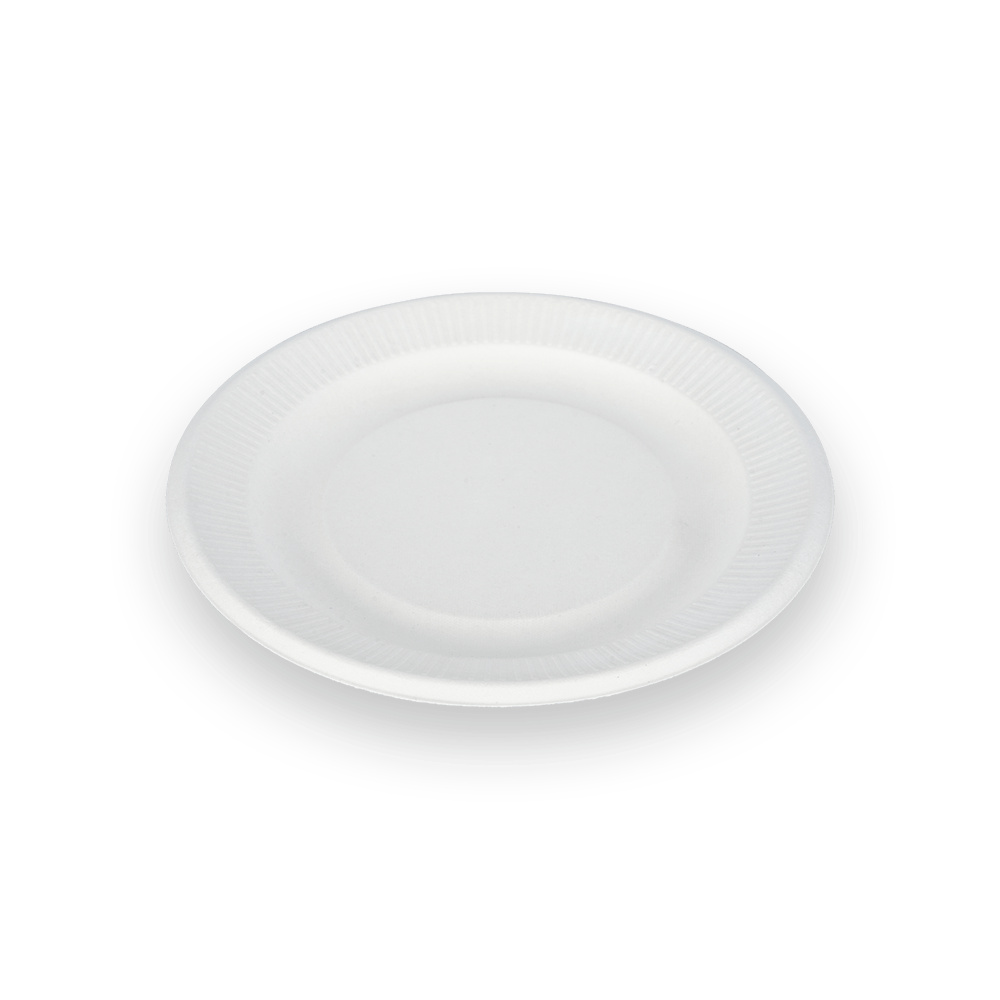
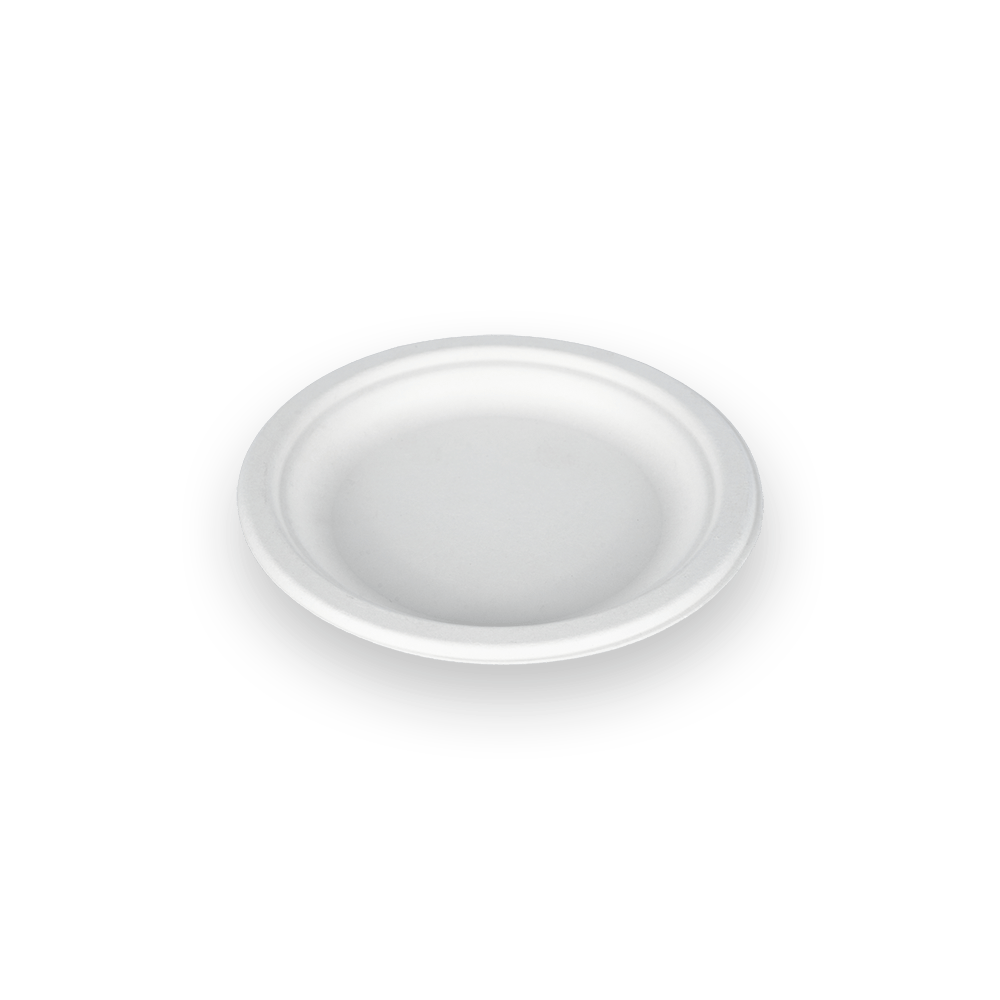
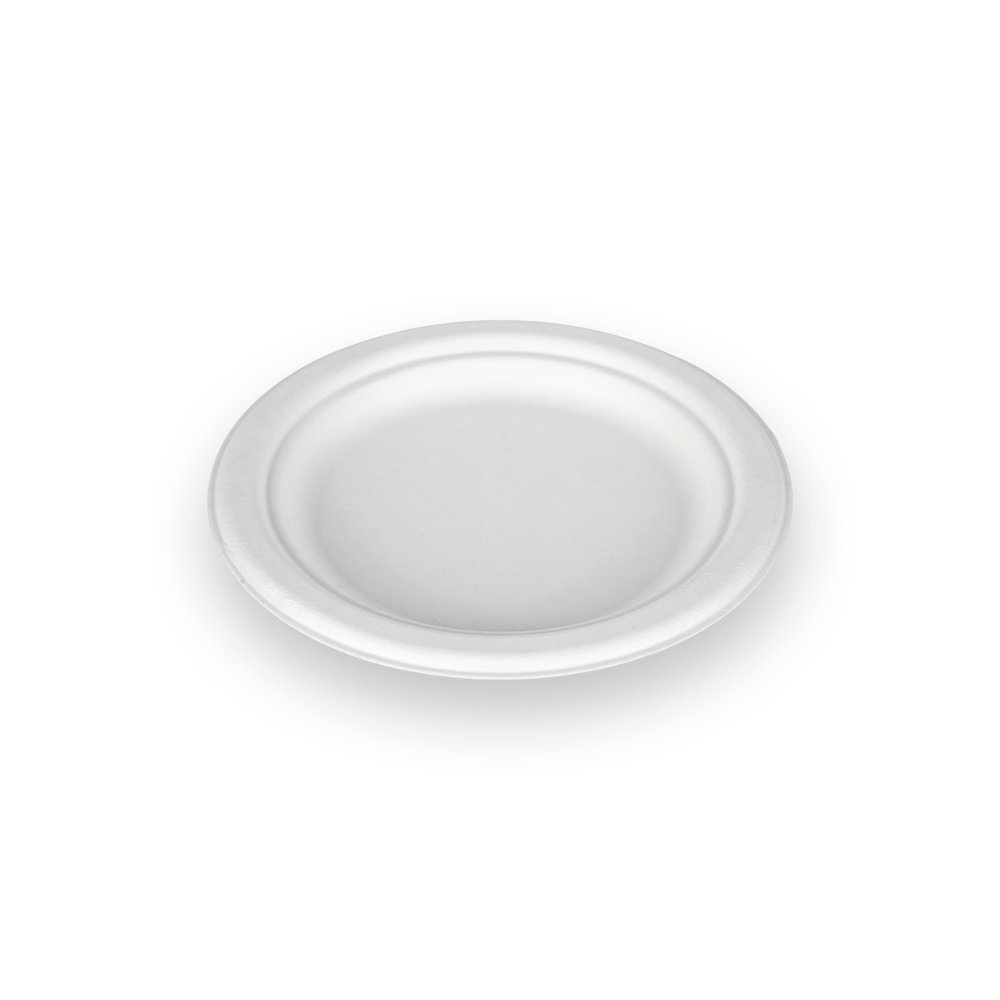
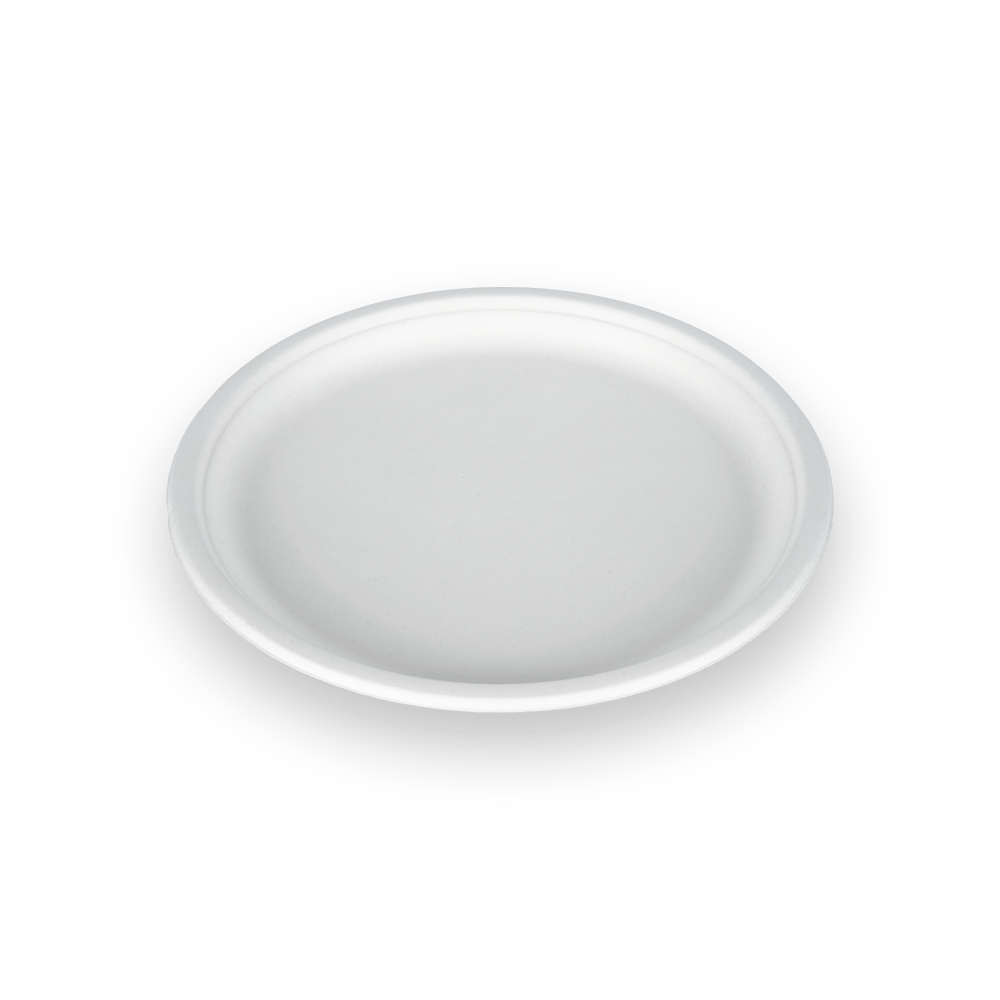
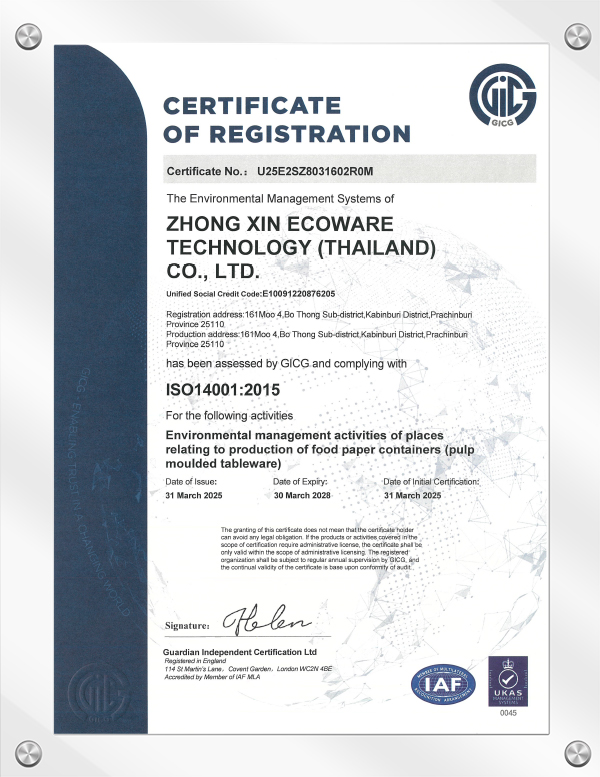
Zhong Xin Ecoware(Thailand) was registered on November 1, 2023, and officially began construction of the factory building in June 2024. At present, the first phase workshop of the factory has been fully completed and put into use. The second phase of the factory is being constructed intensively.
The landing and development of Zhong Xin in Thailand has brought a large amount of initial investment for land, factories, etc., and continuous operational investment for continuous equipment updates, technological upgrades, and capacity expansion.
Zhong Xin Ecoware(Thailand) has directly and indirectly created thousands of job opportunities, increased government revenue, promoted local economic development, cultivated local supply chains, provided systematic training for employees, improved the quality of local human capital, injected vitality into the local economy, enhanced industrial competitiveness, and ultimately improved residents' living standards.
Zhong Xin Ecoware(Thailand) actively collaborates with local pulp mills to explore new cooperation models for developing new products, improving production capacity and quality. At the same time, relying on Zhongxin's advanced production technology, process flow, management experience, and quality control system, it promotes the development of this industry in Thailand.

-
-
 +66-31240888
 -
 161 Village No. 4, Bo Thong Subdistrict Kabin Buri District Prachinburi Province 25110
-
How to Import Bagasse Tableware to the USA: FDA, Duties and Customs Clearance
Aug 14,2026
-
FDA Food Contact Packaging Checklist for Molded Fiber and Bagasse Packaging Buyers
Aug 14,2026
-
How to Choose a Compostable Takeout Box Supplier in Southeast Asia (2026 Guide)
Aug 14,2026
-
Compostable Packaging Certifications: EN 13432 vs BPI vs OK Compost
Aug 14,2026
-
Compostable Tableware Manufacturer: How to Choose a Molded Fiber Factory (2026 Guide)
Aug 14,2026
-
EU PPWR 2026: 7 Key Obligations for Food Packaging Buyers
Aug 14,2026
-
PFAS-Free Food Packaging: Documents Buyers Should Request
Aug 14,2026
-
Top 10 Bagasse Tableware Manufacturers in Thailand (2026 Ranking)
Aug 14,2026
-
How to Choose a Sugarcane Bagasse 9-Inch Plate Supplier for Wholesale Food Service Buyers
Aug 14,2026
-
Sugarcane Bagasse Sushi Tray Sourcing Guide for Distributors
Aug 14,2026
-
Molded Pulp Tableware Quality Control: 15 Checks Before Bulk Ordering
Aug 14,2026
-
Molded Pulp Factory Audit Checklist: 12 Checks for Global Buyers
Aug 14,2026
Copyright © 2025 Zhong Xin Ecoware Technology ( Thailand ) CO., LTD.
All Rights Reserved.

Biodegradable Disposable Bagasse Tableware Manufacturer