-
 [email protected]
-
 +66-31240888



 English
 Español
 ไทย
ไทยDo Biodegradable Disposable Takeaway Paper Pulp Boxes Stay Truly Compostable After Grease Exposure
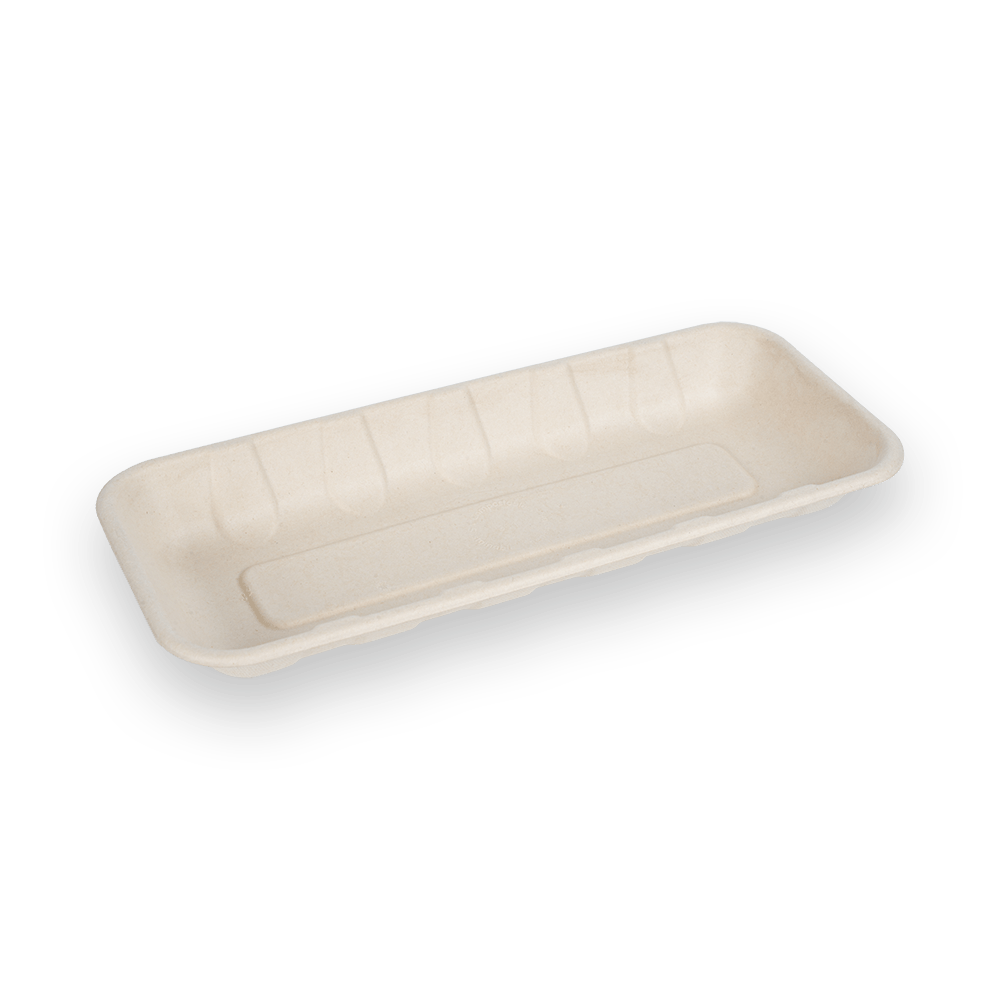
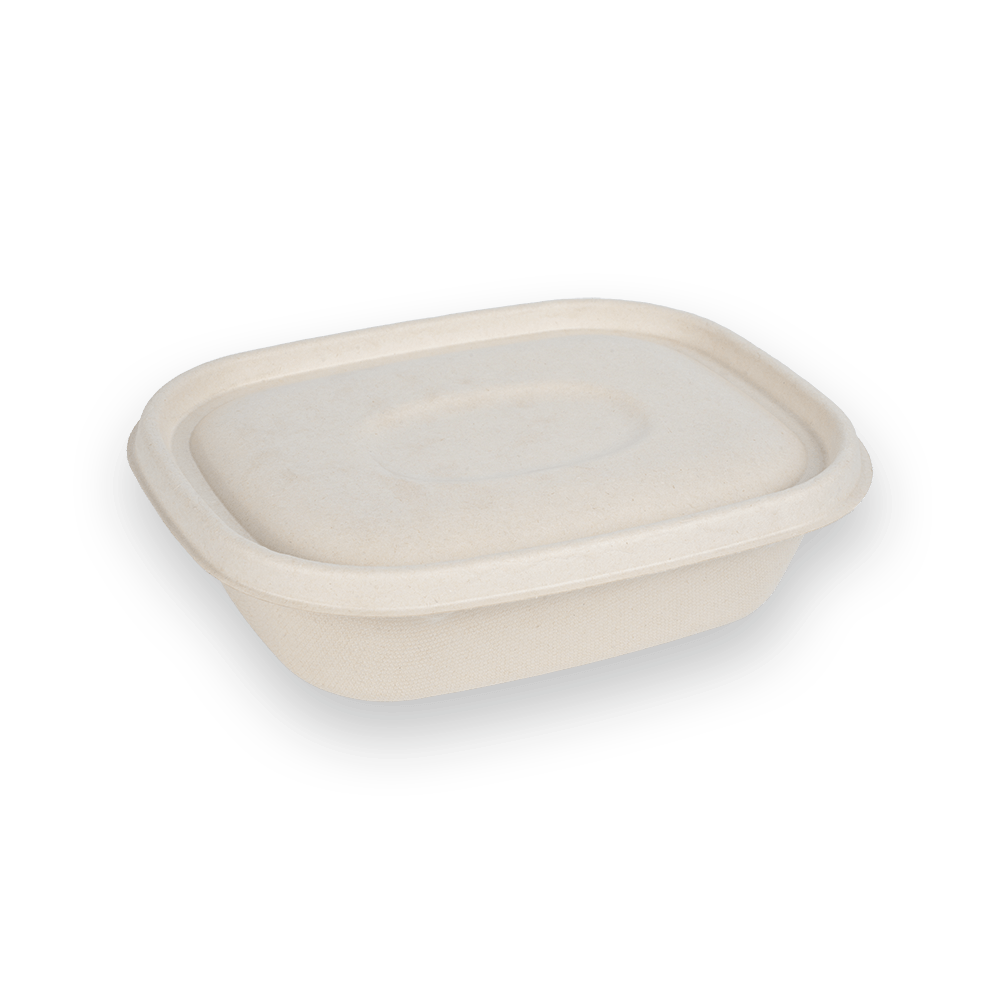
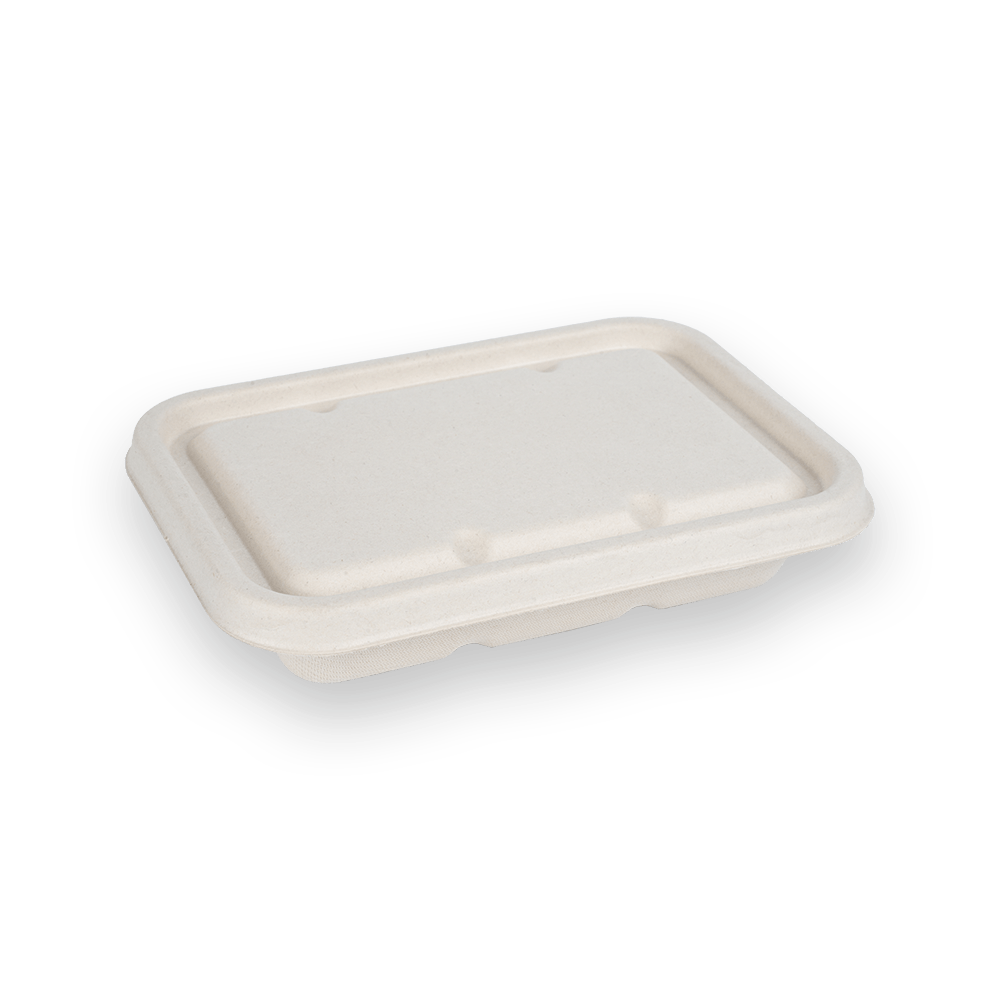
The growing use of a Biodegradable Disposable Takeaway Paper Pulp Box has created a practical question beyond marketing claims: does compostability remain valid after heavy contact with oil, sauces, and fried foods?
Industry data shows that compostability is not defined only by the base fiber material. It is also determined by barrier coatings, grease absorption behavior, and how contaminants interact with composting microbial activity under industrial conditions.

Core Meaning of Compostability in Fiber-Based Packaging
Fiber Decomposition vs Functional Contamination
Cellulose fibers used in molded pulp are naturally biodegradable. However, composting performance depends on whether added substances interfere with microbial breakdown.
- Uncoated pulp fibers break down rapidly in compost environments
- Barrier coatings may slow or alter degradation pathways
- Oil and grease contamination can disrupt microbial activity in compost piles
Compostability standards such as EN 13432 require not only breakdown of material structure but also absence of toxic residues and acceptable disintegration rates under controlled conditions.
Impact of Grease on Composting Performance
Oil Penetration and Fiber Saturation Behavior
Grease exposure introduces a physical and biochemical challenge for pulp-based materials. Instead of simply breaking down, oily residues change how microbes interact with the substrate.
- Oil coats fiber surfaces and reduces oxygen access for microbes
- High-fat residues slow down enzymatic degradation speed
- Saturated fibers may clump, reducing surface area for decomposition
Research and waste management discussions highlight that while small amounts of food residue are acceptable in compost streams, heavy grease contamination can significantly slow processing efficiency or require pre-treatment separation.
Barrier Coatings and Their Role in Compostability
Coating Types Used in Paper Pulp Boxes
Modern pulp packaging often uses coatings to improve oil and water resistance. These coatings directly influence composting outcomes.
| Coating Type | Grease Resistance | Compostability Behavior |
| Uncoated molded pulp | Low resistance | Breaks down rapidly in compost conditions |
| Starch / cellulose-based coating | Moderate resistance | Generally compostable under industrial systems |
| PLA bioplastic lining | High resistance | Requires industrial composting (heat >55°C) |
| PE plastic coating | Very high resistance | Not compostable, disrupts recycling and compost streams |
Technical reviews of food packaging confirm that compostability claims often depend more on coating chemistry than on the fiber substrate itself.
Does Grease Change “Compostable Certification” Status?
Certified vs Real-World Composting Behavior
A compostability certification generally assumes controlled conditions such as temperature, humidity, and microbial activity. Grease exposure is not always fully simulated in standard testing scenarios.
- Certified materials must disintegrate within defined timeframes under industrial composting
- Oil contamination may slow breakdown but does not automatically invalidate compostability
- Excessive grease can shift material behavior closer to anaerobic decomposition
Studies on composting systems indicate that fats and oils can inhibit microbial activity when present in large concentrations, but moderate food residues are generally tolerated in municipal compost streams.
Grease Resistance vs Compostability Trade-Off
Engineering Balance in Pulp Packaging Design
Manufacturers often face a structural trade-off: improving grease resistance typically requires barrier treatments, but these same treatments can influence degradation behavior.
- Stronger oil barriers improve usability in takeaway scenarios
- Heavier coatings may slow microbial access during composting
- PFAS-free innovations aim to balance both performance and end-of-life safety
Recent packaging research highlights the shift toward fluorine-free oil-resistant coatings that maintain compostability while improving functional performance in hot and greasy foods.
Real Usage Scenarios and Decomposition Outcomes
Different Levels of Grease Exposure
Compostability after use depends heavily on how the container was used in practice rather than its theoretical material classification.
| Usage Scenario | Grease Level | Expected Compost Behavior |
| Dry snacks or bakery items | Minimal | Fast decomposition, near baseline performance |
| Rice or stir-fry meals | Moderate | Normal breakdown with slight delay |
| Fried foods with heavy oil | High | Slower decomposition, possible residue persistence |
| Deep oil saturation or sauce pooling | Very high | Reduced composting efficiency, requires longer cycles |
The compostability of a Biodegradable Disposable Takeaway Paper Pulp Box does not disappear after grease exposure, but its degradation efficiency can be significantly affected depending on oil intensity, coating type, and composting conditions.
Under controlled industrial composting systems, more certified pulp-based containers remain capable of breaking down, even with moderate food residue. However, heavy grease contamination can slow microbial activity and extend processing time, meaning real-world compostability is not an absolute condition but a variable performance outcome influenced by usage intensity.
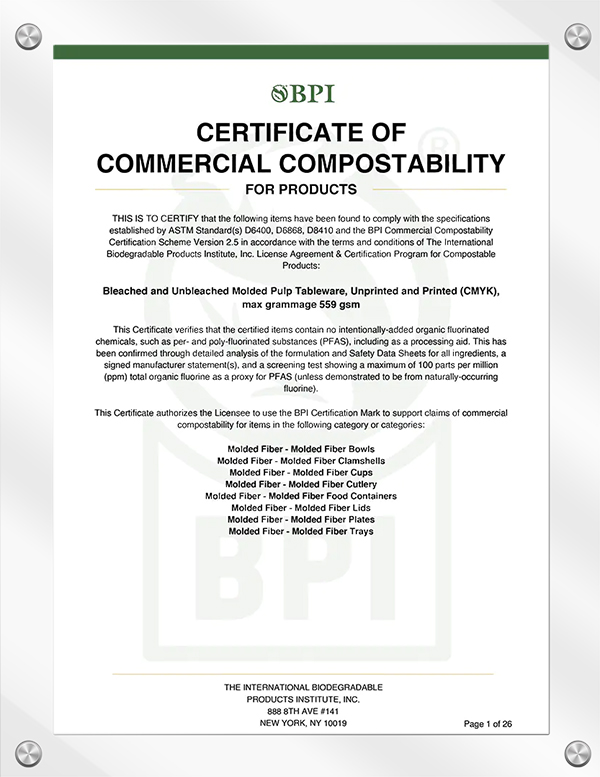
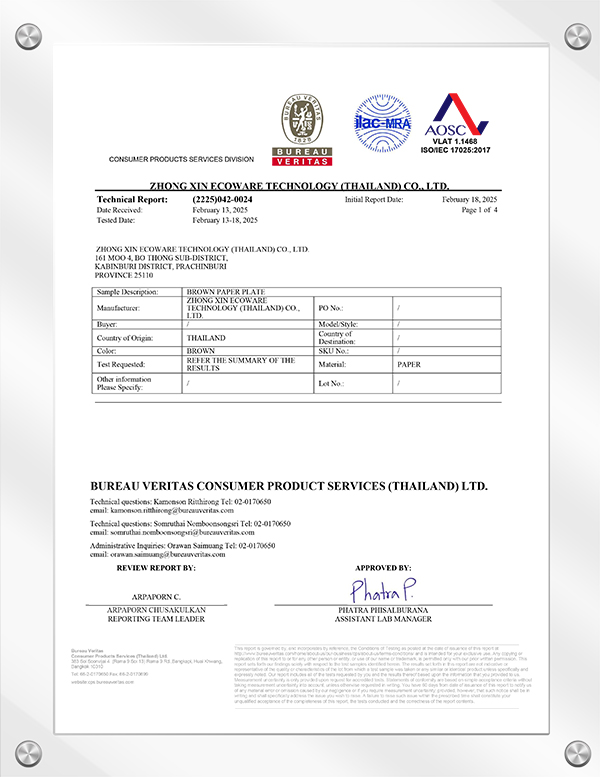
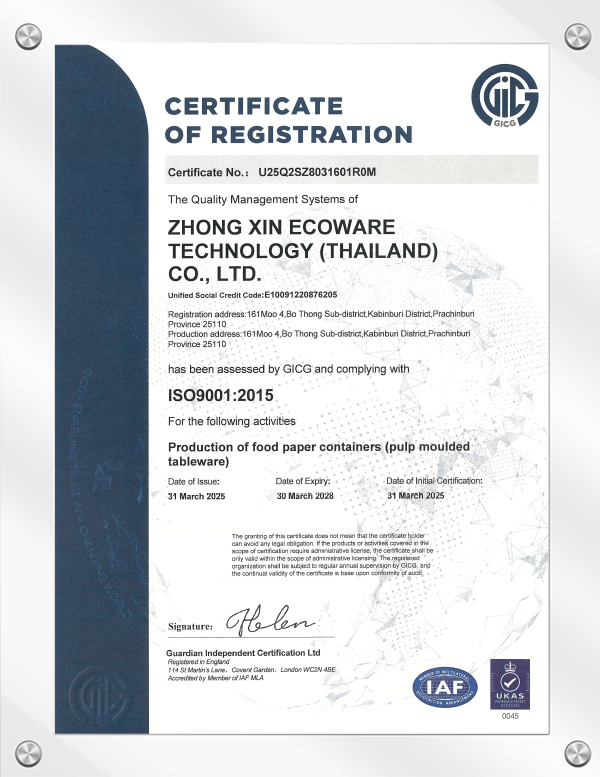
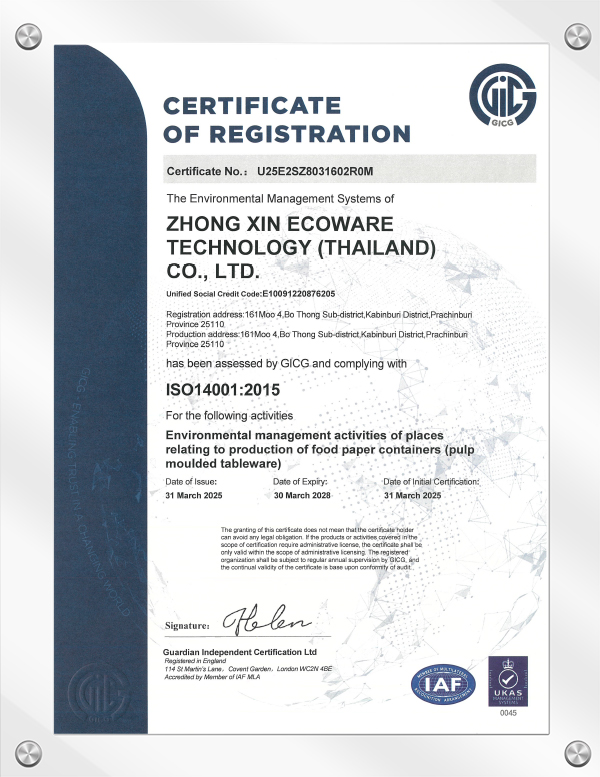
Zhong Xin Ecoware Technology (Thailand) Co., Ltd. supplies bagasse and molded fiber food packaging to importers, distributors and foodservice brands. For MOQ, pricing, samples and lead time, email info@fiber-product.com or use the contact form.



Zhong Xin Ecoware(Thailand) was registered on November 1, 2023, and officially began construction of the factory building in June 2024. At present, the first phase workshop of the factory has been fully completed and put into use. The second phase of the factory is being constructed intensively.
The landing and development of Zhong Xin in Thailand has brought a large amount of initial investment for land, factories, etc., and continuous operational investment for continuous equipment updates, technological upgrades, and capacity expansion.
Zhong Xin Ecoware(Thailand) has directly and indirectly created thousands of job opportunities, increased government revenue, promoted local economic development, cultivated local supply chains, provided systematic training for employees, improved the quality of local human capital, injected vitality into the local economy, enhanced industrial competitiveness, and ultimately improved residents' living standards.
Zhong Xin Ecoware(Thailand) actively collaborates with local pulp mills to explore new cooperation models for developing new products, improving production capacity and quality. At the same time, relying on Zhongxin's advanced production technology, process flow, management experience, and quality control system, it promotes the development of this industry in Thailand.

-
-
 +66-31240888
 -
 161 Village No. 4, Bo Thong Subdistrict Kabin Buri District Prachinburi Province 25110
-
New Bagasse Tableware Lineup for 2026: What Is New and Where to See It
Sep 28,2026
-
How to Select Bagasse Clamshells for Burgers, Rice Meals and Fried Food
Sep 28,2026
-
Microwave Reheating: Is a Bagasse Lunch Box Suitable
Sep 25,2026
-
9 Inch Pizza Plates and Bagasse Pizza Boards: A Sourcing Guide for US and Canadian Distributors
Sep 19,2026
-
PFAS-Free & Compostability Verification: A Buyer's Checklist for Bagasse and Molded Fiber Packaging
Sep 19,2026
-
Bagasse vs PLA vs Molded Fiber: What Distributors Should Stock in 2026
Sep 19,2026
-
Can Sugarcane Plates Handle Hot, Greasy Foods
Sep 18,2026
-
Bagasse Tableware RFQ Template: Get a Comparable Thailand Factory Quote
Sep 14,2026
-
Are Takeaway Food Containers Ready for Saucy Meals
Sep 11,2026
-
7-Inch vs 9-Inch Bagasse Plates: Carton and 20GP Guide
Sep 07,2026
-
Will Bagasse Pulp Trays Sag Under Heavy Meals
Sep 04,2026
-
Zhongxin Packaging at the 140th Canton Fair 2026: Booths and Buyer Meeting Guide
Sep 02,2026
Copyright © 2025 Zhong Xin Ecoware Technology ( Thailand ) CO., LTD.
All Rights Reserved.

Biodegradable Disposable Bagasse Tableware Manufacturer