-
 [email protected]
-
 +66-31240888



 English
 Español
 ไทย
ไทยWhich Conditions Cause Pulp Food Container Boxes to Collapse During Delivery Use
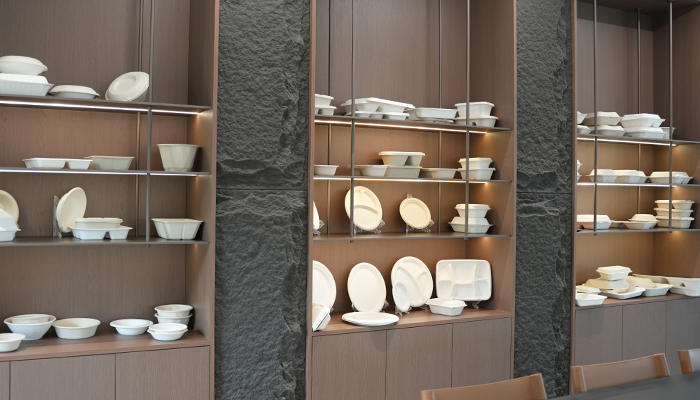
Damage issues involving Pulp Food Container Boxes during delivery rarely come from a single failure point. Collapse is usually the result of combined stress factors such as moisture exposure, stacking pressure, heat, and transportation vibration. Molded fiber packaging is designed to balance sustainability and strength, yet its cellulose-based structure remains sensitive to real logistics environments.
Industry observations and packaging engineering studies consistently show that compression failure and moisture weakening are the two dominant triggers behind structural collapse in paper-based containers used in food delivery systems.
Moisture Exposure as a Primary Structural Weakness
Fiber Softening and Compression Loss
Cellulose fibers naturally absorb water vapor from air and direct liquid contact. Once moisture penetrates the structure, internal bonding strength decreases significantly.
- Humidity reduces inter-fiber friction and stiffness
- Wet fibers lose resistance against vertical stacking pressure
- Repeated humidity cycles accelerate deformation behavior
Packaging research shows corrugated and molded fiber materials may lose a substantial portion of compression strength under high relative humidity conditions, increasing the probability of collapse during storage and transit.
Stacking Pressure and Vertical Load Failure
Compression Force Accumulation in Delivery Bags
Delivery environments subject containers to continuous vertical pressure from stacking multiple food boxes inside insulated bags or transport crates.
- Upper containers transfer weight directly to lower layers
- Rim deformation starts at edge contact points
- Once edge buckling begins, structural collapse spreads rapidly
Studies on shipping packaging confirm that vertical compression, rather than sudden impact, is the more common cause of box failure during transit.
Heat and Steam Interaction Inside Containers
Thermal Softening and Internal Pressure Build-Up
Hot meals packaged inside pulp containers generate steam immediately after sealing. This trapped vapor increases internal pressure while also softening fiber bonds.
- Steam condensation increases localized moisture saturation
- Heat weakens surface fiber bonding strength
- Pressure pushes outward against lid and side walls
Delivery packaging failures are often linked to the combination of heat retention and insufficient ventilation design, which accelerates deformation during transport cycles.
Vibration and Transport Movement Effects
Micro-Stress Accumulation During Transit
Even without visible impact, continuous vibration during delivery creates repeated micro-movements inside stacked containers.
- Repeated shaking loosens fiber joints over time
- Side friction increases wear at structural corners
- Small internal shifts amplify stress concentration zones
Transit vibration is recognized as a slow degradation factor that gradually reduces packaging integrity, especially in lightweight molded fiber systems.
Design Weak Points That Trigger Collapse
Geometry and Material Distribution Issues
Structural design plays a decisive role in whether pulp containers maintain stability under delivery stress.
| Design Weakness | Collapse Behavior | Consequence in Delivery |
| Thin rim structure | Edge buckling under stack load | Top lid misalignment and leakage |
| Uneven wall thickness | Localized deformation zones | Side collapse during handling |
| Low-density fiber molding | Rapid compression loss | Base flattening under weight |
| Poor corner reinforcement | Corner cracking under pressure | Structural failure spread |
Improper design selection is frequently identified as a hidden root cause behind packaging breakdown even when material quality appears acceptable.
Real Delivery Conditions Amplifying Failure Risk
Combined Environmental Stress Scenarios
Collapse rarely happens under isolated conditions. It is typically triggered when multiple stress factors overlap during delivery operations.
- High humidity combined with stacking pressure accelerates compression failure
- Hot food increases moisture content inside the fiber structure
- Long transport duration extends exposure time to stress factors
Field reports from delivery systems show that packaging often appears intact at dispatch but fails after prolonged stacking, vibration, and environmental exposure during transit routes.
The structural reliability of Pulp Food Container Boxes depends on how effectively the material and design manage moisture absorption, vertical load, thermal stress, and transport vibration at the same time.
Collapse during delivery is not caused by a single defect but by the interaction of environmental stressors that weaken fiber bonding and reduce compression resistance. Improving performance therefore requires a balanced approach involving density optimization, structural reinforcement, and moisture-resistant surface treatment to maintain stability throughout the delivery cycle.
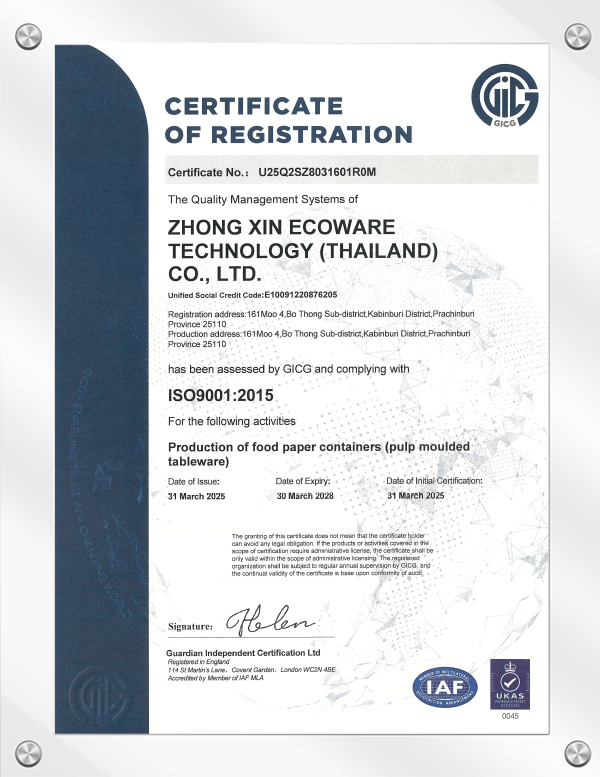
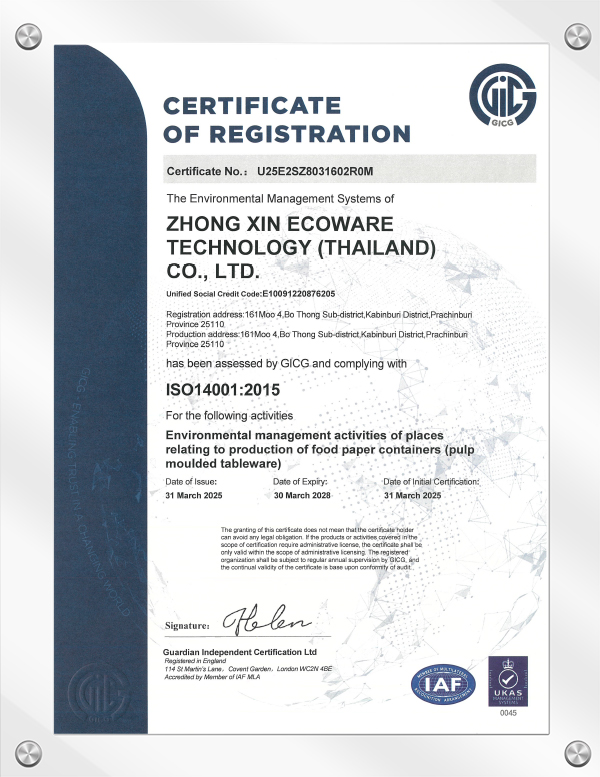
Zhong Xin Ecoware Technology (Thailand) Co., Ltd. supplies bagasse and molded fiber food packaging to importers, distributors and foodservice brands. For MOQ, pricing, samples and lead time, email info@fiber-product.com or use the contact form.
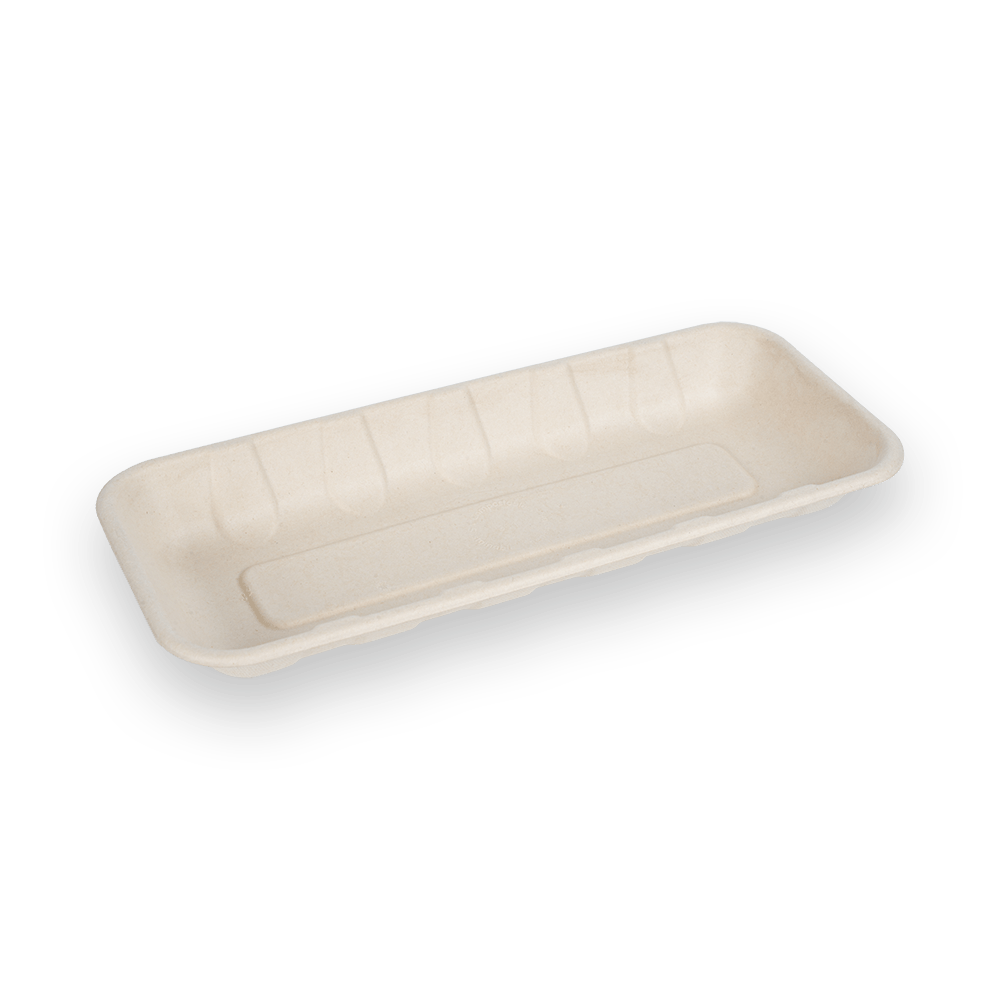
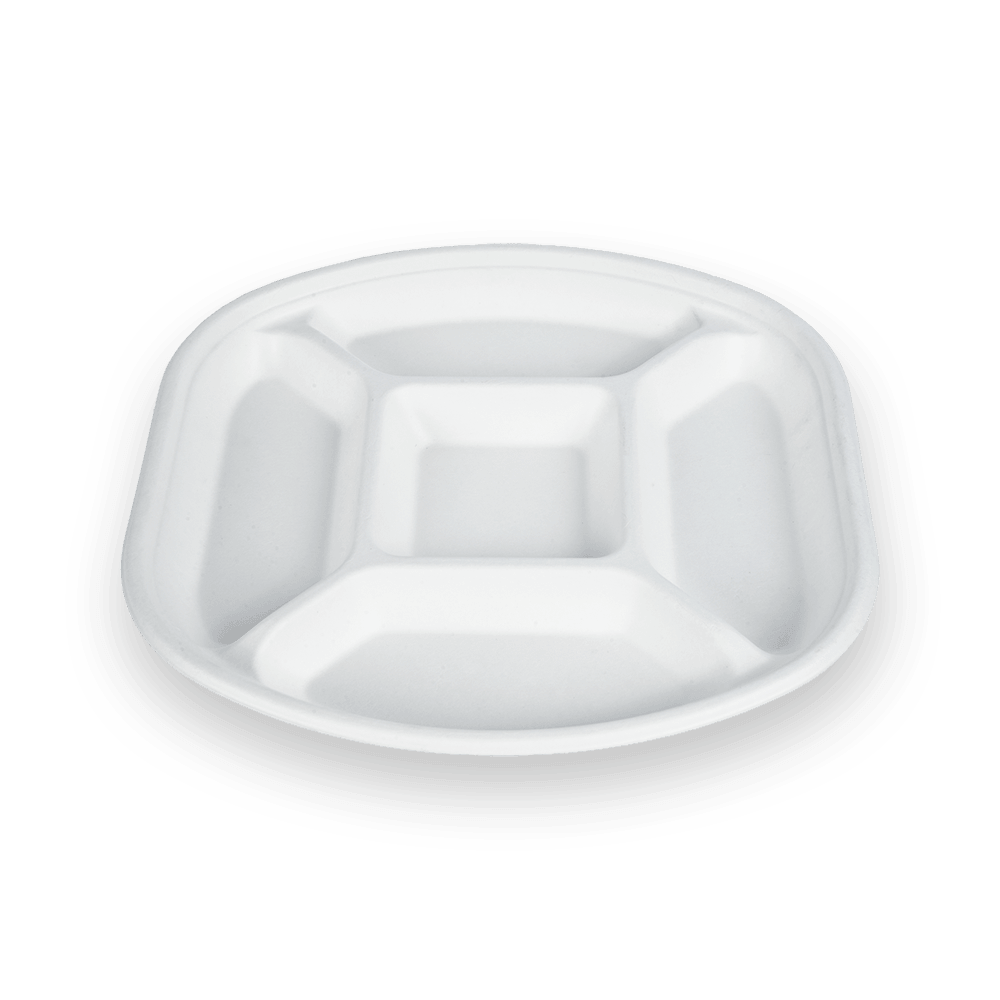

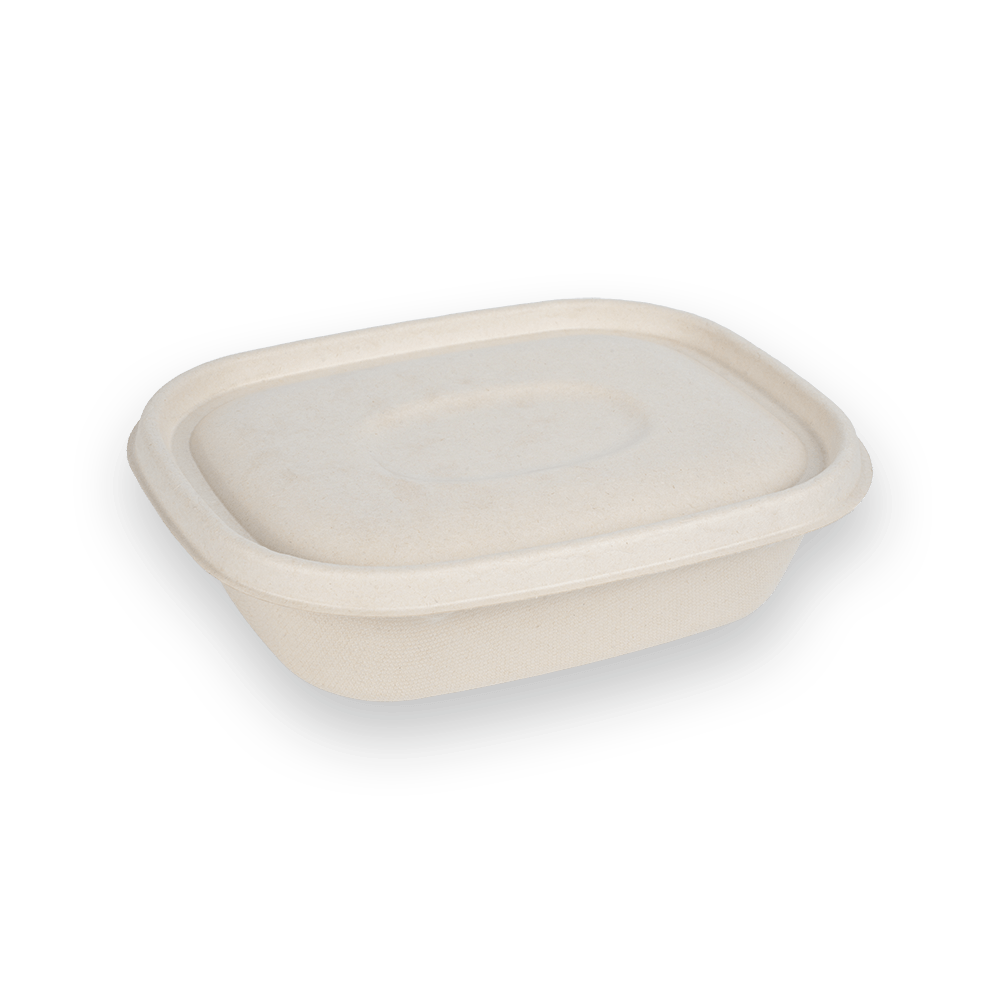

Zhong Xin Ecoware(Thailand) was registered on November 1, 2023, and officially began construction of the factory building in June 2024. At present, the first phase workshop of the factory has been fully completed and put into use. The second phase of the factory is being constructed intensively.
The landing and development of Zhong Xin in Thailand has brought a large amount of initial investment for land, factories, etc., and continuous operational investment for continuous equipment updates, technological upgrades, and capacity expansion.
Zhong Xin Ecoware(Thailand) has directly and indirectly created thousands of job opportunities, increased government revenue, promoted local economic development, cultivated local supply chains, provided systematic training for employees, improved the quality of local human capital, injected vitality into the local economy, enhanced industrial competitiveness, and ultimately improved residents' living standards.
Zhong Xin Ecoware(Thailand) actively collaborates with local pulp mills to explore new cooperation models for developing new products, improving production capacity and quality. At the same time, relying on Zhongxin's advanced production technology, process flow, management experience, and quality control system, it promotes the development of this industry in Thailand.

-
-
 +66-31240888
 -
 161 Village No. 4, Bo Thong Subdistrict Kabin Buri District Prachinburi Province 25110
-
Bagasse Cups and Cup Lids: A Sourcing Guide for Foodservice and Takeaway Buyers
Oct 20,2026
-
How to Find Zhong Xin at the 140th Canton Fair: A Visitor Navigation Guide
Oct 16,2026
-
Thailand vs China Bagasse Tableware: 8 Comparisons Buyers Should Verify
Oct 16,2026
-
Will Takeout Containers Fit Your Existing Lids and Delivery Workflow
Oct 16,2026
-
What Is Bagasse Tableware? A 2026 Buyer Guide to Material, Performance and Documents
Oct 13,2026
-
Bagasse Tray Wholesale: How Bulk Buyers Cut Cost with Carton and Container Planning
Oct 09,2026
-
What Should a Bagasse Manufacturer Include in a Bulk Order Quote
Oct 09,2026
-
FOB, CIF or DDP? Incoterms for Bagasse Tableware Buyers Shipping from Thailand
Oct 06,2026
-
Packaging or Food Contact? Which EU Regime Applies to Bagasse Cups, Bowls, Plates and Cutlery
Oct 06,2026
-
Compostable Cutlery Sets for Private Label: 7 Sourcing Checks for Retail and Foodservice Buyers
Oct 06,2026
-
US vs EU Bagasse Tableware Imports: 8 Documentation and Compliance Checks Buyers Should Run
Oct 06,2026
-
How to Prepare a Bagasse Tableware Import: 10 Readiness Checks for US and EU Buyers
Oct 06,2026
Copyright © 2025 Zhong Xin Ecoware Technology ( Thailand ) CO., LTD.
All Rights Reserved.

Biodegradable Disposable Bagasse Tableware Manufacturer