-
 [email protected]
-
 +66-31240888



 English
 Español
 ไทย
ไทยHow to Set AQL Acceptance Criteria for Molded Pulp Tableware Before Shipment
A molded pulp tableware shipment can look acceptable in product photos but still fail at receiving if the buyer and supplier never agreed on AQL, defect classification or photo evidence. Before shipment, importers, distributors, QSR chains, school foodservice buyers and supermarket deli teams should define what counts as a critical, major or minor defect and how many defects can be accepted in one lot.
This article focuses on AQL acceptance criteria for molded pulp and bagasse tableware before shipment. For Zhong Xin Ecoware's broader inspection approach, buyers can also review the molded pulp tableware quality control page, the factory information page and the contact page.
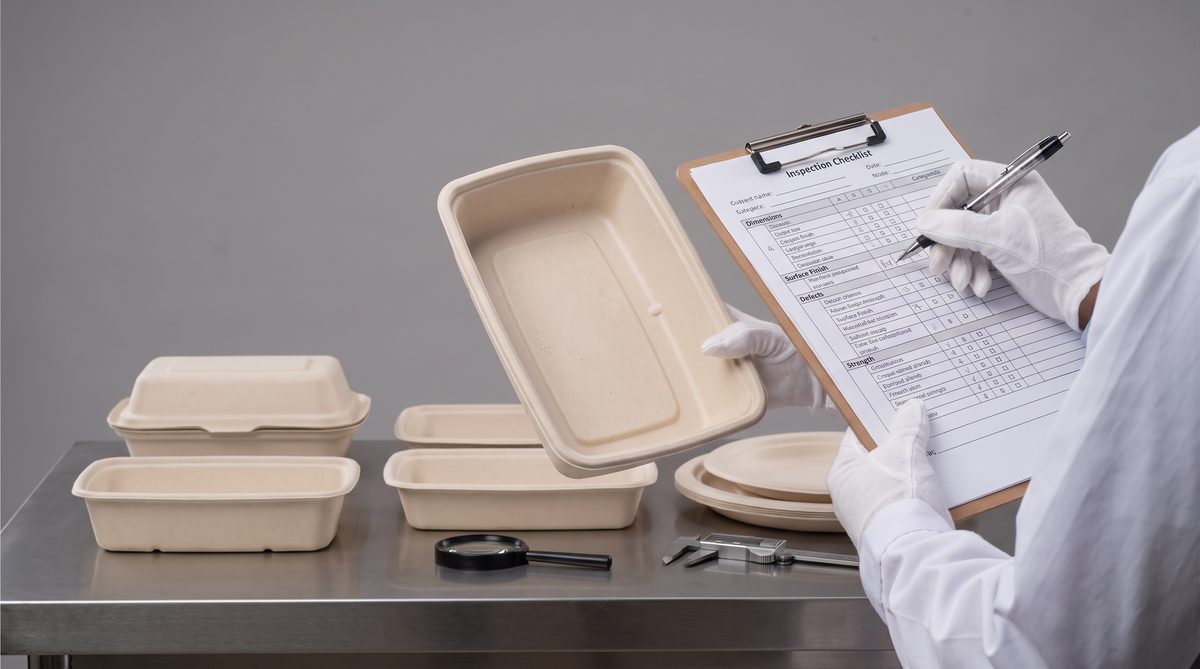
AQL Setup Before Inspection
AQL is not a visual preference. It is an agreed sampling and acceptance method. ASQ explains that ANSI/ASQ Z1.4 is used for acceptance sampling by attributes with AQL, normal, tightened and reduced plans. For molded pulp tableware, buyers usually use attribute inspection for visible defects and measurement checks for dimensions or weight.
| Inspection Item | Common Classification | Acceptance Logic | Buyer Evidence |
|---|---|---|---|
| Food-contact contamination, foreign material, mold or strong odor | Critical | Usually zero tolerance because it can affect food safety or brand risk. | Close-up photo, lot number, carton number and retained sample. |
| Severe deformation, broken rim, lid cannot close, cracked bowl or unusable tray | Major | Reject if defects exceed agreed AQL limit. | Photo with scale reference and functional test result. |
| Dimension outside agreed tolerance | Major or minor depending on fit impact | Major if it affects lid fit, stacking, dispenser fit or filling line use. | Caliper reading, specification drawing and sample photo. |
| Weight outside agreed tolerance | Major or minor depending on strength impact | Major if low weight links to weak structure; minor if still functional. | Digital scale photo and sample count record. |
| Small fiber specks, slight color variation or light surface mark | Minor | Accept within agreed limit when food-contact safety and function are not affected. | Representative photos under normal lighting. |
| Carton mark mismatch, missing SKU label or wrong case count | Major | Reject or rework because receiving and traceability are affected. | Carton photos, packing list and case count check. |
How to Define Major and Minor Defects
For molded pulp tableware, major defects are defects that prevent normal use or create a clear customer complaint risk. Examples include lids that do not close, containers that collapse during stacking, bowls that deform under hot liquid, severe stains, obvious cracks or product dimensions that cannot match the buyer's lid or filling line.
Minor defects are visible but do not stop normal use. Small fiber specks, slight color variation, light trimming marks or small non-food-contact surface marks may be minor if the buyer has accepted natural molded fiber appearance. The key is to define these examples before production, not during a dispute after inspection.
Photo Record Requirements
| Photo Type | Required Detail | Why It Matters |
|---|---|---|
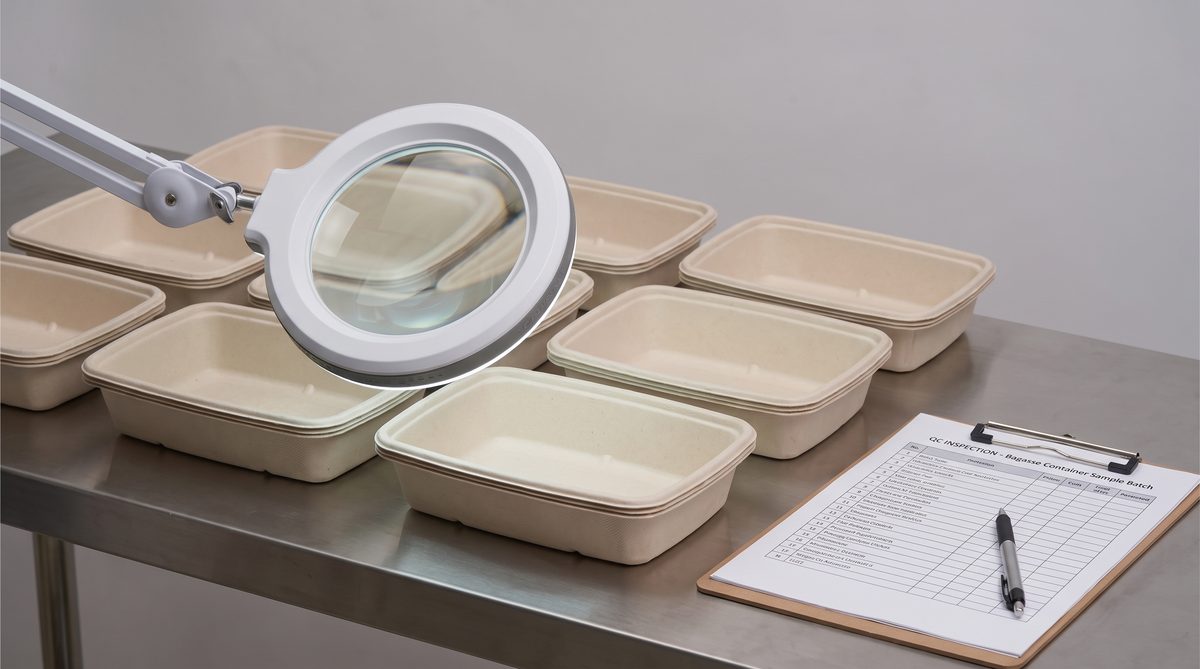
| Random sampling overview | Show inspected cartons, opened cartons and selected units. | Proves samples came from the shipment lot, not a prepared display set. |
| Defect close-up | Show the defect with scale, product side and carton reference. | Allows buyer and factory to classify critical, major or minor defects consistently. |
| Measurement photo | Show caliper or scale reading with the product visible. | Supports dimension and weight acceptance records. |
| Functional photo | Show lid closure, stacking, nesting, filling or carton count. | Connects visual inspection to real foodservice use. |
| Rework or replacement photo | Show corrected cartons or removed defective units. | Prevents the same rejected product from being shipped later. |
Procurement Recommendation
Before issuing the purchase order, write the inspection plan into the order file: lot definition, sample size standard, AQL level, critical defects, major defects, minor defects, dimension tolerance, weight tolerance, stain criteria, deformation examples and photo record rules. For food-contact review, buyers can use FDA's Packaging and Food Contact Substances page as regulatory context.
To align an AQL plan with Zhong Xin Ecoware's production and QC workflow, send product SKU, carton quantity, destination market and acceptance criteria through the Zhong Xin Ecoware contact page.
FAQ
What AQL level should buyers use for molded pulp tableware?
The AQL level should be agreed by buyer and supplier based on risk, product use and order size. Many buyers use stricter limits for critical and major defects, while minor appearance defects may use a more tolerant level if they do not affect food safety or function.
What is a major defect for bagasse or molded pulp tableware?
A major defect is one that affects normal use, such as cracked bowls, severe deformation, poor lid closure, wrong dimensions, weak structure, wrong case count or defects that could create customer complaints in foodservice use.
Should stains or fiber specks be rejected during AQL inspection?
Severe stains, foreign material or contamination should be treated seriously. Small natural fiber specks may be classified as minor defects if the buyer accepts molded fiber appearance and food-contact safety is not affected.
Can Zhong Xin Ecoware provide pre-shipment photo records and samples?
Buyers can request inspection photos, retained samples, carton records and measurement evidence before shipment. The required photo list should be agreed before production so the factory knows what to document.
Get a quote for your next order
Zhong Xin Ecoware Technology (Thailand) Co., Ltd. supplies molded fiber bagasse tableware for wholesale, distribution and private-label programs. Send your product list and target market to our sales team for a quotation with certification documentation.
Related buyer guides
- Molded pulp tableware quality control: 15 checks before bulk ordering
- How to verify carton strength and container loading
- Molded pulp factory audit checklist: 12 checks for global buyers
- How to verify a bagasse packaging supplier's production capacity
- Browse our bagasse tableware products
Zhong Xin Ecoware Technology (Thailand) Co., Ltd. supplies bagasse and molded fiber food packaging to importers, distributors and foodservice brands. For MOQ, pricing, samples and lead time, email info@fiber-product.com or use the contact form.



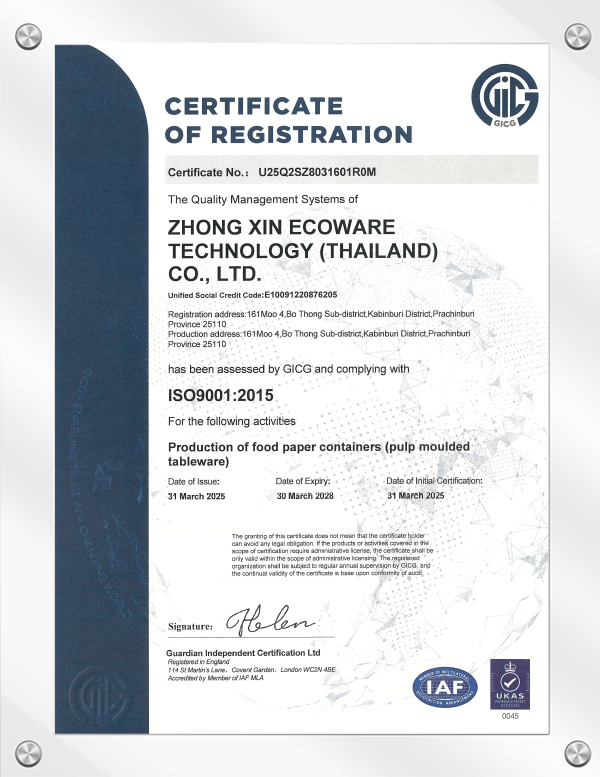
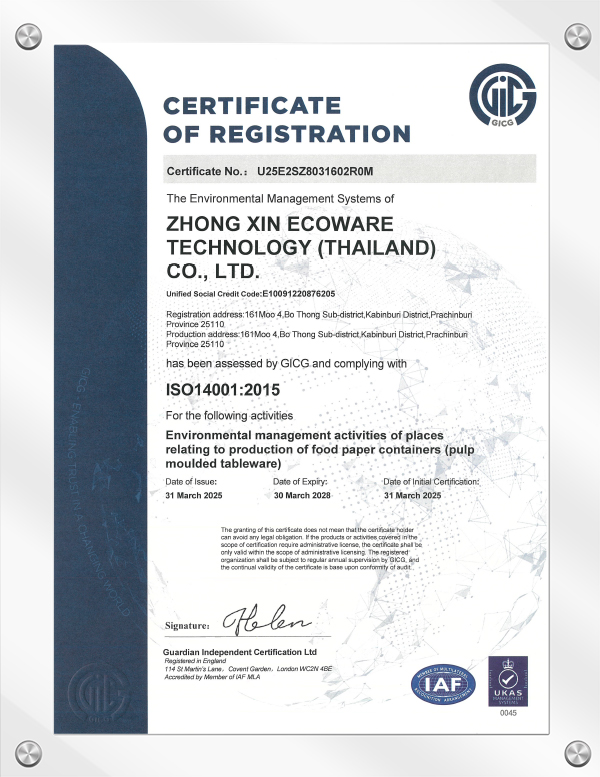
Zhong Xin Ecoware(Thailand) was registered on November 1, 2023, and officially began construction of the factory building in June 2024. At present, the first phase workshop of the factory has been fully completed and put into use. The second phase of the factory is being constructed intensively.
The landing and development of Zhong Xin in Thailand has brought a large amount of initial investment for land, factories, etc., and continuous operational investment for continuous equipment updates, technological upgrades, and capacity expansion.
Zhong Xin Ecoware(Thailand) has directly and indirectly created thousands of job opportunities, increased government revenue, promoted local economic development, cultivated local supply chains, provided systematic training for employees, improved the quality of local human capital, injected vitality into the local economy, enhanced industrial competitiveness, and ultimately improved residents' living standards.
Zhong Xin Ecoware(Thailand) actively collaborates with local pulp mills to explore new cooperation models for developing new products, improving production capacity and quality. At the same time, relying on Zhongxin's advanced production technology, process flow, management experience, and quality control system, it promotes the development of this industry in Thailand.

-
-
 +66-31240888
 -
 161 Village No. 4, Bo Thong Subdistrict Kabin Buri District Prachinburi Province 25110
-
New Bagasse Tableware Lineup for 2026: What Is New and Where to See It
Sep 28,2026
-
How to Select Bagasse Clamshells for Burgers, Rice Meals and Fried Food
Sep 28,2026
-
Microwave Reheating: Is a Bagasse Lunch Box Suitable
Sep 25,2026
-
9 Inch Pizza Plates and Bagasse Pizza Boards: A Sourcing Guide for US and Canadian Distributors
Sep 19,2026
-
PFAS-Free & Compostability Verification: A Buyer's Checklist for Bagasse and Molded Fiber Packaging
Sep 19,2026
-
Bagasse vs PLA vs Molded Fiber: What Distributors Should Stock in 2026
Sep 19,2026
-
Can Sugarcane Plates Handle Hot, Greasy Foods
Sep 18,2026
-
Bagasse Tableware RFQ Template: Get a Comparable Thailand Factory Quote
Sep 14,2026
-
Are Takeaway Food Containers Ready for Saucy Meals
Sep 11,2026
-
7-Inch vs 9-Inch Bagasse Plates: Carton and 20GP Guide
Sep 07,2026
-
Will Bagasse Pulp Trays Sag Under Heavy Meals
Sep 04,2026
-
Zhongxin Packaging at the 140th Canton Fair 2026: Booths and Buyer Meeting Guide
Sep 02,2026
Copyright © 2025 Zhong Xin Ecoware Technology ( Thailand ) CO., LTD.
All Rights Reserved.

Biodegradable Disposable Bagasse Tableware Manufacturer