-
 [email protected]
-
 +66-31240888



 English
 Español
 ไทย
ไทยMaterials for Disposable Paper Plates
Disposable Paper Plates with Compartment: Practical & Eco-Friendly Solutions
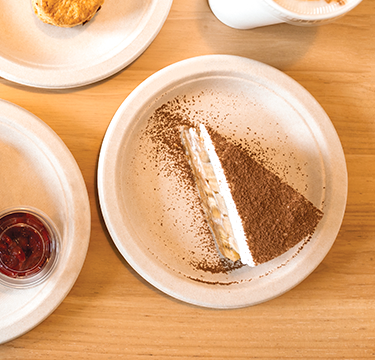
The first time you serve a meal where the sauce absolutely cannot touch the garlic bread, you understand the appeal of a compartment plate. These aren't just for cafeterias or kids' birthday parties anymore. Disposable paper plates with built-in dividers have quietly evolved from a novelty into a genuinely useful tool for portion control, mess reduction, and even eco-conscious entertaining.
Why the Divided Design Solves Three Everyday Problems
Think about the last outdoor barbecue you attended. Someone’s baked beans slid into their coleslaw. A runaway meatball rolled off the edge and onto the grass. These small frustrations happen because traditional round plates offer no resistance to food migration. A compartment plate, typically with two or three sections, creates physical barriers. That means wet foods stay separate from dry foods. Sauces remain where you put them. Children can eat without needing every item mixed into a single unappetizing pile. Adults appreciate the neatness too, especially at buffets where sampling multiple dishes matters more than portion size. The practical benefit isn't just aesthetic—it reduces food waste because people actually finish what's on their plate when flavors aren't unintentionally blended.
A Real Summer Picnic Scenario: Serving without Stress
Imagine you are hosting a small gathering on a Saturday afternoon. You have pulled pork, potato salad, baked beans, and a fruit salad. Using standard plates, guests either eat sequentially (food touching) or hold multiple plates—neither is ideal. Switch to compartment paper plates. Each guest places pulled pork in the largest section, potato salad in a medium bowl, and beans in the third. The dividers, which are pressed into the plate during manufacturing rather than glued on, rise about half an inch. That small lip prevents bean juice from flowing downhill into the fruit. Everyone eats comfortably from one plate. Afterward, if you choose uncoated or compostable versions, the entire plate goes into the green bin. No plastic wrap, no Styrofoam, and no awkward balancing acts.
Compartment Plates vs. Regular Rounds vs. Reusable Plastic Trays
Here is where many shoppers get stuck. They see compartment paper plates and wonder if the trade-off is worth it compared to what they already use. Let's walk through the decision logically rather than through marketing claims.
A standard round paper plate wins on simplicity and storage. It stacks flat and works for dry sandwiches or a single slice of pizza. But introduce two or three wet foods, and the weaknesses appear quickly. Reusable plastic compartment trays, like lunch trays from a school cafeteria, are extremely durable. They handle dishwashers and aggressive scrubbing. However, they take up significant cabinet space, and if you are catering a one-off event for twenty people, you probably do not own twenty trays. Compartment paper plates occupy the middle ground. They are not as sturdy as plastic, but they do not require washing or storage space. They are more specialized than a round paper plate, but for meals with distinct components—think fish and chips with tartar sauce, or a breakfast plate with eggs, bacon, and pancakes—they are objectively the most functional choice. The one limitation to know ahead of time: compartment plates rarely hold very runny soups or stews because the dividers create small leak paths at their base. For solid or semi-solid foods, they perform beautifully.
How to Choose White Disposable Paper Plates?
White paper plates look clean and neutral, which is why restaurants and caterers prefer them over printed or brown alternatives. But not all white plates are the same, and picking the wrong one leads to sagging, soaking, or customer complaints.
Start with the coating. A white paper plate is either uncoated (matte finish, absorbs moisture quickly) or coated with a thin layer of polyethylene (glossy feel, water-resistant). For cold sandwiches or dry pastries, uncoated works fine and is more compostable. For anything with gravy, salad dressing, or juicy fruit, you need the coated version. Check the fine print on the box—terms like "water-resistant" or "wet-strength" indicate the coating is present.
Next, look at the ply. Most basic plates are single-ply, meaning one layer of paper. These buckle under heavy food. Double-ply plates have two layers pressed together, offering significantly better rigidity without feeling thick or bulky. Hold the plate in one hand and press the center with your thumb. If it flexes easily, skip it for main courses. Finally, examine the base construction. A good white disposable plate has a slightly raised rim and a flat, not domed, center. Domed centers cause food to slide inward, which looks sloppy on a buffet line. Raised rims help with grip and contain small spills. For large gatherings, buy a small test pack first. Serve a hot, saucy meal on one plate and wait ten minutes. If the bottom remains firm and the surface doesn't delaminate, that brand is worth ordering in bulk.
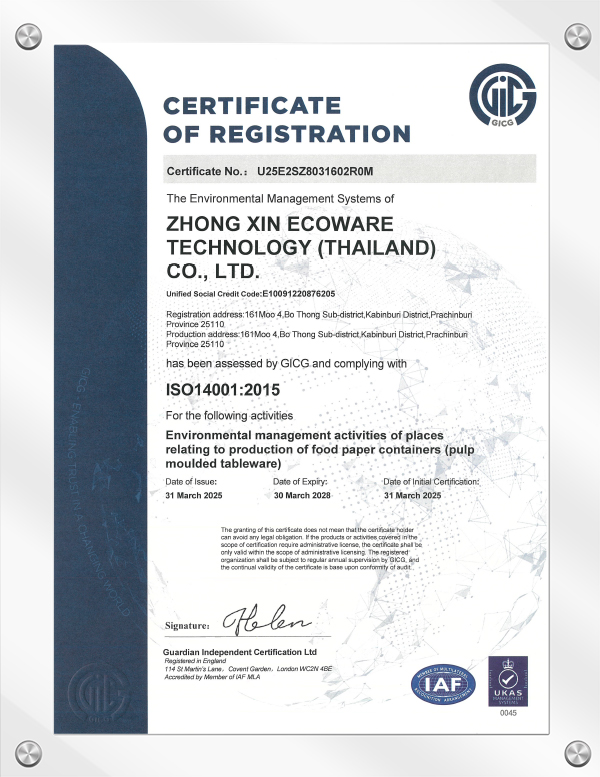
Zhong Xin Ecoware Technology (Thailand) Co., Ltd. supplies bagasse and molded fiber food packaging to importers, distributors and foodservice brands. For MOQ, pricing, samples and lead time, email info@fiber-product.com or use the contact form.
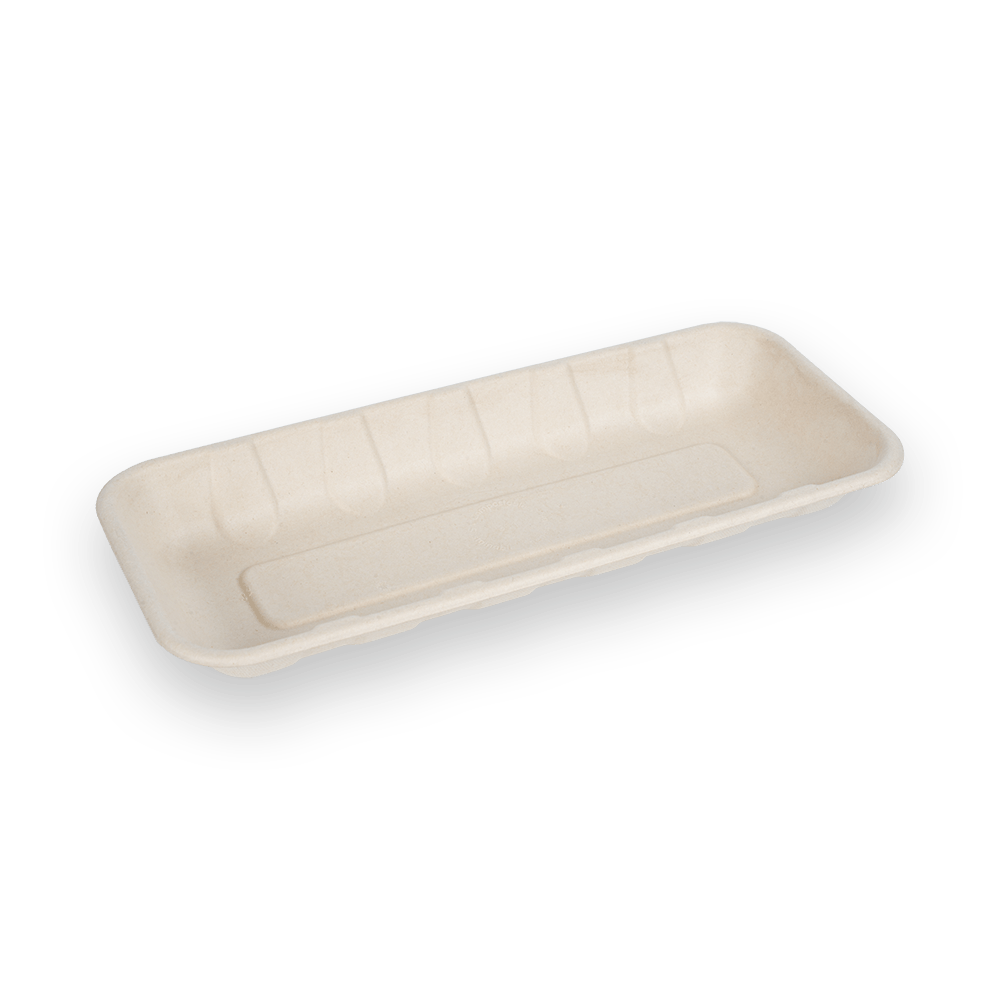


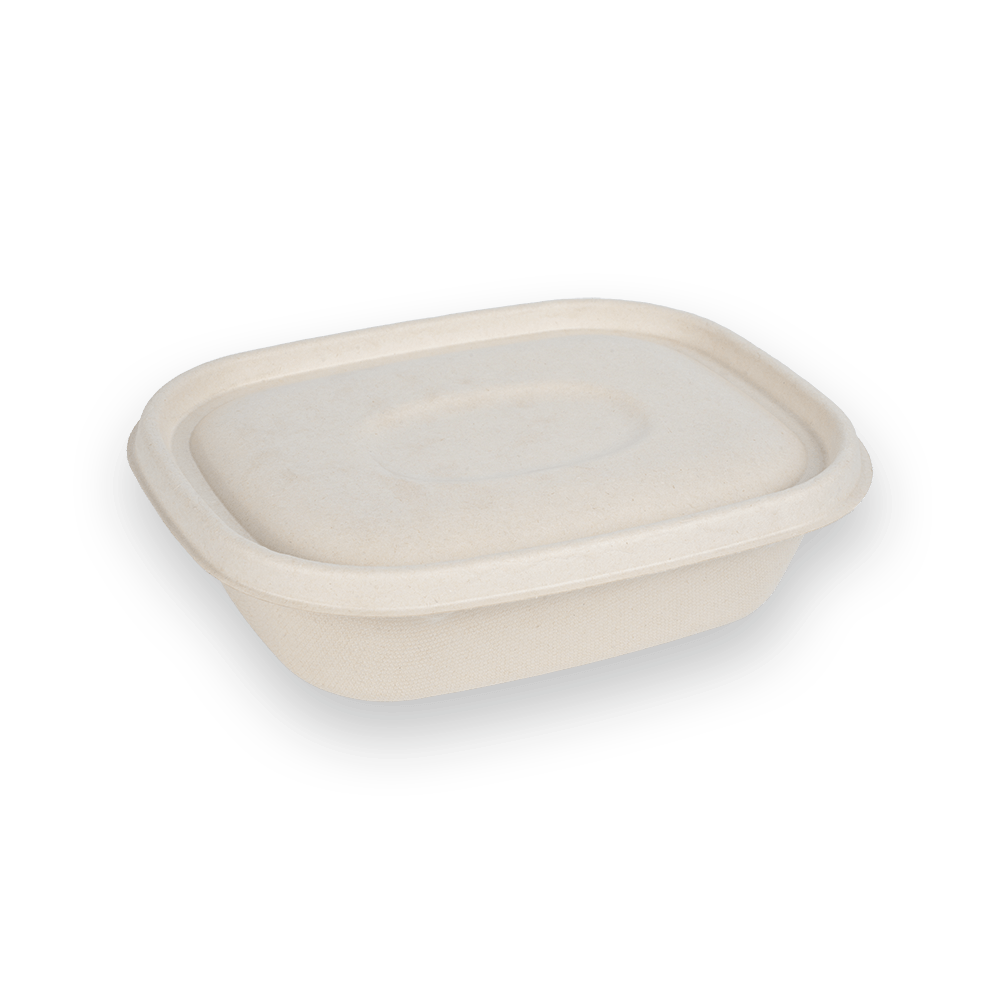
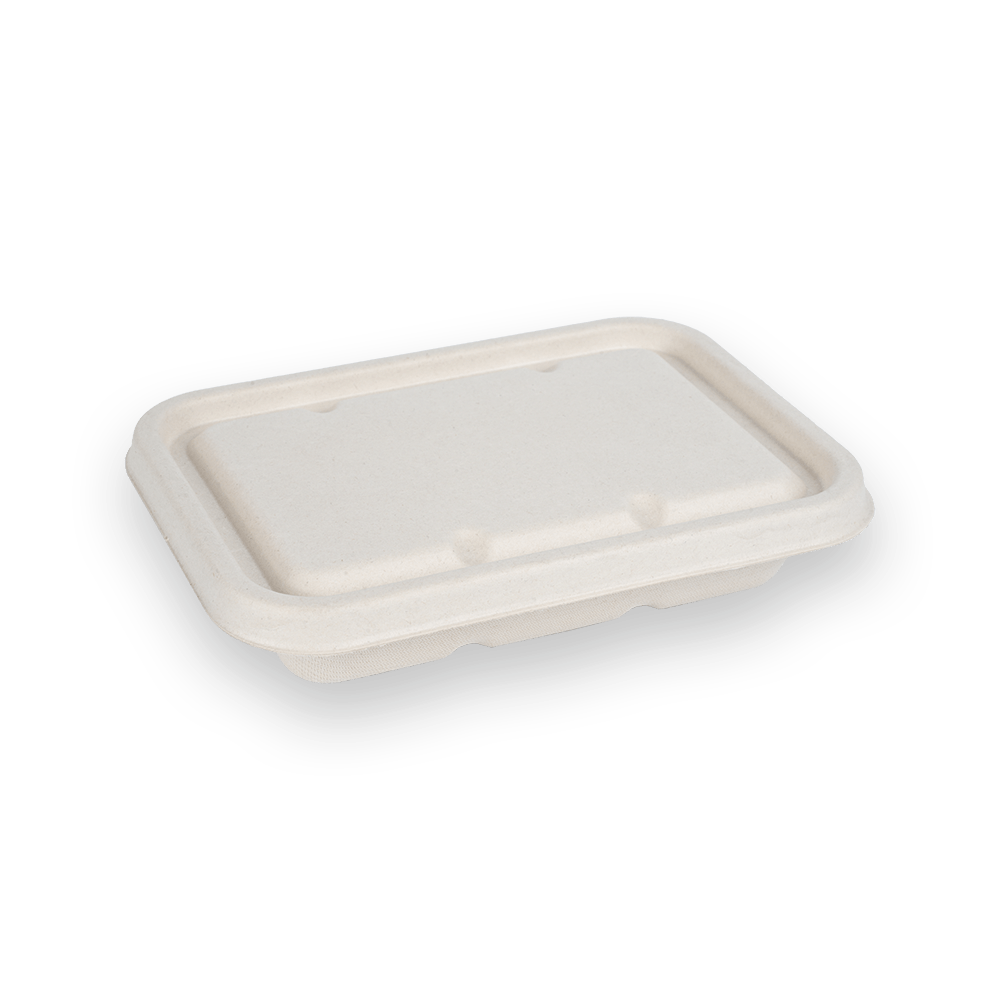

Zhong Xin Ecoware(Thailand) was registered on November 1, 2023, and officially began construction of the factory building in June 2024. At present, the first phase workshop of the factory has been fully completed and put into use. The second phase of the factory is being constructed intensively.
The landing and development of Zhong Xin in Thailand has brought a large amount of initial investment for land, factories, etc., and continuous operational investment for continuous equipment updates, technological upgrades, and capacity expansion.
Zhong Xin Ecoware(Thailand) has directly and indirectly created thousands of job opportunities, increased government revenue, promoted local economic development, cultivated local supply chains, provided systematic training for employees, improved the quality of local human capital, injected vitality into the local economy, enhanced industrial competitiveness, and ultimately improved residents' living standards.
Zhong Xin Ecoware(Thailand) actively collaborates with local pulp mills to explore new cooperation models for developing new products, improving production capacity and quality. At the same time, relying on Zhongxin's advanced production technology, process flow, management experience, and quality control system, it promotes the development of this industry in Thailand.

-
-
 +66-31240888
 -
 161 Village No. 4, Bo Thong Subdistrict Kabin Buri District Prachinburi Province 25110
-
Can Paper Packaging Meet Retail Shelf and Branding Requirements
Oct 23,2026
-
Bagasse Cups and Cup Lids: A Sourcing Guide for Foodservice and Takeaway Buyers
Oct 20,2026
-
How to Find Zhong Xin at the 140th Canton Fair: A Visitor Navigation Guide
Oct 16,2026
-
Thailand vs China Bagasse Tableware: 8 Comparisons Buyers Should Verify
Oct 16,2026
-
Will Takeout Containers Fit Your Existing Lids and Delivery Workflow
Oct 16,2026
-
What Is Bagasse Tableware? A 2026 Buyer Guide to Material, Performance and Documents
Oct 13,2026
-
Bagasse Tray Wholesale: How Bulk Buyers Cut Cost with Carton and Container Planning
Oct 09,2026
-
What Should a Bagasse Manufacturer Include in a Bulk Order Quote
Oct 09,2026
-
FOB, CIF or DDP? Incoterms for Bagasse Tableware Buyers Shipping from Thailand
Oct 06,2026
-
Packaging or Food Contact? Which EU Regime Applies to Bagasse Cups, Bowls, Plates and Cutlery
Oct 06,2026
-
Compostable Cutlery Sets for Private Label: 7 Sourcing Checks for Retail and Foodservice Buyers
Oct 06,2026
-
US vs EU Bagasse Tableware Imports: 8 Documentation and Compliance Checks Buyers Should Run
Oct 06,2026
Copyright © 2025 Zhong Xin Ecoware Technology ( Thailand ) CO., LTD.
All Rights Reserved.

Biodegradable Disposable Bagasse Tableware Manufacturer