-
 [email protected]
-
 +66-31240888



 English
 Español
 ไทย
ไทยWhat Are The Disadvantages of Bagasse Plate?
Are Disposable Sugarcane Bagasse Plates Really Durable? The Honest Test Results
When you first pick up a plate made from sugarcane fiber (often labeled as bagasse), the texture can be a little surprising. It feels like a cross between thick cardboard and molded paper pulp. Most people assume that "eco-friendly" automatically means "flimsy." That assumption, however, is where the confusion starts.

In short: Yes, disposable sugarcane bagasse plates are genuinely durable for the vast majority of hot, cold, wet, or oily foods. They are structurally stronger than standard paper plates and significantly more rigid than compostable PLA-lined options. But—and this is an important "but"—durability has a context. A bagasse plate will hold a heavy pasta dinner with marinara sauce for 45 minutes without turning to mush. It will not hold up to a steak knife vigorously sawing through a tough cut of meat, nor will it survive a full bowl of soup for an hour.
The engineering behind bagasse is smart. The long fibers in sugarcane stalks, after the juice is extracted, create a natural interlocking matrix. When heated and pressurized into tableware, that matrix resists liquid penetration far better than tree-based paper pulp, which has shorter fibers.
Bagasse vs. Plastic vs. Paper: Where Durability Actually Matters
Here is the comparison that most manufacturers don't lay out clearly. It's not about whether bagasse is stronger than plastic—it's not. A virgin plastic plate is technically more impact-resistant if you drop it on a tile floor. But plastic's durability is brittle; it cracks under sudden pressure. Bagasse, however, flexes slightly. That flex means it handles hot, heavy, or saucy foods without catastrophic failure.
|
Feature |
Sugarcane Bagasse |
Standard Paper Plate |
Clear Plastic (Crystal) |
|
Hot liquids (soup) |
Holds 15–20 min before leaking |
Leaks in <5 minutes |
Excellent (but not microwave-safe) |
|
Greasy foods (fried rice) |
No soak-through |
Grease spots appear fast |
Excellent |
|
Microwave reheating (30 sec) |
Fully safe, no melting |
Safe, but weakens |
Melts or releases chemicals |
|
Cutting with fork |
Minor scratching |
Tears easily |
Scratches, no tear |
|
True failure point |
Over-soaking (not pressure) |
Saturation + weight |
Cracking under bend |
The bottom line for Western eating habits: If you are hosting a backyard barbecue and serving burgers, ribs, or potato salad, bagasse plates are overkill—they work beautifully. If you are catering a soup-and-sandwich lunch, choose the bagasse bowl over any paper option. Only skip bagasse if you need a plate to survive aggressive cutting (like a child sawing chicken nuggets) or if the meal will sit more than 40 minutes before anyone eats.
Are sugarcane plates and bowls genuinely better than plastic tableware?
For the vast majority of single-use scenarios, yes—but not for the reasons you might think. Plastic tableware wins on raw tensile strength and waterproofness. But "better" depends on what you value. If you need a plate to hold a full portion of lasagna, travel through a catering line, and stay intact for an hour, plastic and bagasse perform almost identically. The difference appears afterward. Plastic lingers in landfills for 500 years, breaking down into microplastics. Bagasse, even if it isn't commercially composted, breaks down in a natural environment within 60–90 days. However, one practical advantage that surprises most people: bagasse does not get dangerously hot in the microwave. Plastic can warp or leach BPA. Paper can catch fire if overheated. Bagasse simply gets warm. For offices, food trucks, or family dinners where reheating is common, this safety advantage outweighs plastic's marginal durability lead.
The only two times you should not trust a bagasse plate
Let's be completely transparent to avoid a bad user experience. First, avoid long-term contact with very acidic liquids like straight lemon juice or vinegar-based marinades sitting for over 30 minutes. The acid can slowly break down the natural cellulose bonds. Second, never leave a bagasse plate sitting on a wet countertop or a puddle. The plate will wick moisture from the bottom upward, leading to a slow collapse. In both cases, the failure isn't sudden—it's gradual, giving you time to finish eating. For normal use at a picnic, potluck, or fast-casual restaurant, these limitations rarely matter. Bagasse plates are durable enough for 95% of what people actually eat off a disposable plate. The final 5%—a steak dinner with a serrated knife or a soup marathon—should use a reusable ceramic or a thicker plastic bowl. Everything else? Bagasse handles it without apology.
Zhong Xin Ecoware Technology (Thailand) Co., Ltd. supplies bagasse and molded fiber food packaging to importers, distributors and foodservice brands. For MOQ, pricing, samples and lead time, email info@fiber-product.com or use the contact form.



Zhong Xin Ecoware(Thailand) was registered on November 1, 2023, and officially began construction of the factory building in June 2024. At present, the first phase workshop of the factory has been fully completed and put into use. The second phase of the factory is being constructed intensively.
The landing and development of Zhong Xin in Thailand has brought a large amount of initial investment for land, factories, etc., and continuous operational investment for continuous equipment updates, technological upgrades, and capacity expansion.
Zhong Xin Ecoware(Thailand) has directly and indirectly created thousands of job opportunities, increased government revenue, promoted local economic development, cultivated local supply chains, provided systematic training for employees, improved the quality of local human capital, injected vitality into the local economy, enhanced industrial competitiveness, and ultimately improved residents' living standards.
Zhong Xin Ecoware(Thailand) actively collaborates with local pulp mills to explore new cooperation models for developing new products, improving production capacity and quality. At the same time, relying on Zhongxin's advanced production technology, process flow, management experience, and quality control system, it promotes the development of this industry in Thailand.
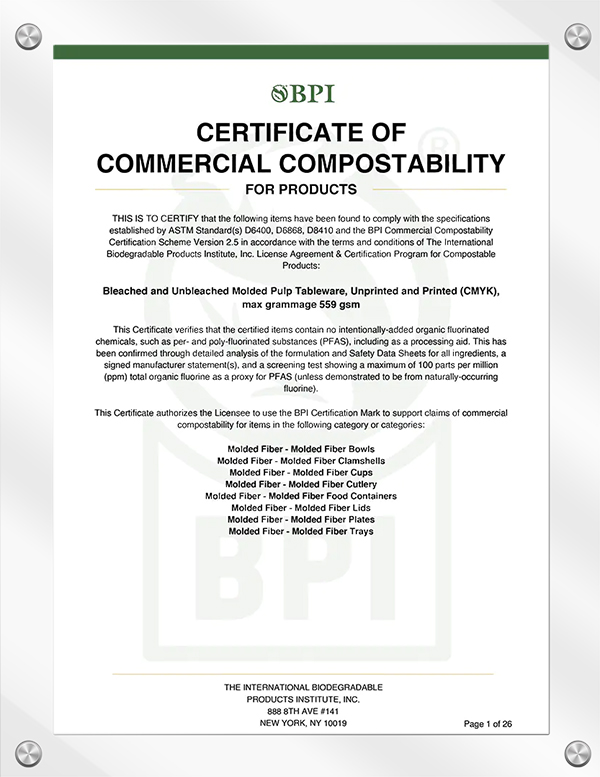
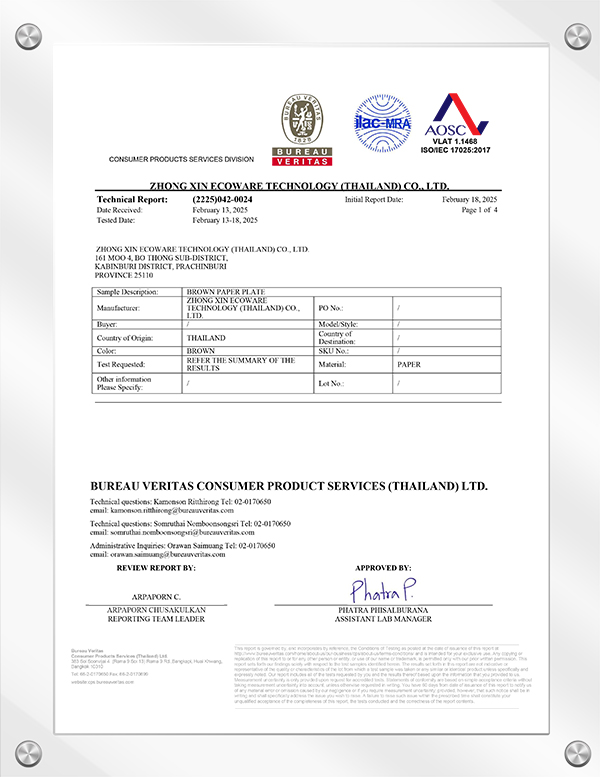
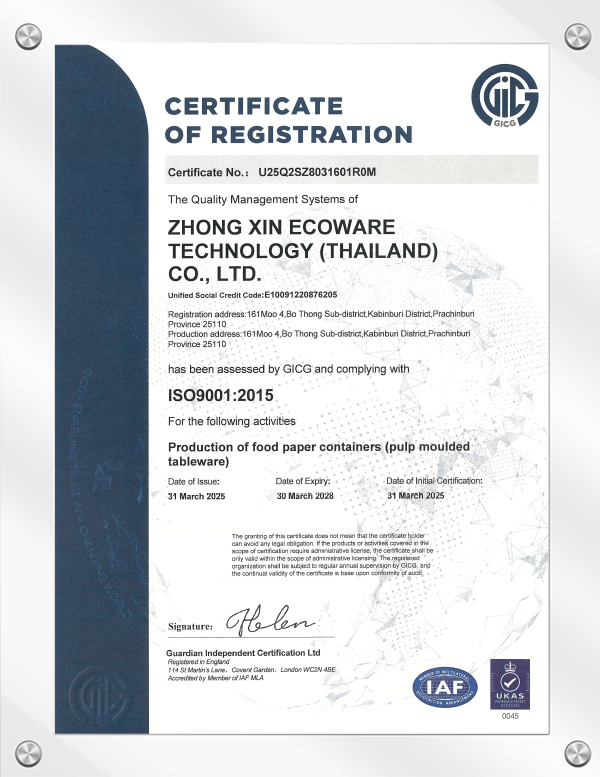
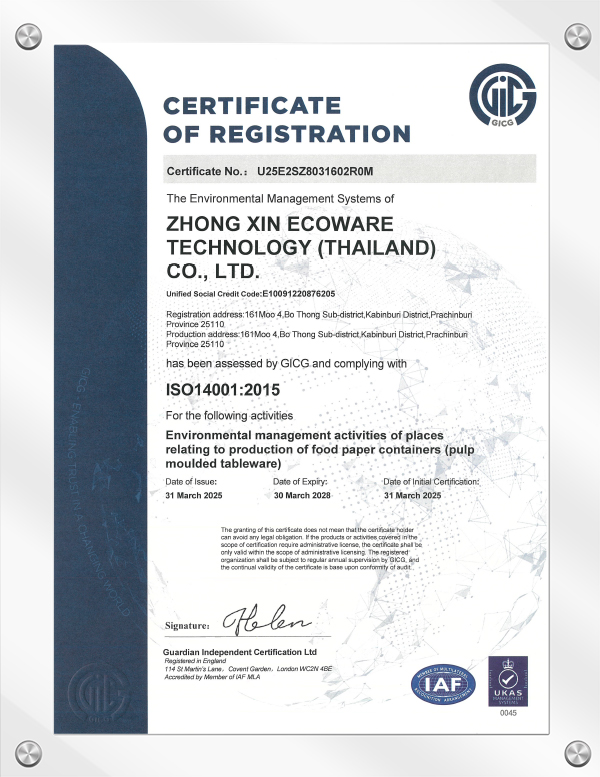

-
-
 +66-31240888
 -
 161 Village No. 4, Bo Thong Subdistrict Kabin Buri District Prachinburi Province 25110
-
Can Paper Packaging Meet Retail Shelf and Branding Requirements
Oct 23,2026
-
Bagasse Cups and Cup Lids: A Sourcing Guide for Foodservice and Takeaway Buyers
Oct 20,2026
-
How to Find Zhong Xin at the 140th Canton Fair: A Visitor Navigation Guide
Oct 16,2026
-
Thailand vs China Bagasse Tableware: 8 Comparisons Buyers Should Verify
Oct 16,2026
-
Will Takeout Containers Fit Your Existing Lids and Delivery Workflow
Oct 16,2026
-
What Is Bagasse Tableware? A 2026 Buyer Guide to Material, Performance and Documents
Oct 13,2026
-
Bagasse Tray Wholesale: How Bulk Buyers Cut Cost with Carton and Container Planning
Oct 09,2026
-
What Should a Bagasse Manufacturer Include in a Bulk Order Quote
Oct 09,2026
-
FOB, CIF or DDP? Incoterms for Bagasse Tableware Buyers Shipping from Thailand
Oct 06,2026
-
Packaging or Food Contact? Which EU Regime Applies to Bagasse Cups, Bowls, Plates and Cutlery
Oct 06,2026
-
Compostable Cutlery Sets for Private Label: 7 Sourcing Checks for Retail and Foodservice Buyers
Oct 06,2026
-
US vs EU Bagasse Tableware Imports: 8 Documentation and Compliance Checks Buyers Should Run
Oct 06,2026
Copyright © 2025 Zhong Xin Ecoware Technology ( Thailand ) CO., LTD.
All Rights Reserved.

Biodegradable Disposable Bagasse Tableware Manufacturer