-
 [email protected]
-
 +66-31240888



 English
 Español
 ไทย
ไทยThe Sustainable Table: Understanding Bagasse Plates
The Manufacturing Process of Bagasse Plates
The transformation of sugarcane waste into a functional plate involves a series of mechanical and thermal processes. The manufacturing method is similar to paper pulping but adapted for the specific characteristics of bagasse fiber.

Step 1: Fiber Collection and Preparation
The process begins at the sugar mill. After the sugarcane is crushed and the juice extracted, the remaining damp, fibrous pulp is collected. This raw bagasse contains residual sugars and moisture, which must be addressed. The fibers are screened to remove any remaining pith or unfiberized material. They are then cleaned and may be stored for a period. If not processed immediately, the bagasse must be dried to prevent microbial growth and spoilage.
Step 2: Pulping
The cleaned bagasse is transferred to a pulping operation. Here, the fibers are mixed with water and sometimes mild processing aids to create a slurry, or pulp. This process helps to separate the individual fibers and create a consistent mixture. The consistency of the pulp is carefully controlled; it is mostly water, with a small percentage of fiber. Mechanical action may be used to refine the fibers, improving their bonding characteristics for the forming stage.
Step 3: Forming the Shape
The diluted fiber slurry is then fed into a forming machine. There are two primary methods used:
|
Method |
Description |
Characteristics |
|
Forming (Molding) |
The slurry is poured into a heated, perforated mold that is shaped like a plate. A vacuum is applied from behind the mold, drawing the water out and pulling the fibers against the mold surface. |
Produces a consistent, well-defined shape. Suitable for higher volumes and more complex contours like compartment plates. |
|
Forming |
A forming tool, also perforated, is immersed into a tank of the fiber slurry while a vacuum is applied. The fibers are deposited onto the surface of the tool as the water is drawn through. The wet, formed shape is then transferred to a heated drying mold. |
Often used for simpler, shallower shapes. Can be a slightly slower process but effective for certain product geometries. |
Regardless of the method, the result of this stage is a wet, saturated, plate-shaped object held together by the interlocking fibers and residual water.
Step 4: Drying and Setting
The wet-formed plate, which is still fragile, must be dried to remove the water and allow the fibers to bond permanently. The plates are typically transferred to a heated drying tunnel or oven. They may be held between heated molds to prevent warping and to set the final shape precisely. Heat and pressure during this stage also help to sterilize the product. The drying process removes the vast majority of the water, leaving a rigid, sturdy fiber structure.
Step 5: Trimming and Finishing
After drying, the plates may have a thin flash or rough edge where the mold halves met. These are trimmed off in a die-cutting or edge-trimming operation. Some plates may also undergo a final pressing step to ensure flatness and smoothness. Quality control inspections check for defects such as thin spots, holes, or warping. The finished plates are then stacked, counted, and packaged for distribution.
Performance of Bagasse Plates with Food Temperatures
Bagasse plates are designed to be functional across a range of serving temperatures, but their performance differs depending on whether the food is hot or cold. This is due to the nature of the fiber material and how it interacts with moisture and heat.
A. Suitability for Hot Foods
Heat Resistance and Structural Integrity: Bagasse plates are generally well-suited for hot foods. The fiber material can withstand temperatures up to approximately 200°F (93°C) or higher without melting or deforming. This makes them a safe alternative to plastic or foam for serving items like hot entrees, soups, and grilled dishes. The plates do not release harmful chemicals when heated, unlike some petroleum-based plastics.
Moisture and Grease Resistance: While the fibers themselves are absorbent, bagasse plates are manufactured with a level of inherent resistance to moisture and grease. The natural lignin in the plant fibers provides some barrier properties. For very saucy or greasy hot foods, some plates may have a thin biodegradable coating (often made from PLA or similar materials) to prevent soak-through and maintain plate integrity during the meal.
Insulation Properties: The fibrous structure of bagasse provides natural insulation. A bagasse plate containing hot food will feel warm to the touch but is less likely to become uncomfortably hot to hold compared to a metal or ceramic plate. This is a practical advantage for casual dining settings where the plate is held in the hand.
Limitations with Extended Heat Exposure: While suitable for serving hot food, bagasse plates are not intended for cooking or for prolonged exposure to high heat. They should not be placed in a conventional oven or under a broiler. Microwaving is generally acceptable for reheating, but the plate may become quite hot, and extended microwaving can dry out the fibers and potentially scorching if the food does not provide sufficient moisture.
B. Suitability for Cold Foods
Excellent Compatibility with Cold Items: Bagasse plates are very well-suited for cold foods. Items such as salads, cold sandwiches, fruit platters, and desserts can be served without any concern for the plate's structural performance. The material is inert and does not impart any taste or odor to the food.
Resistance to Condensation: When cold food is placed on a plate in a warm environment, condensation can form. Bagasse fibers can absorb a certain amount of this surface moisture without immediately losing their rigidity. This is an advantage over paper plates, which can become soggy quickly. However, if the food is very cold and the plate is left for a long period, the absorbed moisture can gradually soften the fibers.
Freezer Storage Capability: Bagasse plates can generally be used for foods that are stored in the freezer, such as pre-plated meals for later use. The material remains stable at low temperatures and does not become brittle like some plastics. However, when such a plate is removed from the freezer and thawed, condensation may form and be absorbed, potentially softening the plate before serving. For freezer-to-table use, serving the food promptly upon thawing is advisable.
No Special Coating Required: For dry or non-greasy cold foods, bagasse plates perform well without any additional coating. The natural fiber surface is adequate for holding items like breads, pastries, or vegetable platters. The choice to use coated versus uncoated plates for cold foods often depends on the specific moisture content and oiliness of the items being served.
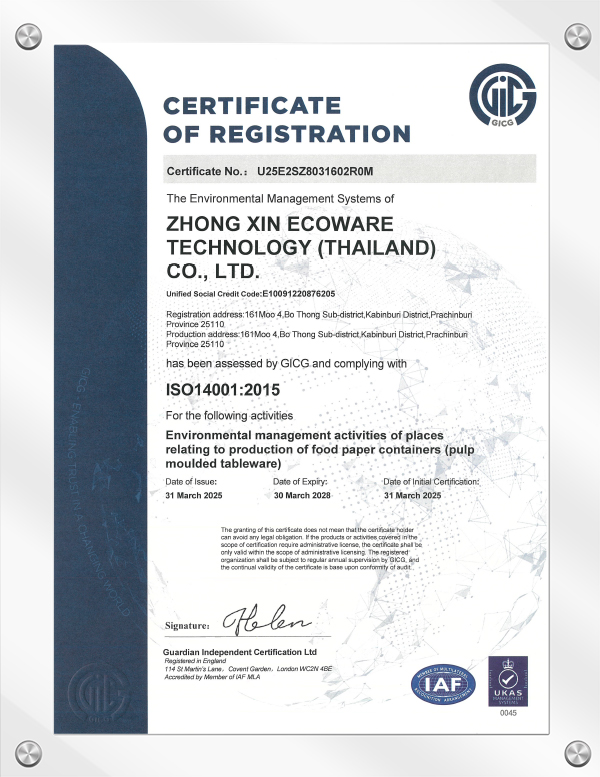
Zhong Xin Ecoware Technology (Thailand) Co., Ltd. supplies bagasse and molded fiber food packaging to importers, distributors and foodservice brands. For MOQ, pricing, samples and lead time, email info@fiber-product.com or use the contact form.


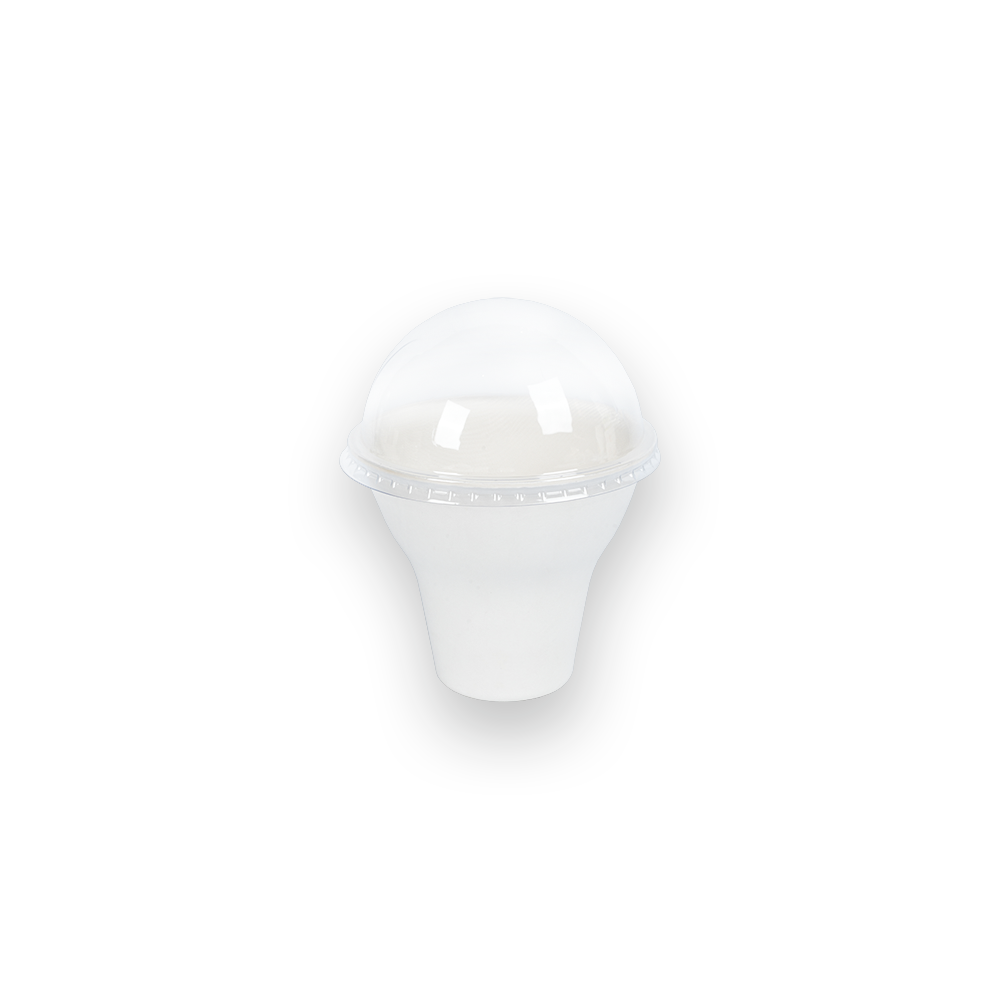
Zhong Xin Ecoware(Thailand) was registered on November 1, 2023, and officially began construction of the factory building in June 2024. At present, the first phase workshop of the factory has been fully completed and put into use. The second phase of the factory is being constructed intensively.
The landing and development of Zhong Xin in Thailand has brought a large amount of initial investment for land, factories, etc., and continuous operational investment for continuous equipment updates, technological upgrades, and capacity expansion.
Zhong Xin Ecoware(Thailand) has directly and indirectly created thousands of job opportunities, increased government revenue, promoted local economic development, cultivated local supply chains, provided systematic training for employees, improved the quality of local human capital, injected vitality into the local economy, enhanced industrial competitiveness, and ultimately improved residents' living standards.
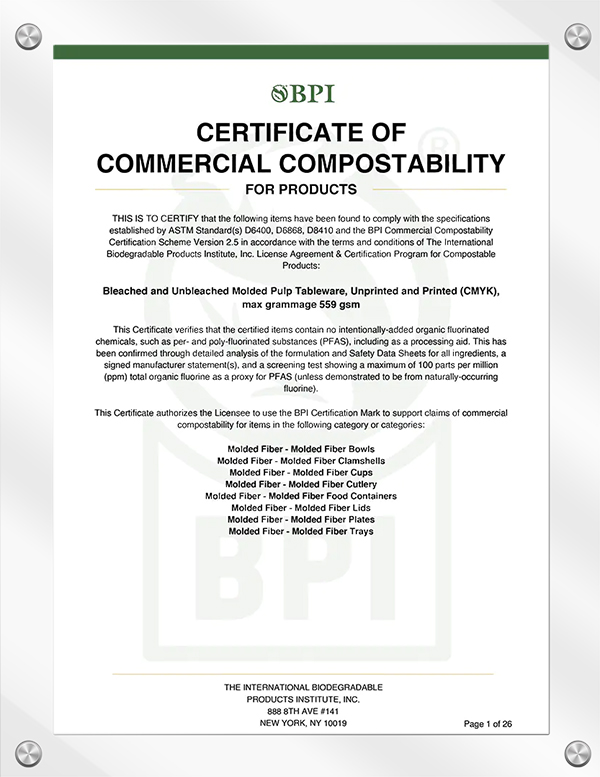
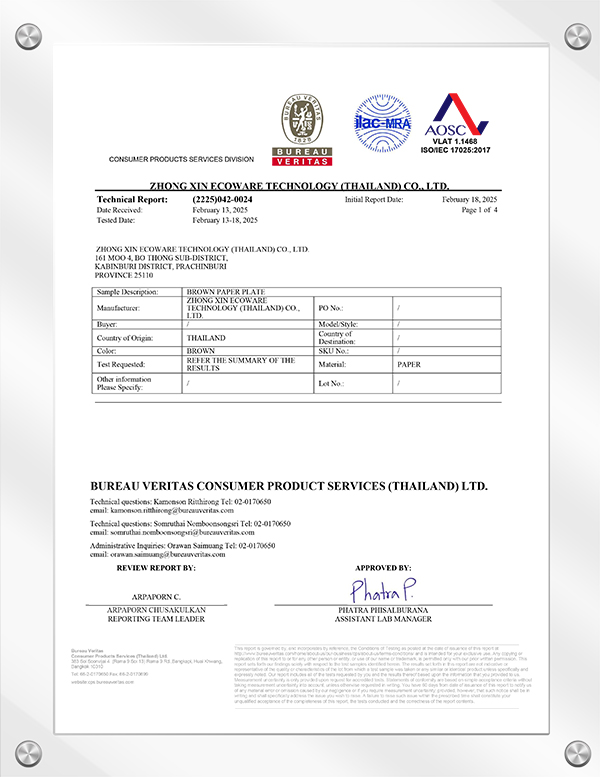
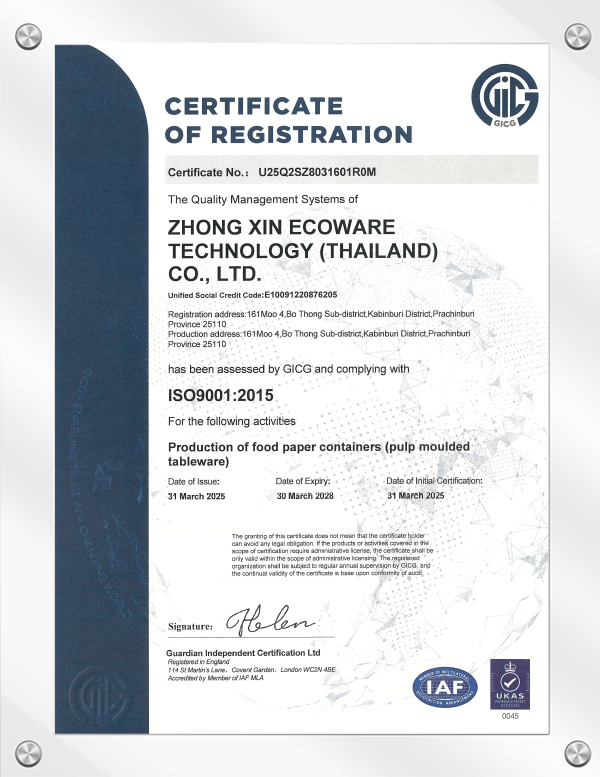
Zhong Xin Ecoware(Thailand) actively collaborates with local pulp mills to explore new cooperation models for developing new products, improving production capacity and quality. At the same time, relying on Zhongxin's advanced production technology, process flow, management experience, and quality control system, it promotes the development of this industry in Thailand.

-
-
 +66-31240888
 -
 161 Village No. 4, Bo Thong Subdistrict Kabin Buri District Prachinburi Province 25110
-
Beyond Plates: Which Foods Suit Bagasse Tableware
Oct 02,2026
-
New Bagasse Tableware Lineup for 2026: What Is New and Where to See It
Sep 28,2026
-
How to Select Bagasse Clamshells for Burgers, Rice Meals and Fried Food
Sep 28,2026
-
Microwave Reheating: Is a Bagasse Lunch Box Suitable
Sep 25,2026
-
9 Inch Pizza Plates and Bagasse Pizza Boards: A Sourcing Guide for US and Canadian Distributors
Sep 19,2026
-
PFAS-Free & Compostability Verification: A Buyer's Checklist for Bagasse and Molded Fiber Packaging
Sep 19,2026
-
Bagasse vs PLA vs Molded Fiber: What Distributors Should Stock in 2026
Sep 19,2026
-
Can Sugarcane Plates Handle Hot, Greasy Foods
Sep 18,2026
-
Bagasse Tableware RFQ Template: Get a Comparable Thailand Factory Quote
Sep 14,2026
-
Are Takeaway Food Containers Ready for Saucy Meals
Sep 11,2026
-
7-Inch vs 9-Inch Bagasse Plates: Carton and 20GP Guide
Sep 07,2026
-
Will Bagasse Pulp Trays Sag Under Heavy Meals
Sep 04,2026
Copyright © 2025 Zhong Xin Ecoware Technology ( Thailand ) CO., LTD.
All Rights Reserved.

Biodegradable Disposable Bagasse Tableware Manufacturer